Business
Nigeria’s Economy Must Not Be Held Hostage by Lagos State

Editorial
The recent outburst from the Lagos State Government against the Nigerian Ports Authority (NPA) over its decision to strengthen operations at the Warri Port Complex is not only misplaced but dangerously revealing of a deeper,sectionalized mindset that has long plagued Nigeria’s economic discourse. Governor Babajide Sanwo-Olu’s administration, through its aides, has once again demonstrated an obsession with Lagos’ dominance; cloaked in the language of “strategic advantage,” while dismissing the legitimate aspirations of other regions.
The League of Maritime Editors (LOME) feels strongly embarrassed by the vituperation of Governor Sanwo-Olu and recommends the idea that Lagos is Nigeria’s economic destiny be re-evaluated. Nigeria is a federation, not a fiefdom. The idea that Lagos alone must remain the unrivaled commercial gateway is both arrogant and unsustainable. For decades, the over-concentration of port activities in Apapa and Tin Can has created monumental congestion, corruption, and inefficiency. Truck extortion, racketeering, and a broken e-call-up system are not the inventions of the Nigerian Ports Authority; they are the direct consequences of Lagos’ failure to manage its own infrastructure and regulatory environment.
To now resist the decentralization of port operations to Warri, Onne, or Calabar is to insist that Nigeria’s economy remain shackled to Lagos’ dysfunction. Equity demands decentralization.
The diversion of cargo to Warri is not a “band-aid,” as Lagos officials claim—it is a necessary corrective to decades of imbalance. The South-South and South-East regions, rich in oil, gas, and human capital, have been systematically marginalized in the distribution of economic infrastructure. Why should Warri, Port Harcourt, or Calabar not enjoy the same level of investment and patronage as Apapa? Why must the Igbo trader or Niger Delta entrepreneur be forced to funnel their commerce through Lagos, enriching one state while impoverishing others? True federalism demands equity in production, distribution, and growth. Lagos cannot continue to monopolize Nigeria’s maritime lifeline.
Governor Sanwo-Olu’s Lagos claim to “Unwavering Commitment” is not only a myth but should not also narrow the economic gauge of the development of regional economy, assuming but not conceding that his claim to unwavering commitment may be true. Governor Sanwo-Olu’s aides boast of “heavy investments” in traffic management and multi-agency coordination. Yet the reality on the ground is stark: Apapa remains a nightmare of gridlock, corruption, and inefficiency.
If Lagos’ interventions were truly effective, why does the crisis persist? The truth is that Lagos thrives on patronage politics and rent-seeking, not on genuine reform. The resistance to Warri’s revival is not about efficiency—it is about protecting entrenched interests that profit from chaos.
As a federation, Nigeria’s future lies in balance, not domination. The Lagos State Government must be reminded that Nigeria’s economy is not its private estate. The Warri Port Complex, like Onne and Calabar, represents the hope of millions in the South-South and South-East who have long been denied fair access to national infrastructure. Strengthening these ports is not a threat to Lagos, it is a step toward justice, balance, and national cohesion. A truly federal economy cannot allow one state to dominate while others languish in neglect.
Governor Sanwo-Olu’s tribalized rhetoric and disdain for decentralization betray a dangerous vision of Nigeria’s future—one where Lagos remains the sole beneficiary of national commerce, while other regions are reduced to spectators. This vision must be rejected. Nigeria’s prosperity will only be secured when Warri, Onne, Calabar, and other ports thrive alongside Lagos, ensuring that no regional bloc is subsumed under another. Equity, justice, and balance—not domination—must define our economic destiny.
The League, which was founded in 1998, comprises Nigeria’s best corps of journalists who had reported the maritime and allied industry for about 40 years. As a professional group, the League owes society the obligation of setting the records right about possible misconceptions in the industry, both as watchdog and agenda setter. This social contract cannot be negotiated.




NIMASA Unveils National Innovation Hackathon, Open Young Innovators Por

Ogun 1 Customs Intercepts N417m Range Rover

Operator Raises Alarm Over Foreign Control, Cartelisation of Maritime Supply Chain

Tin-Can Customs Generates ₦137.298bn in August

DG NIMASA, Mobereola Reasserts Cabotage Implementation Key To Maritime Development

Tribute to a Colossus: The Eternal Legacy of Alhaji Bamanga Tukur (1935–2026)

Stakeholders To Re-Examine Blue Economy Imperatives

ANLCA@72: From Founders’ Dream to Indispensable Pillar of Nigeria’s Port Economy

ANLCA’s 72nd Anniversary: NECOM Reels Out Programme, Says Peace Worth Celebrating

US Coast Guard, Nigeria and the Politics of a Maritime Victory

Wasiu, Seme ANLCA Chairman Calls for Review of Vehicle Restriction

Seme-Krake: Nigeria, Benin Launch Joint Assessment to Revive One-Stop Border Post
ANLCA Board is intact, cannot be wished away by anybody’-Elochukwu

B-R-E-A-K-I-N-G: Effedua, Rector MAN Oron, Resigns

EFCC’s Probe: Okowa Plots Sheriff’s Removal Despite London Accord
Customs Trains ANLCA Members, Others on B’Odogwu Portal

NPA’s Alleged Executive Management Fight: The Half Truth & Truth
ANLCA Board Election: Know Your Candidates
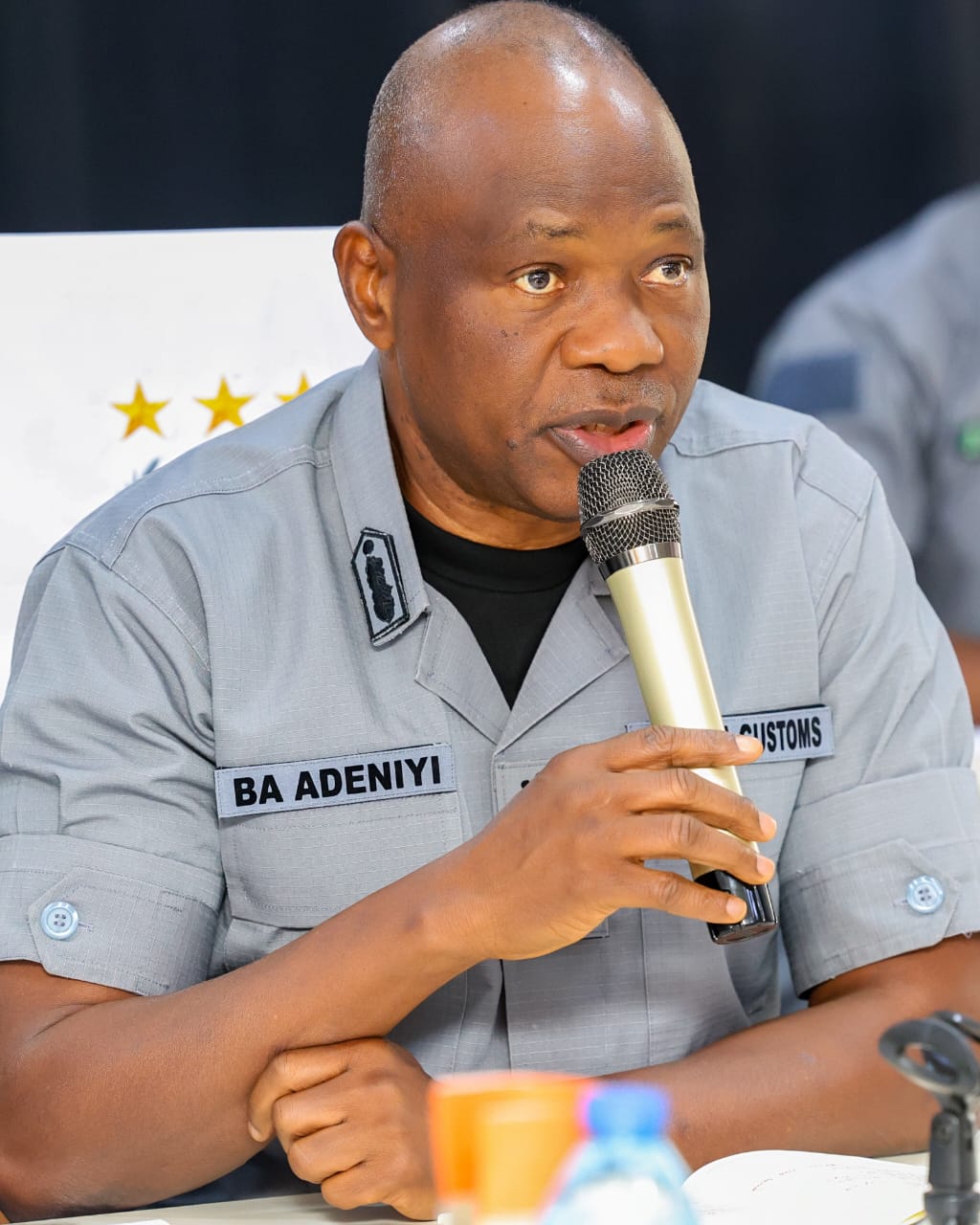
‘Why We Launched B-Odogwu Pilot Scheme With Webb Fontaine Still Running’ – Adeniyi

Onyemekara Promoted GM, Appointed NPA’s New Spokesperson

Nigeria Customs: Trust, Competence And The Oramalugo Factor

‘Rush To Break News Can Lead To Brush With Cybercrime’- Police

Kebbi Is Hub of Hard Drugs Smuggling In Northern Region’ – Oramalugo

‘Our Trade Security Is More Protected Under B’Odogwu’ – Daniyan