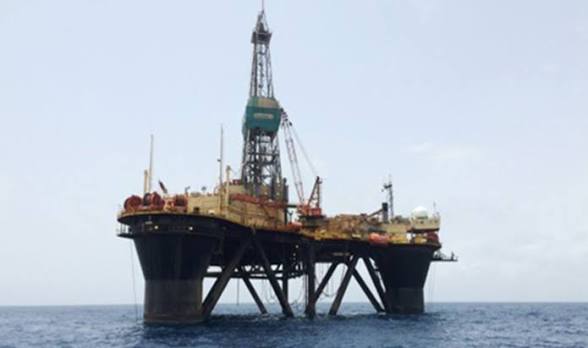


BY GBOGBOWA GBOWA The Sea Empowerment & Research Center (SEREC) has called for greater harmonization, transparency and interoperability in Nigeria’s ongoing maritime digital transformation, warning that...
What Did the 18th Judges’ Seminar Leave on the Table? A post-seminar appraisal of Nigeria’s maritime jurisprudence against emerging IMO, WTO and UNCITRAL standards. BY...
BY GGBOGBOWA GBOWA The Nigerian Shippers’ Council (NSC) has been basking in the glow of its recent announcement: ₦90.6 billion in economic losses prevented over the past three years. Executive Secretary Dr. Pius Akutah credits the Council’s interventions in demurrage disputes, tariff harmonization, and alternative dispute resolution for the savings, a figure that underscores the Council’s growing role as Nigeria’s port economic regulator. From settling conflicts with global shipping giants like Maersk and CMA CGM, to harmonizing bonded terminal charges and facilitating collective bargaining agreements for maritime workers, the Council has positioned itself as a bulwark against exploitative practices. For shippers, the ₦90.6 billion claim is more than a statistic; it is proof that regulatory oversight can translate into tangible economic relief. This economic gain no doubt stands Dr Pius Akutah tall as a performing CEO, one that understands his primary role in the national and political economy. The announcement is also necessary to give Nigerians the benefit of a full understanding of the how the Akutah led NSC management has performed since he came onboard, his grasp of the dynamics of governance in the delivery of cost-efficient services. Yet, beyond the headline numbers, stakeholders point to a stubborn reality: the Council’s inability to prevent arbitrary increments in truckers’ fees at the ports. Importers and exporters complain that while demurrage charges have been checked, haulage costs continue to spiral. But in truth these troubling charges are driven by fuel hikes, poor access roads, and the dominance of trucking unions. For many, this gap reveals the limits of the Council’s mandate. While empowered to regulate shipping lines and terminal operators, the NSC has little direct control over road haulage pricing. Without any equivocation, the result is a paradox of sort: billions saved on one front, and billions lost on another. Industry watchers argue that reconciling these contradictions requires more than dispute resolution. Expanded legislative authority under the pending Nigerian Port Economic Regulatory Agency (NPERA) Bill, coupled with infrastructure investment to ease port congestion, could give the Council the leverage it needs to rein in trucking costs. Until then, the NSC’s ₦90.6 billion claim stands as both a triumph and a reminder that regulation can deliver savings, but without holistic oversight, the cost of moving goods through Nigeria’s ports will remain a contested terrain. Is it possible however to address this lacuna through policy initiative with conscientious, bold and focused implementation drive, free of divided intents and attention? The answer is yes, but lies squarely on the court of the presidential economic team, the presidential enabling business environment council, the federal ministry of marine and blue economy, and its relevant agencies.
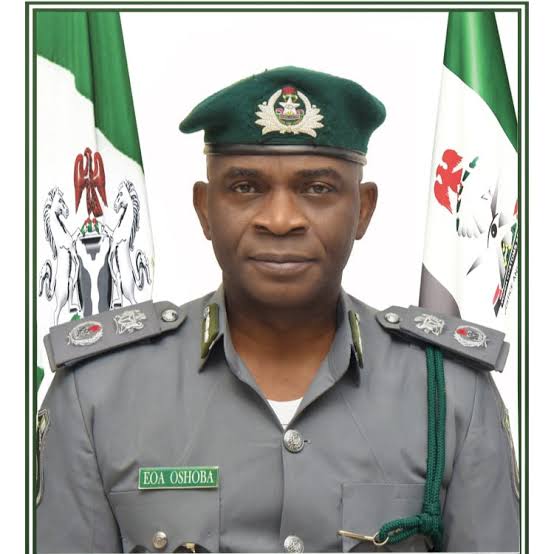
BY Okey IBEKE Smuggling in Nigeria is no longer merely an economic crime involving the evasion of customs duties or loss of government revenue. It has...
BY IBRAHIM NASIRU When the World Bank and S&P Global recently released the 2025 Container Port Performance Index (CPPI), the headlines understandably erupted in celebration. For Tin Can Island and Apapa to land in the global Top 20 for performance gains is undoubtedly a historic milestone. Yet, for seasoned maritime analysts and industry stakeholders, a glaring question remains: what about the rest of Nigeria’s coastlines? While the satellite data accurately captures a localized turnaround in the Lagos pilotage districts, it simultaneously masks a stark regional imbalance. The narrative of Nigerian maritime modernization cannot begin and end in Lagos. To truly turn the tide, the conversation must expand to the Eastern Corridor encompassing Onne Port, Port Harcourt Port, Calabar Port, and Warri Port. The fundamental issue is that the World Bank’s CPPI relies strictly on automated vessel AIS data tracking. It registers a win when ship turnaround times shrink at a berth, but it completely shuts out the structural and geographical deficiencies that prevent large vessels from even sailing into Eastern waters in the first place. Modern deep sea shipping lines require drafts starting at 15 meters. While multi-billion naira investments and natural depths allow Lagos and the expanding Lekki Deep Sea Port to receive mega-vessels, Calabar Port remains severely hindered by an un-dredged channel hovering around a shallow 6 to 7 meters. Port Harcourt suffers from similar shallow constraints. Without aggressive, patriotic capital dredging projects, the devils in the details ensure that these regional Ports remain underutilized, regardless of how much digitization is deployed on paper. It is easy for policymakers to announce massive financial interventions. Critics are entirely right to point out that the Federal Government’s massive Port modernization plans must yield measurable metrics on the ground, not just political headlines. However, recent data shows that commercial viability is waiting to be unlocked. In overall cargo throughput metrics, Onne Port has consistently proven that the Eastern flank possesses massive economic power when given the operational room to breathe. The roadmap for greenfield developments like the Ibom deep seaport and others exists, but real execution under the African Continental Free Trade Area (AfCFTA) framework will be the ultimate judge of these investments. The current operational reality forces an unnatural economic bottleneck. Importers in the South-East and South-South regions frequently clear their goods in Lagos, only to transport them across hundreds of kilometers of volatile highways back to Eastern markets. This layout drives up logistics expenses, completely wiping out the macro efficiencies celebrated in recent National Bureau of Statistics (NBS) trade surplus figures. The next institutional hurdle for the Managing Director of the NPA, Dr. Abubakar Dantsoho, and the Minister of Marine and Blue Economy, Adegboyega Oyetola, is the implementation of a unified, cooperative Port development strategy. This requires more than just launching an electronic call-up system; it demands a deliberate re-alignment of tariff structures that actively incentivizes shipping consortia to divert traffic to regional hubs. Ultimately, a Port system is only as strong as its weakest link. Celebrating the World Bank validation of Apapa and Tin Can is fair, but treating it as a nationwide victory is premature. Until the institutional bottlenecks, channel depths, and security challenges of the Eastern Corridor seaports are solved with the same urgency applied to Lagos, Nigeria’s maritime sector will continue running on half its cylinders. True maritime competitiveness is not won by building an elite logistics island in one state, but by unlocking the full economic potentials of the nation’s entire coastline. Chief Ibrahim Nasiru, a Public Affairs Analyst writes from Abuja
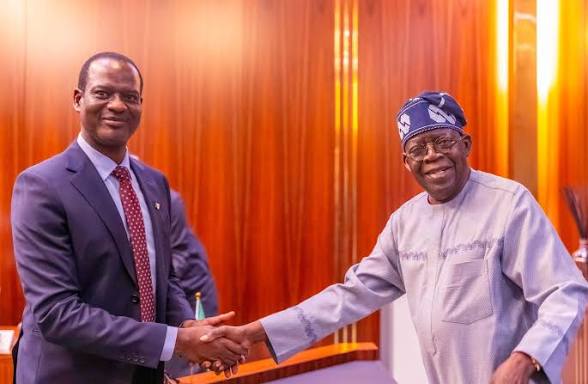
BY EGUONO ODJEGBA When Comrade Adewale Adeyanju, Deputy President of the Nigeria Labour Congress (NLC) and immediate past President General of the Maritime Workers Union of...
BY EGUONO ODJEGBA In Nigeria’s maritime corridors, whispers have grown louder over the curious handling of allegations against the Grimaldi Agency of Nigeria. Earlier this month, reports surfaced accusing Grimaldi of engaging in questionable sales of empty containers in contravention of Nigerian Customs Service (NCS) rules. The company swiftly denied wrongdoing, but its rebuttal was publicly dismantled by international business consultant Mr. Okey Ibeke, who insisted Grimaldi had breached legal and procedural protocols. Yet, the Federal Ministry of Marine and Blue Economy and its supervising minister, Dr. Adegboyega Oyetola, maintained an absolute silence. For a...