Business
How Oshoba Is Driving Apapa Port’s Economic Potentials

BY GBOGBOWA GBOWA
When Comptroller Emmanuel Oshoba assumed office at Apapa Customs Port Command, he inherited a robust framework established by his predecessor, Assistant Comptroller General Babatunde Olomu fsi. Rather than being daunted by Olomu’s record-breaking tenure, Oshoba embraced the challenge and immediately set new benchmarks.
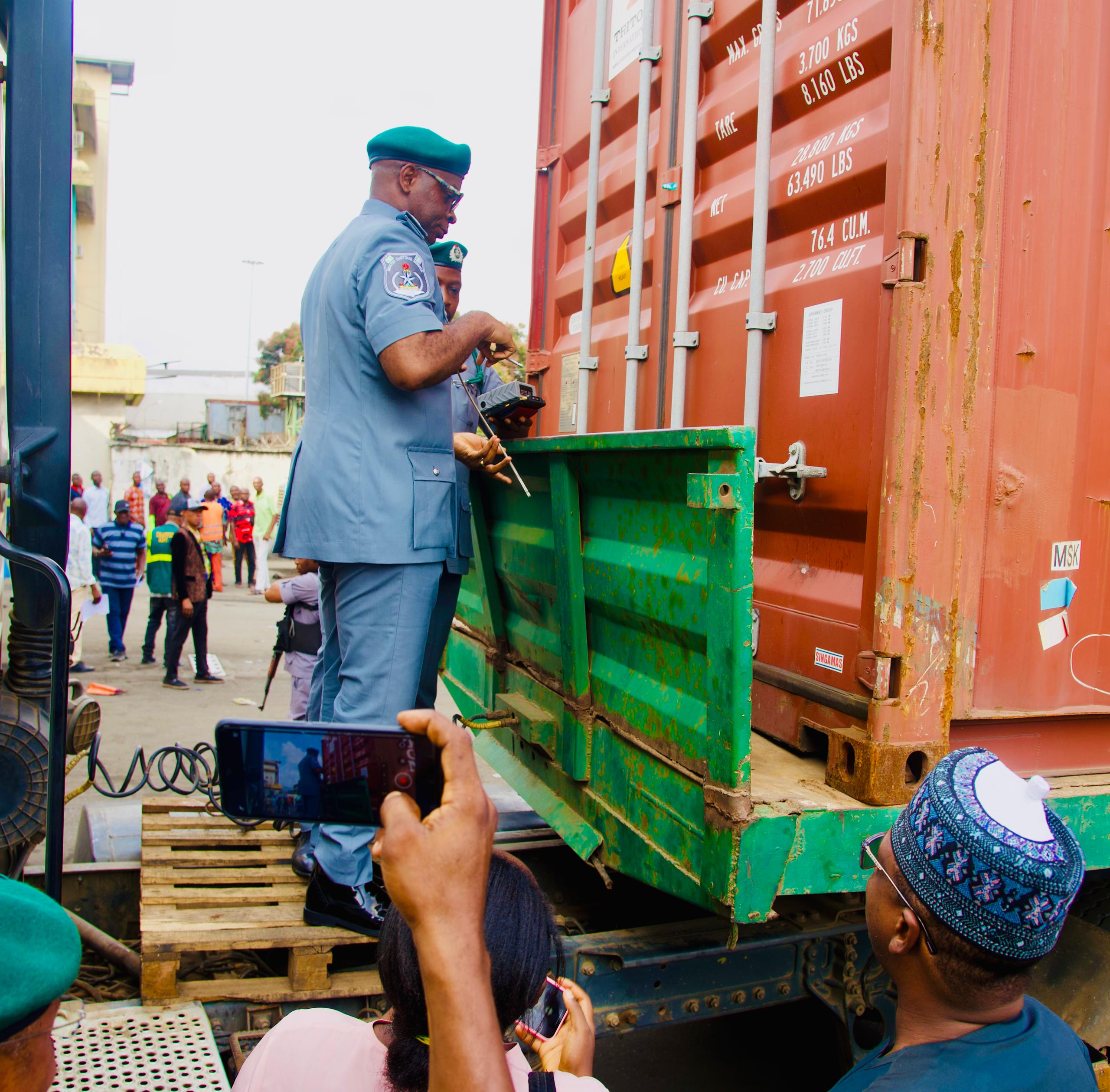
Within 24 hours of taking charge, Apapa Command recorded a ₦20.1 billion single-day revenue collection, the highest ever in the history of the Nigeria Customs Service. Unfazed by the intimidating profile of the Command’s scorecard chart, he has demonstrated a clear capacity to consolidate inherited structures while charting new pathways for growth.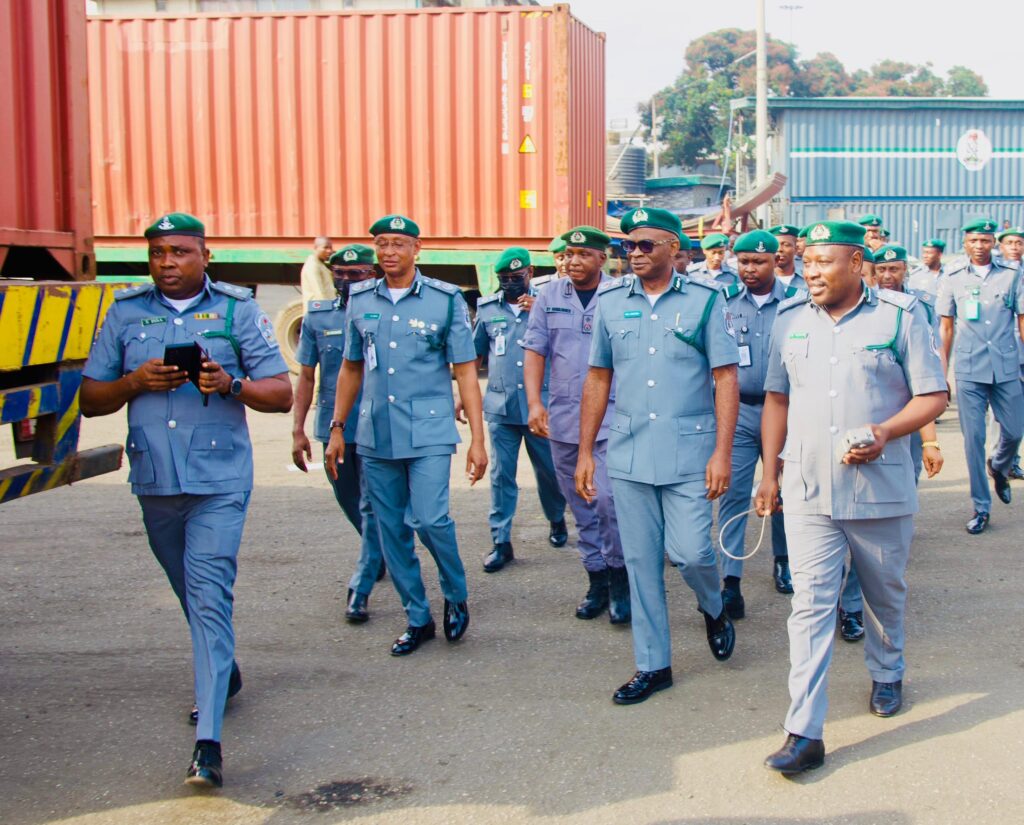
His stewardship reflects a blend of administrative discipline, operational efficiency, and strategic partnerships that are steadily unlocking the port’s vast revenue potential. In the area of streamlined processes, Oshoba has prioritized transparency and accountability, ensuring that documentation and clearance procedures are more efficient, while in capacity building, training and retraining of officers have been emphasized to align with global best practices.
To achieve a holistic and functional blueprint in line with the prevailing regime of technology adoption which is a cardinal policy thrust of the Comptroller General of Customs, Adewale Adeniyi’s key agenda, digital tools have been deployed to reduce bottlenecks and enhance compliance monitoring.
Together, above has achieved unquestionable operational excellence, with early indicators showing improved revenue collection, clearly aligning with his pledge to raise the bar.
Same goes for trade facilitation where he has achieved a delicate balancing enforcement with facilitation, thereby creating a more business-friendly environment for importers and exporters.
Oshoba has not performed less in the area of efficient cargo throughput, where operational adjustments have led to smoother cargo handling and reduced delays. In October 2025, the command under his watch generated ₦304 billion, the highest monthly revenue ever recorded.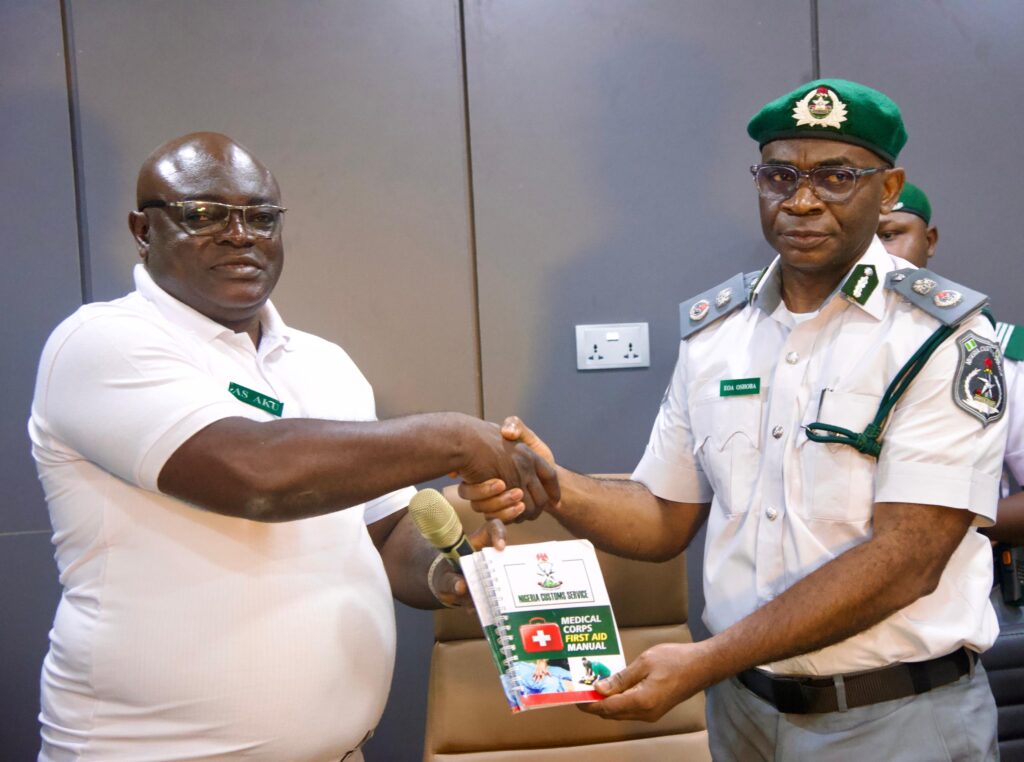
He has also utilized strategic partnerships in achieving mutual understanding via stakeholder engagement. Thus, Oshoba has strengthened collaboration with port stakeholders, including shipping companies, terminal operators, and freight forwarders. He has also strengthened inter-agency synergy by enhancing cooperation with sister agencies which is believed to have greatly improved intelligence sharing and enforcement. On public-private collaboration, he has sustained partnerships with private sector players which have also helped to modernize port infrastructure and logistics.
Apapa Port Command, often described as the “nerve center” of Nigeria’s maritime trade, has long been the benchmark for customs operations nationwide. As mentioned earlier, he rose up with the determination of a manager set out, not only to manage well, but also to break existing limits and push through the frontiers of conservative routines.
Hence, rather than resting on these laurels, Oshoba was quick to infuse fresh energy into existing structures, gaining an uncommon grip on the system and with a focused energy, swung himself up the ladder of great achievers.
“We are building on what we met, but with a renewed commitment to transparency, efficiency, and collaboration,” Oshoba remarked during a recent stakeholders’ forum.
Apart from his pledge to improve the revenue collection record of the Command is the deepening of enforcement, and strengthening stakeholder collaboration. This set the tone for a performance-driven leadership.
In the area of stakeholder collaboration, Oshoba emphasized working closely with port stakeholders—shipping companies, clearing agents, and logistics operators—to streamline cargo clearance. This collaboration is crucial in reducing delays and ensuring compliance with Customs regulations.
Above vision also interconnect with any factor that would slow the pace of growth, thus at the first whiff of concerns about the recent resurgence of traffic gridlock along the corridor, Oshoba stepped out in his managerial fullness to collaborate on how fast the situation can be mitigated.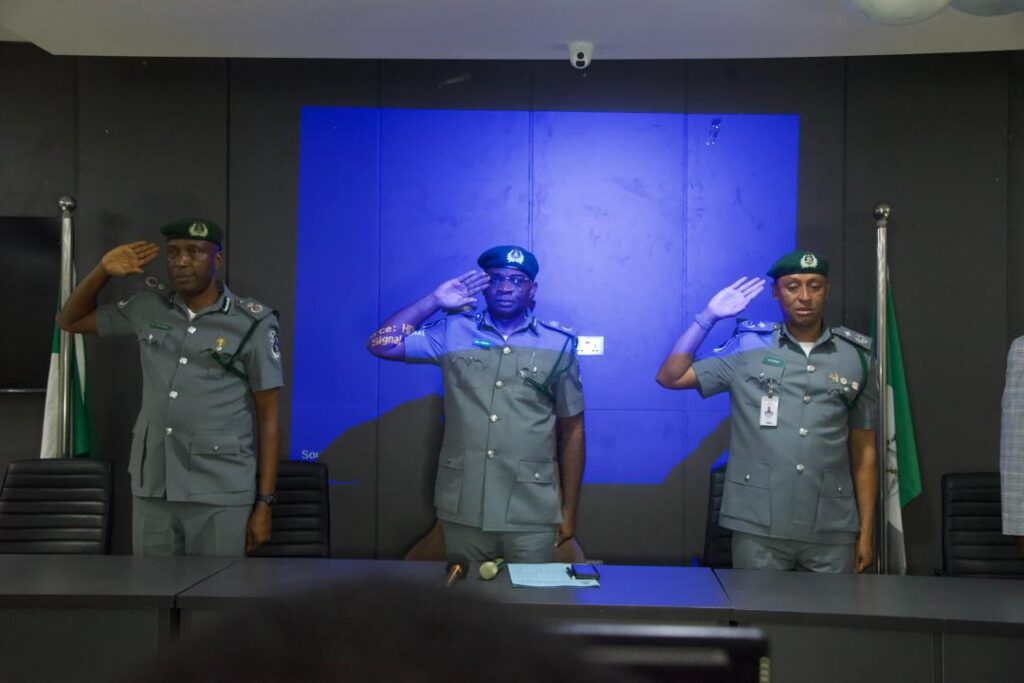
His interventions included aligning Customs clearance processes with port logistics reforms. By tightening coordination between Customs and port authorities, the Command aim to prevent cargo clearance from being strangled by road bottlenecks.
His diligent streamlining of the clearance processes which has led to reduced cargo dwell time not only improves trade facilitation but also strengthens Nigeria’s competitiveness in global shipping.
It goes without saying that all of the above has so far helped to broaden stakeholder confidence, thereby fostering trust and compliance, reducing disputes and enhancing smooth cargo movement.
An area controller to be watched, his scorecard and outlook remains impressive and reassuring. Indeed, his scorecard so far aligns with his pledge to raise the bar; all of which is manifesting in measurable scales. His leadership style anchored on discipline, innovation, and collaboration has positioned Apapa Port Command as a model for efficiency and revenue optimization.
As Nigeria seeks to diversify its economy and strengthen non-oil revenue, Apapa Port Command under Oshoba’s stewardship is proving to be a critical pillar. His scorecard so far suggests that the port is not only unlocking revenue potential but also setting new standards for efficiency, transparency, and stakeholder trust.
Industry watchers believe that if sustained, these reforms will not only boost Nigeria’s trade competitiveness but also reinforce Apapa’s status as the nation’s leading customs port.







Teamwork, Discipline, Central to Our Enforcement Mandate —Jonah Charges Customs Marine Operatives

How the UAE-Nigeria Partnership Can Transform Our Ports

Cross River, FTZ Customs Gets New Impulse

CGC Adeniyi Signs Anti-Corruption Documents, Activates ICRAM Steering Committee

Nigeria Customs Marks Breast Cancer Awareness Month in Abuja

NIMASA To Host Webinars on Automation of Nigerian Ship Registry

NPA Moves To Cut Export Bottlenecks, Targets Forex Inflows

NPA Congratulates ANLCA on 72nd Anniversary, Reaffirms Support for Port Modernisation

Afeni Lands at FOU Zone ‘A’ in Acting Controller Capacity

NPA Mulls Specialised Fishing Port to Deepen Nigeria’s Blue Economy

Industry Stakeholders Applaud ANLCA at 72nd Anniversary Celebration

Port Regulation Critical To Fisheries, Blue Economy – NPERA DG, Akutah
ANLCA Board is intact, cannot be wished away by anybody’-Elochukwu

B-R-E-A-K-I-N-G: Effedua, Rector MAN Oron, Resigns

EFCC’s Probe: Okowa Plots Sheriff’s Removal Despite London Accord
Customs Trains ANLCA Members, Others on B’Odogwu Portal

NPA’s Alleged Executive Management Fight: The Half Truth & Truth
ANLCA Board Election: Know Your Candidates
‘Why We Launched B-Odogwu Pilot Scheme With Webb Fontaine Still Running’ – Adeniyi

Onyemekara Promoted GM, Appointed NPA’s New Spokesperson

Nigeria Customs: Trust, Competence And The Oramalugo Factor

‘Rush To Break News Can Lead To Brush With Cybercrime’- Police

Kebbi Is Hub of Hard Drugs Smuggling In Northern Region’ – Oramalugo

Apapa Customs Collects ₦161b On B’Odogwu Platform In 3 Weeks