Business
Nigeria’s Oil Sector: The Fight of The Gods

BY GBOGBOWA GBOWA
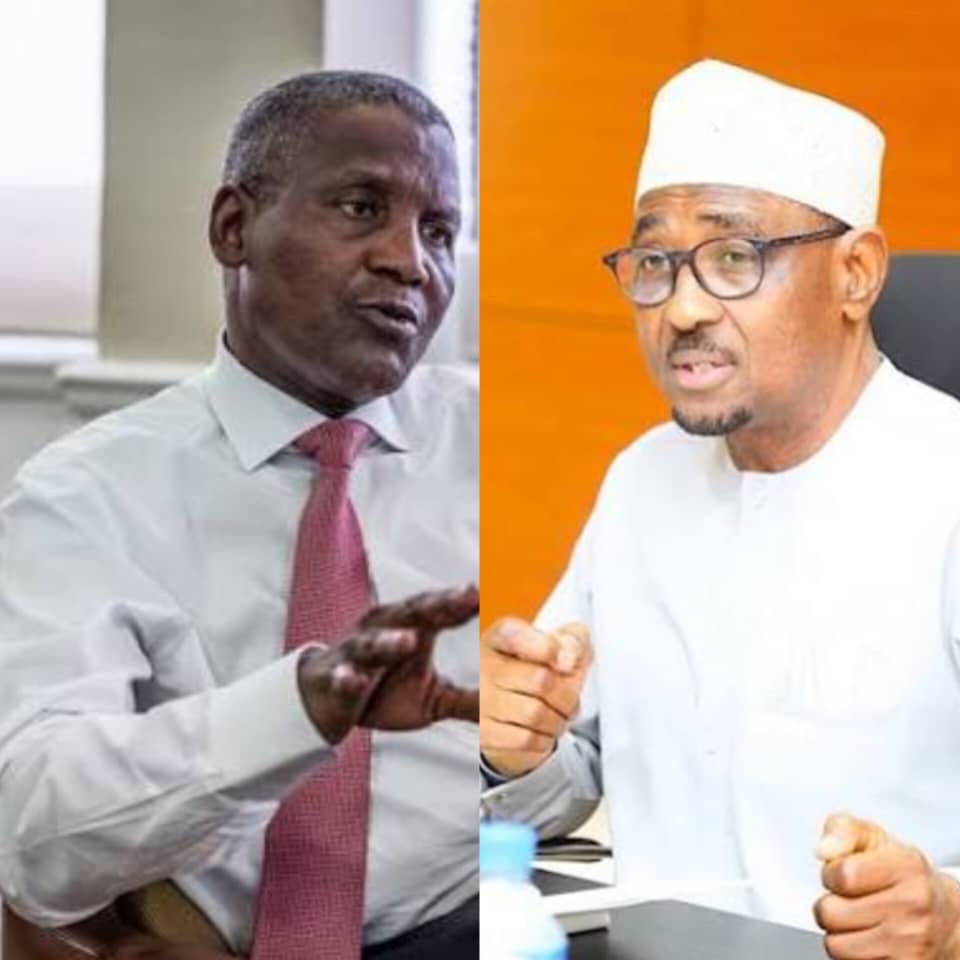
Nigeria’s downstream petroleum sector has long been a theatre of power struggles, corruption allegations, and cartel-like dominance. The latest salvo fired by Alhaji Aliko Dangote, Africa’s richest man and President of the Dangote Group, against Farouk Ahmed, CEO of the Nigerian Midstream and Downstream Petroleum Regulatory Authority (NMDPRA), has electrified the nation. Dangote’s allegation that Ahmed spent $5 million on his children’s education abroad is not just a corruption charge—it is a declaration of war in a sector where fortunes and national survival collide.
Dangote’s refinery, a $20 billion behemoth in Lekki, was meant to break Nigeria’s dependence on imported fuel. Yet, his battle with regulators exposes the entrenched interests that thrive on inefficiency and rent-seeking. By calling out Ahmed, Dangote positions himself as a crusader against corruption. But many Nigerians see this as less about patriotism and more about self-preservation of a billionaire defending his empire against forces that could undermine his refinery’s dominance.
Dangote’s rhetoric resonates with a frustrated populace weary of corruption. He speaks of “regulatory failures” and “rot” in the system, echoing the cries of ordinary Nigerians. Yet, critics argue that his fight is narrowly focused on protecting his refinery’s economic turf. The populist slogans mask a deeper reality: this is a battle of elites, not a revolution for the masses.
While Dangote lambasts corruption in petroleum regulation, somr Nigerians who have seen through the smokescreen have challenged him to confront the broader decay in education and healthcare. Public schools crumble, hospitals lack basic equipment, and millions are locked out of quality services. The elites and their families including Dangote himself regularly escape to Switzerland for schooling and to London or Dubai for medical care. His silence on these issues clearly underscores the narrow intentions of his crusade: it is about oil profits, not systemic reform.
Observers describe this onging roforofo as a “fight of the gods”, a clash between powerful figures who have long benefited from Nigeria’s broken systems. Dangote, once accused of being part of the very cartels he now condemns, is seen by some as waging a gang war cloaked in moral outrage. The spectacle entertains and inspires, but it does little to dismantle the structures that keep ordinary Nigerians disenfranchised.
Dangote’s courage to speak out deserves recognition, but his fight remains limited. It is a battle for dominance in the oil sector, not a war to liberate Nigeria from corruption across all institutions. Until the elites including Dangote address the rot in education, healthcare, and governance, this fight of the gods will remain a narrow contest of power, not a transformative struggle for the people.

Customs Sharpens Operational Edge as 50 Officers Graduate from NCCSC Gwagwalada

AUDIT OF DESPAIR: Who Does Delta State’s ₦1.7 Trillion Budget Really Serve?

Customs, Fire Service, Unilever Sign MoUs to Strengthen Cooperation

THE 84-NAUTICAL-MILE GRAVEYARD: How Silt, Suits, and Spent Billions Buried the Calabar Port

THE GILDED CAGE: How Delta State’s Oil Billions Fail to Wash Away Human Misery

President Tinubu Receives NIMASA DG, Mobereola at State House

NIMASA Rolls Out Enhanced Guidelines for Cabotage Trade

DESOPADEC: How Politics Has Ravaged Delta’s Oil Communities

Second-guessing NRC Preliminary Report On Warri-Itakpe Train Accident

SEREC Demands Full Disclosure of Maritime Agencies’ Books, Proposes New Financial Transparency Framework

Customs Partners WCO, UK International Development on Corruption Risk Mapping, SOPs

Eastern Ports: From Underutilised Gateways To Engines Of Regional Growth
ANLCA Board is intact, cannot be wished away by anybody’-Elochukwu

B-R-E-A-K-I-N-G: Effedua, Rector MAN Oron, Resigns

EFCC’s Probe: Okowa Plots Sheriff’s Removal Despite London Accord
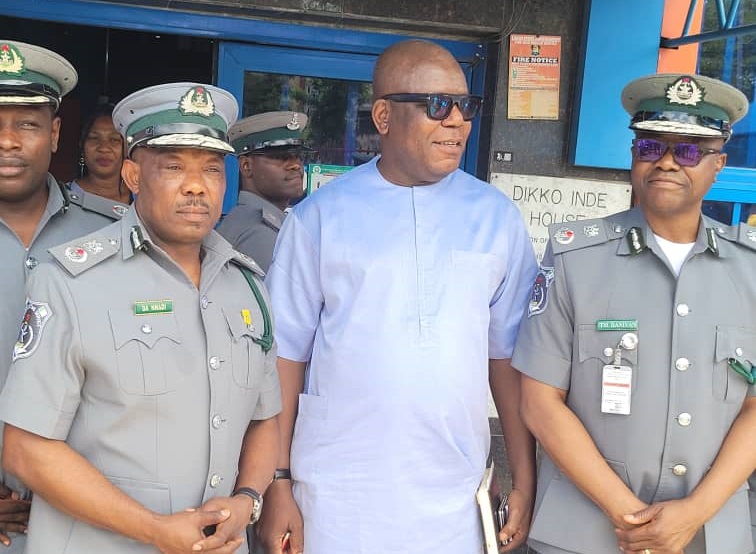
Customs Trains ANLCA Members, Others on B’Odogwu Portal

NPA’s Alleged Executive Management Fight: The Half Truth & Truth
ANLCA Board Election: Know Your Candidates
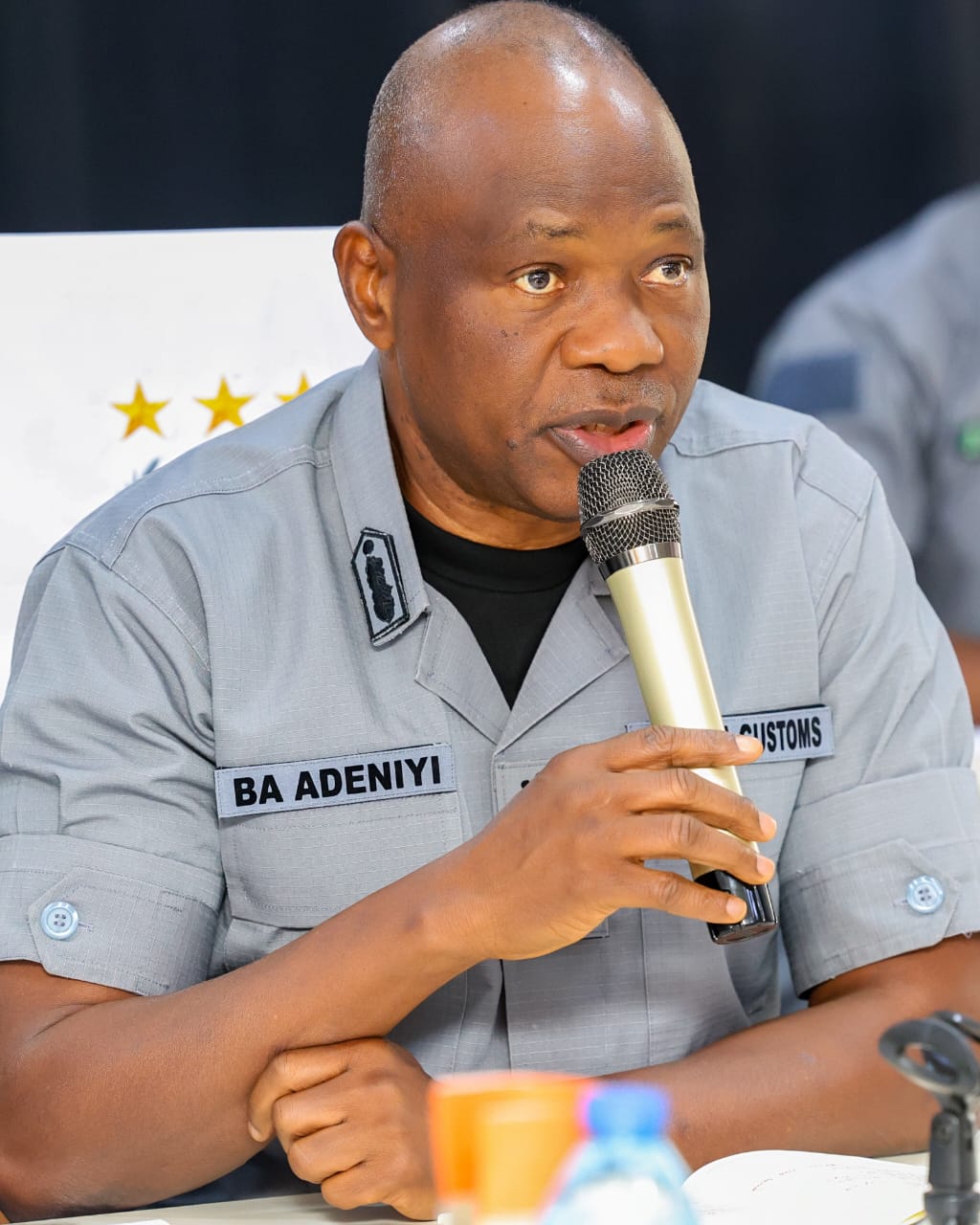
‘Why We Launched B-Odogwu Pilot Scheme With Webb Fontaine Still Running’ – Adeniyi

Onyemekara Promoted GM, Appointed NPA’s New Spokesperson

Nigeria Customs: Trust, Competence And The Oramalugo Factor

‘Rush To Break News Can Lead To Brush With Cybercrime’- Police

Kebbi Is Hub of Hard Drugs Smuggling In Northern Region’ – Oramalugo

‘Our Trade Security Is More Protected Under B’Odogwu’ – Daniyan