Business
Fibre Boats Alone Cannot Correct Nigeria’s Waterways Safety Crisis

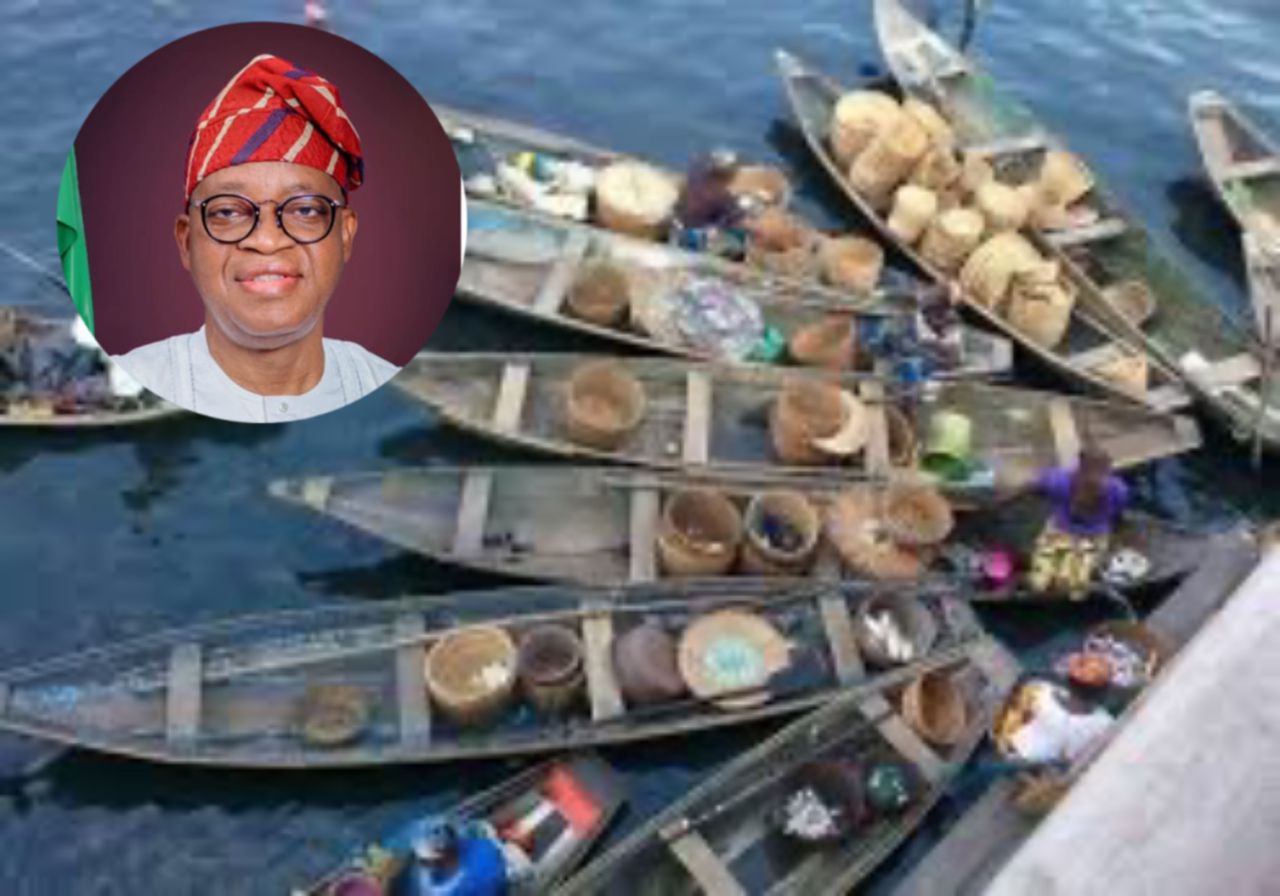
The Minister of Marine and Blue Economy, Dr. Adegboyega Oyetola recent directive to phase out wooden boats in favor of fibre (fiberglass) and aluminium craft has ignited debate across Nigeria’s maritime sector.
Framed as a safety intervention after recurring accidents, the policy aims to reduce fatalities by eliminating what officials describe as “failure prone” vessels. Yet, industry stakeholders and riverine communities warn that material substitution alone cannot resolve the systemic safety crisis.
In this special report, Eguono Odjegba provides a comprehensive overview of the issues at stake and why a holistic approach in achieving the desired result must be pursued with clarity of purpose.
Government’s Position: A Visible Step Toward Safer Waters
Officials argue that banning wooden boats is a pragmatic way to raise standards quickly. Fibre boats, often produced from molds with repeatable specifications, are easier to inspect and certify. Regulators believe this shift will align with existing inland waterways codes, in terms of lifejackets mandate, passenger limits, registration, and inspections, among others.
But so far, stakeholders and critics have highlighted a number of blind spots which includes small operators financing so that this bracket is forced out of business, transition plans for local boat builders, and consistent enforcement across Nigeria’s sprawling and often informal jetties.
Unions and Maritime Workers: Support with Caveats
Maritime unions, including the Maritime Workers Union of Nigeria (MWUN), cautiously support the ban. They see potential benefits in clearer rules, fewer adhoc repairs, and better survivability in capsizes if boats meet construction standards.
However, they stress that without certified skippers, standardized safety gear, and rigorous training, new hulls will not change outcomes. “A fibre boat without a trained operator is no safer than a wooden one,” one union representative noted.
Analysts and Riverine Communities: Material Is Not the Core Problem
Independent analysts and riverine residents counter that many wooden boats fail not because of their material, but because they are old, poorly maintained, or crudely built without standards. They argue that replacing “weak boats” with “sound boats”, regardless of material, would be more effective if accompanied by strict enforcement of safety basics.
Equity concerns also loom large. A sudden ban risks pushing small operators out of business unless financing, phased timelines, and local manufacturing support are provided.
Comparative Snapshot: Wood vs Fibre
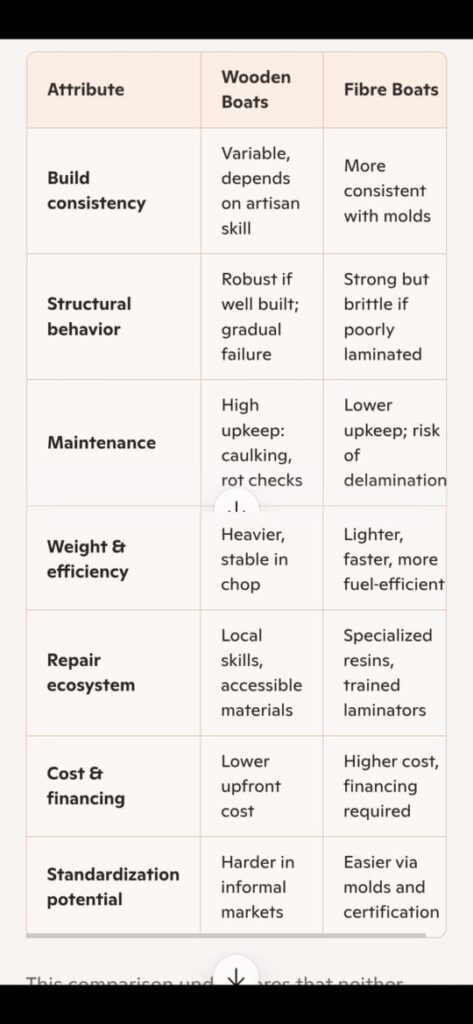
This comparison underscores that neither material is inherently unsafe. Both demand standards, inspections, and proper maintenance.
What’s Missing in the Debate
Data transparency: Accident reports rarely disaggregate causes such as weather, overloading, operator error, or hull failure. Without cause based data, material bans risk being symbolic.
Transition plan: Sadly and typically, the ministerial directive has no clear timelines, financing mechanisms, and certification pathways for builders and operators; as well as remains undefined.
Local industry strategy: Artisans who build wooden boats need support to upgrade craftsmanship or pivot into composite fabrication.
The Real Safety Hierarchy
Experts emphasize that safety outcomes depend less on hull material and more on the following:
Enforced passenger limits, mandatory lifejackets regime, certified skippers and crew drills, weather/no-go rules, regular inspections and flotation standards and functioning emergency response systems. Without these, switching from wood to fibre boats in order to attain safety is cosmetic.
Necessary Policy Options
If the ban proceeds there should be a phased transition over 12–24 months, financing schemes for operators, local manufacturing support, and buy back or retrofit programmmes for viable wooden hulls.
Focus must shift to standards. Dual compliance allowing both wooden and fibre boats that meet design and inspection codes, public compliance scorecards, and targeted enforcement of loading and night travel rules must prevail.
Conclusion
Hull material is secondary. Fibre boats may simplify standardization, but wooden boats can be safe when built and maintained to code. What will actually save lives is a culture of enforcement. This includes capacity limits, lifejackets, trained skippers, weather protocols, inspections, and emergency response.
Until we address these systemic gaps, fibre boats alone cannot correct the safety crisis on our waterways.










NPA Congratulates ANLCA on 72nd Anniversary, Reaffirms Support for Port Modernisation

Afeni Lands at FOU Zone ‘A’ in Acting Controller Capacity

NPA Mulls Specialised Fishing Port to Deepen Nigeria’s Blue Economy

Industry Stakeholders Applaud ANLCA at 72nd Anniversary Celebration

Port Regulation Critical To Fisheries, Blue Economy – NPERA DG, Akutah

ANLCA @ 72: FG, Stakeholders Laud Association’s Leading Role in Trade Facilitation

Apapa Customs: Comptroller Mu’azu Takes Over, Pledges Strict Revenue Integrity And Seamless Trade

Stakeholders Demand Immediate Action To Convert Nigeria’s $1 Trillion Blue Economy Potential Into Reality

Afeni’s Parting Query: Why Evade Duty on a ₦417m Range Rover?

ANLCA@72: As All Roads Lead to Marriott Hotel lkeja

MARCON Set To Host Conference On Sustainable Fishing In Lagos

Fire Incident: Western Marine Customs Debunk Media Exaggerations

ANLCA Board is intact, cannot be wished away by anybody’-Elochukwu

B-R-E-A-K-I-N-G: Effedua, Rector MAN Oron, Resigns

EFCC’s Probe: Okowa Plots Sheriff’s Removal Despite London Accord
Customs Trains ANLCA Members, Others on B’Odogwu Portal

NPA’s Alleged Executive Management Fight: The Half Truth & Truth
ANLCA Board Election: Know Your Candidates

‘Why We Launched B-Odogwu Pilot Scheme With Webb Fontaine Still Running’ – Adeniyi

Onyemekara Promoted GM, Appointed NPA’s New Spokesperson

Nigeria Customs: Trust, Competence And The Oramalugo Factor

‘Rush To Break News Can Lead To Brush With Cybercrime’- Police

Kebbi Is Hub of Hard Drugs Smuggling In Northern Region’ – Oramalugo

Apapa Customs Collects ₦161b On B’Odogwu Platform In 3 Weeks