
National
Beyond Ethnic Rhetoric: Why Surveillance Contracts Are a National Imperative


BY EGUONO ODJEGBA
In recent times, a few voices have attempted to reduce the critical issue of oil and gas asset protection in the Niger Delta to petty ethnic squabbles. Fejiro Oliver and Zik Gbemre, in their serial commentaries, have sought to portray surveillance contracts as instruments of ethnic domination, painting a picture of exclusion and conspiracy. Their narratives, however, are misleading, divisive, and unhelpful to the broader national conversation.
For the discerning minds, perhaps, these twisting and deliberate distortions and misrepresentations of facts can only be attributed to the hunger for want of better things. I am not aware that there was ever an authorized Urhobo Summit in which this matter was discussed, and an agenda to pursue a cause for the Urhobo oil surveillance contract was agreed upon.
Therefore, those leading these warped protests represent their own stomachs and inclinations, and are inimical to the collective wellbeing of the Urhobo/Isoko people, and indeed, the entire peoples of Delta State.
Surveillance Contracts Are About National Security, Not Ethnic Patronage
The protection of oil and gas installations is not a political bazaar or a tool for ethnic appeasement. These contracts are designed to safeguard national assets that contribute significantly to Nigeria’s GDP. Pipelines, terminals, and offshore facilities are the lifeblood of our economy. Their security is a matter of national survival, not ethnic entitlement. To frame them as “Ijaw contracts” or “Itsekiri contracts” is to trivialize a national assignment of immense importance.
The Danger of Ethnic Narrowing
By constantly invoking Urhobo, Ijaw, and Itsekiri rivalries, Fejiro and Gbemre drag proud ethnic identities into needless mudslinging. This primitive narrowing of a national project is disgraceful. It ignores the fact that oil and gas installations cut across multiple ethnic territories, and their protection requires collaboration, professionalism, and efficiency, not ethnic quotas. If their logic were to be followed, every ethnic group would demand its own contract, leading to chaos and inefficiency.
Balance and Equity in Delta Politics
It is ironic that those who cry foul over surveillance contracts ignore the political balance that has existed in Delta State. Urhobo, Anioma, and Itsekiri have all taken turns at the Osadebe Government House in Asaba, while the Ijaws have played second fiddle. If equity is the principle, then it must be applied consistently, not selectively when it suits an argument. The state and its resources belong to all: Urhobo, Isoko, Anioma, Itsekiri, and Ijaw. Our collective responsibility is to promote harmony, not division.
The Real Target
It is evident that the real target of these tirades is Chief Government Oweizide Ekpemupolo, popularly knowns as Tompolo and his company, Tantita. Yet, in their bid to discredit him, they drag other contractors and ethnic groups like the Olu of Warri, Ogiame Atuwase 111 into the fray. This is unfair and unnecessary. Surveillance contracts awarded to Tantita, Ocean Marine Solutions, Maton Engineering, and Pipeline Infrastructure Limited are not about ethnic favoritism but about proven capacity to deliver results. The Federal Government and NNPCL must prioritize competence and track record over ethnic sentiments.
Addressing Gbemre’s Shallow Intercourse
Gbemre goes further to accuse Urhobo elites and politicians of “worshipping Tompolo and his boys” and claims they have lost self worth because of surveillance contracts. He even attempts to reduce Tompolo’s legacy to militancy, invoking Henry Okah and MEND. This is a distortion of history and a dangerous oversimplification. The reality is that Tompolo, like many former agitators, transitioned from responsible militancy to constructive engagement with the state. His company, Tantita, has been recognized for delivering results in curbing oil theft and pipeline vandalism. To dismiss this transformation as mere “violence” is to ignore the broader peace process that stabilized the Niger Delta and allowed Nigeria’s oil production to recover.
As for Urhobo elites, traditional rulers, and politicians, it is unfair to suggest they have “lost self worth” simply because they engage with contractors. Leadership is about negotiation, balance, and ensuring that communities benefit from national programs. Demonizing them for engaging with established contractors is not only disrespectful but also counterproductive.
A Call for Constructive Engagement
Rather than peddling misinformation and whipping up ethnic emotions, genuine activists should focus on constructive engagement. If Urhobo contractors have capacity, they should demonstrate it and bid competitively. If there are transparency concerns, let us demand clarity from NNPCL on contract scopes and performance metrics. But to reduce everything to “Ijaw versus Urhobo” or “Itsekiri versus Urhobo” is petty and counterproductive.
Conclusion
Nigeria’s oil and gas assets are national treasures. Their protection is a matter of national interest, not ethnic rivalry. We must rise above divisive rhetoric and embrace balance, equity, and harmonious coexistence. The Niger Delta deserves peace, development, and prosperity: not endless quarrels over who gets what contract. Let us reject narrow and misleading narratives and focus on building a stronger, united Delta within a prosperous Nigeria.







Nigeria’s Ports: How Foreign Capital Took the Dinner, While Indigenous Businesses Got the Crumbs (2)

Former Senatorial Candidate, Hajia Nike AbdulRahman Dumps NDC, Defects to APC

Nigeria’s Ports: How Foreign Capital Took the Dinner, While Indigenous Businesses Got the Crumbs

How Anani’s Tin Can Command Intercepted a ₦3.6 Billion Illicit Drug Shipment

Ibrahim, Ogun 1 Customs New Sheriff Unveils Strength Beneath His Quiet Mien

Logistics Synergy: NPA Advances Integration of ICDs Under New Reform Agenda

Teamwork, Discipline, Central to Our Enforcement Mandate —Jonah Charges Customs Marine Operatives

How the UAE-Nigeria Partnership Can Transform Our Ports

Cross River, FTZ Customs Gets New Impulse

CGC Adeniyi Signs Anti-Corruption Documents, Activates ICRAM Steering Committee

Nigeria Customs Marks Breast Cancer Awareness Month in Abuja

NIMASA To Host Webinars on Automation of Nigerian Ship Registry
ANLCA Board is intact, cannot be wished away by anybody’-Elochukwu

B-R-E-A-K-I-N-G: Effedua, Rector MAN Oron, Resigns

EFCC’s Probe: Okowa Plots Sheriff’s Removal Despite London Accord
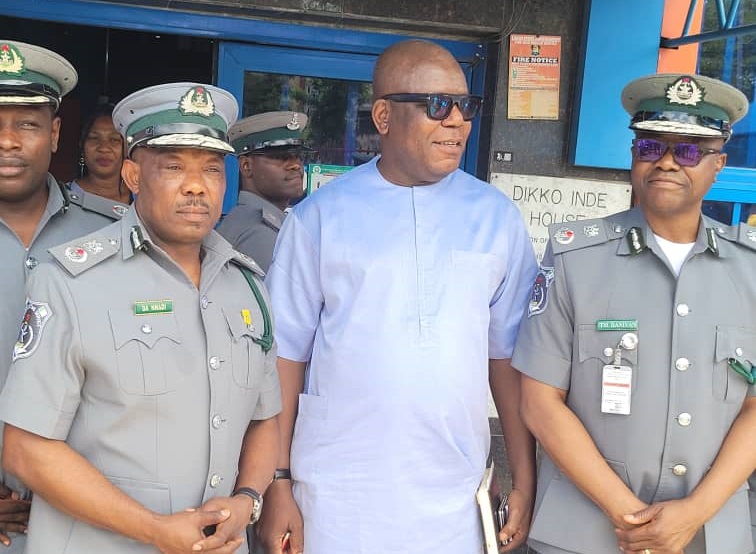
Customs Trains ANLCA Members, Others on B’Odogwu Portal

NPA’s Alleged Executive Management Fight: The Half Truth & Truth
ANLCA Board Election: Know Your Candidates
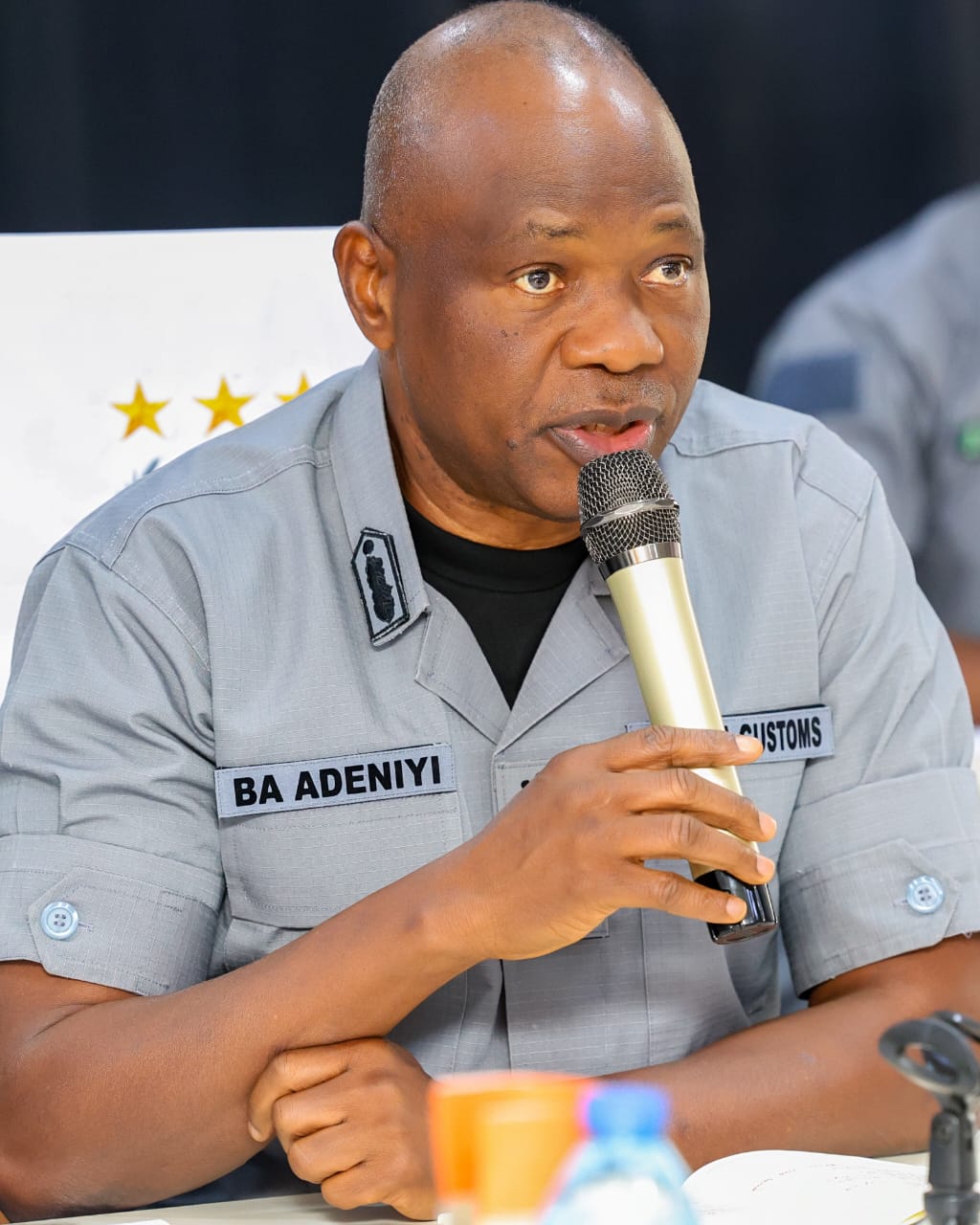
‘Why We Launched B-Odogwu Pilot Scheme With Webb Fontaine Still Running’ – Adeniyi

Onyemekara Promoted GM, Appointed NPA’s New Spokesperson

Nigeria Customs: Trust, Competence And The Oramalugo Factor

‘Rush To Break News Can Lead To Brush With Cybercrime’- Police

Kebbi Is Hub of Hard Drugs Smuggling In Northern Region’ – Oramalugo

Apapa Customs Collects ₦161b On B’Odogwu Platform In 3 Weeks