
Business Focus
Dangote Refinery: The Dawn of Liberating Truth

BY EGUONO ODJEGBA
For years, the Dangote Refinery has been the subject of speculation, misconceptions, and outright misinformation. But last Tuesday, select industry journalists were taken on an extensive tour of the sprawling facility in Ibeju-Lekki, Lagos.
The encounter revealed a state-of-the-art industrial hub that is not only reshaping Nigeria’s energy landscape but also setting new benchmarks in global fuel standards. Perhaps, Nigerians cannot appreciate enough, the vision of Alhaji Aliko Dangote, the man who dared to dream the possibility of the Dangote Refinery; which has become a monument of industrial engineering and economic marvel.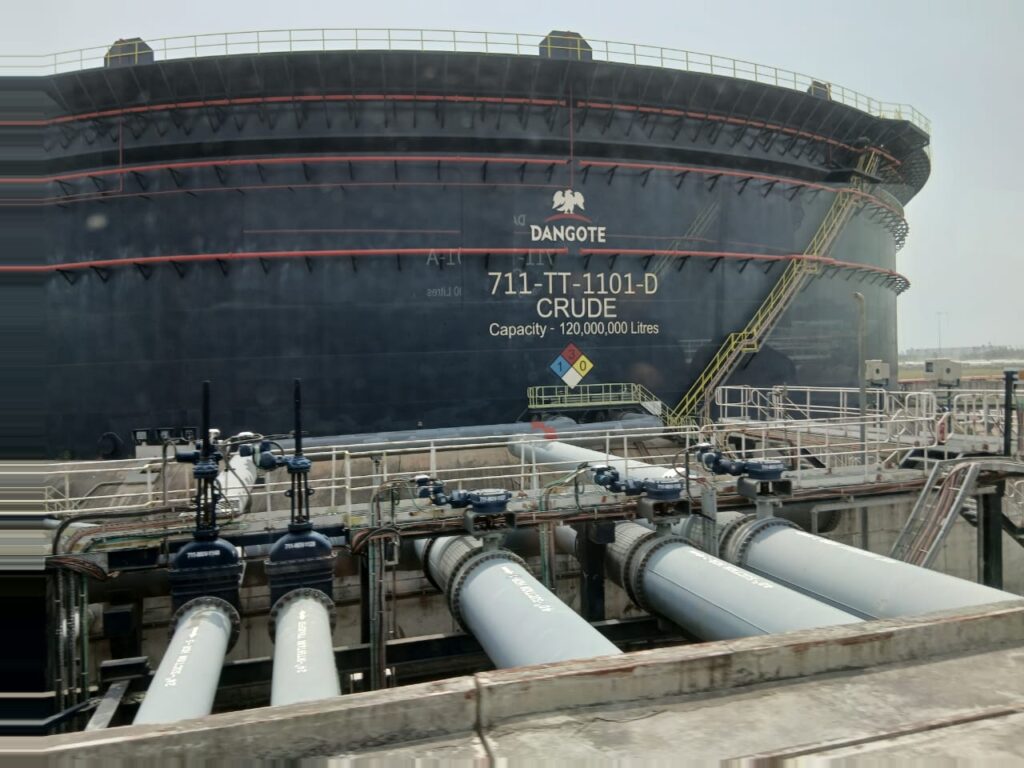
The refinery complex, built on a land once considered an unyielding swamp, now stands as a breathtaking industrial city. From the Loading and Export Terminal to the Dangote Port, Fertilizer Plant, Crude Refinery, Power Plant, distribution pipelines, turbines, laboratories, and control rooms, the facility presents a seamless web of interconnected operations.
Guided by a team of engineers, journalists observed spotless laboratories manned by Nigerian and expatriate professionals, all working within a highly automated system that minimizes human interference. The absence of loitering underscored the refinery’s digital backbone, where safety protocols and operational precision are embedded into every process.
The tour dismantled long-held doubts about the refinery’s viability. What was once dismissed as an ambitious gamble now radiates as a masterpiece of engineering and a beacon of national economic renewal.
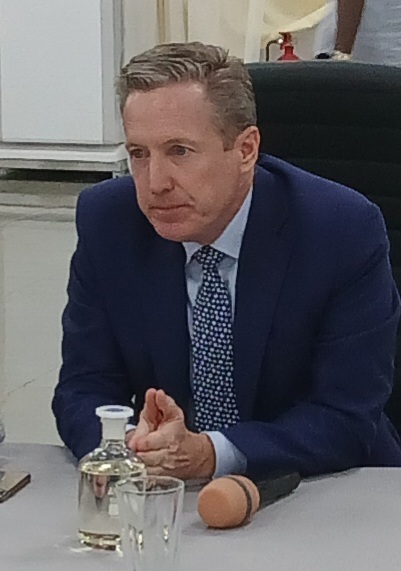
Speaking after the tour, David Bird, Managing Director and Chief Executive Officer of Dangote Petroleum Refinery & Petrochemicals, addressed lingering questions about the refinery’s operations and product quality.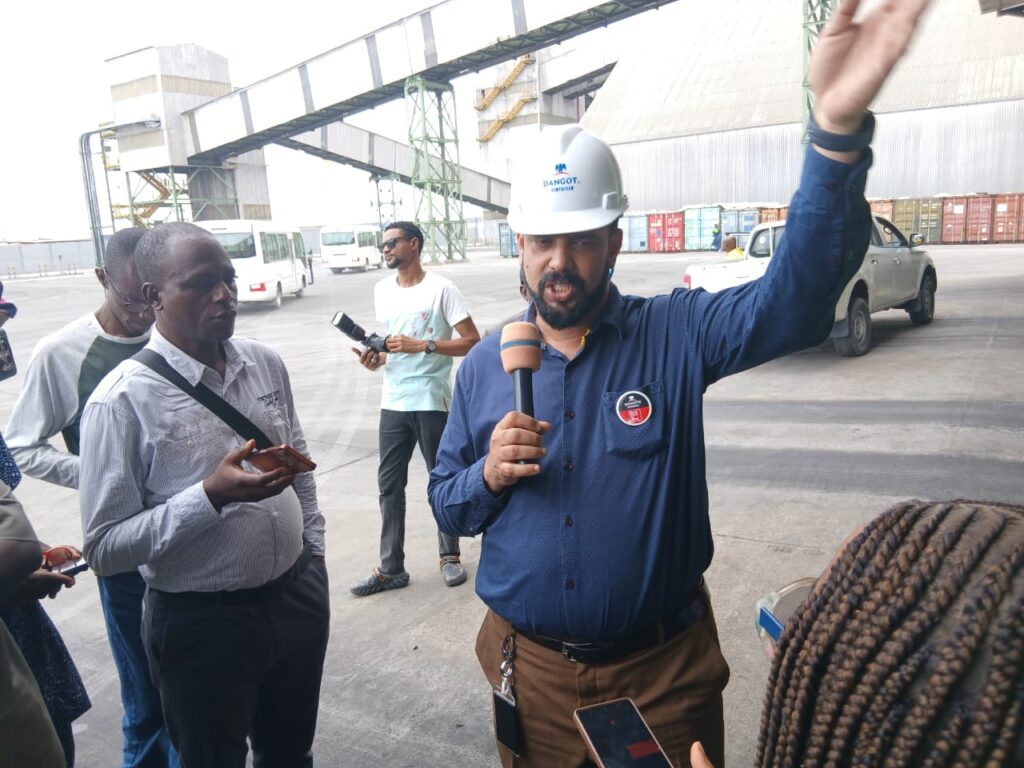
Bird emphasized that the refinery is producing Euro 5 standard fuels, a globally recognized benchmark designed to reduce harmful emissions and protect public health.
“Fuel specifications have evolved over time in response to public health requirements,” Bird explained. “Euro 5 is not about imposing costs on industry. It is about safeguarding health and ensuring cleaner air. The reduction of sulphur in fuels has significantly reduced problems such as acid rain and harmful emissions.”
According to him, the refinery’s petrol contains 50 parts per million (ppm) sulphur, aligning Nigeria with advanced markets in Europe. He noted that while many West African countries still operate under outdated fuel standards, Nigerians are now benefiting from cleaner, low-sulphur, metal-free petrol.
Continuing, Bird said: “This is something many Europeans take for granted. It should not be considered a luxury. If industry can deliver the highest standards, then consumers have the right to benefit from them. Our ambition is to extend the reach of high-quality fuels across the continent.”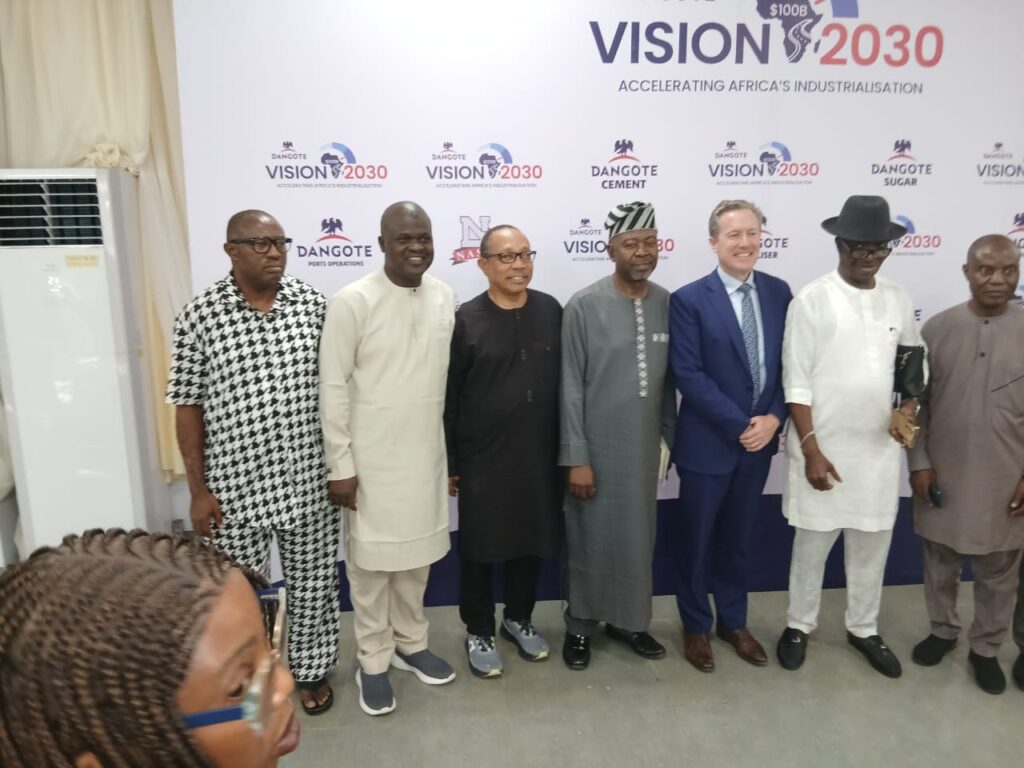
Beyond fuel quality, Bird highlighted the refinery’s engineering depth and operational resilience. Following scheduled maintenance and optimization, the refinery has reached its full nameplate capacity of 650,000 barrels per day, making it the largest single-train refinery in the world.
“Our teams have demonstrated exceptional precision and expertise in stabilizing both the Crude Distillation Unit and the Motor Spirit Block. This milestone underscores the strength, reliability, and engineering quality that define our operations. We remain committed to producing high-quality refined products that will transform Nigeria’s energy landscape, eliminate import dependence, and position the nation as a net exporter of petroleum products”, he declared.
The refinery Bird further explained, underscored its growing contribution to Nigeria’s domestic fuel supply. He pointed out that during the recent festive period, it supplied between 45 million and 50 million litres of Premium Motor Spirit (PMS) daily to the market. With the CDU and MS Block now fully restored and optimized, the Bird says it is positioned to deliver up to 75 million litres of PMS daily, a volume that could significantly reshape domestic supply dynamics and reduce pressure on imports.
The announcement comes amid sustained national focus on energy security, foreign exchange conservation, and the push to end Nigeria’s long-standing dependence on imported refined petroleum products despite being a major crude oil producer.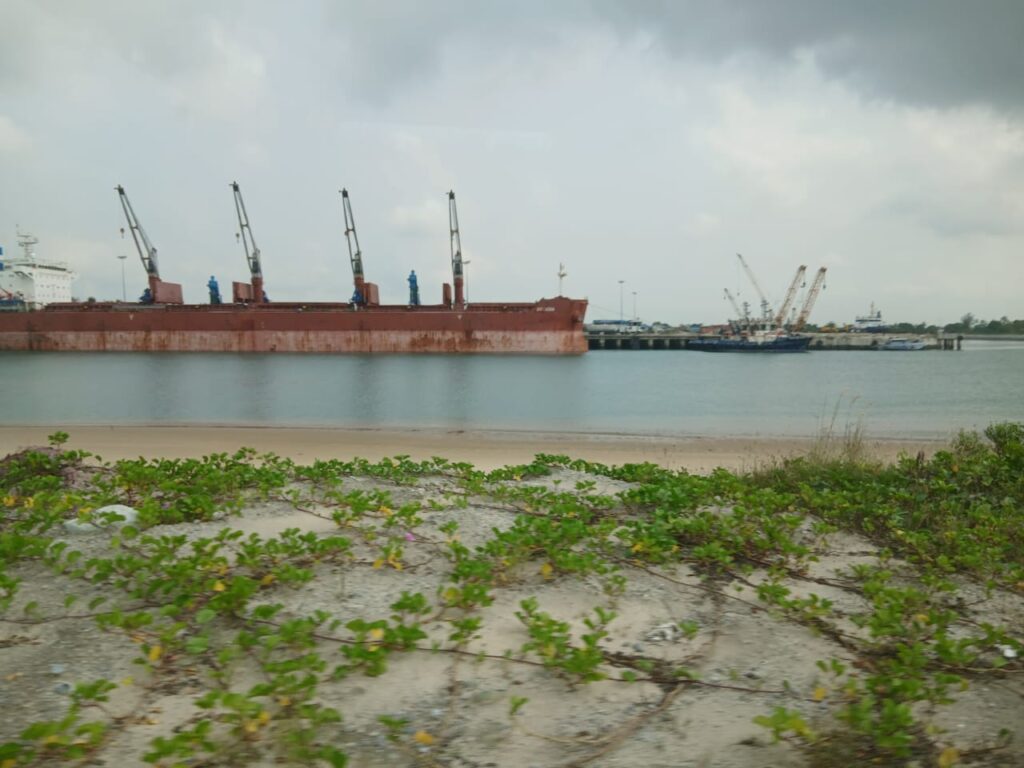
The CEO expressed appreciation to customers and Nigerians, reiterating the company’s commitment to enhancing energy security, supporting industrial development, employment generation, and economic diversification. Looking ahead, Bird explained that Dangote Refinery is planning to double its capacity to 1.4 million barrels per day within the next three years, a move that would cement its role as a continental energy powerhouse.
The facility tour has effectively dismantled malicious rumours and distortions that once clouded public perception of the refinery. Pinnacle Time believes that what journalists witnessed was not a mirage but a tangible industrial revolution in motion. It was a facility tour that may have effectively brought to an end, the sad rumours of personal interests that were purportedly Aliko Dangote’s sole interest.
With the truth now evident, the Dangote Refinery stands as more than a business venture. It is a national asset, a testament to Aliko Dangote’s vision, and a liberating force for Nigeria’s economy.

US Coast Guard, Nigeria and the Politics of a Maritime Victory

Wasiu, Seme ANLCA Chairman Calls for Review of Vehicle Restriction

Seme-Krake: Nigeria, Benin Launch Joint Assessment to Revive One-Stop Border Post

Unity Schools Crisis: Ministry Must Lead With Dialogue, Not Directives

‘Vehicle Ban Through Seme Border Will Be Lifted, If…’ — Adeniyi

Oyetola’s Strategic Investment Moves Reaches Copenhagen

Recruitment 2025/26: Customs Begins Final Phase Screening, Tasks Candidates on Discipline

Apapa Customs Intercepts N43.59bn Worth Offensive Cargo

Badagry Port: Infrastructure Vision or Election-Season Bargaining Chip?

SON, NAFDAC: Unofficial Toll Gates of Nation’s Seaports?
NIMASA Moves To Overhaul 32-Year-Old Seafarer Training Curriculum

NCS at 65: The Quiet Restructuring Behind Customs’ ₦11.07trn Revenue Ambition
ANLCA Board is intact, cannot be wished away by anybody’-Elochukwu

B-R-E-A-K-I-N-G: Effedua, Rector MAN Oron, Resigns

EFCC’s Probe: Okowa Plots Sheriff’s Removal Despite London Accord
Customs Trains ANLCA Members, Others on B’Odogwu Portal

NPA’s Alleged Executive Management Fight: The Half Truth & Truth
ANLCA Board Election: Know Your Candidates
‘Why We Launched B-Odogwu Pilot Scheme With Webb Fontaine Still Running’ – Adeniyi

Onyemekara Promoted GM, Appointed NPA’s New Spokesperson

Nigeria Customs: Trust, Competence And The Oramalugo Factor

‘Rush To Break News Can Lead To Brush With Cybercrime’- Police

Kebbi Is Hub of Hard Drugs Smuggling In Northern Region’ – Oramalugo

‘Our Trade Security Is More Protected Under B’Odogwu’ – Daniyan