Customs Report
A Peep at Onyeka’s Stewardship and the New Customs Doctrine

BY FUNMI ALUKO
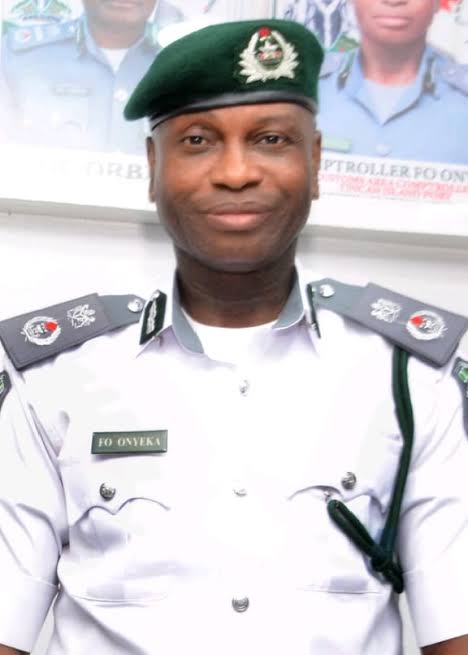
The Tin Can Island Port Command has emerged as a defining symbol of reform within the Nigeria Customs Service (NCS), and at the heart of this transformation is Comptroller Frank Onyeka. His leadership has not only reshaped the operational character of the Command but has also set a new benchmark for customs administration nationwide.
For much of 2024 ending upwards, Onyeka’s stewardship was defined by a relentless pursuit of compliance, trade facilitation, and revenue protection. He tightened the screws on questionable Transire practices, blocked leakages that had long undermined fiscal discipline, and ensured maximum revenue collection. His insistence on integrity in cargo clearance processes won the confidence of stakeholders, while his strategic engagements created a climate of cooperation between Customs and the trading community.
Yet, as the calendar turned to 2025, Onyeka’s leadership began to take on a broader dimension. Tin Can Island Port Command recorded a historic revenue haul of ₦1.45 trillion, with ₦135 billion generated in November alone. This was not merely a statistical triumph; it was a statement of capacity, discipline, and vision. It demonstrated that Customs could be both a facilitator of trade and a guardian of national revenue, without compromise.
The Command also faced a critical test in the transition from NICIS II to the new B’Odogwu software platform. System changes often come with disruption, but Onyeka’s team managed the shift with remarkable resilience. Cargo clearance continued, revenue collection remained steady, and the Command adapted to digital modernization with minimal turbulence. In this, Onyeka showed that leadership is not only about enforcing rules but also about guiding institutions through change.
Equally striking has been his emphasis on enforcement. Smuggling and economic sabotage remain persistent threats to Nigeria’s economy, and Onyeka has sharpened the Command’s response. His operational doctrine now integrates revenue generation, trade facilitation, and national security into a unified framework. This holistic approach has elevated Tin Can Island from a revenue hub to a strategic pillar of Nigeria’s economic protection.
Recognition has followed. Onyeka’s stewardship has earned national honours, and his Command is increasingly seen as a model for customs excellence. His balanced style, firm yet facilitative, disciplined yet collaborative has become a reference point for other Commands across the Service.
As the Nigeria Customs Service pursues its 2026 agenda, Tin Can Island Port Command under Onyeka stands as proof that reform is possible, that discipline yields results, and that leadership can transform institutions. The story of Tin Can Island is no longer just about cargo and clearance; it is about resilience, modernization, and the redefinition of customs operations in Nigeria.
In the unfolding narrative of Nigeria’s trade and fiscal management, Onyeka has carved a chapter that will be remembered not only for record-breaking revenue but for the creation of a new customs doctrine, one that blends compliance with innovation, enforcement with facilitation, and national duty with global trade realities.







Godfrey Bivbere Decorated Best Maritime Reporter of the Year

Clearing Agents Protests Police Continued Disruption of Activities

Customs Auctions Seized Petrol Worth ₦14.8 Million

Jonathan, George, Alaibe, Gwandu, Diri Others Speak On Efficient Modern Ports System

Deleting the Gatekeepers: How Dantsoho is Coding-Out Corruption at Nigeria’s Ports

President Tinubu Government Sensitive To Community Development – Okonna, MAN Rector

Apapa Area Command: Investing in People, Building a Future of Integrity

IWD 2026: CGC Adeniyi Hosts Surprise Appreciation Event for NCS Women

Dantsoho Speaks On Upgrade of Eastern Ports, Export Expansion Programme

All Roads Leads To Oriental Hotel For MML Workshop

The ‘License to Lie: How Nigeria’s New Electoral Act Shields the Forger

The Long Journey To Securing Nigerian Ports’ Repairs Loan (3)
ANLCA Board is intact, cannot be wished away by anybody’-Elochukwu

B-R-E-A-K-I-N-G: Effedua, Rector MAN Oron, Resigns

EFCC’s Probe: Okowa Plots Sheriff’s Removal Despite London Accord
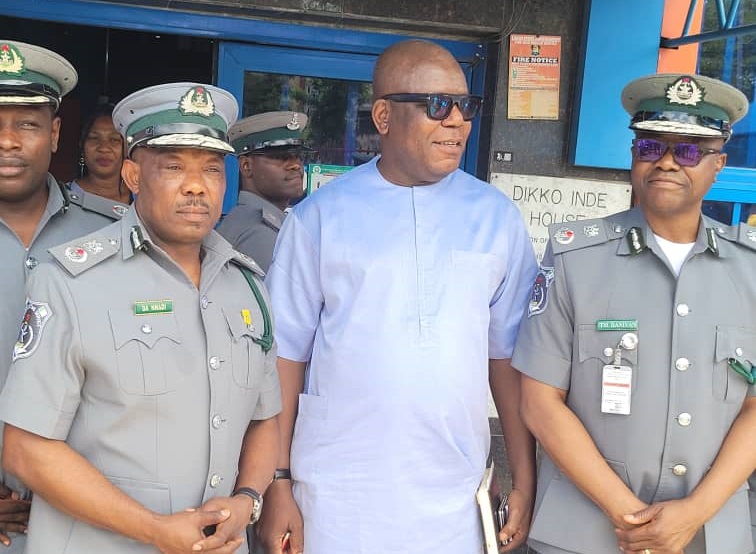
Customs Trains ANLCA Members, Others on B’Odogwu Portal

NPA’s Alleged Executive Management Fight: The Half Truth & Truth
ANLCA Board Election: Know Your Candidates
‘Why We Launched B-Odogwu Pilot Scheme With Webb Fontaine Still Running’ – Adeniyi

Onyemekara Promoted GM, Appointed NPA’s New Spokesperson

Nigeria Customs: Trust, Competence And The Oramalugo Factor

‘Rush To Break News Can Lead To Brush With Cybercrime’- Police

Kebbi Is Hub of Hard Drugs Smuggling In Northern Region’ – Oramalugo

Maritime Industry At 64: Oyetola Versus Oyetola