
Analysis
Attacks on Customs: Need to Recalibrate the Laws of Repercussion


BY GBOGBOWA GBOWA
Preamble
The Nigeria Customs Service (NCS), Ogun I Area Command, weekend lamented loudly about yet another violent assault on its officers barely one week after a similar attack by suspected smugglers at Akokoro area of Iwoye, Imeko-Afon Local Government Area of the state.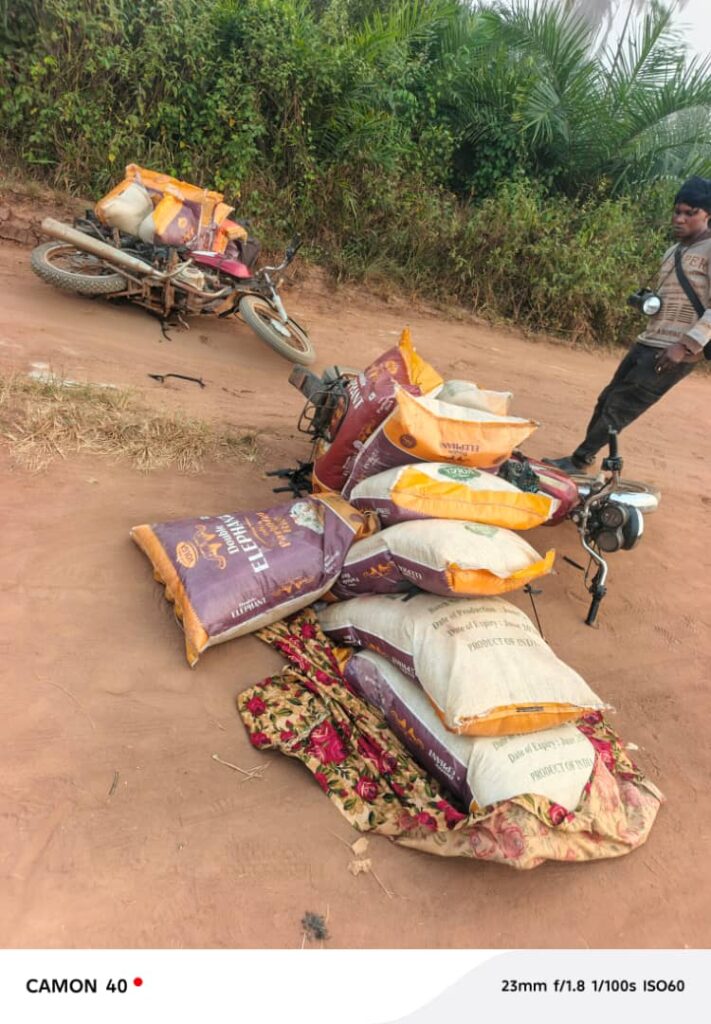
The Customs Area Controller, Deputy Comptroller Olukayode Afeni, disclosed that two of his officers sustained life-threatening injuries and are still receiving medical care. Speaking through the Command Public Relations Officer, Deputy Superintendent of Customs Zakari Chado, the Ogin 1 customs boss condemned and described the attack as barbaric and an assault on the rule of law.
He reaffirmed that such resistance will not deter the Command or the Service from carrying out its statutory mandate, warning that those involved will be identified and brought to justice, while assuring law-abiding members of the public of the Command’s unwavering commitment to their safety and the enforcement of the Nigeria Customs Service Act, 2023.
The latest incident, Afeni said occurred at about 0600 hours on Saturday, 31 January 2026, when officers of the Command, on a routine anti-smuggling patrol along a bush path at Alapoti in Ado-Odo/Ota Local Government Area of Ogun State, intercepted a convoy of motorcycles conveying smuggled foreign parboiled rice. According to him, a total of forty-six (46) bags of 50kg foreign parboiled rice were seized and evacuated into an official patrol vehicle as the team exited the location.
But while withdrawing from the scene, the officers were suddenly ambushed by a large mob, in a coordinated attempt to overwhelm the patrol team and recover the seized items. Afeni said the officers maintained composure and successfully repelled the attack after an intense exchange that lasted about thirty minutes.
During the confrontation, one of the assailants got injured and succumbed to his injuries, while a suspect who claimed ownership of the seized rice was apprehended and is currently undergoing investigation.
Assessment
The recent spate of violent attacks on officers of the Nigeria Customs Service (NCS), Ogun I Area Command, has proven to be more than a law enforcement challenge, and must be treated as a national security crisis. Twice in one week, operatives carrying out their statutory duty of intercepting contraband were ambushed by mobs, reportedly armed with dane guns, stones, bottles, and charms. These are not random skirmishes; they are organized assaults designed to intimidate the state and embolden criminal networks.
This disturbing trend demands urgent reflection: Are our current legal instruments strong enough to deter such brazen defiance of lawful authority? The answer, regrettably, is no.
The Limits of Current Enforcement
Smuggling has long been a thorn in Nigeria’s economic fabric, draining revenue, undermining local industries, and fueling insecurity. Yet what is unfolding in Ogun State is a dangerous escalation, where smugglers and their sympathizers are no longer content with evading detection; but now openly confront and attack officers of the law.
The fact that these attacks occur repeatedly, with little fear of consequence, reveals a troubling weakness in our legal deterrence. There are concerns that penalties for smuggling and violent resistance remain inadequate, allowing offenders to calculate that the rewards of smuggling outweigh the risks of punishment.
Why Stronger Legal Instruments Are Urgent
Considering that the recent ldiroko attacks merely replicate certain past incidences, perhaps, the time has come for the federal government to undertake a review of the essential laws strong enough to serve as deterrence through stiffer penalties and sentencing.
Violent resistance against law enforcement must be treated as a grave offense, with mandatory custodial sentences. Anything less emboldens criminal elements to continue testing the resolve of the state.
Swift Justice Through Specialized Courts
Smuggling-related offenses should not languish in the slow grind of the general judicial system. Fast-track courts dedicated to economic and border crimes would ensure that offenders are tried and convicted without delay, sending a clear message that justice is swift and uncompromising.
Economic Disruption Through Asset Forfeiture
Smuggling thrives on profit. To dismantle these networks, laws must empower authorities to seize not only contraband but also vehicles, warehouses, and financial assets linked to smuggling. When crime ceases to be profitable, it also ceases to be attractive.
Community Accountability
The scale of these ambushes suggests community complicity. Legal frameworks should hold communities accountable where organized resistance is proven, through fines or withdrawal of government support. Smuggling must be delegitimized as an economic lifeline and exposed as a collective liability.
Inter-Agency Collaboration Codified in Law
Customs officers cannot stand alone against armed mobs. Laws must mandate seamless collaboration between Customs, Police, and other security agencies, ensuring rapid response when officers come under attack.
A Call to Policymakers
Nigeria cannot afford to treat these attacks as isolated incidents. They are symptoms of a deeper malaise: the erosion of respect for lawful authority. If smugglers and their sympathizers believe they can defy the state with impunity, then the very foundation of governance is at risk.
Policymakers must act decisively. As things stand, legislative reform is no longer an option, it is imperative. The National Assembly should move swiftly to review and strengthen the Nigeria Customs Service Act, 2023, and related statutes, embedding provisions that make violent resistance against enforcement officers a crime with severe, non-negotiable consequences.
A Call to the Public
The public, too, must recognize that smuggling is not a victimless crime. It robs the nation of revenue, undermines local farmers and manufacturers, and fuels insecurity. Communities that shield smugglers are complicit in weakening the nation’s economy and endangering its future. Law-abiding citizens must stand with enforcement agencies, not against them. The rule of law is only as strong as the collective will to uphold it.
Conversely, the management of the NCS should ensure that its officers and men do not engage in prior backyard, monkey businesses of any sort that could jeopardize the integrity of full scale enforcement at any point, away from the border, entry points.
Conclusion

One of the command operatives who escaped with bullet wounds
The Ogun I Command has shown resilience in the face of repeated attacks, but resilience alone is not enough. Nigeria must recalibrate its anti-smuggling strategy with robust legal instruments that make violent resistance unthinkable. Smugglers and their sympathizers must be made to understand that defiance of lawful authority carries consequences so severe that compliance becomes the only rational choice.
The time for half-measures is over. The law must be sharpened, strengthened, and enforced with unwavering resolve. Anything less is an invitation to chaos.












Port Efficiency: NCS, PEBEC Launch Strategic Reform Initiatives

Barge Operators Push for Fairer Regulations in Nigeria’s Port Logistics

SEREC Congratulates Prince Olayiwola Shittu on UN-POLAC Appointment

The $1.1 Billion Anchor: Why We Cannot Abandon Our Gateway Ports – The CVFF and the New Shipping Line (Part 2)

NASS Rules ‘Tantita Providing Critical National Assignment’

ANLCA vs Nigeria Police Force: MMAC Secretariat Crisis Deepens

Nigeria’s $748m UK Port Infrastructure Loan: Many Questions Begging for Answer

President Tinubu’s Borrowing Binge Amid Rising Revenues and Elite Excesses
Prince Olayiwola Shittu: A Glimpse Into His ‘International Peace Advocate’ Appointment

NRS, Customs, PEBEC Visit NSW Office Apapa

Customs Boss Adeniyi Announces Relocation of FOU Zone ‘A’ Office

The $1.1 Billion Anchor: Why We Cannot Abandon Our Gateway Ports –

ANLCA Board is intact, cannot be wished away by anybody’-Elochukwu

B-R-E-A-K-I-N-G: Effedua, Rector MAN Oron, Resigns

EFCC’s Probe: Okowa Plots Sheriff’s Removal Despite London Accord

Customs Trains ANLCA Members, Others on B’Odogwu Portal

NPA’s Alleged Executive Management Fight: The Half Truth & Truth

ANLCA Board Election: Know Your Candidates

‘Why We Launched B-Odogwu Pilot Scheme With Webb Fontaine Still Running’ – Adeniyi

Nigeria Customs: Trust, Competence And The Oramalugo Factor

Onyemekara Promoted GM, Appointed NPA’s New Spokesperson

‘Rush To Break News Can Lead To Brush With Cybercrime’- Police

Kebbi Is Hub of Hard Drugs Smuggling In Northern Region’ – Oramalugo

Maritime Industry At 64: Oyetola Versus Oyetola