
Business Focus
Border Reopening: Nigeria Bets Big on Tsamiya


BY EGUONO ODJEGBA
If there was any business development in the past seventy two hours worth an urgent review that is based on its criticality to our nation’s overall interest, it must be the reopening of the Tsamiya border. The reopening of the Tsamiya Corridor in Kebbi State last weekend was more than a ceremonial ribbon-cutting. It was a calculated political and economic statement by the Federal Government and the Nigeria Customs Service (NCS), signaling a renewed attempt to balance the delicate equation of national security and legitimate trade.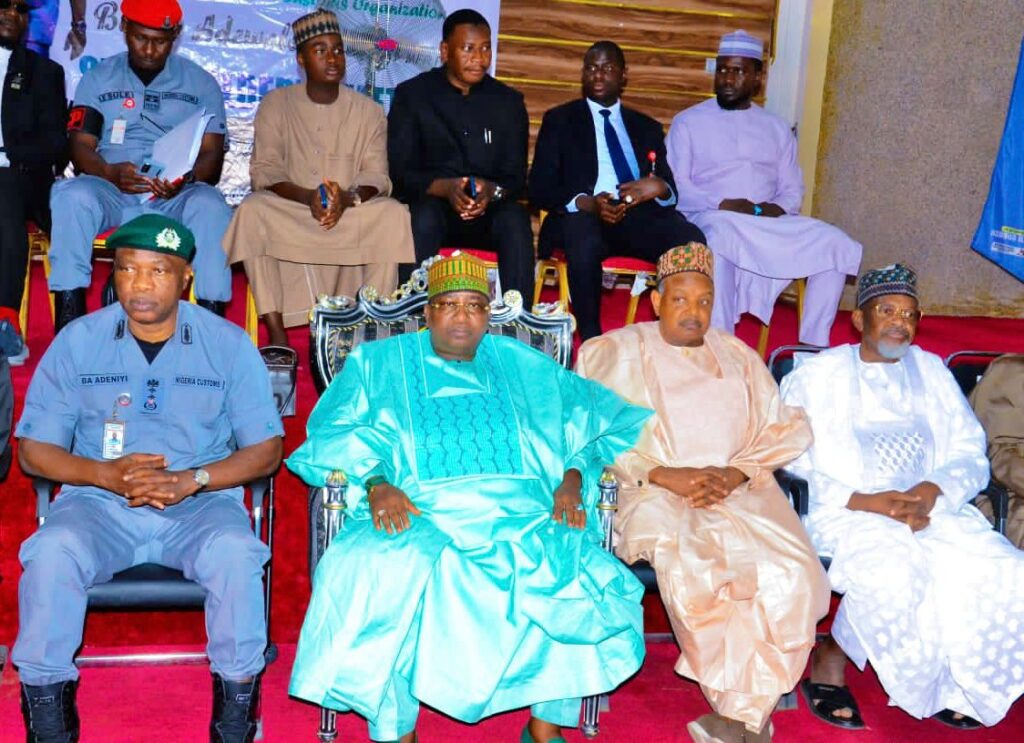
A Corridor with a Checkered Past
The Tsamiya border route, once notorious for illicit inflows of contraband and questionable goods, had been shut down for years as part of Nigeria’s broader clampdown on porous orders; nationwide. This reopening, therefore, is not just about trade facilitation but about reclaiming control over a space long associated with shadow economies with positive expectations.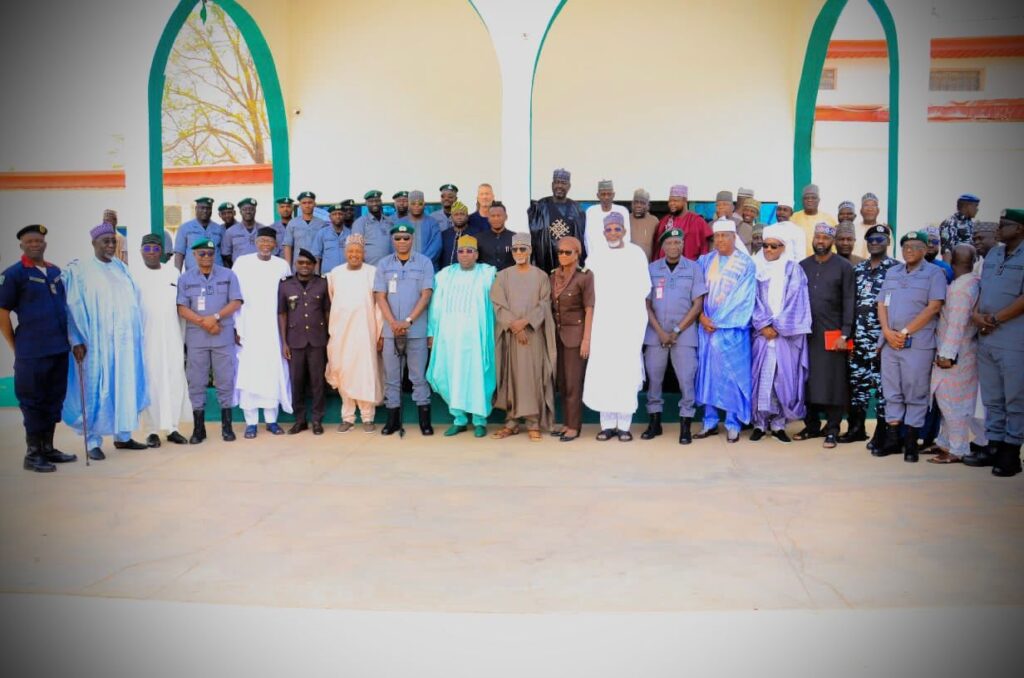
The presence of the state political actors including retired Customs chiefs like ACG M. B. Jibo Rtd alongside political heavyweights such as former House of Representatives member and 2027nsenatorial aspirant, Dr. Hassan Kangiwa, underscored the symbolic weight of the event. It was a reminder that this corridor has been central to Nigeria’s border governance struggles for decades.
Customs’ New Doctrine: Collaboration and Technology
Comptroller General Adewale Adeniyi’s remarks captured the essence of the new approach: criminal networks thrive on cooperation, and so must state institutions. His emphasis on inter-agency synergy, cross-border collaboration with Niger and Benin, and ICT-driven monitoring reflects a shift from reactive enforcement to proactive governance.
Key measures announced include:
-ICT interconnectivity systems for real-time monitoring of transit goods.
-Enhanced profiling of licensed agents to weed out compromised operators.
-Strict route enforcement, with trucks deviating from approved paths facing seizure and prosecution.
This no doubt is a far cry from the old days when enforcement was sporadic and porous borders became playgrounds for smugglers.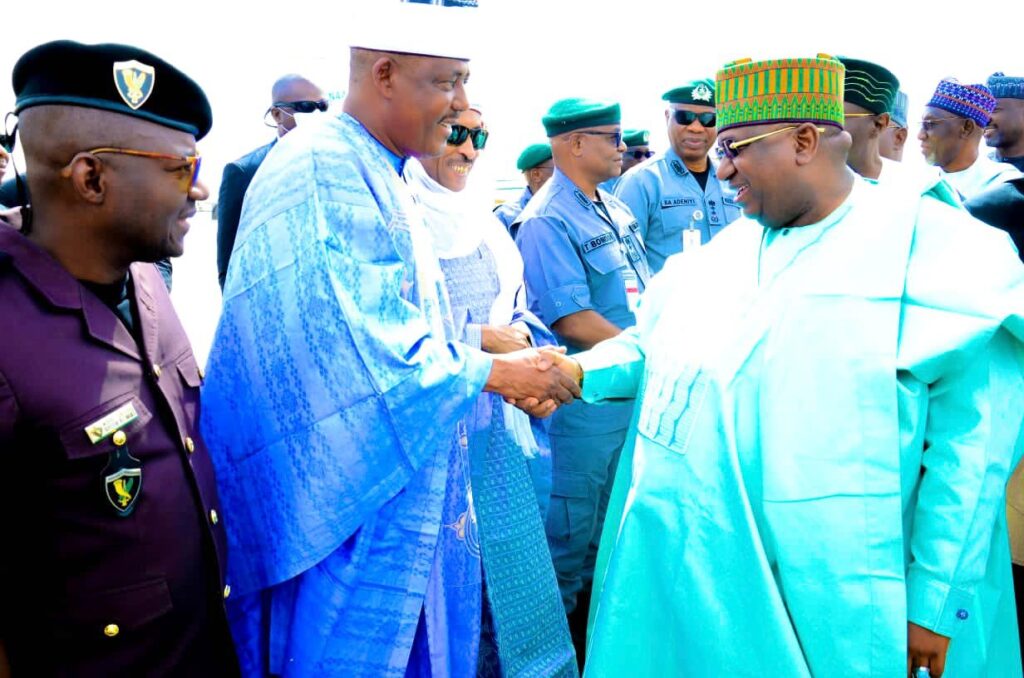
Kebbi’s Strategic Role
In the prevailing circumstances, Governor Nasir Idris positioned Kebbi State as more than a passive host. By pledging logistics, infrastructure, and community engagement, he framed the corridor as a potential hub for lawful commerce. The state’s involvement is crucial and suggests that border governance cannot succeed without local buy-in, especially in communities that often see smuggling as survival rather than crime.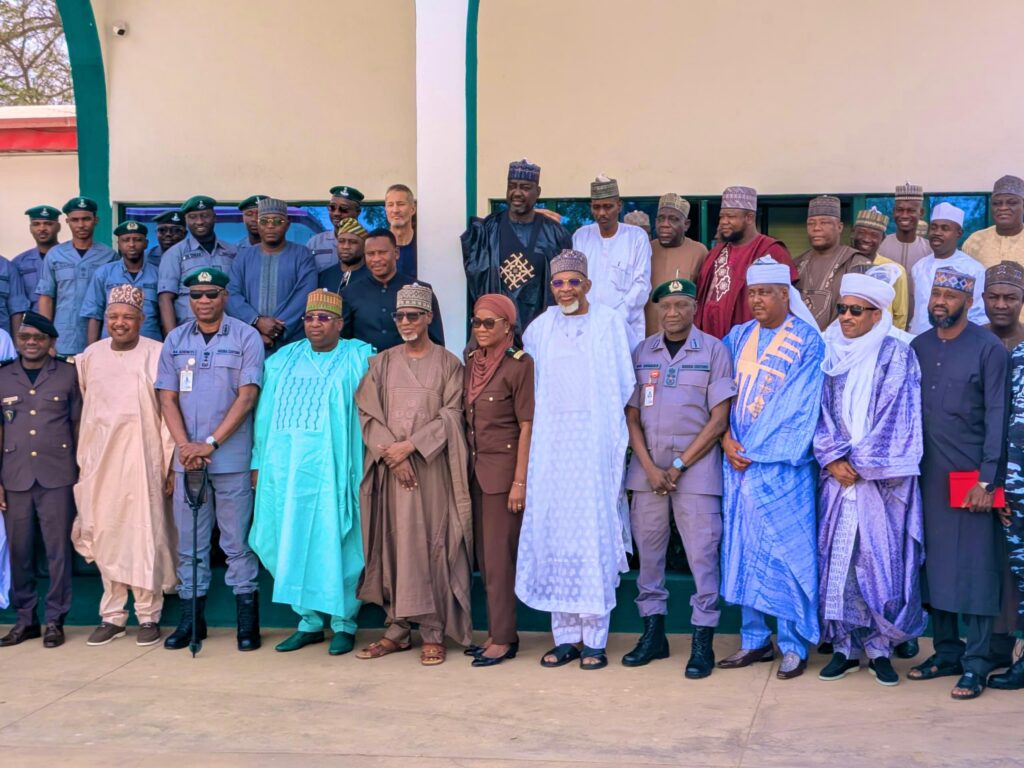
The attendance of former governors Atiku Bagudu and Usman Dakingari, alongside traditional rulers and economic operators, reinforced the idea that border reopening is not just a federal project but a regional economic recalibration.
The Critical Questions
Yet, beneath the optimism lies a set of unresolved tensions:
*Can technology and inter-agency collaboration truly outpace the ingenuity of smuggling networks?
*Will local communities, long dependent on informal trade, embrace stricter compliance regimes?
*Does reopening risk reactivating old smuggling routes under the guise of legitimate trade?
The answers, which perhaps, lie in the bosom of time does not only lend credence to the criticality or otherwise of the federal government generosity to give Tsamiya Border a second chance; but will serve a litmus test for re-aggregating the future of similar economic reviews.
There can be no doubt about the clarity of government in the recent reopening. There is a consensus of opinion that with the reopening, Tsamiya is about boosting legitimate commerce and strengthening governance. While these efforts must be appreciated by all and sundry, history warns that without sustained enforcement, porous borders quickly revert to their old ways.
It must be stated in conclusion that the Tsamiya Corridor reopening is both a test and a statement. It tests Nigeria’s ability to modernize border governance in an era of transnational criminal networks.
It also signals to regional partners and local communities that trade facilitation and security are not mutually exclusive. Whether this balance holds will depend not on fanfare but on the daily grind of enforcement, cooperation, and community trust.
The corridor may be open, but the real challenge lies in keeping it secure, lawful, and beneficial to Nigeria’s fragile economy.












Port Efficiency: NCS, PEBEC Launch Strategic Reform Initiatives

Barge Operators Push for Fairer Regulations in Nigeria’s Port Logistics

SEREC Congratulates Prince Olayiwola Shittu on UN-POLAC Appointment

The $1.1 Billion Anchor: Why We Cannot Abandon Our Gateway Ports – The CVFF and the New Shipping Line (Part 2)

NASS Rules ‘Tantita Providing Critical National Assignment’

ANLCA vs Nigeria Police Force: MMAC Secretariat Crisis Deepens

Nigeria’s $748m UK Port Infrastructure Loan: Many Questions Begging for Answer

President Tinubu’s Borrowing Binge Amid Rising Revenues and Elite Excesses
Prince Olayiwola Shittu: A Glimpse Into His ‘International Peace Advocate’ Appointment

NRS, Customs, PEBEC Visit NSW Office Apapa

Customs Boss Adeniyi Announces Relocation of FOU Zone ‘A’ Office

The $1.1 Billion Anchor: Why We Cannot Abandon Our Gateway Ports –

ANLCA Board is intact, cannot be wished away by anybody’-Elochukwu

B-R-E-A-K-I-N-G: Effedua, Rector MAN Oron, Resigns

EFCC’s Probe: Okowa Plots Sheriff’s Removal Despite London Accord

Customs Trains ANLCA Members, Others on B’Odogwu Portal

NPA’s Alleged Executive Management Fight: The Half Truth & Truth

ANLCA Board Election: Know Your Candidates
‘Why We Launched B-Odogwu Pilot Scheme With Webb Fontaine Still Running’ – Adeniyi

Nigeria Customs: Trust, Competence And The Oramalugo Factor

Onyemekara Promoted GM, Appointed NPA’s New Spokesperson

‘Rush To Break News Can Lead To Brush With Cybercrime’- Police

Kebbi Is Hub of Hard Drugs Smuggling In Northern Region’ – Oramalugo

Maritime Industry At 64: Oyetola Versus Oyetola