
Edaucation
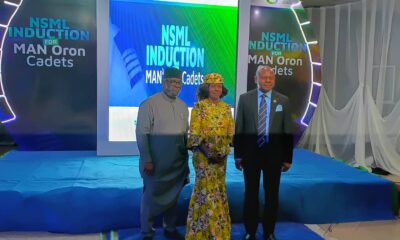
MAN Oron: Why Stakeholders Insist on Preserving Its Identity

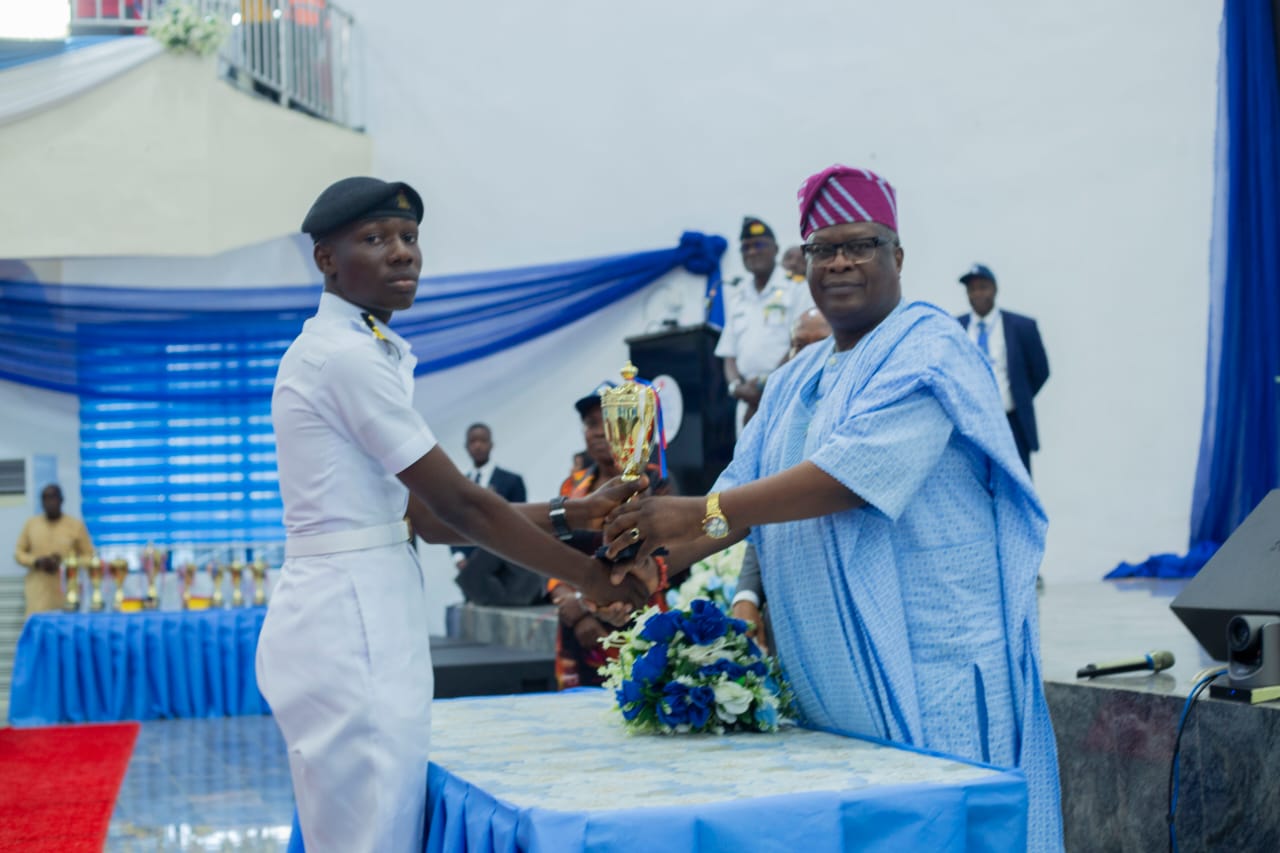
BY EGUONO ODJEGBA
For decades, the Maritime Academy of Nigeria (MAN), Oron, has stood as a beacon of specialized maritime training in Africa, producing generations of shipboard officers, ratings, and maritime management professionals.
Established in 1977 with technical support from the International Maritime Organization (IMO), the Academy has earned global recognition as a regimented institution dedicated to manpower development for Nigeria’s maritime sector.
Yet, recent agitations by host community youths pressing for its conversion into a university have sparked a heated national debate. While local aspirations for a university are understandable, stakeholders argue that such a move would undermine Nigeria’s strategic maritime interests.
The arguments for maintaining the status quo spring from the Academy’s specialized mandate. MAN was designed as a professional maritime training institution, not a conventional university. Its enabling law (Cap M3 LFN 2010) already empowers it to run advanced programmes and award certificates without limitation, aligning with global maritime standards.
The IMO’s longstanding technical support and recognition could be jeopardized if MAN loses its unique identity. Thus its conversion into a university risks severing these critical affiliations.
It is instructive to note that the Academy’s regimented training structure mirrors military academies, instilling discipline and professionalism. A university model would dilute this system, weakening the quality of manpower produced.
It is also important to appreciate the nature of its funding which stability should be maintained. MAN currently receives a statutory 5% allocation from the Nigerian Maritime Administration and Safety Agency (NIMASA). This lifeline would vanish if the Academy is rebranded, creating severe operational challenges.
While Oron youths have campaigned for a university, stakeholders argue that altering a national maritime institution to satisfy local demands prioritizes narrow interests over Nigeria’s broader strategic needs.
There are concerns that rumours of aggressive actions by the Oron Youth Movement, including threats to management and cadets are politically motivated. Analysts posit that such hostility undermines the Academy’s stability and the Federal Government’s Renewed Hope agenda.
All hands must be on deck to sustain the strategic reforms that is already underway. Since October 2024, MAN’s Governing Council has rolled out a five year strategic plan aligned with national blue economy goals, approved a Conditions of Service document for the first time in 48 years, and advanced a bill to empower MAN to award degrees—similar to the Nigerian Defence Academy and Police Academy.
Contrary to claims of neglect, MAN has invested in host communities, restoring electricity to Oron, providing laptops to host community schools, crash helmets to commercial motorcyclists, and installing solar powered streetlights as part of its corporate social responsibility.
Chairman of the Governing Council, Engr. Kehinde Olayinka Akinola, emphasized that the Academy is a national asset serving the entire country’s maritime needs. He warned against attempts to “appropriate a national institution for narrow interests,” stressing that the Council will not be intimidated or distracted from its mandate.
With Nigeria’s Marine and Blue Economy Ministry counting on MAN as a manpower engine, stakeholders believe the Academy’s current structure offers the best path forward. Rather than conversion, they advocate strengthening MAN’s existing framework to award degrees, ensuring it retains its international standing while meeting national development goals.
Adding to the Governing Council’s position, Mr. Emmanuel Maiguwa, President of Alumni of Maritime Academy of Nigeria (AMANO), underscored the dangers of tampering with the Academy’s identity. He stressed that alumni across the globe are living testimonies of MAN’s credibility, with many holding senior positions in shipping companies, ports, and maritime administrations worldwide.
Maiguwa argued that converting MAN into a university would erase decades of alumni achievements tied to its specialized brand, weakening the Academy’s global standing.
The Academy’s international reputation is a national asset, built painstakingly through IMO recognition and alumni performance, and should not be sacrificed for local political gains, he said.
Alumni strongly support the ongoing reforms under President Tinubu’s administration, noting that empowering MAN to award degrees within its current framework is the best compromise — preserving its identity while expanding opportunities for cadets.
He warned that any disruption to MAN’s funding or mandate would directly affect alumni credibility, as employers worldwide rely on the Academy’s reputation when hiring Nigerian seafarers.
His words: “The Maritime Academy of Nigeria is not just an institution; it is a brand that has given Nigeria a seat at the global maritime table. To tamper with that identity is to gamble with our future as a maritime nation.”
In essence, the argument is clear, Nigeria already has a maritime university in Okerenkoko, Delta State. What the nation needs is not duplication, but preservation and enhancement of MAN’s specialized role as a globally recognized maritime training powerhouse.







The Long Road to Nigeria’s £746m Ports Loan (1)

Alhaji Ahmad Wanka Steals The Show At The Bauchi Sallah Celebration

PORT MODERNIZATION: Repairing The Leaking Bucket of Nigeria’s Trade

Sanwo-Olu, Ministers, Key Stakeholders Set for GTP Multimodal Roundtable

Freight Forwarders Fault NSC Over Shipping Charges Hike, Issue Ultimatum

ANLCA Board Felicitates Oduntan As He Marks 60

Prince Oduntan Bask Industry Euphoria At 60th Birthday Celebration

Alma Mater Honours DG NIMASA, Mobereola

Turning Borders into Gateways: Controller Afeni’s Testimonial

A Closer Peep At The UK, Nigeria Ports Financing Deal

Nigeria Customs, HMRC Partner To Advance Trade Facilitation, Digital Border Management

Tariff Dispute Grounds Shipping Services in Lagos
ANLCA Board is intact, cannot be wished away by anybody’-Elochukwu

B-R-E-A-K-I-N-G: Effedua, Rector MAN Oron, Resigns

EFCC’s Probe: Okowa Plots Sheriff’s Removal Despite London Accord
Customs Trains ANLCA Members, Others on B’Odogwu Portal

NPA’s Alleged Executive Management Fight: The Half Truth & Truth
ANLCA Board Election: Know Your Candidates
‘Why We Launched B-Odogwu Pilot Scheme With Webb Fontaine Still Running’ – Adeniyi

Onyemekara Promoted GM, Appointed NPA’s New Spokesperson

Nigeria Customs: Trust, Competence And The Oramalugo Factor

‘Rush To Break News Can Lead To Brush With Cybercrime’- Police

Kebbi Is Hub of Hard Drugs Smuggling In Northern Region’ – Oramalugo

Maritime Industry At 64: Oyetola Versus Oyetola