Business
Nigeria’s Rail Cargo Evacuation Stalls at Below 5% Amid Trucking Dominance

BY GBOGBOWA GBOWA
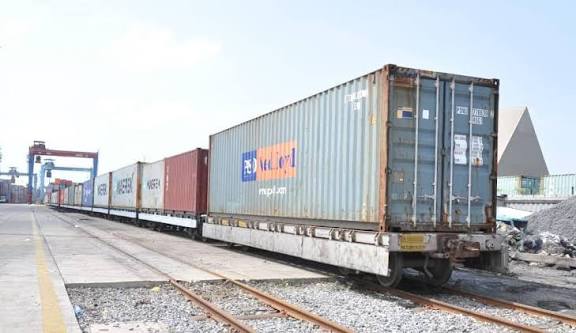
The Sea Empowerment & Research Center (SEREC–RGT) has raised alarm over Nigeria’s weak reliance on rail transport for cargo evacuation, revealing that rail accounted for less than 5% of total port cargo movement in 2025.
Despite policy recognition of rail as the safest and most efficient mode for moving imports and highly flammable products such as petroleum products, the system remains underutilized. Instead, trucking continues to dominate, with conglomerates like the Dangote Group and other large operators heavily investing in road-based haulage.
While SEREC’s position ordinarily reflects industry growth factors, the issue signposts a broader human and socio- economic safety concerns. It is instructive that while road safety risks is higher with the controversial trucking system for port cargo evacuation including fuel tankers and heavy-duty trucks which have claimed countless lives through crashes and damaged infrastructures; the development also speaks of severe economic costs.
This includes road congestion, higher logistics expenses, and accelerated wear on highways which undermines national productivity.
The neglect of the Nigerian rail system sidelines a mode that could reduce costs, improve efficiency, and enhance safety. While government policy has long emphasized intermodal transport integration, SEREC notes that implementation remains weak.
Inland waterways and pipelines are also underdeveloped, leaving roads as the default option. The communiqué suggests that entrenched trucking interests have “almost frustrated the nation’s rail system,” prioritizing short-term corporate gains over national safety and economic sustainability.
The development portends much more far reaching consequences as Nigeria’s reliance on trucks contrasts sharply with global best practices, where rail and pipelines play leading roles in moving bulk and hazardous cargo. Without functional intermodal connectivity, Nigerian ports will continue to face higher logistics costs, congestion risks, and limited regional dominance. From elementary studies and practical economics, while a single rail voyage of cargo evacuation can muster hundreds of thousands of cargo tonnage compared to thousands of trucks; the former is not only safer and cheap, the nation’s road networks suffer less tears and pressure, less accidents and freer flow of traffic compared with the trucking system.
SEREC projects that 2026 could mark a turning point if rail integration is prioritized. With port automation, FX stabilization, and sustained maritime security gains already on the agenda, functional rail cargo evacuation could unlock significant growth.
It further notes that non-oil exports, which recorded double-digit increases in 2025, stand to benefit most from efficient inland transport. Among other benefits, the group posit that the regulation of trucking dominance to balance safety and efficiency and investing in intermodal infrastructure to reduce reliance on roads.
“Nigeria cannot afford to continue sacrificing lives and economic competitiveness on the altar of trucking convenience,” the report cautioned.
Sadly, the Federal Ministry of Transportation, the Nigerian Railway Corporation, the Manufacturers Association of Nigeria, the Presidential Enabling Business Evironment Council, the Presidency Policy Coordination department and other relevant authorities and critical stakeholders have elected to pretend not to notice the notoriety of our trucking system and the costs it is exacting on the social and economic space.








Godfrey Bivbere Decorated Best Maritime Reporter of the Year

Clearing Agents Protests Police Continued Disruption of Activities

Customs Auctions Seized Petrol Worth ₦14.8 Million

Jonathan, George, Alaibe, Gwandu, Diri Others Speak On Efficient Modern Ports System

Deleting the Gatekeepers: How Dantsoho is Coding-Out Corruption at Nigeria’s Ports

President Tinubu Government Sensitive To Community Development – Okonna, MAN Rector

Apapa Area Command: Investing in People, Building a Future of Integrity

IWD 2026: CGC Adeniyi Hosts Surprise Appreciation Event for NCS Women

Dantsoho Speaks On Upgrade of Eastern Ports, Export Expansion Programme

All Roads Leads To Oriental Hotel For MML Workshop

The ‘License to Lie: How Nigeria’s New Electoral Act Shields the Forger

The Long Journey To Securing Nigerian Ports’ Repairs Loan (3)

ANLCA Board is intact, cannot be wished away by anybody’-Elochukwu

B-R-E-A-K-I-N-G: Effedua, Rector MAN Oron, Resigns

EFCC’s Probe: Okowa Plots Sheriff’s Removal Despite London Accord
Customs Trains ANLCA Members, Others on B’Odogwu Portal

NPA’s Alleged Executive Management Fight: The Half Truth & Truth
ANLCA Board Election: Know Your Candidates
‘Why We Launched B-Odogwu Pilot Scheme With Webb Fontaine Still Running’ – Adeniyi

Onyemekara Promoted GM, Appointed NPA’s New Spokesperson

Nigeria Customs: Trust, Competence And The Oramalugo Factor

‘Rush To Break News Can Lead To Brush With Cybercrime’- Police

Kebbi Is Hub of Hard Drugs Smuggling In Northern Region’ – Oramalugo

Maritime Industry At 64: Oyetola Versus Oyetola