
Maritime
Cargo clearance: The Maritime Police Command Cargo Clearance Organized Alert Network

BY FUNMI ALUKO
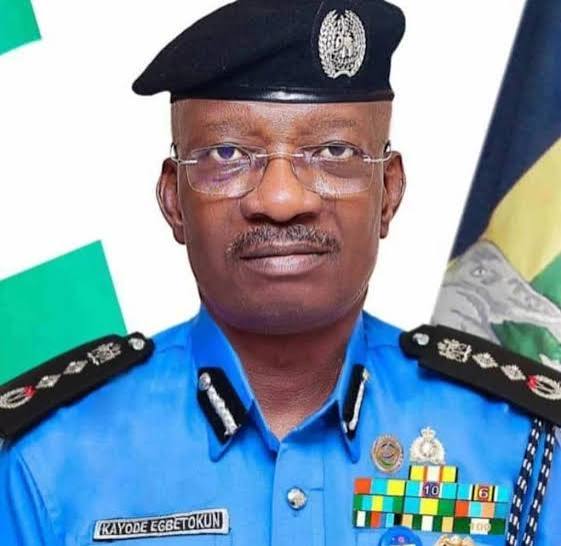
Industry insiders has alleged that the Maritime Police Command orchestrates a coordinated network involving shipping companies, terminal operators, and regulatory intermediaries to detain cleared cargo designed solely to extract payments before release.
According to the petitions and evidences sighted by our reporter, complainants confirmed that containers—sometimes numbering up to 160 in a week—are routinely placed on hold through letters sent to carriers and terminals, creating bottlenecks that are only resolved after significant sums are paid without any documented investigative outcomes.
Sources claim that maritime police operatives often request payments reportedly in the range of N200,000 per container before sending a “release note” to the Nigerian Shippers’ Council, which then instructs shipping companies and terminals to release affected cargo. Consignees are subsequently required to settle accumulated demurrage and storage charges before Delivery Orders (DO) and Terminal Delivery Orders (TDO) are issued. Speaking on the development, sources within the Association of Nigeria Licensed Customs Agents (ANLCA) say that these practices constitute an extortion-based system that thrives on administrative leverage rather than lawful intelligence-led enforcement.
The association questions the operational basis of the network, noting the absence of suitable facilities for re-examination at the Maritime Police premises and the lack of formal investigation reports following payment and release. ANLCA and the others is urging a dual-track response: a formal petition to senior police authorities—including the AIG Maritime Police Command and the Inspector-General of Police—and potential legal action seeking refunds of alleged illicit collections.
Complainants emphasizes that customs intelligence units already function within port examinations, making external detentions after clearance both duplicative and harmful to supply chain integrity.











Nnadi Urges Nigerian Importers to Shift from Finished Goods to Manufacturing

WMD: Oyetola Recommit to Unlock CVFF Pursuant to Indigenous Operators Financing

Customs FOU Zone ‘A’ Hands Over Seized ₦511.4m Pharmaceuticals, Illicit Drugs to NDLEA, NAFDAC

Oyetola Unveils NPERA, Corporate Logo Amid Quiet Enthusiasm

Nigeria, Benin Urged to Deploy Culture and Traditional Diplomacy to Defuse Border Tensions

Nigeria’s Ports: How Foreign Capital Took the Dinner, While Indigenous Businesses Got the Crumbs (3)

FOU Zone A, Police, Army, DSS, Others Strengthen Security Alliance Ahead of Elections

Nigeria’s Ports: How Foreign Capital Took the Dinner, While Indigenous Businesses Got the Crumbs (2)

Former Senatorial Candidate, Hajia Nike AbdulRahman Dumps NDC, Defects to APC

Nigeria’s Ports: How Foreign Capital Took the Dinner, While Indigenous Businesses Got the Crumbs

How Anani’s Tin Can Command Intercepted a ₦3.6 Billion Illicit Drug Shipment

Ibrahim, Ogun 1 Customs New Sheriff Unveils Strength Beneath His Quiet Mien
ANLCA Board is intact, cannot be wished away by anybody’-Elochukwu

B-R-E-A-K-I-N-G: Effedua, Rector MAN Oron, Resigns

EFCC’s Probe: Okowa Plots Sheriff’s Removal Despite London Accord
Customs Trains ANLCA Members, Others on B’Odogwu Portal

NPA’s Alleged Executive Management Fight: The Half Truth & Truth
ANLCA Board Election: Know Your Candidates
‘Why We Launched B-Odogwu Pilot Scheme With Webb Fontaine Still Running’ – Adeniyi

Onyemekara Promoted GM, Appointed NPA’s New Spokesperson

Nigeria Customs: Trust, Competence And The Oramalugo Factor

‘Rush To Break News Can Lead To Brush With Cybercrime’- Police

Kebbi Is Hub of Hard Drugs Smuggling In Northern Region’ – Oramalugo

Onyeka Makes History As Tin-Can Customs Hit ₦16.4bn A Day