
Customs Report
How Bolaji Adigun Plans to Turnaround KLT

BY FUNMI ALUKO
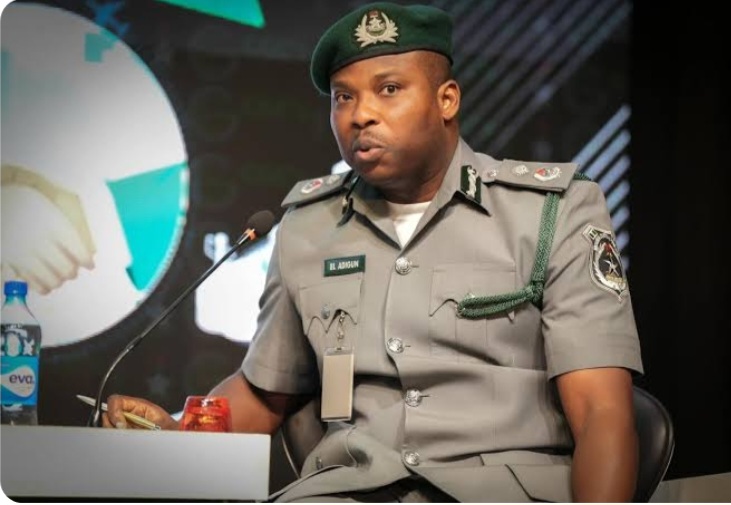
At the Kirikiri Lighter Terminal (KLT) Command of the Nigeria Customs Service, Deputy Comptroller Bolaji Lukman Adigun is quietly but firmly steering a turnaround.
Since assuming office as Acting Area Controller late last year, he has combined discipline, innovation, and integrity to deliver early wins that are already reshaping the Command’s identity.
A Reputation Anchored in Integrity and Numbers
Adigun’s reputation precedes him. At Port Harcourt Area II Command, Onne, he earned the moniker “super revenue guru” for plugging leakages and setting unprecedented records in collections. His mastery of revenue optimization, described by colleagues as “understanding the abacus of customs duty” is now being deployed at KLT with precision and impact. Already, the Command has recorded all-time high revenue collections under his watch.
Digital Transformation
Sources close to the KLT Customs boss say Adigun is pushing for automation of licenses and permits processing, reducing human bottlenecks and cutting down clearance delays. The plans according to them include integrating AI-driven risk management tools to flag suspicious consignments early, aligning KLT with global customs modernization standards.
Revenue Optimization
At KLT, Adigun has already driven revenue collections to all-time highs. His reforms focus on tightening of duty assessment processes, plugging revenue leakages, and insistence on operational discipline among officers. Accordingly, these measures are not short-term fixes but are designed to sustain growth and position KLT as a major revenue hub.
Scorecard of Early Gains
The local maxim that “morning shows he day” holds true for the revenue super officer as Adigun’s short tenure has produced measurable results, highlighted below:
Enforcement Successes: Intelligence-driven operations have led to seizures of expired and improperly declared goods, safeguarding public health and national revenue.
Operational Discipline: The Command’s work culture has also undertaken a visible change for the better as officers’ report renewed accountability, with loopholes spotted and closed under his sharp oversight.
Stakeholder Confidence: Freight forwarders and port operators describe enforcement as tighter while clearance processes are smoother, a balance long sought at Kirirki Lighter Terminal.
These achievements form the backbone of his scorecard, proof that his turnaround plan is not just aspirational but already delivering tangible gains.
The Turnaround Blueprint
Adigun who hit the ground running on arrival, came with a work plan for KLT that rests on three pillars:
*Revenue Optimization: Sustaining growth beyond the ₦147.2 billion milestone achieved in 2025, with a projection to position KLT as a major revenue hub.
*Compliance and Facilitation: Ensuring trade compliance while streamlining legitimate transactions, and building trust with stakeholders.
Structural Renewal: Tackling bottlenecks by attracting direct vessel calls, expanding terminal capacity, and modernizing facilities through digitalization and global best practices.
Stakeholders Engagement
He has initiated structured dialogue forums with freight forwarders, shipping companies, and sister agencies to rebuild trust. These forums are designed to co-create compliance solutions, rather than imposing them top-down, which stakeholders see as a refreshing shift.
Trade Compliance and Stakeholder Confidence
By prioritizing trade compliance, Adigun is building trust with importers, agents, and port operators. His collaborative approach ensures adherence to regulations while streamlining clearance procedures. This has begun to restore confidence among stakeholders, who now see KLT as a command committed to fairness, efficiency, and partnership.
Leadership with a Human Touch
A gentleman officer with a purpose, Adigun’s leadership style is one that is approachable, yet firm, and has been central to the Command’s renewed energy. Officers describe him as a “gentleman officer” who listens but insists on discipline. His words at inauguration captured his philosophy: “We must remain disciplined, focused, and committed to the Service’s mandate. Together, we will build a stronger KLT.”
Global Alignment
His roadmap mirrors the Comptroller General of Customs, Bashir Adewale Adeniyi’s modernization agenda, but with a localized twist, adapting global best practices to Nigeria’s peculiar maritime realities. For instance, his roadmap aligns seamlessly with CGC’s modernization agenda, which emphasizes efficiency, transparency, and revenue optimization. By consolidating gains while addressing structural challenges, Adigun is positioning KLT as a model of customs operations nationwide.
Conclusion
The expectations on Adigun are high, but his scorecard already shows he is delivering. His turnaround plan blends revenue optimization, enforcement, compliance, and modernization into a coherent vision. For officers and stakeholders, his tenure represents more than leadership; it is a chance to redefine KLT’s role in Nigeria’s maritime economy and prove that renewal is possible, even under the weight of high expectations.






ANLCA Airport Crisis: Police Raid Raises Questions Over IGP’s Respect For Court Orders

‘We Arrested Several Vessels Violating Cabotage Trade’ – NIMASA

Customs CGC Says ‘The World Is Connected, Not Borderless’

Nigeria Customs Mulls Reviews of Complaints Arising from Recruitment

Edo-Delta Journalists Forum Challenges Political Leaders on Regional Development

Nnadi Urges Nigerian Importers to Shift from Finished Goods to Manufacturing

WMD: Oyetola Recommit to Unlock CVFF Pursuant to Indigenous Operators Financing

Customs FOU Zone ‘A’ Hands Over Seized ₦511.4m Pharmaceuticals, Illicit Drugs to NDLEA, NAFDAC

Oyetola Unveils NPERA, Corporate Logo Amid Quiet Enthusiasm

Nigeria, Benin Urged to Deploy Culture and Traditional Diplomacy to Defuse Border Tensions

Nigeria’s Ports: How Foreign Capital Took the Dinner, While Indigenous Businesses Got the Crumbs (3)

FOU Zone A, Police, Army, DSS, Others Strengthen Security Alliance Ahead of Elections
ANLCA Board is intact, cannot be wished away by anybody’-Elochukwu

B-R-E-A-K-I-N-G: Effedua, Rector MAN Oron, Resigns

EFCC’s Probe: Okowa Plots Sheriff’s Removal Despite London Accord
Customs Trains ANLCA Members, Others on B’Odogwu Portal

NPA’s Alleged Executive Management Fight: The Half Truth & Truth

ANLCA Board Election: Know Your Candidates
‘Why We Launched B-Odogwu Pilot Scheme With Webb Fontaine Still Running’ – Adeniyi

Onyeka Makes History As Tin-Can Customs Hit ₦16.4bn A Day

Onyemekara Promoted GM, Appointed NPA’s New Spokesperson

Nigeria Customs: Trust, Competence And The Oramalugo Factor

Apapa Customs Collects ₦161b On B’Odogwu Platform In 3 Weeks

‘Rush To Break News Can Lead To Brush With Cybercrime’- Police