Business Focus
The $1.1 Billion Anchor: Why We Cannot Abandon Our Gateway Ports –

Plugging The Leaking Bucket. Part (1)
BY IBRAHIM NASIRU
“A ship can only dock as deep as the harbour allows; a nation can only grow as fast as its gates can open.”
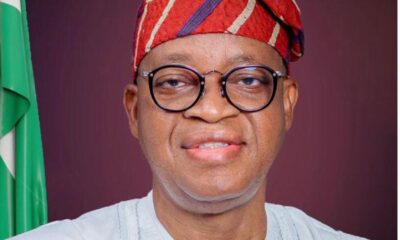
As the Minister of Marine and Blue Economy, Adegboyega Oyetola, celebrates the recent milestones in Nigeria’s maritime sector, a stark reality remains anchored at our docks.
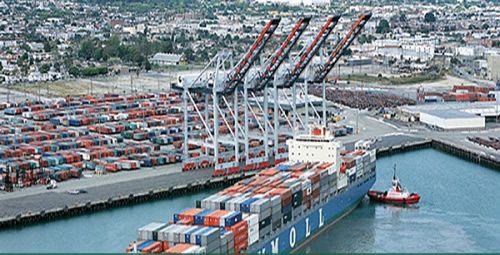
For decades, our gateway Ports at Apapa and Tin Can Island have been described as a “leaking bucket”- a system where potential billions in national revenue seep away through crumbling infrastructure, manual delays, and the shift of cargo to more efficient neighbours.
While the Minister’s vision for a thriving Blue Economy is ambitious, it cannot be achieved without first plugging the leaks in the very foundation of our trade.
The Federal Government’s commitment to a $1.1 billion modernization project is not just a budget line; it is a survival strategy. These Ports are the lungs of the Nigerian economy, yet they have been gasping for air with quay walls over 50 years old and structural decay threatening to shut down operations.
This investment aims to transform these “leaks” into world-class terminals by rebuilding physical docks and introducing total automation. By doing so, Nigeria is finally moving to stop the revenue loss caused by ship congestion and the high cost of business that eventually drives up the price of every household commodity in the country.
We cannot simply abandon these legacy Ports for newer ones like Lekki or Badagry, as Apapa and Tin Can are too strategically linked to Nigeria’s industrial heartland to be left to rot. Instead, the bucket must be mended through deep-water berths to accommodate the world’s largest vessels and total digitalization to remove the “human interface” that breeds corruption.
Plugging the leaks in our physical infrastructure is a massive win for the Oyetola administration, but it is only the first half of the story. A world-class Port is merely a sophisticated parking lot if we do not own the vehicles that use it.
As the concrete is poured and the cranes are installed, a bigger question remains:
How do we ensure that Nigerians are the ones profiting from the ships that dock at these new quays and berths, and that the rising throughput and stevedoring activities translate into genuine local wealth?
Beyond the physical infrastructure, the true test will be the rigorous enforcement of cabotage laws and the transparent management of Port concessions to guarantee that the indigenous players are not sidelined in their own waters.
We urge the Ministry of Marine and Blue Economy to move beyond infrastructure milestones and ensure the 10 year Marine and Blue Economy Policy is backed by the ‘performance discipline’ required to turn these Ports into engines of indigenous prosperity.
Ultimately fixing the Port is like fixing the floor; it doesn’t matter how much furniture you buy if the ground beneath you is sinking.
Ibrahim Nasiru, a Public Affairs Analyst writes from Abuja








Teamwork, Discipline, Central to Our Enforcement Mandate —Jonah Charges Customs Marine Operatives

How the UAE-Nigeria Partnership Can Transform Our Ports

Cross River, FTZ Customs Gets New Impulse

CGC Adeniyi Signs Anti-Corruption Documents, Activates ICRAM Steering Committee

Nigeria Customs Marks Breast Cancer Awareness Month in Abuja

NIMASA To Host Webinars on Automation of Nigerian Ship Registry

NPA Moves To Cut Export Bottlenecks, Targets Forex Inflows

NPA Congratulates ANLCA on 72nd Anniversary, Reaffirms Support for Port Modernisation

Afeni Lands at FOU Zone ‘A’ in Acting Controller Capacity

NPA Mulls Specialised Fishing Port to Deepen Nigeria’s Blue Economy

Industry Stakeholders Applaud ANLCA at 72nd Anniversary Celebration

Port Regulation Critical To Fisheries, Blue Economy – NPERA DG, Akutah
ANLCA Board is intact, cannot be wished away by anybody’-Elochukwu

B-R-E-A-K-I-N-G: Effedua, Rector MAN Oron, Resigns

EFCC’s Probe: Okowa Plots Sheriff’s Removal Despite London Accord
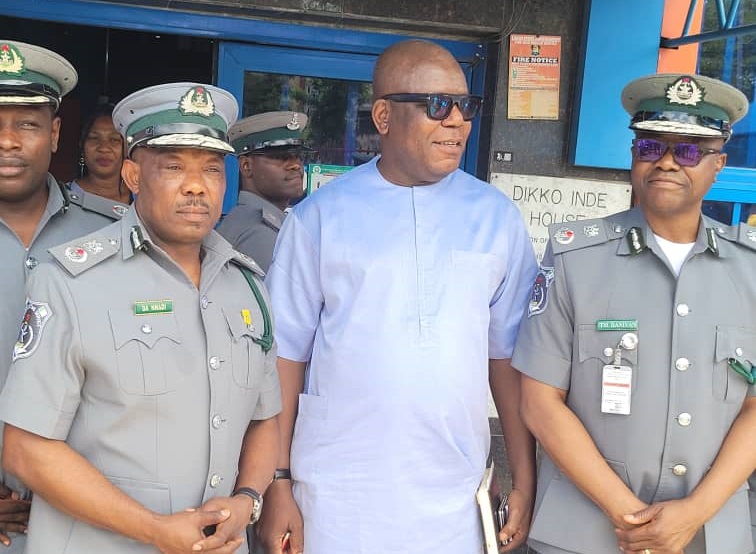
Customs Trains ANLCA Members, Others on B’Odogwu Portal

NPA’s Alleged Executive Management Fight: The Half Truth & Truth
ANLCA Board Election: Know Your Candidates
‘Why We Launched B-Odogwu Pilot Scheme With Webb Fontaine Still Running’ – Adeniyi

Onyemekara Promoted GM, Appointed NPA’s New Spokesperson

Nigeria Customs: Trust, Competence And The Oramalugo Factor

‘Rush To Break News Can Lead To Brush With Cybercrime’- Police

Kebbi Is Hub of Hard Drugs Smuggling In Northern Region’ – Oramalugo

Apapa Customs Collects ₦161b On B’Odogwu Platform In 3 Weeks