
Business
Afeni Intensifies Change Drive at Ogun Border Frontier


…As Idiroko Wears Increased Improved Enforcement, Export Look
BY FUNMI ALUKO
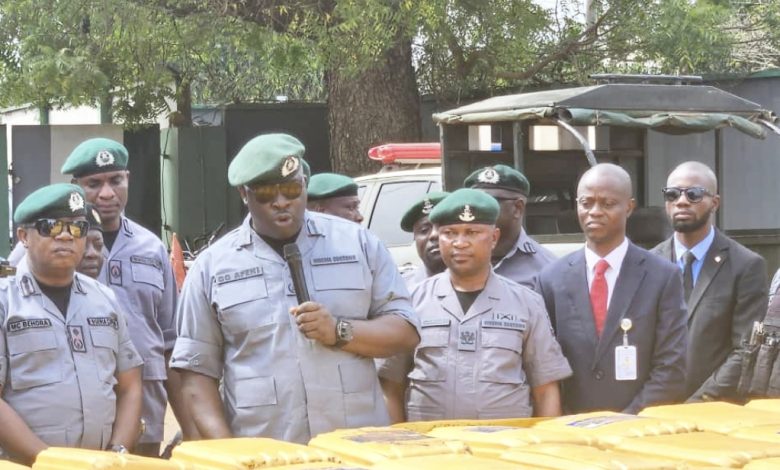
Ayeni together with his principal officers during the latest showcase of seized items
For decades, the Idiroko border in Ogun State was synonymous with porous routes and rampant smuggling. Strategically located along the Nigeria–Benin Republic corridor, it became a haven for illicit trade, with smugglers exploiting bush paths and creeks beyond the reach of enforcement. That reputation is now being rewritten.
On a humid March morning, the evidence of change was unmistakable as seized goods piled high: bags of foreign rice, kegs of petrol, parcels of cannabis, cartons of spaghetti. Each item represented a broken chain in a once-thriving smuggling network.
At the heart of this transformation is Nigeria Customs Service (NCS) DC Oladapo Afeni, Acting Customs Area Controller of the Ogun I Area Command. Since assuming leadership, Afeni has shifted from routine patrols to intelligence-driven operations, combining enforcement with community collaboration. The results have been striking: in just six weeks, seizures worth over ₦1.4 billion were recorded.
Border residents, once passive observers, now serve as vital informants, helping officers track smuggling routes. This intelligence-led approach has yielded major interceptions, from thousands of kegs of vegetable oil consolidated along the Agbara axis to over 4,000 cartons of foreign spaghetti hidden in trucks.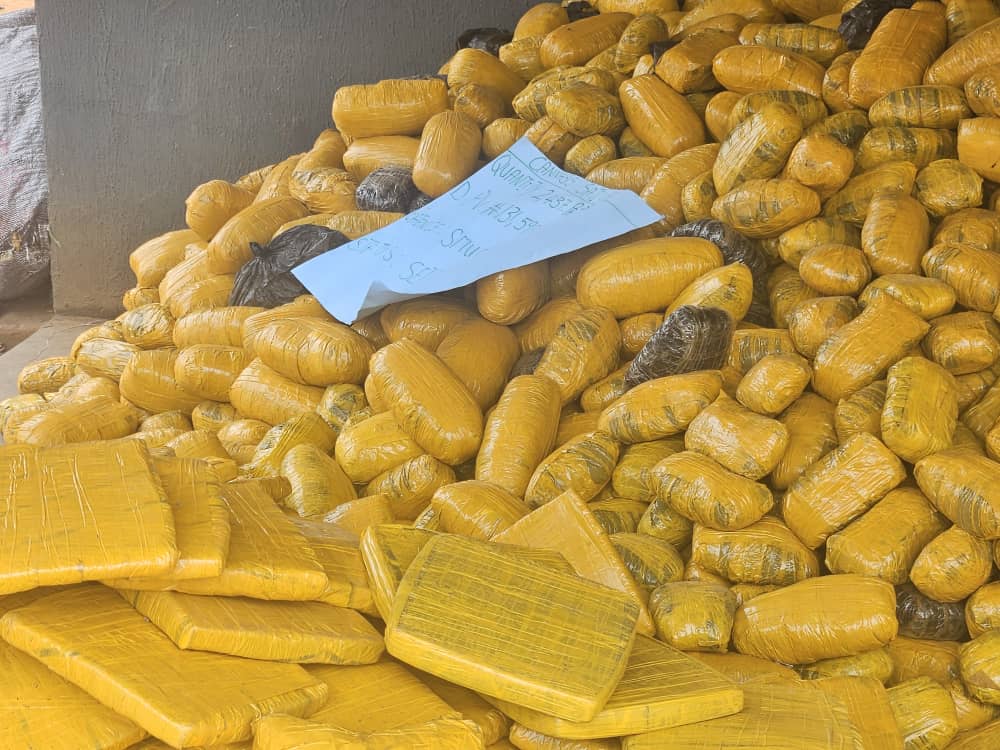
Smuggling networks are evolving, diversifying cargo to reduce losses. Yet enforcement is keeping pace. Beyond economic contraband, officers rescued four live pangolins, one of the world’s most trafficked endangered species, the Command Public Relations Officer, CSC Chado disclosed. The seized endangered animals he explained were later handed over to Green Fingers Wildlife Conservation. Two cultural artifacts were also recovered and transferred to the National Museum in Abeokuta, preserving fragments of Nigeria’s heritage.
Revenue generation has surged alongside enforcement. The command raked in ₦285.6 million within the review period, a leap of over ₦259 million compared to the same period last year.
Perhaps most symbolic is the revival of exports at Idiroko. Once dominated by smuggling inflows, the corridor is now witnessing structured trade. The command recently recorded 95 metric tons of exports valued at over ₦300 million, signaling a gradual restoration of legitimate commerce.
Afeni attributes the progress to collaboration with traditional rulers, local communities, sister agencies, and the media. “Our war on smuggling continues,” he says. “Through intelligence and strategic monitoring, we remain ahead of economic saboteurs.”
For now, Idiroko is shedding its old identity. What is emerging is not just a more secure border, but a redefined trade corridor—where enforcement and trade facilitation coexist, and the balance tilts steadily from illicit survival to regulated opportunity.








SEREC Congratulates Prince Olayiwola Shittu on UN-POLAC Appointment

The $1.1 Billion Anchor: Why We Cannot Abandon Our Gateway Ports – The CVFF and the New Shipping Line (Part 2)

NASS Rules ‘Tantita Providing Critical National Assignment’

ANLCA vs Nigeria Police Force: MMAC Secretariat Crisis Deepens

Nigeria’s $748m UK Port Infrastructure Loan: Many Questions Begging for Answer

President Tinubu’s Borrowing Binge Amid Rising Revenues and Elite Excesses
Prince Olayiwola Shittu: A Glimpse Into His ‘International Peace Advocate’ Appointment

NRS, Customs, PEBEC Visit NSW Office Apapa

Customs Boss Adeniyi Announces Relocation of FOU Zone ‘A’ Office

The $1.1 Billion Anchor: Why We Cannot Abandon Our Gateway Ports –

Again, FG Assures On Disbursement of CVFF

President Tinubu Commissions Iperu ₦73b Ultra-modern Customs FOU Zone ‘A’ Office

ANLCA Board is intact, cannot be wished away by anybody’-Elochukwu

B-R-E-A-K-I-N-G: Effedua, Rector MAN Oron, Resigns

EFCC’s Probe: Okowa Plots Sheriff’s Removal Despite London Accord

Customs Trains ANLCA Members, Others on B’Odogwu Portal

NPA’s Alleged Executive Management Fight: The Half Truth & Truth

ANLCA Board Election: Know Your Candidates
‘Why We Launched B-Odogwu Pilot Scheme With Webb Fontaine Still Running’ – Adeniyi

Nigeria Customs: Trust, Competence And The Oramalugo Factor

Onyemekara Promoted GM, Appointed NPA’s New Spokesperson

‘Rush To Break News Can Lead To Brush With Cybercrime’- Police

Kebbi Is Hub of Hard Drugs Smuggling In Northern Region’ – Oramalugo

Maritime Industry At 64: Oyetola Versus Oyetola