Business Maritime
Industry Stakeholders Score Nigeria Smart Ports Initiative Low

…As JournalNG Townhall Meeting Identifies Drawbacks, Proffer Solutions
BY KESIENNA SHEPHERDS
Nigeria’s Smart Ports Initiative has been rated poorly by maritime stakeholders, who say the country is lagging behind regional peers due to inefficiencies, policy gaps, and lack of coordinated implementation.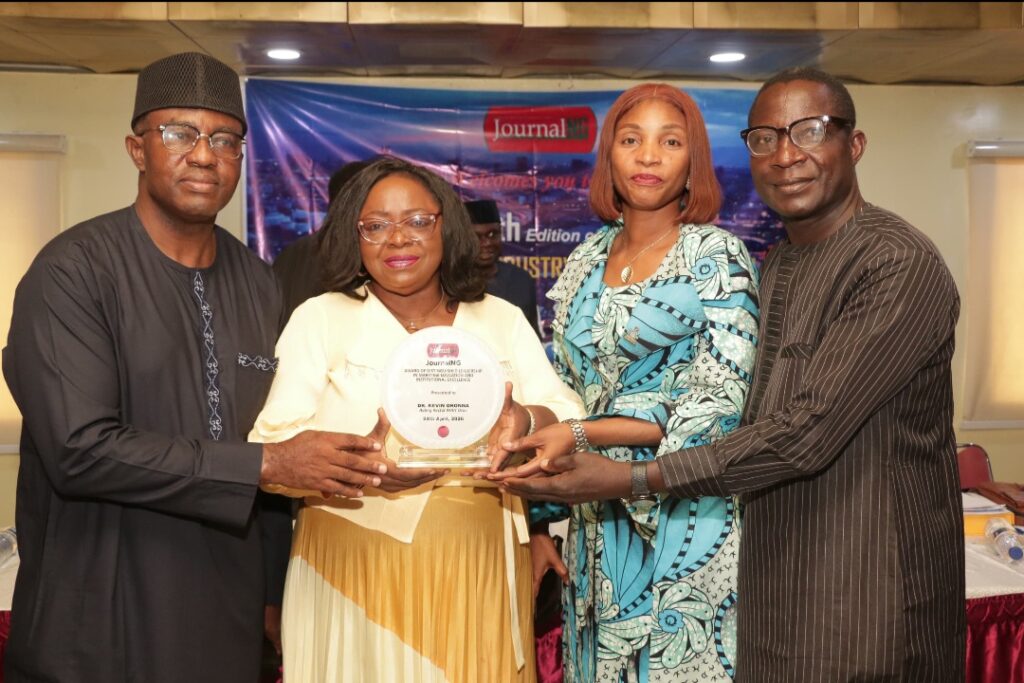
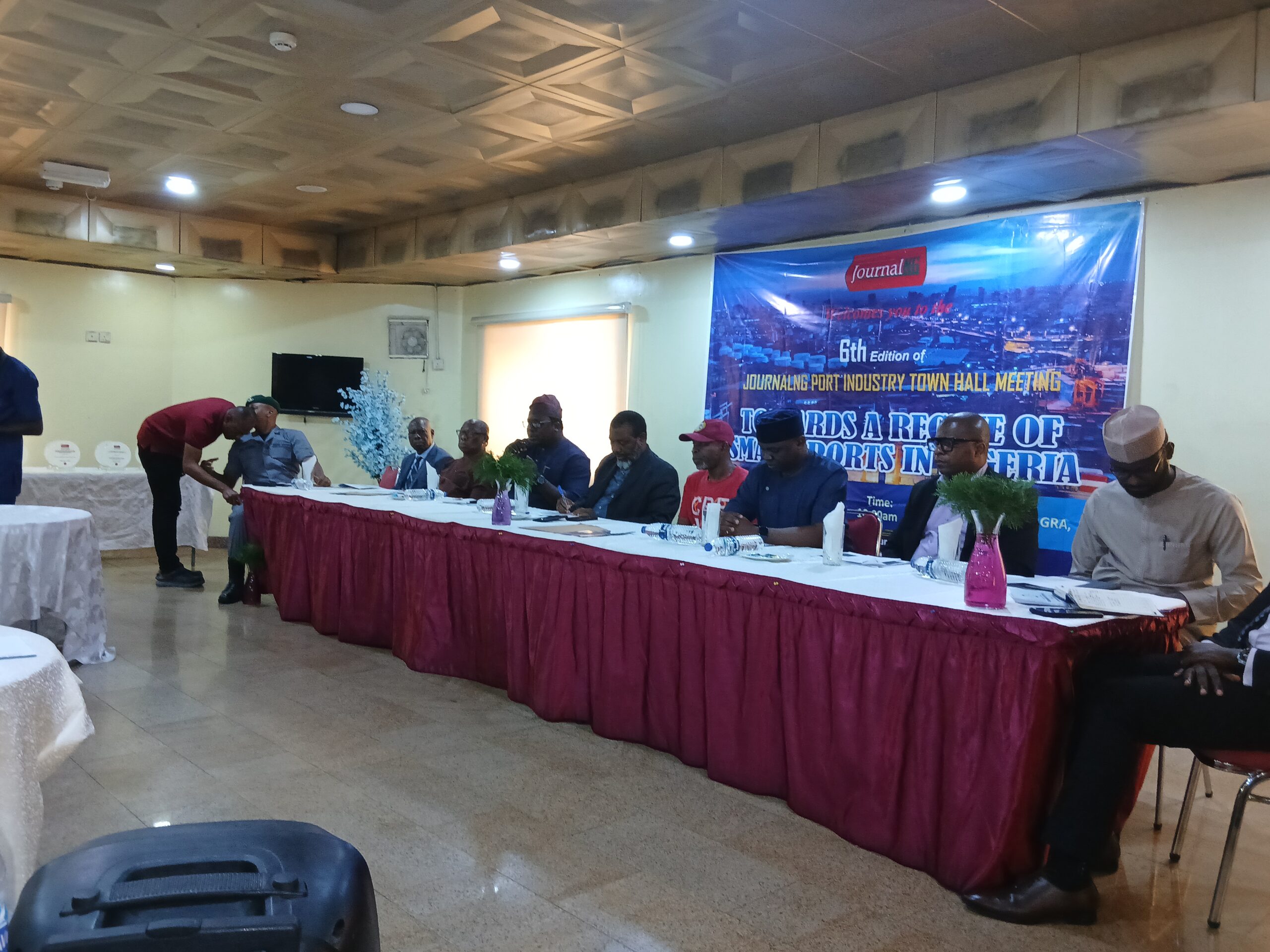
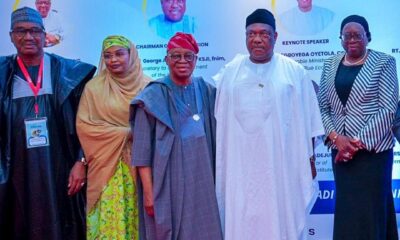
This was the consensus at the 6th edition of the JournalNG Port Industry Townhall Meeting held in Apapa, Lagos with the theme “Towards a Regime of Smart Ports in Nigeria.”
Firing the first salvo, Rear Admiral Thaddeus Udofia (Rtd.), Director General of the International Maritime Institute of Nigeria (IMION), represented by Captain David Ajiboye, urged the federal government to develop a national smart port strategy. He warned that delays in digital transformation are inflating logistics costs and weakening Nigeria’s trade competitiveness.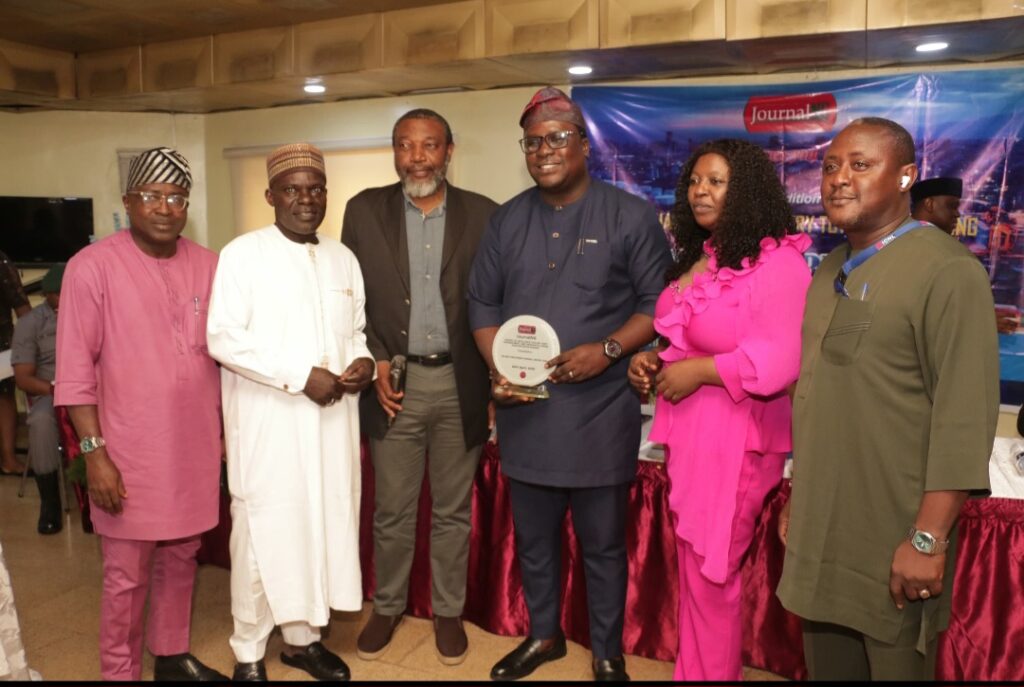
Udofia noted that congestion, manual cargo clearance, and fragmented agency operations have raised logistics costs by up to 40 percent, stressing that smart ports could cut costs by 25 percent and improve efficiency by 30 percent. He called for harmonised regulations, elimination of duplication among agencies, and pilot projects at strategic locations such as Lekki Deep Sea Port.
He pledged IMION’s support through capacity building, policy advocacy, and implementation research, adding that workforce retraining is essential for a technology‑driven maritime future.
This is even other stakeholders present at the event reinforced the urgency of policy direction and the essential reforms necessary to create a smart port enabling environment.
Chairman of the townhall engagement and Head of Research, Seaport Empowerment Research Centre (SERECT), Fwrdr. Eugene Nweke lamented that smaller neighbours like Togo and Ghana already operate real‑time, data‑driven port systems while Nigeria struggles with inefficiencies.
Speaking in the same vein, Captain Sunday Umoren, Executive Secretary of Abuja MoU, represented by Engr. Owolabi, urged stakeholders to be more responsive to smart port adoption.
Presenter of the event’s lead paper, Mr. Kingsley Igwe, Executive Secretary of CRFFN, decried inadequate ICT infrastructure, poor funding, and weak capacity development, estimating that inefficiencies cost Nigeria ₦2.5 billion daily. He argued that smart ports could reduce trade costs by up to 48 percent.
Also speaking, Captain Ebubeogwu Iheanacho, a retired mariner, warned that the National Single Window (NSW) project may remain unattainable unless pursued without political sentiments. He criticized the absence of a National Transport Policy, describing existing subsectoral frameworks as “patch work with no depth.”
Convener of the townhall meeting and Publisher of JournalNG, Mr. Ismail Aniemu described smart ports as the future of global maritime operations, driven by robotics, artificial intelligence, and automation.
He dismissed fears of job losses, insisting that automation would create new specialized roles. “If we migrate to a smart port system, it will create more jobs for smart people,” he said.
Aniemu highlighted that Nigeria already has the foundation for a 24‑hour port system, pointing to round‑the‑clock banking transactions as proof that agencies like the Customs, NDLEA, and NAFDAC could adopt shift operations to accelerate cargo clearance.
The townhall ended with a strong call for urgent reforms to reposition Nigeria’s ports as efficient, technology‑driven gateways to global trade. Stakeholders agreed that without a coordinated national strategy, Nigeria risks losing competitiveness to regional peers whose ports are already digitally advanced.
The future of Nigeria’s economy, they stressed, is inseparably tied to the future of its ports.








Oshoba at 60: A Life of Service, a Port Legacy and the Joy of Thanksgiving

Nigeria Customs Commission Rehabilitated Modakeke Healthcare Centre

Lagos-Calabar Highway: Whose Investments, Livelihoods and Coastal Communities Count? (3)

Again, Customs FOU Zone ‘A’ Rescues Five Live Pangolins in Ogun State
Lagos-Calabar Highway: When a Presidential Legacy Project Collides with Accountability (2)
Lagos-Calabar Highway: Did Nigeria Pay the Price for Inadequate Planning?

ANLCA Airport Crisis: Police Raid Raises Questions Over IGP’s Respect For Court Orders

‘We Arrested Several Vessels Violating Cabotage Trade’ – NIMASA

Customs CGC Says ‘The World Is Connected, Not Borderless’

Nigeria Customs Mulls Reviews of Complaints Arising from Recruitment

Edo-Delta Journalists Forum Challenges Political Leaders on Regional Development

Nnadi Urges Nigerian Importers to Shift from Finished Goods to Manufacturing
ANLCA Board is intact, cannot be wished away by anybody’-Elochukwu

B-R-E-A-K-I-N-G: Effedua, Rector MAN Oron, Resigns

EFCC’s Probe: Okowa Plots Sheriff’s Removal Despite London Accord
Customs Trains ANLCA Members, Others on B’Odogwu Portal

NPA’s Alleged Executive Management Fight: The Half Truth & Truth
ANLCA Board Election: Know Your Candidates
‘Why We Launched B-Odogwu Pilot Scheme With Webb Fontaine Still Running’ – Adeniyi

Onyeka Makes History As Tin-Can Customs Hit ₦16.4bn A Day

Onyemekara Promoted GM, Appointed NPA’s New Spokesperson

Nigeria Customs: Trust, Competence And The Oramalugo Factor

Apapa Customs Collects ₦161b On B’Odogwu Platform In 3 Weeks

‘Rush To Break News Can Lead To Brush With Cybercrime’- Police