Analysis
Nigeria’s IMO Council Seat: ‘Lest We Forget’

BY EGUONO ODJEGBA
Nigeria’s election into Category C of the IMO Council means the country has regained global maritime influence, opening doors for stronger international partnerships, economic growth, and leadership in ocean governance.
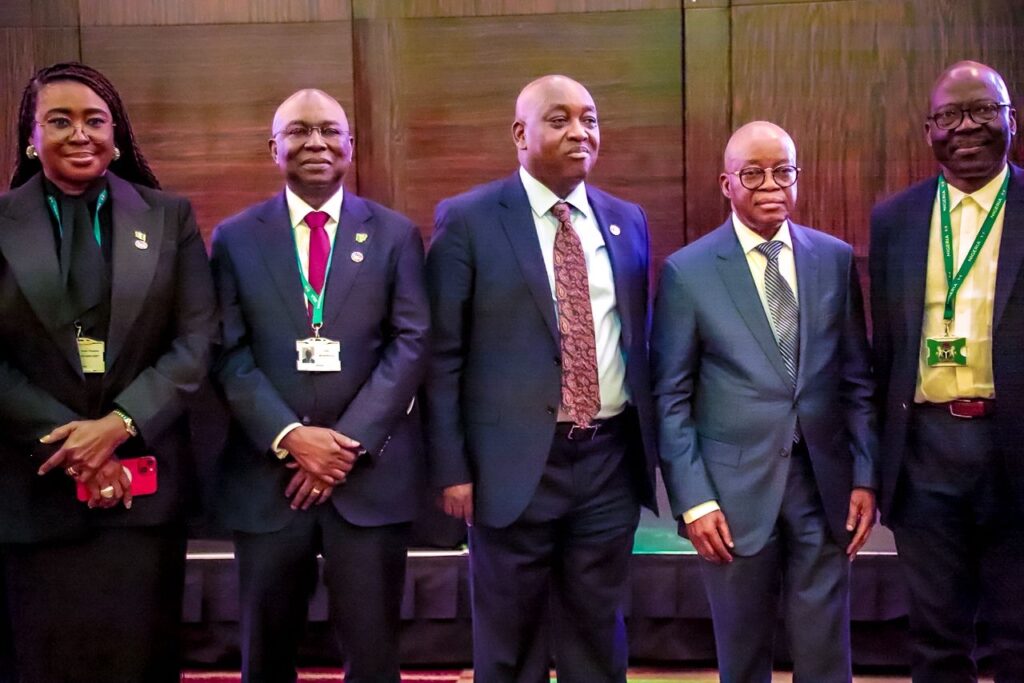
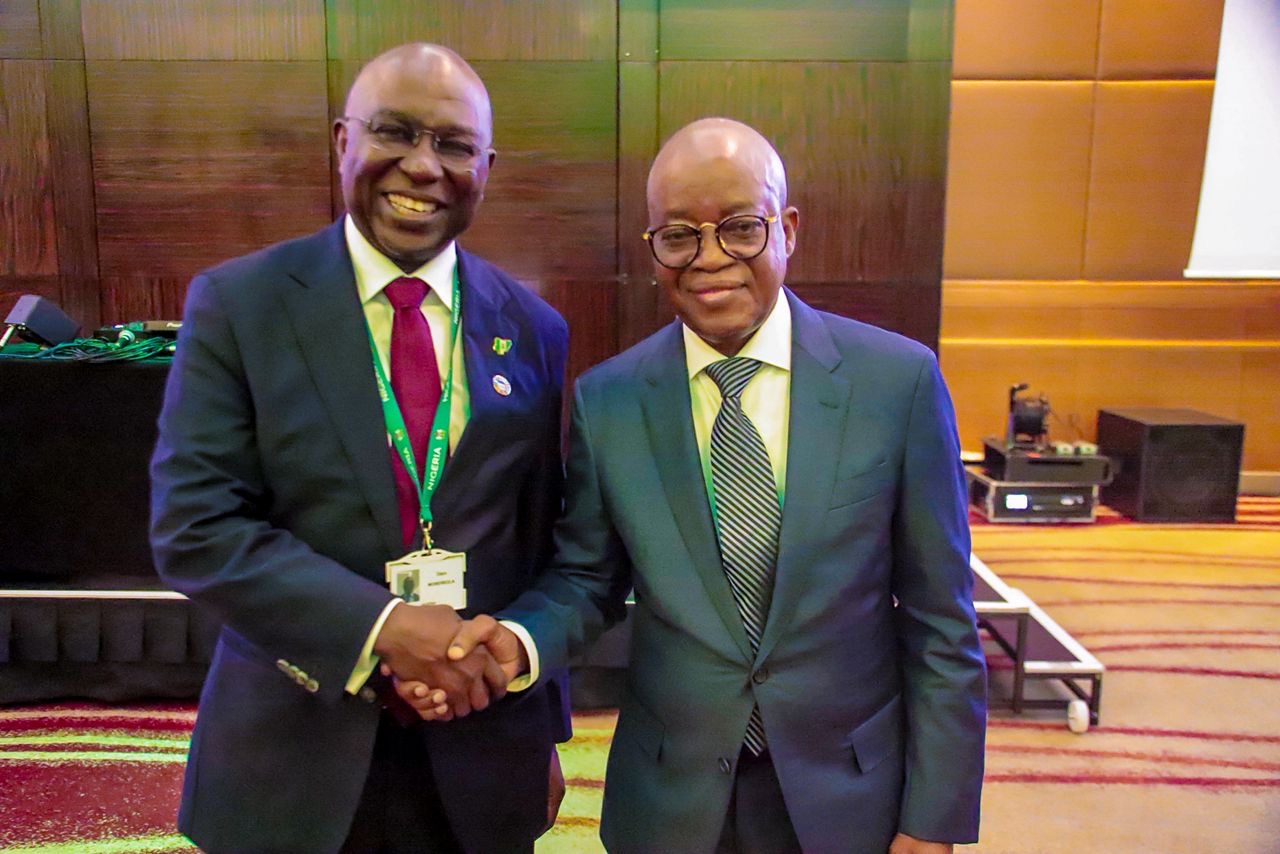
L-R: Executive Director, Finance and Administration, Nigerian Ports Authority, NPA, Vivian C. Richard-Edet; Director General, Nigerian Maritime Administration and Safety Agency (NIMASA), Dr Dayo Mobereola; Director Maritime Safety and Security, Federal Ministry of Marine and Blue Economy, FMMBE, Babatunde Bombata; Minister of Marine and Blue Economy, H.E, Adegboyega Oyetola, CON and Permanent Secretary, FMMBE, Olufemi Oloruntola during the International Maritime Organization’s (IMO) Council Elections in London.
Perhaps, it entails much more than a lot of people think already, or even know. Every victory deserves applause, and there is no reason the Minister of Marine and Blue Economy, Adegboyega Oyetola, who led the campaign, and who has been credited with strategic diplomacy and reforms agenda should not be celebrated.
Therefore, one must empathize with the loud celebration and salutations that have greeted the election victory so far. It undoubtedly points at a renewed global confidence in Nigeria, and it is good to feel alright and to express it in whatever way we see fit. Home and abroad, the win is seen as an endorsement of Nigeria’s maritime reforms, Gulf of Guinea security efforts, and the broader economic vision under President Bola Ahmed Tinubu as has been espoused by political strategists; rightly or wrongly.
In due course, it is hoped that every argument will be interrogated just so to fit into the right narrative. For the moment, suffice it to state that the Category C Seat is reserved for 20 countries with special interests in maritime transport and navigation, and as such, deliberately designed to ensure balanced global representation. In essence, it serves the cause of political balancing than it advances technical oversight. Other elected countries in Category C include Bahamas, Belgium, Chile, Cyprus, Egypt, Finland, Indonesia, and Jamaica.
Let it also be mentioned in passing that the IMO Council has three categories (A, B, C). While pundits holds the view that Category C is highly competitive, with only 20 seats available worldwide, others whose business it is to know say that the categorization is progressive and clearly defined by their boundaries.
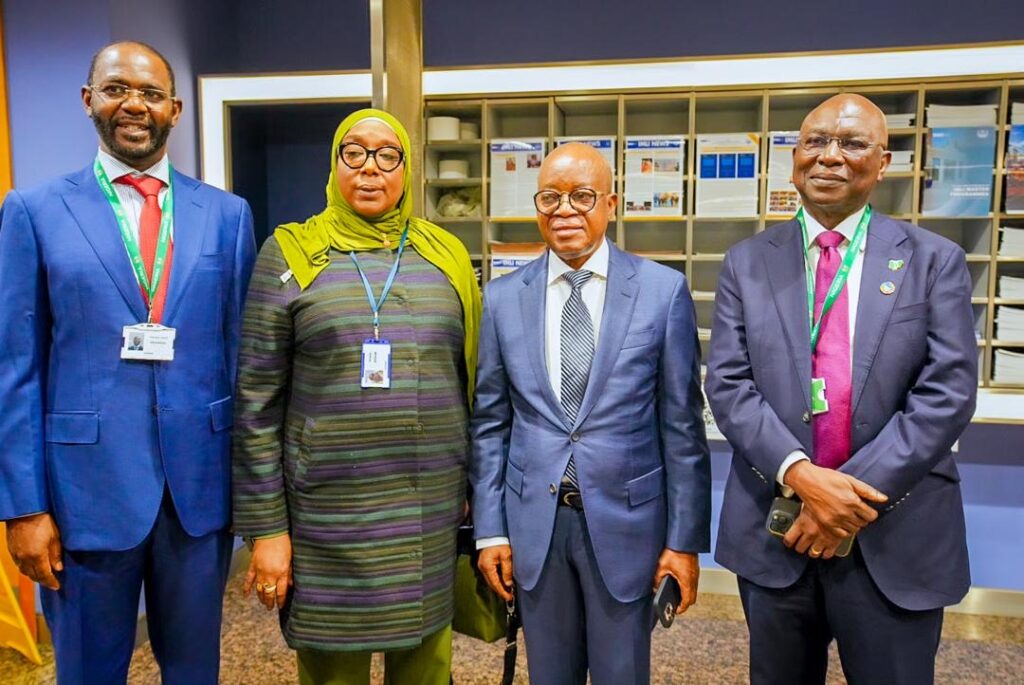
L-R: Chairman Governing Board, Nigerian Maritime Administration and Safety Agency, NIMASA, Yusuf Hamisu Abubakar; Chairman House of Representatives Committee on Maritime Safety, Education and Administration, Rt. Hon. Khadija Bukar Abba Ibrahim; Minister of Marine and Blue Economy, H.E, Adegboyega Oyetola, CON and Director General, NIMASA Dr Dayo Mobereola during the International Maritime Organization’s (IMO) Council Elections in London.
What this suggests is that Category C is the first rung of the ladder rising in importance as the rungs count upwards, but which by no means is a big deal in the diplomatic world of global maritime trade.
Thus far, Nigeria now participates directly in shaping international shipping regulations, safety standards, and environmental policies. For a country with the leading statistics in global import, Nigeria has long enjoyed the undisputable title of both regional and continental leadership. Therefore, as Africa’s largest maritime nation, one cannot but agree with analysts that Nigeria’s election reinforces its role in tackling piracy and promoting sustainable ocean governance.
Notwithstanding, that with a total of 116 votes, Nigeria beat countries like Denmark, Kenya, and Bangladesh at the election, Abuja has set out on a bold walk into the future.
Haven been in the cold for about 14–15 years, this historic comeback cannot in anyway be undermined as efforts, going forward, hopefully would be intensified to move up the rung, while realistically eyeing our sister, regional ally, Liberia that has sustained its grip on the IMO Category A Seat through measurable, pragmatic maritime policy initiatives and capacity growth dynamics.
One cannot but agree with the crowd of growing optimists that our marine and blue economy has just received the greatest boost to refocus, dream and plan better. In the course of the ongoing euphoria, we have heard that the IMO Council Seat strengthens Nigeria’s ability to attract investment into ports, shipping, and marine resources.
We must keep reminding ourselves of the need to keep watch to ensure that these expectations don’t end up a mirage, especially so because our ports is still enveloped in embarrassing infrastructure decay, assets and operationally deficiencies.
Perhaps, the greatest fillip to the victory we are celebrating is Nigeria’s efforts in combating piracy in the Gulf of Guinea, which has significantly reinforced its role as a regional security leader.
We have also been told that Nigeria can now influence IMO’s climate and sustainability agenda, aligning with ongoing global decarbonization efforts. Whilst that aspiration is very commendable, perhaps what is most desirable at the moment should be the urgent lobby to delist Nigeria from the War Risk Premium penalty that has since been imposed by global maritime insurers.
Nigeria can leverage its IMO Council seat by showcasing improved maritime security, building diplomatic coalitions within the IMO, and presenting credible data to insurers and shipping stakeholders to argue for the removal of the War Risk Premium.
This is because on principles, Nigeria’s seat in the IMO Council gives it a stronger voice in shaping maritime policies and insurance perceptions; and this can be achieved through a number of ways, such as coalition building and partnering with other African and developing nations facing similar surcharges; and which can amplify Nigeria’s case as has just been demonstrated with the council seat election.
Agenda setting is another important approach. Nigeria can push for formal IMO discussions on reviewing War Risk Premiums tied to outdated security assessments. In the same vein, regular showcase of maritime security improvements can change perception and reinforce confidence; such as the prevailing increased patrols by the Nigerian Navy.
It is on record that the increased patrols have helped in reducing piracy incidents both at home and in the Gulf of Guinea. Also benchmarked against the gains of the Deep Blue Project under the Nigerian Maritime Administration and Safety Agency (NIMASA), in collaboration with regional partners, the international shipping community cannot but begin to appreciate these positive narratives on improved safety.
Such collaboration logically can only lead unswervingly to the urgency of a reliable data bank. That way, presenting independent statistics showing reduced attacks will help insurers reassess risk models; especially since some of the existing models have come under criticism.
Nigeria can also use its IMO platform to engage Lloyd’s of London and P&I Clubs, the executors of war risks premiums. Economic argument can be built around such direct engagement, and can be used to highlight the $1.5 billion Nigeria so far paid in past three years as an unsustainable burden. There is also no reason Abuja cannot design strategic partnership and engagement system via international industry conferences by hosting IMO-backed forums in Lagos or Abuja to showcase security improvements. Such engagements provide opportunities for prevailing negative narratives and perceptions to be countered and shifted.
The Maritime Organisation of West and Central Africa (MOWCA), the Maritime Academy of Nigeria (MAN) and the Abuja Memorandum of Understanding (Abuja MoU ) have what it takes to support the efforts and help build the required credibility through regional and global partnerships.
While global shipping alliances with major shipping nations (e.g., Greece, Singapore) can add weight to Nigeria’s lobbying, joint patrols and intelligence sharing with regional neighbours can also reinforce Nigeria’s case.
Even though international maritime insurers are known to be conservative and slow when it comes to the adjustments of premiums, the Ministry of Marine and Blue Economy and other relevant MDAs should be seen to be able to provide independent third-party audits of maritime security improvements. There has to be sustained and deafening campaign activities that calls for objectivity and fairness in this matter.
To keep the momentum going, the Minister of Marine and Blue Economy, Adegboyega Oyetola must be seen to also be leading in the planned sensitization and continuous public relations campaigns at IMO and global shipping forums to redirect the narrative that Nigeria’s waters and ports are safe for ship calls.
And there should be no room for fragmented advocacy, all relevant organs of government, NIMASA, Nigeria Port Authority, Nigerian Shippers’ Council, Nigeria Navy, National Inland Waterways Authority, and even the Ministries of Transport and Foreign Affairs must be embedded under a unified strategy to rebrand Nigeria.
It is instructive to note that Nigeria’s IMO Council seat is not just symbolic but a policy tool. By combining diplomatic lobbying, credible security data, and coalition-building, we can make a compelling case for the removal of the war risk premium.
This would save billions annually, boost trade competitiveness, and reposition Nigeria as a secure maritime hub in West Africa.





NSW Mgmt Opens Dedicated Support Centre in Apapa

NIMASA Management Engages National Assembly On Budget Implementation

Nigeria’s Maritime Sector Bleeding Trillions Amid Policy Gaps- Says SEREC

AfCFTA Implementation: Customs Launch 3-Day Training Programme

Adeniyi Commissions Project at Government Secondary School Wuse

ANLCA President, Nwokeoji Honoured as Customs Broker of the Year

Godfrey Bivbere Decorated Best Maritime Reporter of the Year

Clearing Agents Protests Police Continued Disruption of Activities

Customs Auctions Seized Petrol Worth ₦14.8 Million

Jonathan, George, Alaibe, Gwandu, Diri Others Speak On Efficient Modern Ports System

Deleting the Gatekeepers: How Dantsoho is Coding-Out Corruption at Nigeria’s Ports

President Tinubu Government Sensitive To Community Development – Okonna, MAN Rector
ANLCA Board is intact, cannot be wished away by anybody’-Elochukwu

B-R-E-A-K-I-N-G: Effedua, Rector MAN Oron, Resigns

EFCC’s Probe: Okowa Plots Sheriff’s Removal Despite London Accord
Customs Trains ANLCA Members, Others on B’Odogwu Portal

NPA’s Alleged Executive Management Fight: The Half Truth & Truth
ANLCA Board Election: Know Your Candidates
‘Why We Launched B-Odogwu Pilot Scheme With Webb Fontaine Still Running’ – Adeniyi

Onyemekara Promoted GM, Appointed NPA’s New Spokesperson

Nigeria Customs: Trust, Competence And The Oramalugo Factor

‘Rush To Break News Can Lead To Brush With Cybercrime’- Police

Kebbi Is Hub of Hard Drugs Smuggling In Northern Region’ – Oramalugo

Maritime Industry At 64: Oyetola Versus Oyetola