
Uncategorized
Nigeria Customs Explains Setback to 24hr Port Operations

…As Service, PEBEC Partners to Revolutionise Port Digitalization
BY FUNMI ALUKO
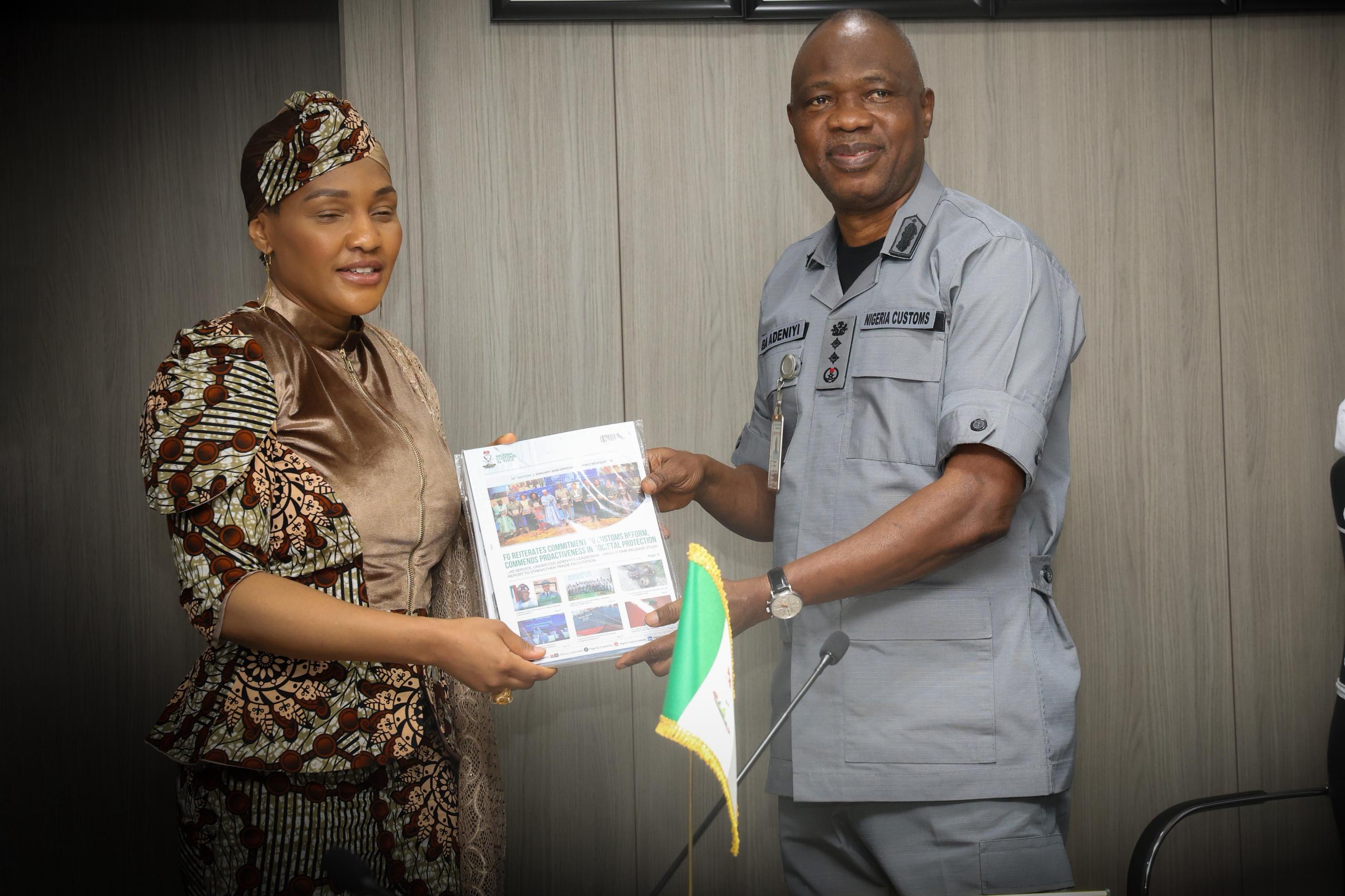
The Nigeria Customs Service (NCS) has reaffirmed its commitment to creating a fully paperless port environment, pledging deeper digital reforms in collaboration with the Presidential Enabling Business Environment Council (PEBEC). Comptroller General of Customs (CGC) Adewale Adeniyi made this known during a strategic meeting with PEBEC Director General, Princess Zahrah Audu at Customs House, Abuja, Friday, when the PEBEC boss paid the customs leadership a courtesy visit.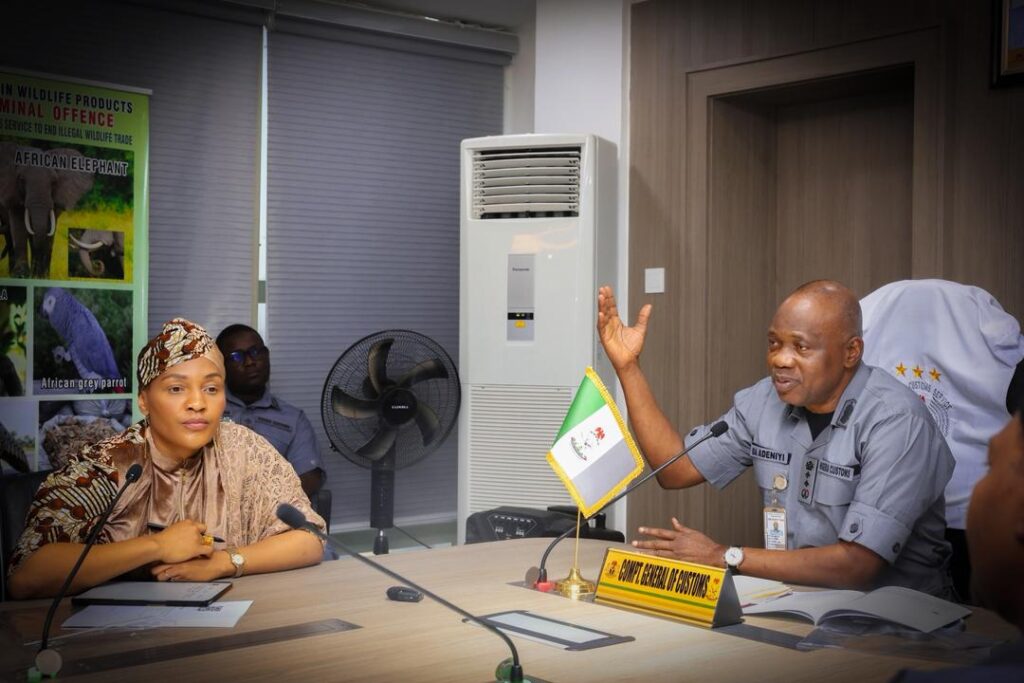
Adeniyi explained that the Service has institutionalised regular consultations with trade stakeholders, including the American Business Council, to identify operational bottlenecks and strengthen cooperation. The customs boss according to a release made available by the Service Spokesman, Deputy Comptroller Abdullahi Maiwada disclosed that the Service continuous stride to improve port operations led to the adoption of a global port operation assessment programme known as Time Release Study (TRS).
He highlighted findings from a recent Time Release Study (TRS) conducted with the World Customs Organisation at Tin Can Island Port, which provided critical insights into port inefficiencies and is already guiding reforms.
On the much-discussed issue of 24-hour port operations, Adeniyi clarified that Customs alone cannot sustain round-the-clock clearance without full participation from banks, shipping companies, and terminal operators. “We once deployed officers to support round-the-clock port operations, but the effort faced challenges because other critical operators were not fully integrated,” he said.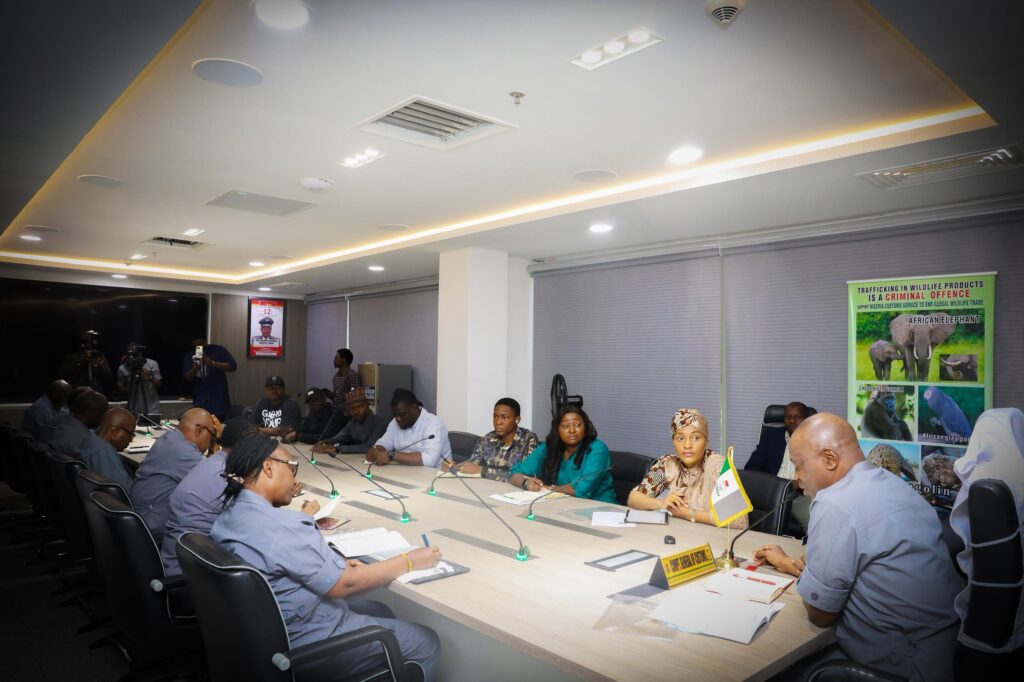
The CGC noted that while most Customs processes, including pre-arrival documentation, cargo declaration, duty payment, and release communication; have been digitized, delays persist due to operators still reliant on physical paperwork. He added that investments in scanning technology and ICT infrastructure are underway to strengthen risk-based cargo management and reduce dependence on physical inspections, in line with global best practices encouraged by partners such as the World Bank and IMF.
Princess Zahrah Audu, PEBEC’s Director General, outlined the Council’s ongoing 90-day Business Environment Enhancement Programme, designed to tackle operational challenges identified in its 2025 Business Facilitation Compliance Report. She revealed that a recent three-day operational assessment at Lagos ports exposed inefficiencies in vessel boarding, cargo inspections, and technology adoption, leading to practical recommendations for improvement.
Deputy Comptroller General of Customs (ICT & Modernisation), Oluyomi Adebakin, stressed that vessel arrival schedules already provide sufficient data for smarter deployment of personnel, rather than simply extending working hours. “The concept of 24-hour port operations should focus on smarter deployment of personnel based on vessel schedules, not merely extending working hours,” she said.
The Deputy Comptroller-General in charge of Tariff and Trade also reaffirmed the effectiveness of trade facilitation tools such as the Authorised Economic Operator Programme, Advance Ruling Systems, and One-Stop-Shop initiatives, which aim to expedite cargo clearance for trusted traders and actualise the Federal Government’s trade efficiency goals.
With Customs and PEBEC aligning on digitalisation, stakeholders are optimistic that Nigeria’s ports will soon overcome long-standing bottlenecks and reposition the country as a competitive hub for global trade.








ANLCA Airport Crisis: Police Raid Raises Questions Over IGP’s Respect For Court Orders

‘We Arrested Several Vessels Violating Cabotage Trade’ – NIMASA

Customs CGC Says ‘The World Is Connected, Not Borderless’

Nigeria Customs Mulls Reviews of Complaints Arising from Recruitment

Edo-Delta Journalists Forum Challenges Political Leaders on Regional Development

Nnadi Urges Nigerian Importers to Shift from Finished Goods to Manufacturing

WMD: Oyetola Recommit to Unlock CVFF Pursuant to Indigenous Operators Financing

Customs FOU Zone ‘A’ Hands Over Seized ₦511.4m Pharmaceuticals, Illicit Drugs to NDLEA, NAFDAC

Oyetola Unveils NPERA, Corporate Logo Amid Quiet Enthusiasm

Nigeria, Benin Urged to Deploy Culture and Traditional Diplomacy to Defuse Border Tensions

Nigeria’s Ports: How Foreign Capital Took the Dinner, While Indigenous Businesses Got the Crumbs (3)

FOU Zone A, Police, Army, DSS, Others Strengthen Security Alliance Ahead of Elections

ANLCA Board is intact, cannot be wished away by anybody’-Elochukwu

B-R-E-A-K-I-N-G: Effedua, Rector MAN Oron, Resigns

EFCC’s Probe: Okowa Plots Sheriff’s Removal Despite London Accord

Customs Trains ANLCA Members, Others on B’Odogwu Portal

NPA’s Alleged Executive Management Fight: The Half Truth & Truth

ANLCA Board Election: Know Your Candidates
‘Why We Launched B-Odogwu Pilot Scheme With Webb Fontaine Still Running’ – Adeniyi

Onyeka Makes History As Tin-Can Customs Hit ₦16.4bn A Day

Onyemekara Promoted GM, Appointed NPA’s New Spokesperson

Nigeria Customs: Trust, Competence And The Oramalugo Factor

‘Rush To Break News Can Lead To Brush With Cybercrime’- Police

Apapa Customs Collects ₦161b On B’Odogwu Platform In 3 Weeks