
Maritime
The Long Journey To Securing Nigerian Ports’ Repairs Loan (3)

BY EGUONO ODJEGBA
In our last serial, we explored the available alternative financing approach to turning around the efficient operability and functionality of the nation’s ports; bogged down for a long time already by infrastructural deficit; among other issues. Today, we shall be looking elsewhere in our attempt to achieve a comprehensive view of the challenge starring us in the face.
The Political Economy of Nigerian Ports
Nigeria’s ports remain the country’s most critical trade arteries, yet they are also its most glaring symbols of dysfunction. Observers believe that the effort to secure foreign loans for rehabilitation is less about infrastructure and more about navigating entrenched political and economic interests that have historically derailed reform.
Corruption and Rent-Seeking
Port operations are riddled with overlapping agencies, each extracting unofficial charges that inflate costs and delay clearance. Relevant and allied agencies thrive on rent-seeking, while political patronage ensures contracts are awarded based on loyalty rather than competence. The result: inflated concession fees, poor service delivery, and annual revenue leakages running into billions of naira through under-declaration, smuggling, and collusion between importers and officials.
Regulatory Gaps
Oversight remains fragmented. The Nigerian Ports Authority, Nigeria Customs Service, and regulators such as the Standard Organisation of Nigeria, National Agency for Drugs Administration Control, often work at cross-purposes, creating confusion and inefficiency. Automation and single-window clearance systems which has been the global best practices have been announced repeatedly but resisted by vested interests who profit from manual bottlenecks. Unlike advanced economies where regulators shield businesses and consumers from exploitative practices, Nigeria lacks effective mechanisms to protect port users from arbitrary charges and inefficiency. But of course, given that the NSW implementation was launched last week; only time would tell how efficient and business-like it turned out to be.
Inefficiency and Infrastructure Decay
Apapa and Tin Can Island ports are notorious for congestion, with trucks queuing for days due to poor road access and outdated logistics. Importers face some of the highest port charges in West Africa, eroding Nigeria’s competitiveness. Meanwhile, billions borrowed for port refurbishment contrast sharply with idle domestic assets like Ajaokuta Steel, underscoring a misalignment between infrastructure investment and industrial policy.
Historical Reform Failures
The 2006 port concessioning was meant to inject efficiency through private operators but was undermined by weak regulation and lack of transparency. Automation initiatives have been sabotaged by entrenched interests, while anti-corruption drives have been politicized, targeting opponents while leaving systemic rent-seeking untouched.
Implications for Financing Deals
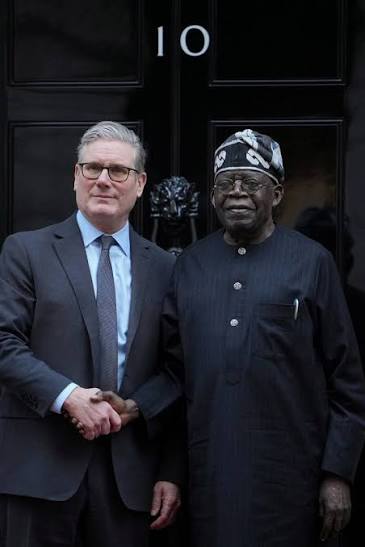
The UK loan deal must be understood against this backdrop. Even if funds are secured, corruption, inefficiency, there is n o guarantee that weak regulation will not erode the expected benefits. Without governance reforms, therefore, refurbished ports risk becoming cosmetic upgrades masking persistent dysfunction.
Conclusion
Nigeria’s ports embody the “Nigerian Factor”, namely, corruption, inefficiency, and regulatory gaps that turn opportunities into liabilities. Securing loans is only half the battle. The harder task lies in dismantling entrenched interests, enforcing transparency, and aligning port reforms with industrial revival. Until then, every loan, whether from the UK or elsewhere, risks being swallowed by the same political economy that has kept Nigeria’s ports in perpetual decay.

NPA Congratulates ANLCA on 72nd Anniversary, Reaffirms Support for Port Modernisation

Afeni Lands at FOU Zone ‘A’ in Acting Controller Capacity

NPA Mulls Specialised Fishing Port to Deepen Nigeria’s Blue Economy

Industry Stakeholders Applaud ANLCA at 72nd Anniversary Celebration

Port Regulation Critical To Fisheries, Blue Economy – NPERA DG, Akutah

ANLCA @ 72: FG, Stakeholders Laud Association’s Leading Role in Trade Facilitation

Apapa Customs: Comptroller Mu’azu Takes Over, Pledges Strict Revenue Integrity And Seamless Trade

Stakeholders Demand Immediate Action To Convert Nigeria’s $1 Trillion Blue Economy Potential Into Reality

Afeni’s Parting Query: Why Evade Duty on a ₦417m Range Rover?

ANLCA@72: As All Roads Lead to Marriott Hotel lkeja

MARCON Set To Host Conference On Sustainable Fishing In Lagos

Fire Incident: Western Marine Customs Debunk Media Exaggerations
ANLCA Board is intact, cannot be wished away by anybody’-Elochukwu

B-R-E-A-K-I-N-G: Effedua, Rector MAN Oron, Resigns

EFCC’s Probe: Okowa Plots Sheriff’s Removal Despite London Accord
Customs Trains ANLCA Members, Others on B’Odogwu Portal

NPA’s Alleged Executive Management Fight: The Half Truth & Truth
ANLCA Board Election: Know Your Candidates
‘Why We Launched B-Odogwu Pilot Scheme With Webb Fontaine Still Running’ – Adeniyi

Onyemekara Promoted GM, Appointed NPA’s New Spokesperson

Nigeria Customs: Trust, Competence And The Oramalugo Factor

‘Rush To Break News Can Lead To Brush With Cybercrime’- Police

Kebbi Is Hub of Hard Drugs Smuggling In Northern Region’ – Oramalugo

Apapa Customs Collects ₦161b On B’Odogwu Platform In 3 Weeks