
Customs Report
500 Senior Officers Panic Over Customs Coup Scare

BY EGUONO ODJEGBA
The politically manipulated leadership change in the Nigeria Customs Service (NCS) in 2004, aptly described by analysts as a “palace coup,” nearly brought the service to its knees. Influential figures were believed to have been involved in that audacious and unspeakable putsch.
By its very nature, the development generated considerable turmoil, almost causing administrative and institutional upheaval. It was eventually brought under control by a strong intervention cascading from the presidency downwards, where the coup appeared to have been hatched.
It is also instructive that the groundswell of opposition that followed the 2004 Customs coup was quelled only by presidential power and incumbency. When the dust settled, over 70 serving senior officers at the comptroller rank lost their commissions and were subsequently discharged en-masse, not for breaching rules, but because of the vaulting ambition of a clique, emboldened by a Nigerian most influential industrialist and power broker, with a coterie of co-conspirators, within the president’s cabinet.
Today, we shall not dwell on naming these actors. Suffice it to say that many are still alive to witness a near repeat of that sad episode, just as most victims of that purge are still alive, some bearing the scars of national ingratitude.
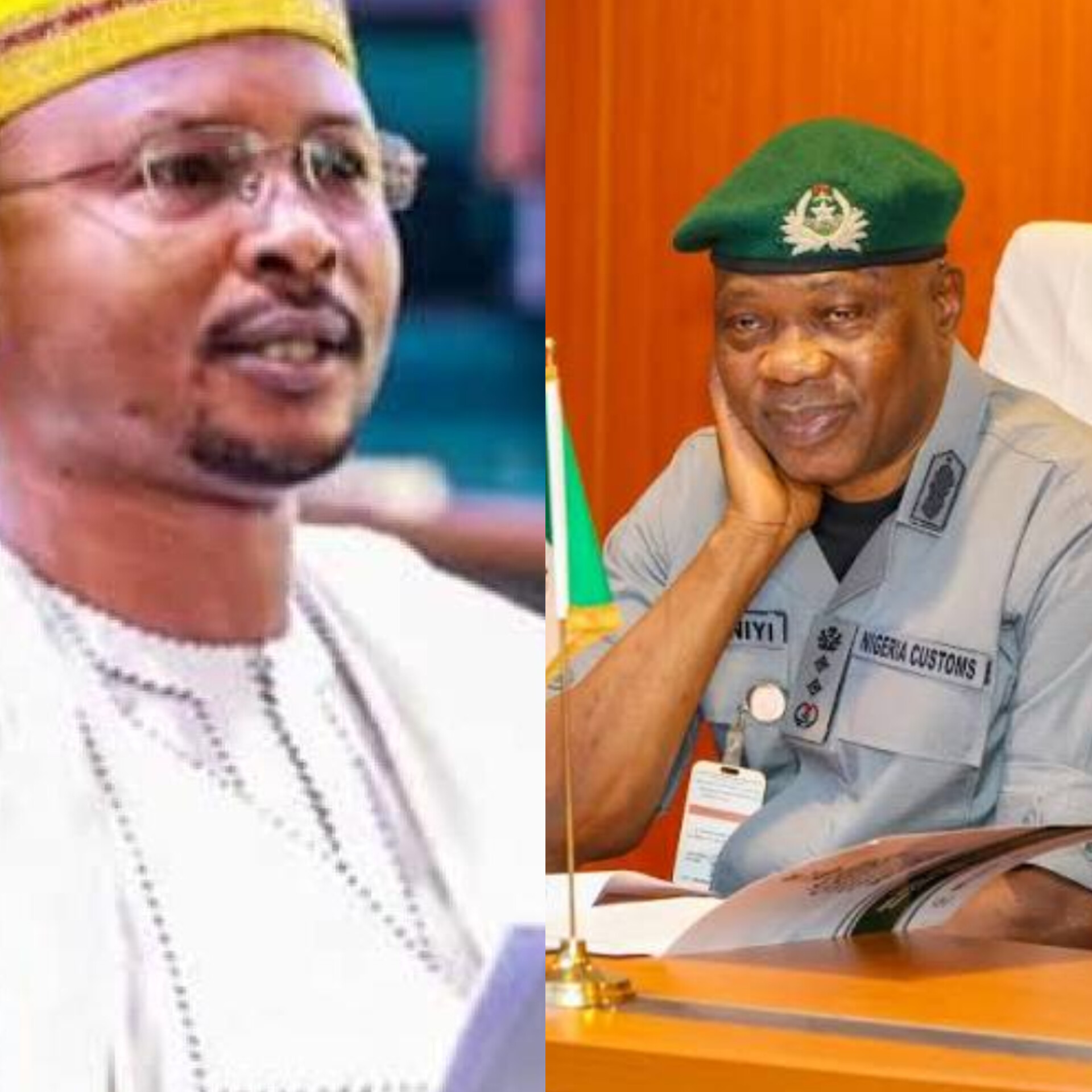
Let us fast forward to 2026, where a similar plot was believed to have been effectively, officially and permanently thwarted by the presidency, according to media reports. It is believed that this alleged, attempted coup was not directly aimed at unseating the incumbent Comptroller General, Bashir Adewale Adeniyi PhD, and his management team. Instead, unconfirmed insiders sources say the plan was to orchestrate the mass removal of over 500 senior officers in favor of one middle-level officer, whose name was given simply as Olorunfemi.
Had Olorunfemi emerged, an estimated 500 senior colleagues would have been forced to exit, and these are officers with the requisite training in modern customs operation and with years of experience; officers who have trained with huge financial resources to continue to give their best until retirement. This would have disrupted the NCS’s structured succession plan, leading to immediate dislocation and chaos across administrative and operational fronts.
Media reports spotlight the alleged role of Hon. Leke Abejide, Chairman of the House of Representatives Committee on Customs and Excise. Abejide has become a household name in Customs affairs, notably for his role in the passage of the Customs Reform Bill, which culminated in the Nigeria Customs Act 2023.
King Duncan in Shakespeare’s Macbeth observed: “There’s no art to find the mind’s construction in the face.” If Abejide’s role in the said coup is as alleged, perhaps the quote above explains his unseen potential for the unimaginable, and the question of sincerity in his disposition towards protecting NCS interests.
Reports allege that Abejide secretly pushed for his cousin, Olorunfemi, to replace Bashir Adewale Adeniyi in August 2026, when Adeniyi’s tenure was expected to wind up after a six-month extension granted by President Bola Ahmed Tinubu in 2025.
Analysts have argued that the move breached civil service procedures, given the said Olorunfemi’s relatively lower rank, compared to constitutional guidelines and recommendations for appointment as CGC.
Pundits further argued that had Abejide’s plan succeeded, the internal turmoil would have dwarfed the 2004 coup, which eventually produced Elder Buba Jacob Jang as CGC after an unforeseen turbulence within the ranks of the coupists at the time. Abejide’s alleged plot sought not only to remove Adeniyi but also to sack the entire senior cadre from comptroller upwards, reportedly just to pave the way for his cousin.
To say the least, such audacity reflects unscrupulous moral depravity in political intrigue. While lawmakers have the right to influence appointments, such actions must align with institutional rules and moral responsibility. Any defiance of these principles renders one unfit for service to both nation and humanity.
God help the said ambitious officer to navigate this avoidable political exposure to safety. In functional societies, such acts constitute what is known in military and security organizations’ parlance, as gross insubordination and act of mutiny. Yet, without official confirmation, the alleged coup remains in the realm of rumour, likely to fade unless it is duly substantiated over time.
Ambition for the coveted CGC seat is widespread, with regions and political cliques deeply involved. Rumors suggest the North West and North East are lobbying for the position, with speculation that President Tinubu is facing intense pressure to trade the role to the core North in exchange for his 2027 re-election support.
That office has resided in the North far more frequently for the North to continue to be seen as just and fair in the present struggle to produce the next customs leadership. North Central, maybe, yes. South East, yes; South South, an emphatic yes; for obvious historical reasons.
Looked at objectively and fairly, perhaps the South East and South South stand out as most qualified to produce the next CGC. The South South, in particular, has never held the position. Historically, the office has resided in the North far too often for continued claim to the office to be fair, unless and until regions that have never produced the CGC to be seen to have done so; even if it were just once or twice.
Yet Nigerian politics often marginalize minority regions, aided by internal collaborators, notably those in the bracket known as the useful idiots. As Adeniyi looks toward completing his tenure in 2027, one hopes President Tinubu will be guided by his conscience and fairness in appointing Adeniyi’s successor.
The Customs Act 2023 is explicit about allowable ranks for CGC appointments. Ignoring these guidelines would amount to a violation of justice and institutional decorum. The NCS, with its structured succession plan, must not be left to chance or undue political interference.
As a sovereign nation, Nigeria must prioritize fair representation, resource distribution, and socio-economic balance. Only then can allegation of distrust, suppression, and marginalization be addressed, meaningfully.
To shield the Nigeria Customs against future coup scare, it is important that those holding political powers, Aso Rock to be precise, not to pander to narrow considerations in the discharge of its constitutional duty in the appointment of new leadership for the service.






Lagos-Calabar Highway: Did Nigeria Pay the Price for Inadequate Planning?

ANLCA Airport Crisis: Police Raid Raises Questions Over IGP’s Respect For Court Orders

‘We Arrested Several Vessels Violating Cabotage Trade’ – NIMASA

Customs CGC Says ‘The World Is Connected, Not Borderless’

Nigeria Customs Mulls Reviews of Complaints Arising from Recruitment

Edo-Delta Journalists Forum Challenges Political Leaders on Regional Development

Nnadi Urges Nigerian Importers to Shift from Finished Goods to Manufacturing

WMD: Oyetola Recommit to Unlock CVFF Pursuant to Indigenous Operators Financing

Customs FOU Zone ‘A’ Hands Over Seized ₦511.4m Pharmaceuticals, Illicit Drugs to NDLEA, NAFDAC

Oyetola Unveils NPERA, Corporate Logo Amid Quiet Enthusiasm

Nigeria, Benin Urged to Deploy Culture and Traditional Diplomacy to Defuse Border Tensions

Nigeria’s Ports: How Foreign Capital Took the Dinner, While Indigenous Businesses Got the Crumbs (3)
ANLCA Board is intact, cannot be wished away by anybody’-Elochukwu

B-R-E-A-K-I-N-G: Effedua, Rector MAN Oron, Resigns

EFCC’s Probe: Okowa Plots Sheriff’s Removal Despite London Accord
Customs Trains ANLCA Members, Others on B’Odogwu Portal

NPA’s Alleged Executive Management Fight: The Half Truth & Truth
ANLCA Board Election: Know Your Candidates
‘Why We Launched B-Odogwu Pilot Scheme With Webb Fontaine Still Running’ – Adeniyi

Onyeka Makes History As Tin-Can Customs Hit ₦16.4bn A Day

Onyemekara Promoted GM, Appointed NPA’s New Spokesperson

Nigeria Customs: Trust, Competence And The Oramalugo Factor

Apapa Customs Collects ₦161b On B’Odogwu Platform In 3 Weeks

‘Rush To Break News Can Lead To Brush With Cybercrime’- Police