Business Focus
SEREC Warns Against IMF-Backed VAT on Fuel, Telecom Excise in Nigeria

BY KESIENNA SHEPHERDS
The Sea Empowerment and Research Center (SEREC) has raised strong concerns over recent recommendations by the International Monetary Fund (IMF) urging Nigeria to extend Value Added Tax (VAT) to petroleum products and introduce excise duties on telecommunications services.
In its position paper released on June 15, 2026, SEREC cautioned that while revenue generation is critical for fiscal stability, such tax measures could worsen Nigeria’s already fragile socio-economic conditions.
Nigeria is currently grappling with inflation, declining purchasing power, rising energy costs, unemployment, food insecurity, and escalating transportation expenses. According to SEREC, imposing VAT on fuel would ripple across transportation, logistics, agriculture, and manufacturing, leading to higher fares, food prices, and production costs.
Telecommunications, now considered essential infrastructure, would also be hit hard. Excise duties on voice and data services could widen the digital divide, undermine Nigeria’s digital economy ambitions, and burden consumers already facing multiple taxation in the sector.
SEREC argued that the proposed taxes may yield limited welfare gains compared to their broader economic consequences. The maritime and logistics sectors, vital for trade and growth, would face additional cost pressures, potentially weakening Nigeria’s competitiveness in regional and global markets, the Centre further noted.
Instead of new consumption taxes, SEREC urged the government to focus on alternatives such as strengthening tax administration, expanding the tax net, reducing governance costs, tackling corruption, modernizing customs operations, and leveraging opportunities in the blue economy.
The Center emphasized that reforms must balance fiscal sustainability with social stability, warning that revenue generation should not come at the expense of worsening poverty and shrinking household incomes.
“Policies that stimulate production, support enterprise growth, encourage investment, expand employment opportunities, and strengthen citizens’ purchasing power should take precedence over additional consumption taxes,” the paper stated.
SEREC concluded by calling for evidence-based, people-centered approaches to tax reform, stressing that any proposals should undergo socio-economic impact assessments and stakeholder consultations before implementation.









Customs CGC Says ‘The World Is Connected, Not Borderless’

Nigeria Customs Mulls Reviews of Complaints Arising from Recruitment

Edo-Delta Journalists Forum Challenges Political Leaders on Regional Development

Nnadi Urges Nigerian Importers to Shift from Finished Goods to Manufacturing

WMD: Oyetola Recommit to Unlock CVFF Pursuant to Indigenous Operators Financing

Customs FOU Zone ‘A’ Hands Over Seized ₦511.4m Pharmaceuticals, Illicit Drugs to NDLEA, NAFDAC

Oyetola Unveils NPERA, Corporate Logo Amid Quiet Enthusiasm

Nigeria, Benin Urged to Deploy Culture and Traditional Diplomacy to Defuse Border Tensions

Nigeria’s Ports: How Foreign Capital Took the Dinner, While Indigenous Businesses Got the Crumbs (3)

FOU Zone A, Police, Army, DSS, Others Strengthen Security Alliance Ahead of Elections

Nigeria’s Ports: How Foreign Capital Took the Dinner, While Indigenous Businesses Got the Crumbs (2)

Former Senatorial Candidate, Hajia Nike AbdulRahman Dumps NDC, Defects to APC

ANLCA Board is intact, cannot be wished away by anybody’-Elochukwu

B-R-E-A-K-I-N-G: Effedua, Rector MAN Oron, Resigns

EFCC’s Probe: Okowa Plots Sheriff’s Removal Despite London Accord
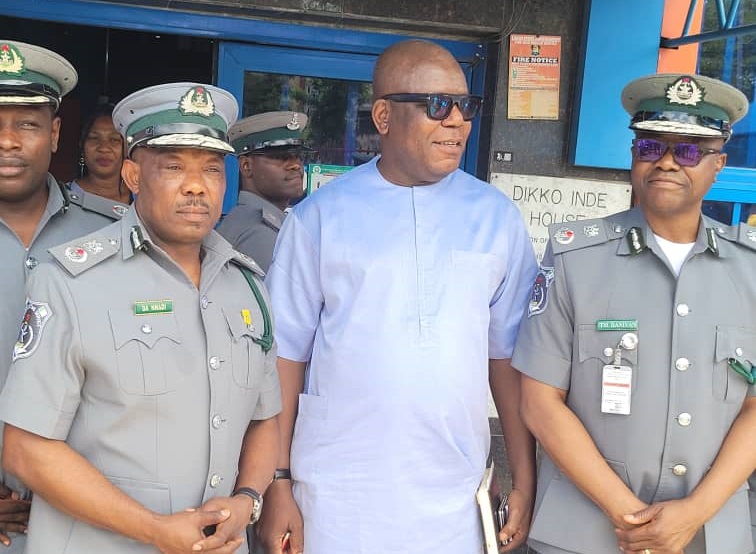
Customs Trains ANLCA Members, Others on B’Odogwu Portal

NPA’s Alleged Executive Management Fight: The Half Truth & Truth

ANLCA Board Election: Know Your Candidates
‘Why We Launched B-Odogwu Pilot Scheme With Webb Fontaine Still Running’ – Adeniyi

Onyemekara Promoted GM, Appointed NPA’s New Spokesperson

Nigeria Customs: Trust, Competence And The Oramalugo Factor

Onyeka Makes History As Tin-Can Customs Hit ₦16.4bn A Day

‘Rush To Break News Can Lead To Brush With Cybercrime’- Police

Kebbi Is Hub of Hard Drugs Smuggling In Northern Region’ – Oramalugo