
Customs Report
Abejide Defends DC Olorunfemi’s Appointment As CGC In-waiting

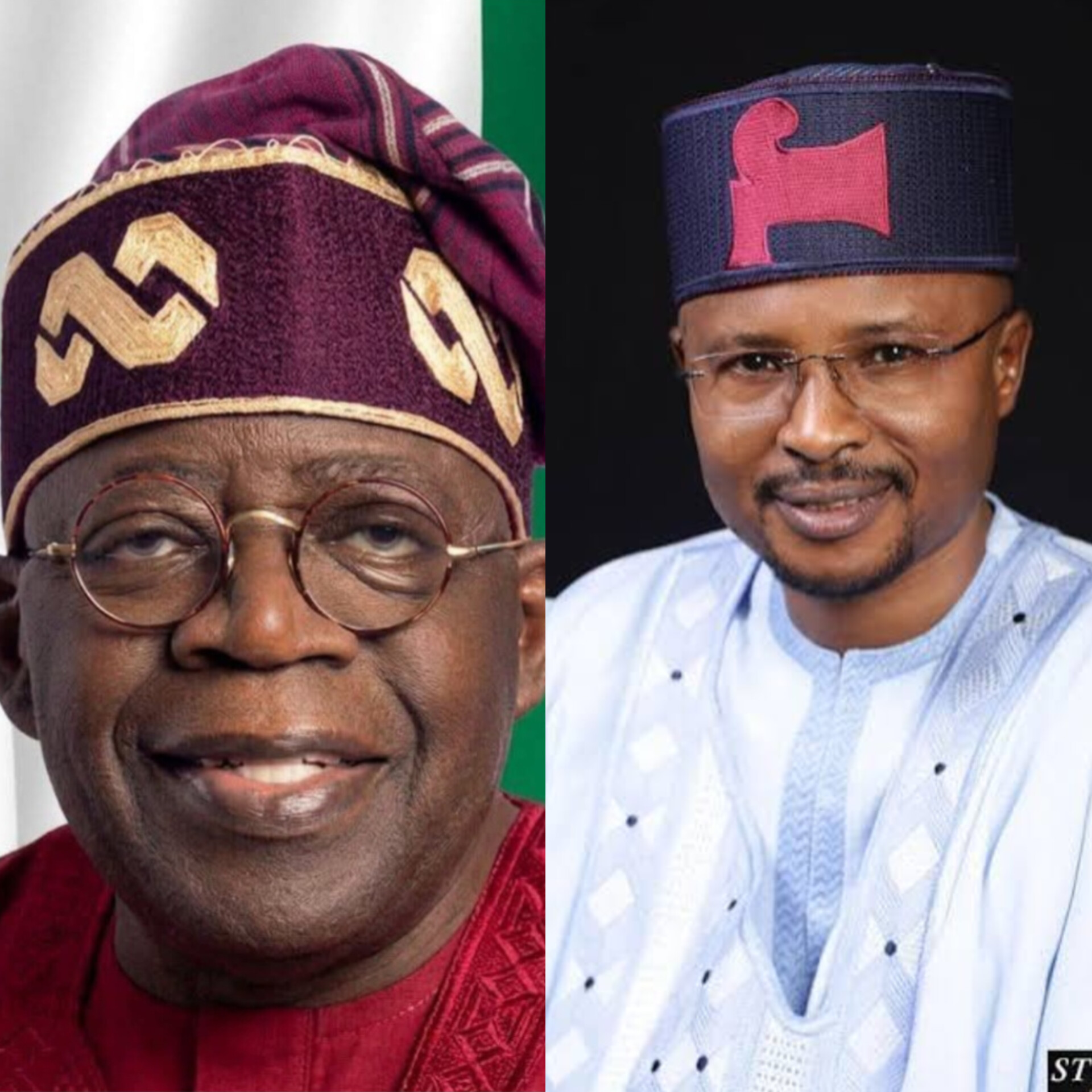
The succession debate within the Nigeria Customs Service (NCS) has intensified in recent days, following reports that Deputy Comptroller H.O. Olorunfemi has been approved by President Bola Ahmed Tinubu as Comptroller-General in-waiting. At the center of the controversy is Rt. Hon. Leke Joseph Abejide, Chairman of the House of Representatives Committee on Customs and Excise, who has mounted a strong defense of the appointment amid swirling allegations of nepotism, political maneuvering, and disregard for service rules. In this report, Eguono Odjegba takes a close look at all the issues at hand.
Media Speculation and Allegations
The controversy which was ignited by a popular online social media investigation alleged that Abejide had lobbied for the elevation of Olorunfemi, described by some sources as his cousin, to succeed the incumbent CGC Bashir Adewale Adeniyi MFR. Critics has argued that such an appointment would bypass senior officers, force premature retirements, and contravene the Nigeria Customs Service Act, which stipulates that only officers of Assistant Comptroller-General rank and above are eligible for the top post.
The report further suggested that political considerations, particularly realignments within the opposition African Democratic Congress (ADC), may have influenced discussions around the succession process. This narrative quickly gained traction, sparking heated debates both within Customs and among public policy observers.
Abejide’s Counter-Narrative
In a video statement and subsequent clarifications, Abejide categorically denied any family ties with Olorunfemi, insisting that he only met the officer in 2026 and had no prior personal or familial relationship. “People are spreading falsehoods. I have no family relationship whatsoever with him,” he said.
“Secondly, I have no relationship with the person the President has approved and appointed to take over from the current CG. As a matter of fact, I only knew him this year. I do not know his parents. He has never been close to me. I worked with Customs for 35 years and never met him until this year.”
He also rejected claims of lobbying, reframing the issue as one of institutional reform. According to Abejide, the Customs Service is grappling with a 16-year generational gap caused by recruitment freezes and promotion imbalances. According to him, current full Controllers, with service numbers in the 41,000 to 43,000 range, all belong to the same set and are due for statutory retirement by September 2026.
Explaining, Abejide said, “The current Deputy Controllers from the 2009 set are the officers who will take over from the current Comptroller-General. Without anybody being compulsorily retired because they have attained either 60 years of age or 35 years in service, there is nothing unusual about that.”
He further explained that the retirement of senior officers would not be the result of any special arrangement but in line with existing public service regulations.
“It is not by compulsion; it is by law. The Public Service Rules are very clear. Anyone saying officers will be retired because somebody is appointed is not telling the truth,” he said.
According to the distinguished lawmaker the Customs hierarchy currently suffers from a concentration of officers within the same generation of service.
“The true position is that Customs is challenged. There is a 16-year gap between those who are currently full Controllers with service numbers 41,000, 42,000 and 43,000. It means all of them belong to the same set and entered service around the same period,” he said.
“They are all leaving at the same time. The pyramid of Customs is very wide at the top and very narrow at the bottom. That is the challenge.”
According to him, the impending retirement of a large number of senior officers has therefore created the need for a carefully managed transition plan.
“By September, most of these officers will no longer remain in service because they would have retired statutorily,” he said.
The Generational Gap and Succession Logic
Abejide emphasized that the appointment of Olorunfemi from the 2009 set is a deliberate attempt to bridge the generational gap and ensure continuity. “The current Deputy Controllers from the 2009 set are the officers who will take over from the current Comptroller-General. Without anybody being compulsorily retired because they have attained either 60 years of age or 35 years in service, there is nothing unusual about that,” he said.
He maintained that President Tinubu’s intervention was designed to stabilize the institution and prevent a leadership vacuum. “The President revived efforts to close the 16-year gap, and the only way to do it was to pick one of them from the 2009 set. That is what the President has done. Customs works with service numbers and progression.”
Law vs. Reform: The Debate
Critics remain unconvinced, pointing to the Nigeria Customs Service Act, which stipulates that only officers of Assistant Comptroller-General rank and above can be appointed as CGC. Olorunfemi, currently a Deputy Comptroller, falls below this threshold. Some insiders warn that bending the rules could undermine morale and institutional credibility, while others see the move as a pragmatic response to an unprecedented personnel crisis.
Abejide insists the succession arrangement complies with existing regulations and will not result in unlawful retirements. “No forced retirement of officers, no senior officer bypassed. Olorunfemi’s appointment as Customs CG after Adeniyi’s six-month transitional tenure is lawful and intended to close the 16-year generational gap,” he said.
Political Undertones and Institutional Integrity
The allegations of political influence—particularly links to ADC realignments have added fuel to the controversy. While Abejide dismisses these claims as distractions, the optics of elevating a relatively middle level officer amid political speculation remain problematic. Public policy analysts argue that succession planning in strategic institutions like Customs must balance legality, meritocracy, and continuity, while insulating leadership decisions from political patronage.
The President’s Role
President Bola Ahmed Tinubu’s reported approval of Olorunfemi as CGC in-waiting adds another layer to the controversy. Abejide portrays the President’s intervention as a stabilizing move, designed to ensure continuity and prevent a leadership vacuum. “The President revived efforts to close the 16-year gap,” he said, underscoring the executive’s role in shaping succession within Customs.
Yet, this raises questions about the balance of power between institutional autonomy and presidential discretion. Should the President override statutory stipulations in the interest of reform? Or should reforms be pursued within the boundaries of existing laws, even if that means enduring temporary instability? These are the questions now animating debates among stakeholders.
Reform or Controversy?
The saga of DC Olorunfemi’s appointment as CGC in-waiting encapsulates the tension between reform and rule of law in Nigeria’s governance. Abejide’s defense rests on the urgency of bridging a generational gap and ensuring continuity, while critics warn of legal breaches and morale crises.
As the incumbent CGC Bashir Adewale Adeniyi’s transitional tenure gradually winds down, the Customs Service faces a defining moment. Whether Olorunfemi’s appointment becomes a symbol of reform or a flashpoint of controversy will depend on how the government navigates the delicate interplay of statutory requirements, political influence, and institutional stability.
Conclusion
In summary, while most regions and political interest groups in the country are reportedly angling and using the headship of the NCS appointment as bargaining chip for electoral support for the general election in 2027, those engaged in any form of lobby might as well be wasting their time, as President Tinubu may have already made up his decision; at least, going by Hon. Abejide’s revelations.
Of particular concern is the apparent unpleasant twist to the matter of institutional discipline and decorum, in respect to the likely issues of instability in relation to the existence of a serving CGC, and CGC purportedly in-waiting.









Oshoba at 60: A Life of Service, a Port Legacy and the Joy of Thanksgiving

Nigeria Customs Commission Rehabilitated Modakeke Healthcare Centre

Lagos-Calabar Highway: Whose Investments, Livelihoods and Coastal Communities Count? (3)

Again, Customs FOU Zone ‘A’ Rescues Five Live Pangolins in Ogun State
Lagos-Calabar Highway: When a Presidential Legacy Project Collides with Accountability (2)
Lagos-Calabar Highway: Did Nigeria Pay the Price for Inadequate Planning?

ANLCA Airport Crisis: Police Raid Raises Questions Over IGP’s Respect For Court Orders

‘We Arrested Several Vessels Violating Cabotage Trade’ – NIMASA

Customs CGC Says ‘The World Is Connected, Not Borderless’

Nigeria Customs Mulls Reviews of Complaints Arising from Recruitment

Edo-Delta Journalists Forum Challenges Political Leaders on Regional Development

Nnadi Urges Nigerian Importers to Shift from Finished Goods to Manufacturing
ANLCA Board is intact, cannot be wished away by anybody’-Elochukwu

B-R-E-A-K-I-N-G: Effedua, Rector MAN Oron, Resigns

EFCC’s Probe: Okowa Plots Sheriff’s Removal Despite London Accord
Customs Trains ANLCA Members, Others on B’Odogwu Portal

NPA’s Alleged Executive Management Fight: The Half Truth & Truth

ANLCA Board Election: Know Your Candidates
‘Why We Launched B-Odogwu Pilot Scheme With Webb Fontaine Still Running’ – Adeniyi

Onyeka Makes History As Tin-Can Customs Hit ₦16.4bn A Day

Onyemekara Promoted GM, Appointed NPA’s New Spokesperson

Nigeria Customs: Trust, Competence And The Oramalugo Factor

Apapa Customs Collects ₦161b On B’Odogwu Platform In 3 Weeks

‘Rush To Break News Can Lead To Brush With Cybercrime’- Police