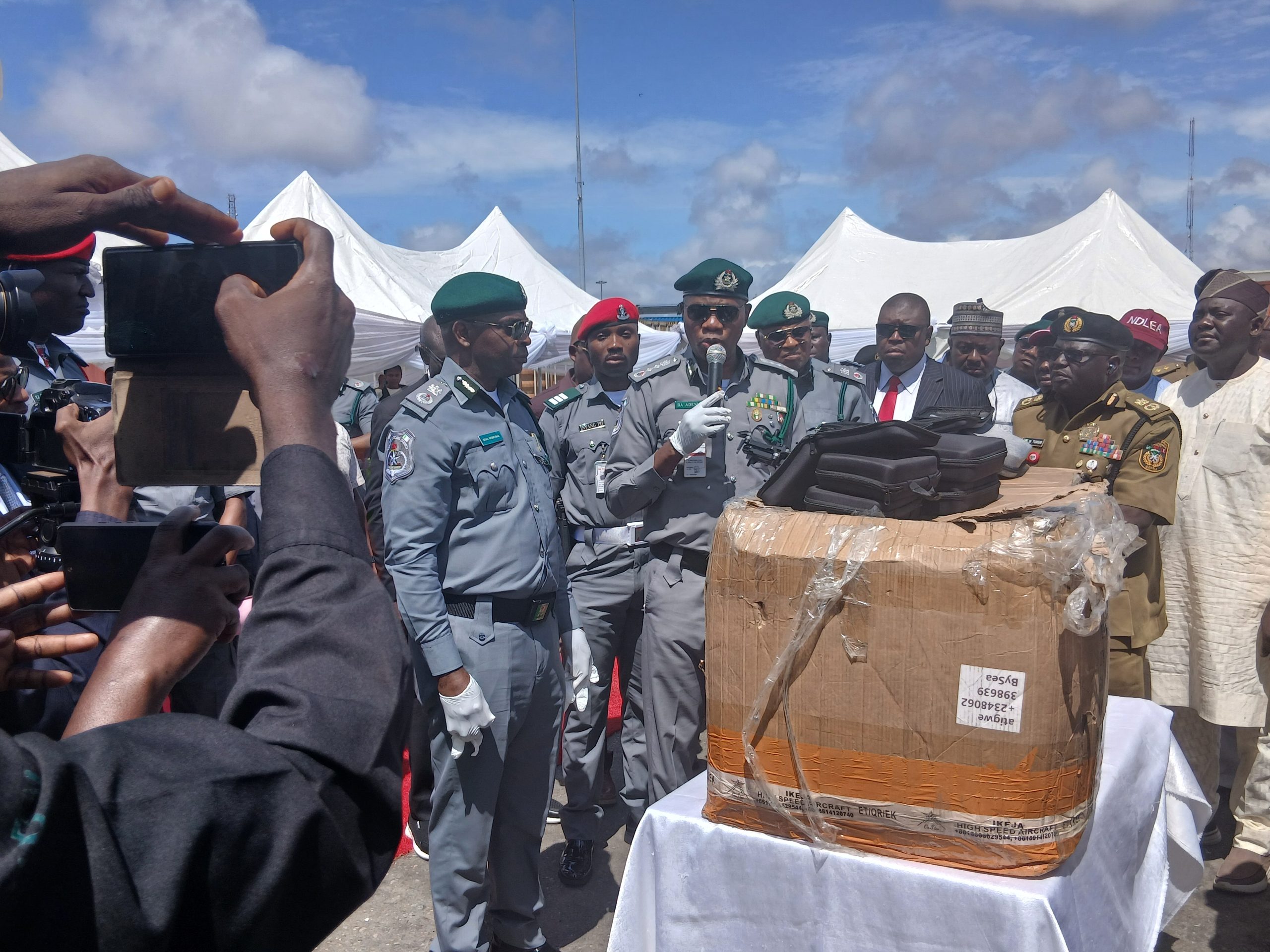
The Nigeria Customs Service (NCS) has intercepted cargo with a combined duty-paid value of N43.59 billion at the Apapa Area Command, including more than 7.6 tonnes of cannabis sativa, 169,998 bottles of codeine syrup, 108 security-sensitive drones and five containers of expired consumer and pharmaceutical products, in a major intelligence-led operation with far-reaching economic and national security implications.
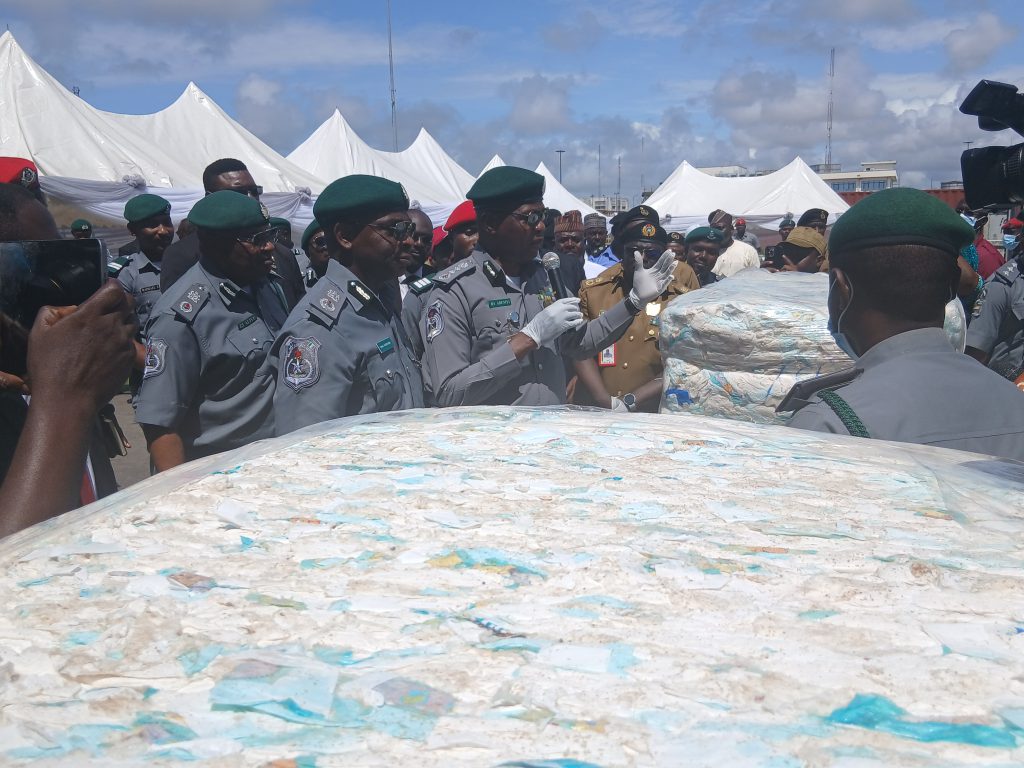
The Comptroller General of Customs, Bashir Adewale Adeniyi, MFR, PhD, who disclosed this during a press briefing, said the seizures should not be viewed merely as another enforcement haul, but as evidence of the Service’s expanding role in securing Nigeria’s supply chain and preventing the nation’s premier seaport from being exploited as a channel for criminal enterprises.
According to Adeniyi, the Nigeria Customs Service Act, 2023 assigns Customs responsibilities beyond revenue collection to include the protection of the border, security of the supply chain and safety of goods entering the country.
He explained that while revenue performance is the more visible and regularly measured component of Customs operations, the less visible side of its mandate is measured by what the Service succeeds in preventing from reaching the streets and the wider economy.
The latest interception at Apapa, he said, demonstrated that dimension of Customs operations, particularly as criminal networks increasingly exploit legitimate international trade channels to conceal illicit commodities.
Adeniyi said narcotics, controlled pharmaceuticals, restricted equipment and unsafe goods were now being concealed within otherwise legitimate consignments, often using false declarations and sophisticated concealment methods.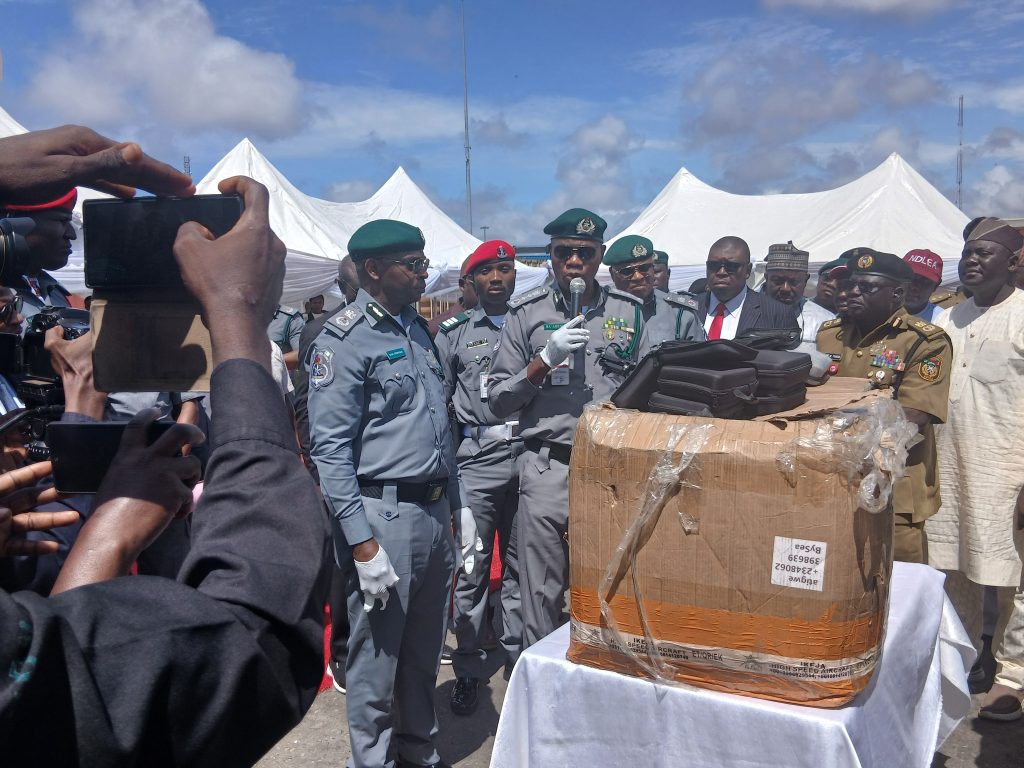
He noted that narcotics could be packed among vehicle spare parts and used vehicles, controlled drugs concealed beneath household goods, while restricted equipment could be declared as ordinary electronics.
Such consignments, he observed, could easily evade untargeted inspection, making intelligence, risk assessment and targeted examination increasingly critical to modern Customs enforcement.
It was against this backdrop, the CGC said, that the NCS had invested in strengthening cargo profiling and risk assessment across its commands while deploying the B’Odogwu platform to enhance the use of trade data in identifying suspicious transactions and consignments.
He also disclosed that the Service had established an INTERPOL Data Centre at its headquarters in Abuja in July, giving Customs officers access to more than 152 international databases.
The development, according to him, had significantly strengthened the Service’s capacity to identify transnational criminal networks and suspicious cargo before they could exploit Nigeria’s trade corridors.
The CGC further linked the Apapa seizures to deepening operational cooperation between Customs and critical national and international security institutions, including the National Drug Law Enforcement Agency (NDLEA), National Agency for Food and Drug Administration and Control (NAFDAC), Office of the National Security Adviser and international security partners.
The most substantial aspect of the operation was the interception of three containers carrying a combined 15,245 parcels of cannabis sativa weighing 7,624 kilogrammes, or more than 7.6 tonnes.
One 40-foot container, numbered HAMU 3086682, contained 4,777 parcels of cannabis weighing 2,388.5kg, concealed alongside assorted automobile spare parts, coffee mix, oats and three vehicles.
Another 40-foot container, FANU 1933352, contained 8,287 parcels weighing 4,145kg, alongside three vehicles.
A third container, MSKU 3941778, a 20-foot unit, contained 2,181 parcels weighing 1,090.5kg, concealed among foreign parboiled rice, automobile spare parts, lithium batteries, photovoltaic equipment, turmeric and assorted fish products.
The scale of the cannabis seizure has a direct public security and productivity dimension, given the established links between illicit drug markets, organised criminality, youth vulnerability and the erosion of productive capacity.
Adeniyi specifically drew attention to the long-running national concern over the abuse of prohibited substances, particularly codeine, among young Nigerians, saying its consequences extended to violent conduct, family breakdown and loss of productive lives.
The Customs operation also uncovered a 40-foot container, TCKU 7653306, containing 1,700 cartons of codeine syrup, amounting to 169,998 bottles, concealed beneath household items.
The sheer volume of the controlled pharmaceutical product, the CGC noted, would have been capable of feeding the illicit drug market for a considerable period had it successfully entered circulation.
From an economic perspective, the interdictions represent more than the physical value assigned to the seized cargo. They also potentially shield households, businesses and government from the secondary costs associated with drug abuse, unsafe consumer products, criminality and the disruption of productive lives.
The operation further exposed the emerging security implications of improperly imported technology, with Customs extracting 108 high-definition dual-camera drones from container MSKU 9282528.
Adeniyi stressed that drones had legitimate commercial and civilian applications, but warned that the same technology could become a tool for surveillance, reconnaissance and delivery in the hands of criminal or insurgent elements.
He therefore warned importers of restricted and security-sensitive equipment to obtain the necessary security approvals, end-user certificates and supporting documentation before shipment.
He said Customs would detain consignments of such equipment arriving without the required approvals, insisting that Nigerian ports would not become conduits through which sensitive capabilities could reach persons working against the country’s security.
The enforcement operation also took a public-health dimension, with Customs intercepting five containers loaded with expired products.
They comprised expired tomato ketchup, antiseptic liquid, vaginal tablets and disposable nappies.
The CGC described the consignments as particularly troubling because they involved products consumed by households or applied directly to the human body.
Their importation after expiry, he said, exposed children, women and other consumers to risks that might not be immediately detectable at the point of purchase.
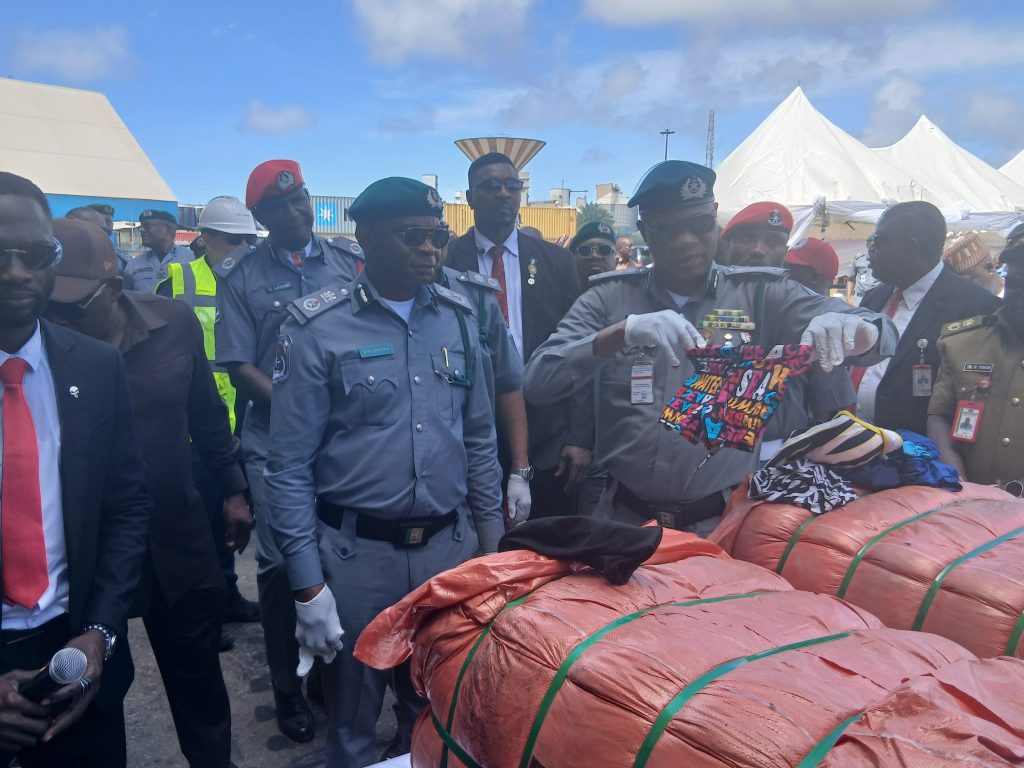
Three additional 40-foot containers were intercepted for carrying 1,282 bales of used clothing, comprising 425 bales in MRKU 6185100, 435 bales in MRKU 5535966 and 422 bales in SEKU 4685299.
Taken together, the seizures present a picture of a modern port enforcement environment in which economic offences, public-health violations, narcotics trafficking and national security threats can converge within the same trade ecosystem.
For Apapa, Nigeria’s premier port and one of the country’s most important gateways for legitimate commerce, the implication is particularly significant.
The port remains central to the movement of raw materials, machinery, vehicles, consumer goods and other inputs required for industrial and commercial activity. Its efficiency therefore has a direct bearing on the cost of doing business and the competitiveness of the Nigerian economy.
Adeniyi consequently sought to draw a clear distinction between enforcement and the disruption of legitimate trade.
He assured compliant importers and businesses that Customs would continue to facilitate the quick movement of legitimate cargo, stressing that scrutiny would increasingly focus on consignments, transactions and operators presenting identifiable risks.
This approach, he said, was also intended to make compliance commercially advantageous.
He encouraged importers uncertain about the classification, valuation or origin of their goods to use the Service’s Advance Ruling mechanism before shipment, rather than waiting until cargo arrived at the port.
He equally urged compliant operators to participate in the Authorised Economic Operator programme, which provides more predictable clearance and fewer interventions where the risk assessment supports such treatment.
The message from the Apapa operation is therefore not simply that Customs has seized billions of naira worth of prohibited goods.
It is that the battle for Nigeria’s economic security is increasingly being fought at the point where international trade, border control, technology, public health and national security intersect.
By intercepting more than 7.6 tonnes of cannabis, nearly 170,000 bottles of codeine, sensitive drone technology and expired goods before they entered the domestic market, the Service has demonstrated the economic value of prevention alongside the conventional revenue function of Customs.
The operation also reinforces the strategic importance of intelligence-led enforcement as Nigeria seeks to maintain efficient ports without allowing trade facilitation to become an avenue for criminal exploitation.
Adeniyi commended officers and men of the Apapa Area Command for their vigilance and professionalism and acknowledged the support of the NDLEA, NAFDAC and international partners.
He said the seized items would be handed over to the appropriate narcotics and other relevant agencies for further action.
His concluded by stressing that Nigerian ports must remain gateways for lawful commerce, industrial growth and national prosperity; and not transit points for narcotics, controlled drugs, security-threatening equipment or products capable of endangering the health of Nigerians.