
Business
NIMASA Moves To Overhaul 32-Year-Old Seafarer Training Curriculum

BY EGUONO ODJEGBA
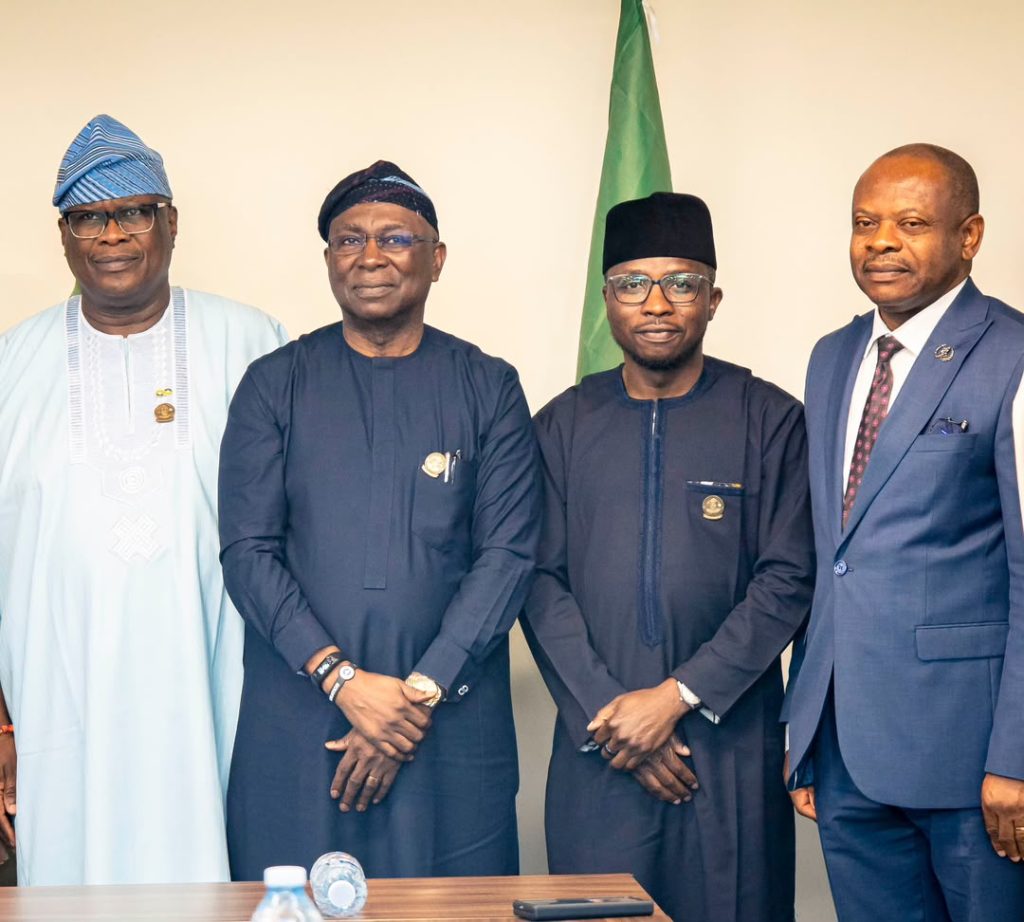
L-R, Board Chairman, Maritime Academy of Nigeria, MAN, Oron, Engr. Kehinde Akinola; Director General/CEO, Nigerian Maritime Administration and Safety Agency, NIMASA, Dr. Dayo Mobereola; Executive Director, Maritime Labour and Cabotage Services, NIMASA, Mr Jibril Abba and Ag. Rector MAN, Oron, Dr Kelvin Okonna during a working visit by the management of MAN Oron to the NIMASA headquarters in Lagos
The Nigerian Maritime Administration and Safety Agency (NIMASA) has disclosed plans to review the curriculum for maritime training institutions in Nigeria, saying the move is aimed at bringing seafarer training and certification in line with globally accepted standards.
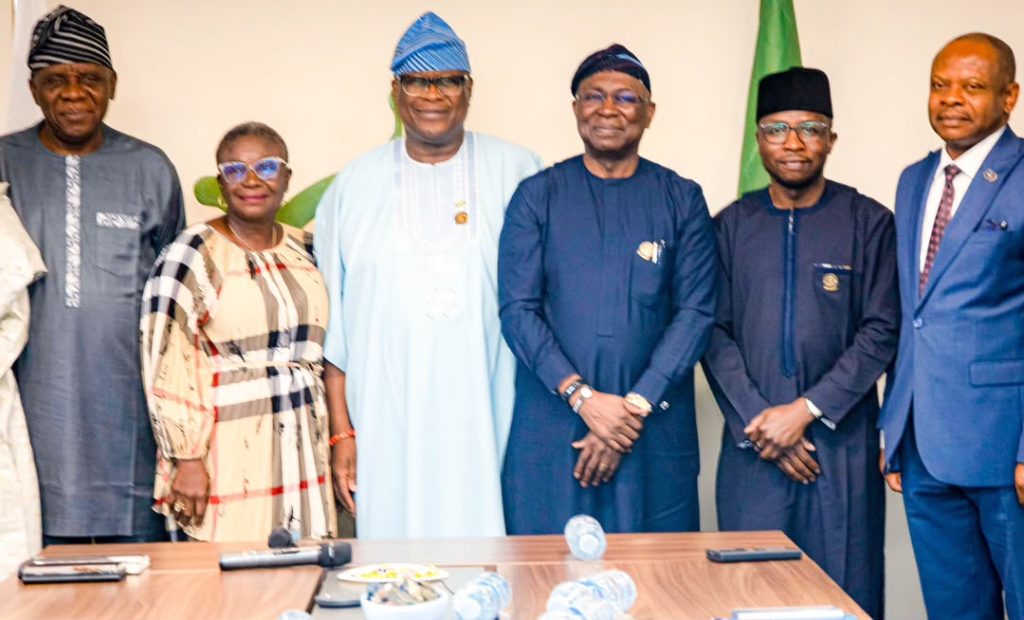
L-R, Executive Director Operations, Nigerian Maritime Administration and Safety Agency, NIMASA, Engr. Fatai Adeyemi; Representative of the Maritime Academy of Nigeria, MAN, Oron, Mrs Inja Husseini; Board Chairman, MAN, Oron. Engr. Kehinde Akinola; Director General/CEO, NIMASA, Dr. Dayo Mobereola; Executive Director, Maritime Labour and Cabotage Services, NIMASA, Mr Jibril Abba and Ag. Rector MAN Oron, Dr Kelvin Okonna during a working visit by the management of MAN Oron to the NIMASA headquarters in Lagos
Director General of NIMASA, Dr Dayo Mobereola, made the disclosure in Lagos when the Governing Council of the Maritime Academy of Nigeria (MAN), Oron, led by its Chairman, Engr. Kehinde Olayinka Akinola, paid a working visit to the Agency’s headquarters.
Mobereola said the planned review of the curriculum for the Standards of Training, Certification and Watchkeeping (STCW) 2017 would address what he described as decades of reliance by Nigerian maritime training institutions on obsolete curricula.
According to him, the curriculum review is part of NIMASA’s broader efforts to ensure that Nigerian seafarers receive training capable of meeting international requirements and that their certificates enjoy wider global recognition.
“For over 32 years, Nigerian training institutions have been operating with obsolete curricula,” the NIMASA DG stated, stressing that the Agency was determined to benchmark the nation’s maritime training system against the best globally accepted standards.
He said the objective was ultimately to strengthen the quality of Nigerian seafarers and improve the international acceptability of their professional certification.
The disclosure is significant for Nigeria’s maritime labour market, where the quality, relevance and international recognition of seafarer training remain critical to the ability of Nigerian officers and ratings to secure employment on foreign-going vessels.
Mobereola also stressed the importance of closer collaboration between NIMASA and MAN, Oron, describing effective institutional cooperation as critical to the development of Nigeria’s seafarer training capacity.
He reaffirmed NIMASA’s commitment to supporting the Academy in the training and promotion of Nigerian seafarers, noting that human capital development remained one of the most important components of the Federal Government’s efforts to develop the nation’s Blue Economy.
The NIMASA chief executive also pointed to the Maritime Academy of Nigeria as a critical institution in the country’s maritime human-capital development architecture, particularly as Nigeria seeks to increase the participation of its citizens in the global maritime labour market.
Responding, Chairman of the MAN Governing Council, Akinola, said the Academy was equipped with state-of-the-art facilities and remained one of the leading maritime training institutions in Africa.
He expressed appreciation to NIMASA for its continued support to the Academy and disclosed that the Governing Council had developed a five-year development plan designed to further strengthen the institution’s training capacity.
A major component of the plan, he revealed, is the acquisition of a training vessel to enhance practical training for cadets.
The proposed training vessel could provide the Academy with an important platform for bridging the gap between classroom instruction and the practical experience required for professional certification and eventual employment at sea.
Akinola further disclosed that the Liberian Maritime Administration and a Liberian maritime training institution, during a recent visit to MAN, Oron, expressed interest in establishing collaboration with the Academy.
The proposed partnership, he said, could create additional opportunities for Nigerian cadets to undertake sea-time training aboard Liberian-flagged vessels.
Such opportunities, he added, would expose Nigerian cadets to practical experience while strengthening their competitiveness in the increasingly demanding global maritime labour market.
The development comes at a time Nigeria is seeking to maximise the human-capital component of its Blue Economy ambitions, with quality maritime education, certification and access to sea-time identified as essential building blocks for producing a workforce capable of competing internationally.
With NIMASA now signaling a review of the STCW 2017 curriculum for maritime training institutions, the focus is expected to shift towards ensuring that Nigeria’s training content, delivery and certification regime keep pace with evolving international maritime standards and the changing demands of the global shipping industry.
The Ag. Rector of MAN, Dr Kevin Okonna, was also part of the governing board delegation to NIMASA.







Nigeria Customs Mulls Reviews of Complaints Arising from Recruitment

Edo-Delta Journalists Forum Challenges Political Leaders on Regional Development

Nnadi Urges Nigerian Importers to Shift from Finished Goods to Manufacturing

WMD: Oyetola Recommit to Unlock CVFF Pursuant to Indigenous Operators Financing

Customs FOU Zone ‘A’ Hands Over Seized ₦511.4m Pharmaceuticals, Illicit Drugs to NDLEA, NAFDAC

Oyetola Unveils NPERA, Corporate Logo Amid Quiet Enthusiasm

Nigeria, Benin Urged to Deploy Culture and Traditional Diplomacy to Defuse Border Tensions

Nigeria’s Ports: How Foreign Capital Took the Dinner, While Indigenous Businesses Got the Crumbs (3)

FOU Zone A, Police, Army, DSS, Others Strengthen Security Alliance Ahead of Elections

Nigeria’s Ports: How Foreign Capital Took the Dinner, While Indigenous Businesses Got the Crumbs (2)

Former Senatorial Candidate, Hajia Nike AbdulRahman Dumps NDC, Defects to APC

Nigeria’s Ports: How Foreign Capital Took the Dinner, While Indigenous Businesses Got the Crumbs
ANLCA Board is intact, cannot be wished away by anybody’-Elochukwu

B-R-E-A-K-I-N-G: Effedua, Rector MAN Oron, Resigns

EFCC’s Probe: Okowa Plots Sheriff’s Removal Despite London Accord
Customs Trains ANLCA Members, Others on B’Odogwu Portal

NPA’s Alleged Executive Management Fight: The Half Truth & Truth
ANLCA Board Election: Know Your Candidates
‘Why We Launched B-Odogwu Pilot Scheme With Webb Fontaine Still Running’ – Adeniyi

Onyemekara Promoted GM, Appointed NPA’s New Spokesperson

Nigeria Customs: Trust, Competence And The Oramalugo Factor

Onyeka Makes History As Tin-Can Customs Hit ₦16.4bn A Day

‘Rush To Break News Can Lead To Brush With Cybercrime’- Police

Kebbi Is Hub of Hard Drugs Smuggling In Northern Region’ – Oramalugo