
Business
Badagry Port: Infrastructure Vision or Election-Season Bargaining Chip?

BY EGUONO ODJEGBA
The story of the proposed Badagry Deep Seaport may have become as good as stale news, and for good reasons. Taking from the point of the conception of the proposal through the labyrinths of concessionaire, host community engagement, business study supervisory holdups and approvals etc, its story has since lost both it’s socio-economic interest and has become a boring, political pastime.
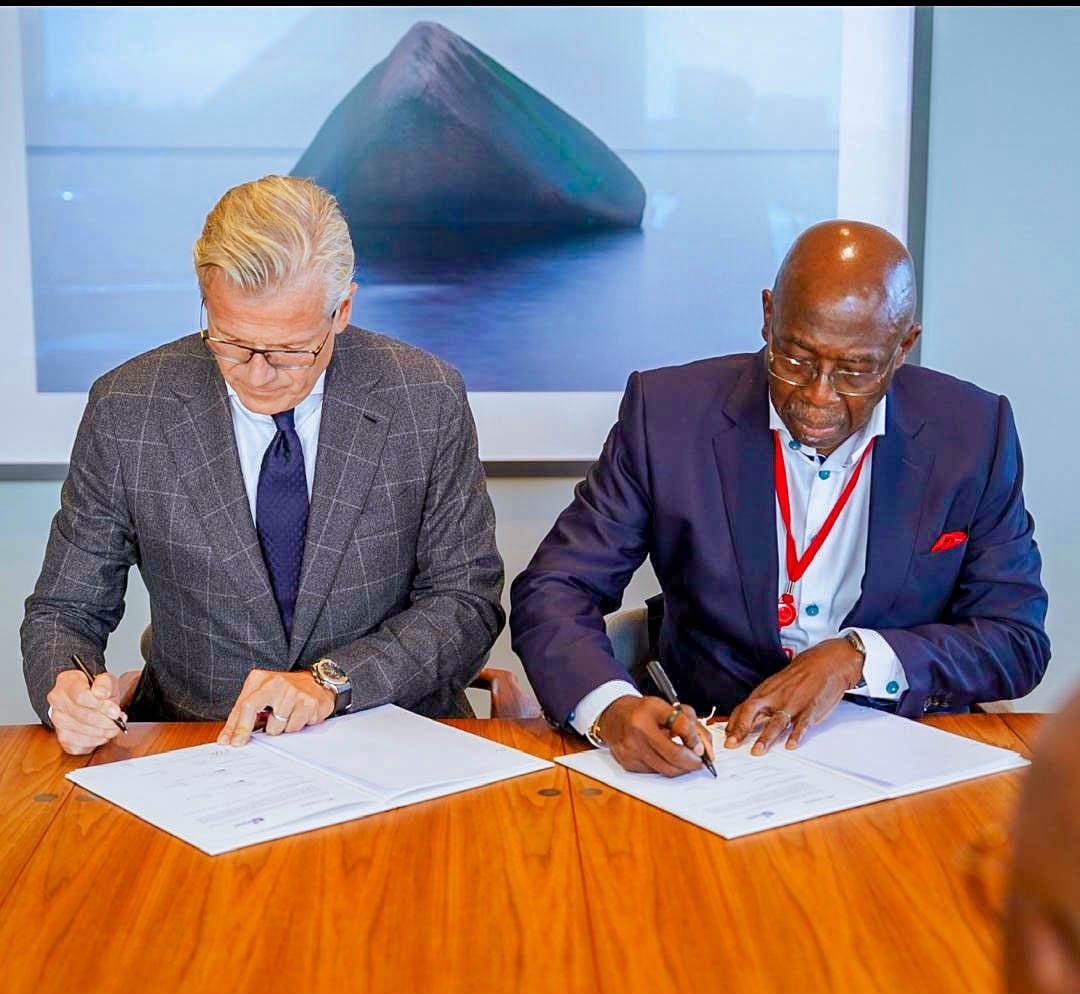
The announcement that the Federal Government has signed a Memorandum of Understanding (MoU) with APM Terminals in Copenhagen for the development thus, merely marks the re-emergence of a project long defined by administrative delays and political positioning.
Led by the Minister of Marine and Blue Economy, Dr. Adegboyega Oyetola, the Nigerian delegation framed the agreement as a critical step toward securing private sector funding for a greenfield port facility designed to handle large deepwater container vessels. Yet, for industry stakeholders who have watched the $2.59 billion project stall across successive administrations, the signing raises familiar questions regarding political motives and actual execution timelines.
Conceived over a decade ago as a joint venture between the Federal Government, the Lagos State Government, and a private consortium led by APM Terminals, the Badagry project promised to relieve severe congestion at Apapa and Tin Can Island. Instead, it became bogged down in legal disputes, regulatory disagreements, and environmental objections.
In 2019, litigation disrupted the project after regulatory deadlocks emerged between federal port authorities and the project promoters over master-plan approvals and jurisdiction. Simultaneously, host communities across 13 affected villages in Badagry raised legal challenges over unfulfilled land acquisition agreements, lack of direct equity participation, and displacement from ancestral lands.
The project’s political dimensions have drawn equal scrutiny. Frequently cited in campaign cycles as a flagship initiative, critics argue the project functions more as a regional political asset than a commercially viable enterprise. This skepticism is compounded by previous instances where the federal government announced multi-hundred-million-dollar maritime commitments that corporate partners later clarified were non-binding exploratory discussions.
The newly signed Copenhagen agreement follows this established pattern. Rather than securing a final investment decision or financial close, the MoU commits the parties only to exclusive negotiations. Industry observers point out that APM Terminals is currently engaged in negotiations to extend its existing, highly lucrative terminal concessions at Apapa and Onne.
Engaging in non-binding exploratory talks for a new port in Badagry provides the global operator with significant leverage during these concession extension negotiations, while providing government officials with a high-profile announcement as election cycles approach.
Without a finalized financial close, clear resolution of community land claims, and fully approved regulatory frameworks, the Badagry Deep Seaport from all indications, remains a theoretical development. Until capital expenditure replaces non-binding MoUs, the project risks remaining an election-season promise rather than a functional trade gateway.




Nigeria Customs Mulls Reviews of Complaints Arising from Recruitment

Edo-Delta Journalists Forum Challenges Political Leaders on Regional Development

Nnadi Urges Nigerian Importers to Shift from Finished Goods to Manufacturing

WMD: Oyetola Recommit to Unlock CVFF Pursuant to Indigenous Operators Financing

Customs FOU Zone ‘A’ Hands Over Seized ₦511.4m Pharmaceuticals, Illicit Drugs to NDLEA, NAFDAC

Oyetola Unveils NPERA, Corporate Logo Amid Quiet Enthusiasm

Nigeria, Benin Urged to Deploy Culture and Traditional Diplomacy to Defuse Border Tensions

Nigeria’s Ports: How Foreign Capital Took the Dinner, While Indigenous Businesses Got the Crumbs (3)

FOU Zone A, Police, Army, DSS, Others Strengthen Security Alliance Ahead of Elections

Nigeria’s Ports: How Foreign Capital Took the Dinner, While Indigenous Businesses Got the Crumbs (2)

Former Senatorial Candidate, Hajia Nike AbdulRahman Dumps NDC, Defects to APC

Nigeria’s Ports: How Foreign Capital Took the Dinner, While Indigenous Businesses Got the Crumbs

ANLCA Board is intact, cannot be wished away by anybody’-Elochukwu

B-R-E-A-K-I-N-G: Effedua, Rector MAN Oron, Resigns

EFCC’s Probe: Okowa Plots Sheriff’s Removal Despite London Accord
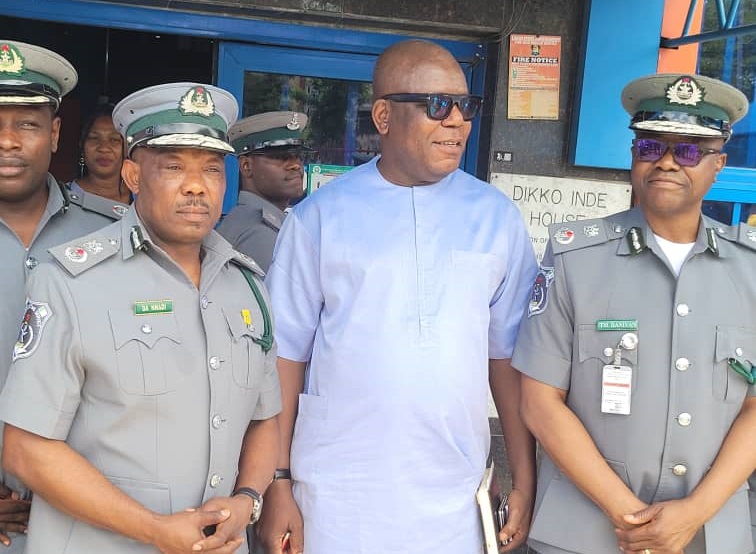
Customs Trains ANLCA Members, Others on B’Odogwu Portal

NPA’s Alleged Executive Management Fight: The Half Truth & Truth
ANLCA Board Election: Know Your Candidates
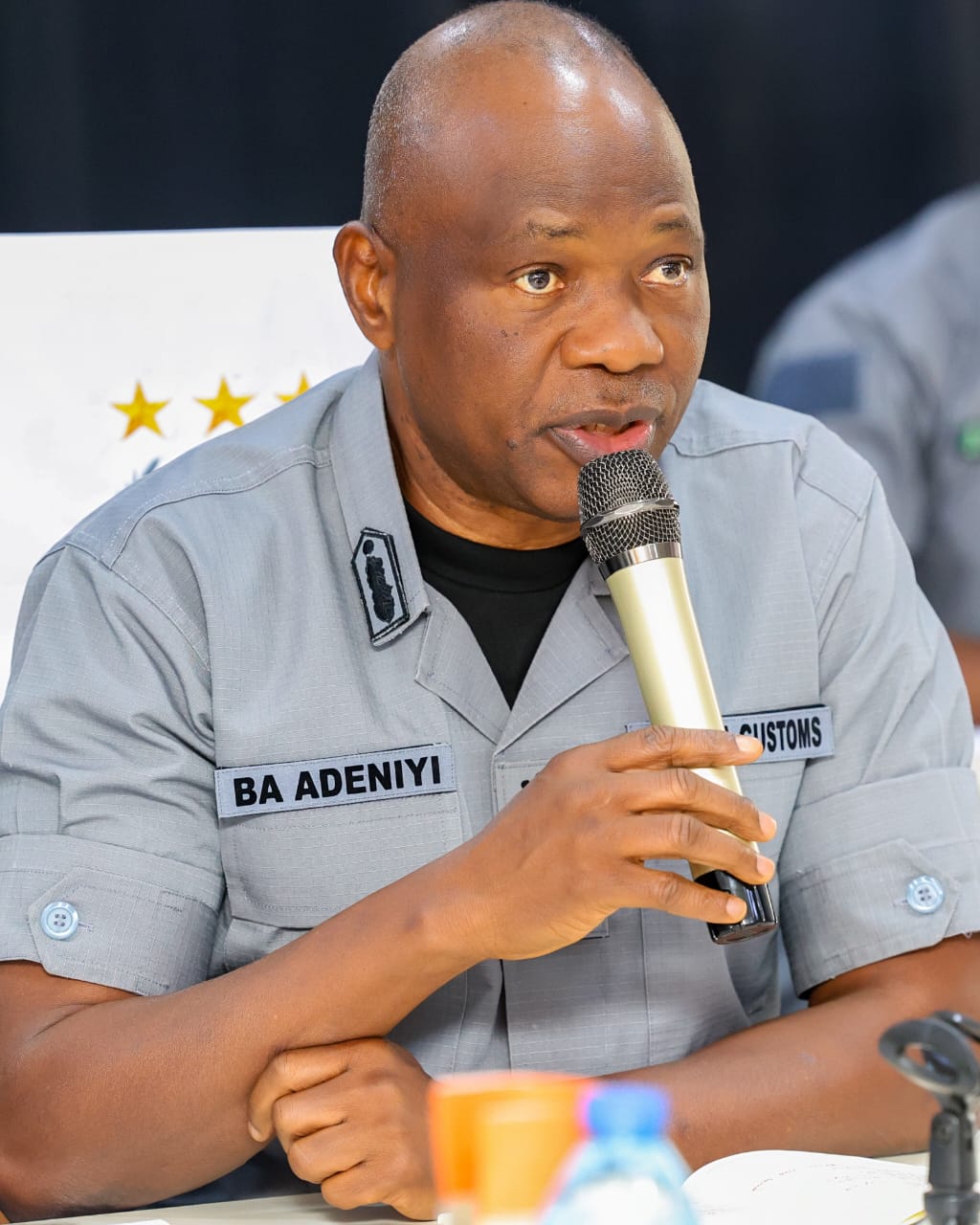
‘Why We Launched B-Odogwu Pilot Scheme With Webb Fontaine Still Running’ – Adeniyi

Onyemekara Promoted GM, Appointed NPA’s New Spokesperson

Nigeria Customs: Trust, Competence And The Oramalugo Factor

Onyeka Makes History As Tin-Can Customs Hit ₦16.4bn A Day

‘Rush To Break News Can Lead To Brush With Cybercrime’- Police

Kebbi Is Hub of Hard Drugs Smuggling In Northern Region’ – Oramalugo