Uncategorized
Blue Economy: Okonna Makes Case for Professional Capacity, Practical Implementation

- BY EGUONO ODJEGBA
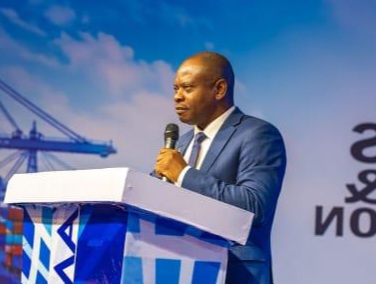
The Acting Rector of the Maritime Academy of Nigeria (MAN), Oron, Dr. Kevin Okonna, has underscored the importance of professional capacity development and practical implementation in translating Nigeria’s National Policy on Marine and Blue Economy into tangible economic benefits.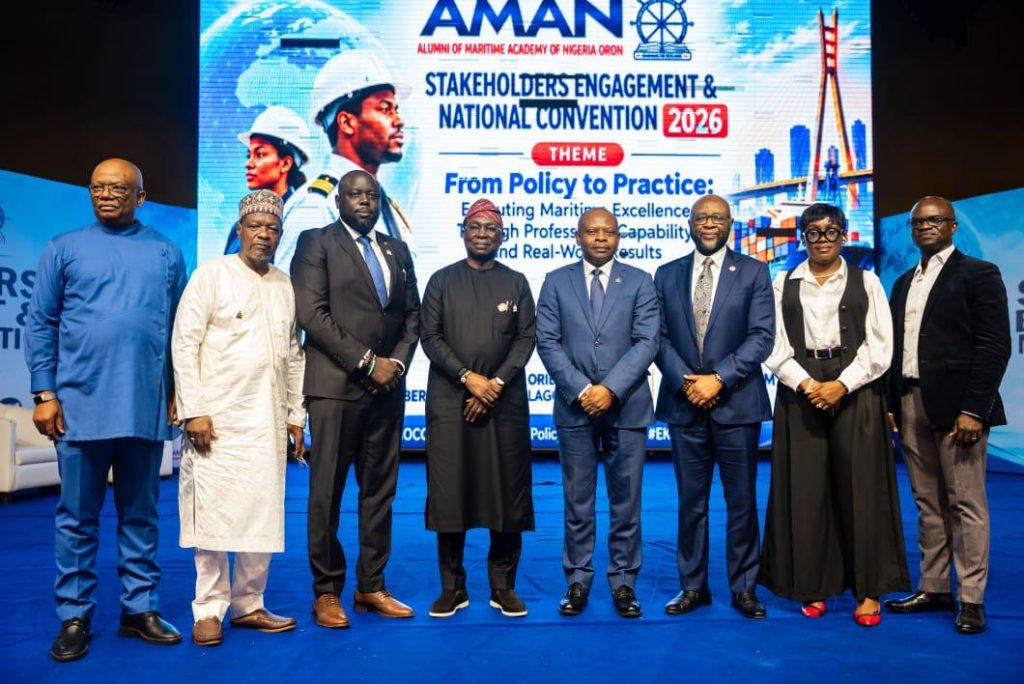
Okonna, who made this submission at the 2026 Stakeholders Engagement and Convention of the Alumni of the Maritime Academy of Nigeria, Oron (AMANO), held at the Oriental Hotel, Victoria Island, Lagos, recently said the success of the country’s blue economy aspirations would depend not merely on policy formulation but on the availability of competent maritime professionals and the ability of industry stakeholders to translate policy objectives into measurable results.
Addressing participants in his capacity as Chief Host of the two-day convention, which held from November 13 to 14, 2026, the Acting Rector described the theme, “From Policy to Practice: Executing Maritime Excellence through Professional Capacity and Real-World Result,” as particularly relevant to the current direction of Nigeria’s marine and blue economy sector.
He noted that with the Federal Government having approved a National Policy on Marine and Blue Economy, the priority should now be effective implementation, supported by the professional expertise and institutional capacity required to drive the sector.
“The sector has now been blessed with a government-approved National Policy on Marine and Blue Economy. What is required is faithful implementation, and implementation rests on competent human capacity,” he said.
According to Okonna, the Maritime Academy of Nigeria occupies a strategic position in this process as the country’s premier maritime training institution, with the responsibility of producing the officers, marine engineers and allied professionals upon whom the successful execution of maritime policies ultimately depends.
He described the Academy as the bridge between policy formulation and practical outcomes, particularly in shipping, port operations and the wider blue economy value chain.
To fulfil this responsibility, he said the institution had continued to align its curricula with the requirements of the International Convention on Standards of Training, Certification and Watchkeeping for Seafarers (STCW) 1978, as amended, alongside other relevant international maritime standards.
He explained that the Academy was strengthening its training delivery through investments in practical and simulator-based learning, improved instructor competence and closer collaboration with industry operators to ensure that cadets acquire the requisite skills and experience to function effectively in real maritime working environments.
The Acting Rector further identified the Academy’s recent international certifications and recognitions, provision of opportunities for cadets to obtain mandatory STCW sea-time experience aboard internationally trading vessels, and the attraction of industry players offering automatic employment to graduating cadets as evidence of its commitment to producing globally competitive maritime professionals.
He stressed that the ultimate value of maritime education should be measured not only by academic qualifications but also by the professional competence, employability and practical contributions of graduates to the industry.
Beyond the Academy’s training mandate, Okonna highlighted the growing influence of its alumni in Nigeria’s maritime industry and the international shipping community, describing their professional accomplishments as a reflection of the institution’s enduring contribution to maritime manpower development.
He cited the emergence of AMANO members in strategic positions, including service as Nigeria’s Alternate Permanent Representative to the International Maritime Organization (IMO), Secretary-General of the Abuja Memorandum of Understanding on Port State Control, and senior professional positions within the Nigerian Maritime Administration and Safety Agency (NIMASA), Nigerian Ports Authority (NPA), and NLNG Shipping and Marine Services Limited (NSML).
He also acknowledged alumni serving as chief executives of several private-sector organisations, noting that their professional accomplishments demonstrated the capacity of Nigerian maritime-trained personnel to occupy strategic positions and contribute meaningfully to the development of the global maritime industry.
The Rector commended the AMANO leadership, under the presidency of Mr. Emmanuel Maiguwa, for sustaining an active alumni platform and maintaining a supportive relationship with the Academy.
He particularly appreciated the association’s contributions to cadet and graduate development through mentorship, career guidance, welfare support and the creation of opportunities for professional advancement within the maritime industry.
According to him, such interventions complement the Academy’s institutional efforts by strengthening the connection between maritime education and industry practice.
He urged participants at the convention to approach the deliberations with candour and a strong sense of national responsibility, expressing the Academy’s readiness to examine and implement relevant resolutions within its mandate.
Okonna also expressed optimism that the technical sessions and panel discussions, particularly those focusing on maritime domain awareness, regulatory reforms and professional capacity development, would generate practical recommendations for strengthening the marine and blue economy.
The convention, chaired by the Minister of Marine and Blue Economy, Dr. Adegboyega Oyetola, CON, brought together maritime industry leaders, regulators, captains of industry, professionals, distinguished alumni and other stakeholders to deliberate on strategies for advancing the Nigerian maritime sector.
In formally welcoming participants on behalf of the Academy’s management, staff and cadets, Okonna expressed confidence that the gathering would strengthen stakeholder collaboration and contribute to the translation of Nigeria’s blue economy aspirations into practical and sustainable industry outcomes.

Blue Economy: Okonna Makes Case for Professional Capacity, Practical Implementation

Onileimo Challenges Maritime Journalists to End Fragmentation, Embrace One Professional Voice

Maritime Sector Bleeds $4.5bn Annually to Foreign Transport Interests – Akabogu

Denmark Backs Nigerian Cadets, NIMASA Innovation Drive

Alumanah Takes Over Seme Customs as Kaila Handover A Staggering 233% Revenue Surge

Oyo/Osun Customs Generates ₦81.88bn in 10 Months, Posts 5.3% Revenue Growth

Onne Customs: Adigun Reads Riot Act on Revenue Leakages, Demands Operational Discipline

Egunjobi Assumes Command at Kebbi Customs, Pledges Tighter Border Security

NNMJ Unity Conference Today: All Roads Lead to Lagos Airport Hotel

ANLCA @72 Celebrations: Prince Oduntan Led LOC Returns N33m Surplus

Lagos NUJ Council Election: Innocent Anaba Steps Down, Alleges Voters’ List Manipulation

Nigeria Customs Highlights Anti-Money Laundering Efforts

ANLCA Board is intact, cannot be wished away by anybody’-Elochukwu

B-R-E-A-K-I-N-G: Effedua, Rector MAN Oron, Resigns

EFCC’s Probe: Okowa Plots Sheriff’s Removal Despite London Accord

Onyeka Makes History As Tin-Can Customs Hit ₦16.4bn A Day
Customs Trains ANLCA Members, Others on B’Odogwu Portal

NPA’s Alleged Executive Management Fight: The Half Truth & Truth
ANLCA Board Election: Know Your Candidates

FOU Zone A Intercepts Drugs Worth Over ₦5.5Bn
‘Why We Launched B-Odogwu Pilot Scheme With Webb Fontaine Still Running’ – Adeniyi

Apapa Customs Collects ₦161b On B’Odogwu Platform In 3 Weeks

Again, Apapa Port Command Intercepts Cannabis Indica Worth ₦26.5b

Customs, NAFDAC, Strengthen Inter-Agency Ties with Landmark ₦20.5bn Drug Bust in Onne