
Customs Report
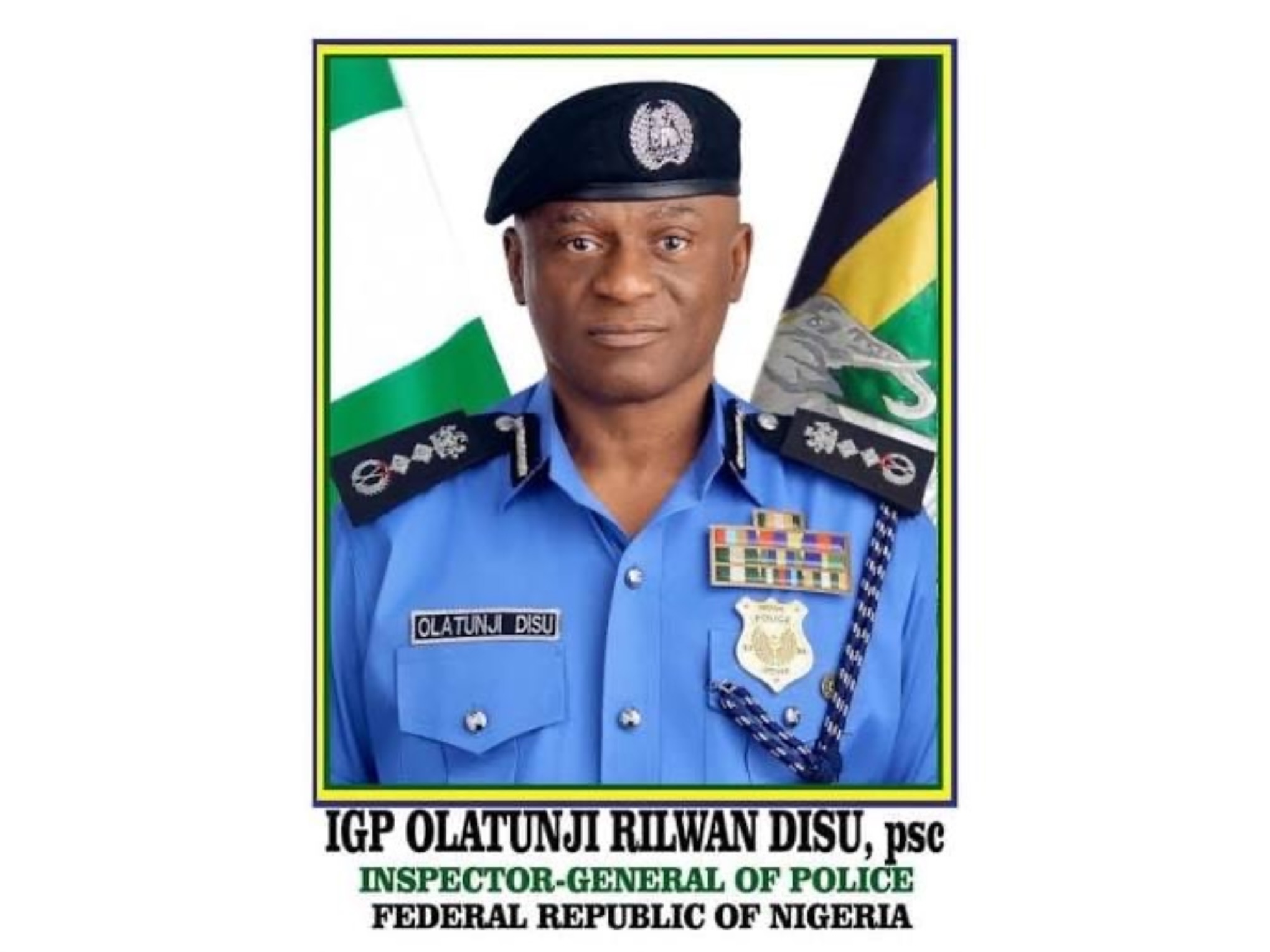
ANLCA Airport Crisis: Police Raid Raises Questions Over IGP’s Respect For Court Orders

BY EGUONO ODJEGBA
The protracted leadership crisis rocking the Murtala Muhammed International Airport Chapter of the Association of Nigerian Licensed Customs Agents (ANLCA) has taken another troubling turn following reports that police officers attached to the Airport Command attempted to arrest the chapter’s recognised chairman, Akindele Tope, and some of his supporters.
The reported incident, which occurred on Wednesday, October 21, has renewed concerns over the role of the Nigeria Police Force in the association’s internal affairs, particularly at a time when the competing claims to the chapter’s leadership are the subject of conflicting judicial pronouncements and pending court proceedings.

More troubling is the allegation that the police operation was initiated on the strength of a list supplied by persons aligned with one side of the dispute, raising questions about whether law enforcement officers were acting on a legitimate policing assignment or had become entangled in a private struggle for control of the chapter’s leadership, secretariat and assets.
Although the attempted arrests were reportedly frustrated by Akindele’s supporters, the incident has placed the conduct of the officers involved, the command structure under which they operate and the responsibility of the Inspector-General of Police (IGP) under renewed scrutiny.
At the heart of the controversy is the fundamental question of why the police should be drawn into the enforcement of competing claims to an association’s leadership when the dispute is already before the courts.

The concern is heightened by claims that the association’s Board of Trustees (BOT) had obtained a court order restraining the IGP and the relevant police authorities from interfering in the affairs of the airport chapter pending the determination of the substantive dispute.
If the reported restraining order remains valid and applicable to the operation in question, the alleged police action raises serious questions about compliance with judicial authority and the responsibility of the Force leadership to ensure that officers act within the limits of the law.
Those familiar with the development say the latest incident comes against the background of a fresh legal twist in the ANLCA airport chapter crisis. As reported by Daily Trend on October 13, 2026, the association’s BOT had appealed the October 8 judgment of Justice A. Lewis-Allagoa of the Federal High Court, Lagos, which declared Chief Bola Ashiru Balogun chairman of the Murtala Muhammed International Airport Chapter.
The BOT, through its counsel, Adekunle Awodiji, reportedly filed a notice of appeal and a motion for stay of execution on October 9, challenging the judgment and asking the Court of Appeal to set it aside.


Among the grounds advanced by the BOT was the argument that the Federal High Court failed to give effect to an earlier judgment delivered on June 22, 2023, by Justice Emmanuel O. Ogundare of the Lagos State High Court, which the BOT says recognised Temitope Pius Akindele as the chapter chairman following his election victory.
The BOT also challenged Balogun’s eligibility to contest the January 15, 2022, chapter election, alleging that his company had been struck off the Corporate Affairs Commission’s register and that his customs agency licence had been suspended at the relevant time.
These arguments advanced by the appellants should be determined through the judicial process and not to be ambushed and disrupted through a kangaroo police interference.
On the other hand, while the October 8 Federal High Court judgment reportedly favoured Balogun on the issues presented before it, the court it was learnt dismissed a preliminary objection challenging his standing to sue, noting that an earlier order had directed the reinstatement of his company and that the CAC subsequently confirmed its active status.
The court also examined provisions of the ANLCA Constitution concerning the chairmanship of chapters and held that the constitution did not contemplate two chairmen occupying the same chapter office simultaneously.
The competing legal positions have consequently created a sensitive situation in which the parties are relying on different judicial decisions to advance their claims.
While acknowledging that the filing of an appeal or a motion for stay of execution does not, by itself, automatically suspend the judgment appealed against since the legal position depends on the applicable orders made by the courts; it is important to respect the judicial processes and be guided by the sensitiveness of the subsisting cases.
This makes the reported restraining order against police interference especially important. Its precise terms, scope and continuing validity are central to determining whether the latest police operation was inconsistent with an existing judicial directive.
In this particular case, the restraining order against the IGP is not only effective but subsists. Therefore, the alleged attempt to arrest Akindele and his supporters has fuelled concerns among observers who believe that the police should not be perceived as an instrument for settling leadership disputes within private professional associations.
ANLCA is a professional body whose members operate within Nigeria’s customs brokerage and international trade ecosystem. Its leadership disagreements can have implications for members’ welfare, chapter administration and access to the association’s facilities. Nevertheless, such disputes do not confer on the police an unrestricted mandate to determine who should occupy an association’s leadership position.
Where allegations of criminal conduct arise, the police retain their lawful investigative responsibilities. But those responsibilities must be exercised impartially, on the basis of credible grounds and in accordance with applicable court orders.
The reported attempt to arrest a chapter chairman on the strength of a list allegedly supplied by interested parties therefore demands clarification. Who provided the list? What specific offences, if any, were the intended arrests connected to? Was there a warrant or other lawful authority where one was required? And were the officers aware of the reported court order restraining interference?
These are legitimate questions that the Airport Command and the Force leadership should be prepared to answer. Without clear explanations, the episode risks reinforcing perceptions that police presence in the chapter’s internal affairs may be serving interests beyond the legitimate enforcement of the law.
Such perceptions, whether ultimately substantiated or not, are damaging to public confidence in a force whose authority depends substantially on its impartiality.
The incident also raises a question of institutional accountability for the Inspector-General of Police. The IGP is responsible for the overall leadership and administration of the Force. That responsibility includes ensuring that officers under his command understand and comply with lawful judicial directives and do not use police authority to advance the private interests of contending parties.
Although it would be premature to conclude from the reported incident alone that the IGP personally authorised, encouraged or colluded with the officers involved; as no evidence establishing such personal involvement has been presented in the information available for this report.
Yet the absence of proof of direct involvement does not remove the need for an institutional response. Where officers are accused of acting contrary to a court order or using their office in a disputed private matter, the Force leadership must establish what happened, who authorised the operation and whether any officer exceeded lawful authority.
Silence in the face of such allegations could deepen public suspicion, while a transparent investigation would provide an opportunity to establish the facts and restore confidence.
The issue is therefore is not merely whether particular officers visited the chapter’s premises, it is more whether their conduct was lawful, professionally justified and consistent with the obligations of the police to remain neutral in a civil leadership dispute.
The ANLCA airport crisis also exposes the dangers of allowing the coercive authority of the state to become entangled in the rivalry between competing factions of a professional association.
Where one faction believes that police officers can be mobilised to secure its control of a secretariat or intimidate its opponents, the distinction between lawful enforcement and private advantage becomes blurred.
That is precisely why police operations in disputed civil matters must be supported by clear legal grounds, transparent procedures and strict respect for judicial orders.
The allegation that the officers acted on a list supplied by interested parties, if established, would warrant particularly close scrutiny. The police cannot properly substitute the preferences of private individuals for independently established legal grounds for arrest.
Equally, neither side in the ANLCA dispute should be permitted to use the police to circumvent the judicial process or intimidate opponents while the courts determine the competing claims.
The principle must apply equally to Akindele, Balogun and every other individual involved in the dispute.
That said, the immediate responsibility rests with the relevant police authorities to clarify the circumstances surrounding Wednesday’s reported operation. The Airport Command should explain the purpose of the visit, the basis for the proposed arrests, the identity and authority of the persons who supplied the names of those sought, and the extent to which the officers considered the court orders reportedly governing the dispute.
The IGP should also ensure that any allegation of disobedience to a court order, abuse of police authority or improper involvement in the association’s internal politics is subjected to an impartial review.
While it is noteworthy that the association’s BOT and national leadership had ensured that their claims are pursued through the appropriate legal channels, officers responsible for enforcing the law must resist any attempt to turn them into instruments of factional warfare.
The credibility of the Nigeria Police Force is not measured simply by its ability to deploy officers, conduct arrests or respond to requests from influential individuals, its image is measured by its willingness to apply the law impartially, respect the courts and protect the rights of all parties without fear or favour.
The reported incident at the MMIA chapter presents the Force with an opportunity to demonstrate that principle. The IGP has a moral and constitutional duty to establish the facts, ensure compliance with every applicable court order and demonstrate that the uniform is an instrument of public law enforcement; and not per adventure a tool for determining who controls the secretariat of a professional association.
Efforts to clarify the issues with the Airport Command of the Force was unsuccessful as the Command PRO, Officer Ibikunle was yet to respond to our reporter’s inquiry as at the time of going to press.


ANLCA Airport Crisis: Police Raid Raises Questions Over IGP’s Respect For Court Orders

‘We Arrested Several Vessels Violating Cabotage Trade’ – NIMASA

Customs CGC Says ‘The World Is Connected, Not Borderless’

Nigeria Customs Mulls Reviews of Complaints Arising from Recruitment

Edo-Delta Journalists Forum Challenges Political Leaders on Regional Development

Nnadi Urges Nigerian Importers to Shift from Finished Goods to Manufacturing

WMD: Oyetola Recommit to Unlock CVFF Pursuant to Indigenous Operators Financing

Customs FOU Zone ‘A’ Hands Over Seized ₦511.4m Pharmaceuticals, Illicit Drugs to NDLEA, NAFDAC

Oyetola Unveils NPERA, Corporate Logo Amid Quiet Enthusiasm

Nigeria, Benin Urged to Deploy Culture and Traditional Diplomacy to Defuse Border Tensions

Nigeria’s Ports: How Foreign Capital Took the Dinner, While Indigenous Businesses Got the Crumbs (3)

FOU Zone A, Police, Army, DSS, Others Strengthen Security Alliance Ahead of Elections

ANLCA Board is intact, cannot be wished away by anybody’-Elochukwu

B-R-E-A-K-I-N-G: Effedua, Rector MAN Oron, Resigns

EFCC’s Probe: Okowa Plots Sheriff’s Removal Despite London Accord

Customs Trains ANLCA Members, Others on B’Odogwu Portal

NPA’s Alleged Executive Management Fight: The Half Truth & Truth

ANLCA Board Election: Know Your Candidates
‘Why We Launched B-Odogwu Pilot Scheme With Webb Fontaine Still Running’ – Adeniyi

Onyeka Makes History As Tin-Can Customs Hit ₦16.4bn A Day

Onyemekara Promoted GM, Appointed NPA’s New Spokesperson

Nigeria Customs: Trust, Competence And The Oramalugo Factor

‘Rush To Break News Can Lead To Brush With Cybercrime’- Police

Apapa Customs Collects ₦161b On B’Odogwu Platform In 3 Weeks