
Analysis
US Coast Guard, Nigeria and the Politics of a Maritime Victory

BY EGUONO ODJEGBA
The Federal Government’s celebration of the United States’ removal of Nigeria from a 12-year maritime security Condition of Entry regime is understandable. But as the 2027 general elections draw closer and political narratives increasingly compete with independently verifiable facts, the development deserves to be separated from the political packaging surrounding it.
At the centre of the controversy is a September 13, 2026 statement by the Federal Ministry of Marine and Blue Economy announcing what it described as a commendation from the United States Government over Nigeria’s maritime security improvements.
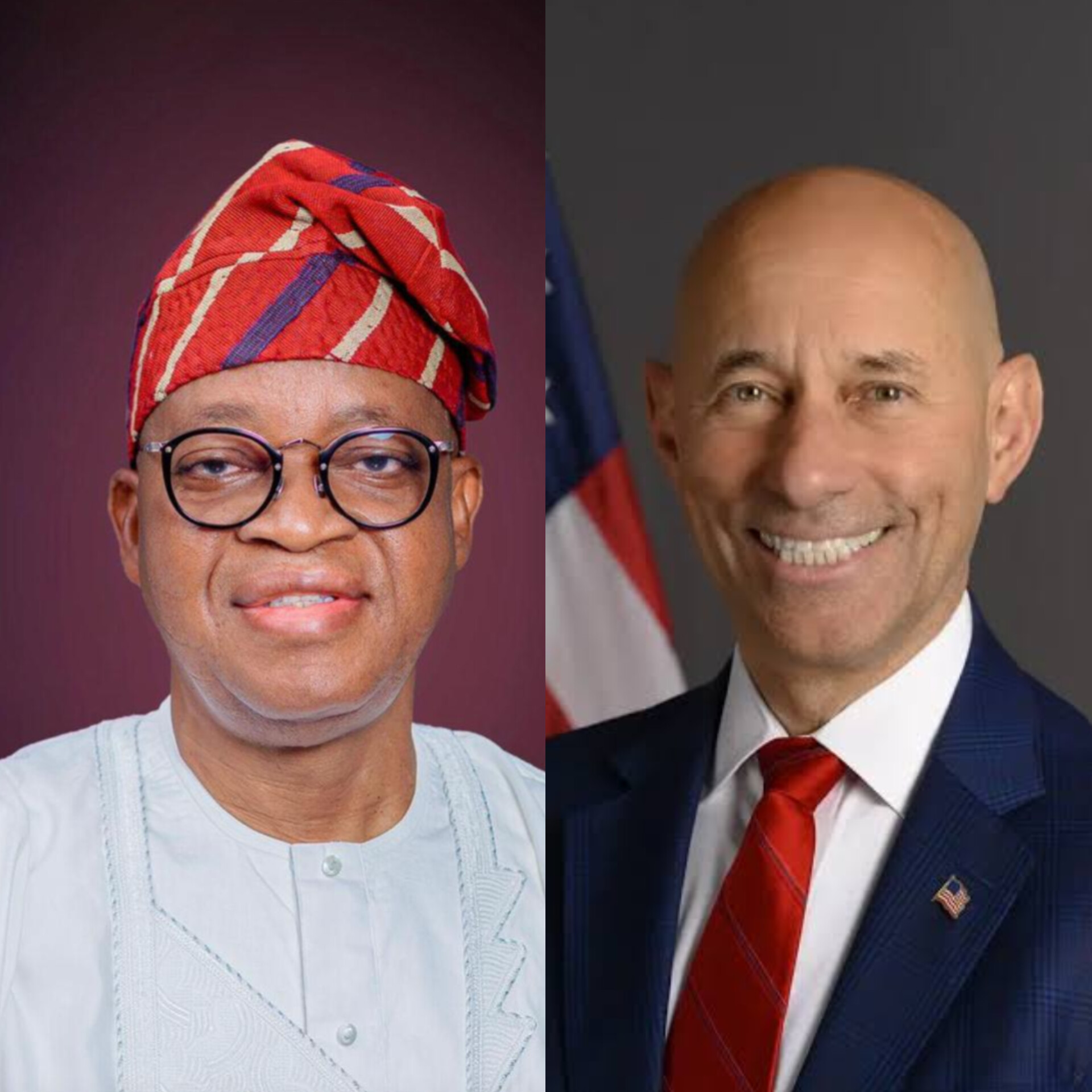
The statement says the U.S. Assistant Secretary of State for African Affairs, Frank W. Garcia Jr., wrote Minister of Marine and Blue Economy, Dr. Adegboyega Oyetola, on August 26, congratulating Nigeria over the removal of the 12-year Condition of Entry imposed by the United States Coast Guard.
There is, however, a need to distinguish three separate issues: what the US Coast Guard actually decided; what that decision means for Nigerian shipping and international trade; and what weight should be attached to a subsequent diplomatic letter from a senior U.S. State Department official.
On the first point, the evidence is unequivocal. Findings showed that the United States Coast Guard did remove Nigeria from its Port Security Advisory on August 19, 2026. The decision was formally published in the U.S. Federal Register as a Department of Homeland Security/Coast Guard notice and took effect the same day.
However, and more importantly, the official American document did not describe the measure as a ban on Nigerian-flagged vessels. It says the Coast Guard had imposed Conditions of Entry in 2014 after determining that Nigeria was not implementing effective anti-terrorism measures in some of its ports. Perhaps, this needs further clarity. It was not a ban on Nigerian-flagged ships, nor was it a U.S. trade embargo against Nigeria. It was a port-security Condition of Entry imposed on vessels that had called at specified Nigerian ports, irrespective of their flag.
Following recent assessments, however, the Coast Guard determined that Nigeria was maintaining effective anti-terrorism measures and consequently removed the conditions.
This distinction matters. It was not a ban on Nigerian ships. To this extent, the original June 2014 Federal Register notice is revealing. The Coast Guard said the conditions would apply to any vessel that had visited a non-exempt Nigerian port among its previous five port calls before arriving in the United States.
The vessels were required, among other things, to operate at Security Level 2 while in the affected Nigerian port, guard access points, attempt to execute a Declaration of Security, record the security measures taken and report those actions to the U.S. Coast Guard before entering American waters.
In certain circumstances, additional armed private security measures could also be demanded. In other words, the regulatory trigger was principally the vessel’s recent port-call history, not its nationality.
This makes the repeated shorthand that the United States imposed a 12-year “restriction on Nigerian-flagged vessels” technically misleading.
Indeed, the Federal Government’s own August announcement was more accurately worded elsewhere: vessels calling at Nigerian ports and subsequently proceeding to the United States were subject to additional security requirements.
That is a considerably different proposition from saying that Nigerian-flagged ships were barred from American ports.
What Washington Actually Removed
The August 19, 2026 Federal Register notice provides the clearest description of the said victory. The Coast Guard said that its recent assessments established that Nigeria was maintaining effective anti-terrorism measures at its ports.
That is the operative finding. It is therefore a recognition by the United States’ maritime security regulator that Nigeria’s port-security arrangements had improved sufficiently for Washington to withdraw the additional layer of security requirements.
The decision is important because the Coast Guard did not simply issue a political statement. It exercised a statutory authority delegated under the Maritime Transportation Security Act.
The U.S. Coast Guard’s International Port Security Programme states that the Secretary of Homeland Security is required to assess the effectiveness of anti-terrorism measures in foreign ports and that this responsibility has been delegated to the Coast Guard.
There is also an important distinction between the USCG decision, which has the direct maritime regulatory effect, and the purported August 26 letter from Assistant Secretary Frank Garcia, which is a diplomatic commendation. While Garcia’s office is verifiable, the actual August 26 letter could not be located in a publicly accessible U.S. government repository.
Nonetheless, the USCG findings can then inform the enforcement of Conditions of Entry against ships arriving in the United States. This gives the decision considerably more weight than an ordinary diplomatic compliment.
Four Assessments Before The Restriction Was Lifted
The Nigerian side has also provided useful evidence of the long process behind the announcement. According to NIMASA, the USCG conducted four comprehensive assessments of Nigeria’s maritime security framework and port facilities over the preceding two years.
According to NIMASA, the assessments took place from March 11–13, 2024; April 15–19, 2024; March 15–21, 2025; and April 13–17, 2026. While there are arguments in some quarters that the development is politically inclined in view of the 2027 presidential and general elections, this chronology weakens any attempt to portray the removal of the Condition of Entry as an overnight political favour to the Tinubu administration.
The process predates the 2026 election season and, more importantly, involves a technical assessment regime established long before the present political moment. NIMASA records show that the agency had been working with the USCG since before the current administration.
In July 2023, a USCG team undertook a peer review of Nigeria’s maritime domain and NIMASA publicly acknowledged that the exercise was aimed at closing identified gaps and ultimately securing the removal of the Condition of Entry.
A subsequent NIMASA statement in March 2025 said the USCG had been conducting on-the-spot assessments as part of a three-year plan designed to generate the evidence necessary for lifting the restrictions.
The achievement, therefore, is best understood as the culmination of a multi-year regulatory and technical engagement rather than an exclusively Tinubu-era accomplishment.
But Is It A “Historic Shipping Breakthrough”?
Here the political claims require more careful examination. There is no doubt that the removal is good news for vessels whose itineraries involve Nigerian ports and U.S. destinations.
The additional requirements created costs, paperwork, security arrangements, reporting obligations and the possibility of delays. NIMASA itself had previously argued that the CoE regime adversely affected shipping economics by adding delays and costs to voyages from Nigeria.
The removal should consequently improve operational efficiency for affected voyages. But the government’s suggestion that it automatically makes Nigerian ports more competitive globally requires qualification.
The U.S. Coast Guard’s decision removes one specific security-related impediment. It does not, by itself, resolve Nigeria’s much broader port competitiveness problems: cargo dwell time, terminal charges, multiple agency interventions, customs procedures, infrastructure constraints, draft limitations, road access, congestion, ship turnaround, freight rates, insurance, connectivity and the efficiency of the wider logistics chain.
Nor does the USCG decision mean that Nigerian ports have suddenly become preferred global trans-shipment hubs. That conclusion would require evidence from shipping lines, port operators, cargo owners, freight forwarders and international trade data.
How powerful is the U.S. Coast Guard?
This is perhaps the most important question in assessing the political value of the announcement. The U.S. Coast Guard is an exceptionally influential maritime regulator, but it is not the world’s maritime government.
Its power is particularly formidable because it controls access to the U.S. maritime transportation system. Through its Port State Control programme, the Coast Guard examines foreign-flagged ships operating in U.S. waters to determine whether they comply with applicable international conventions, U.S. laws and regulations.
It can delay vessels, impose controls and, in serious circumstances, deny vessels access to U.S. ports. The Coast Guard also maintains a system for identifying vessels that are denied entry into U.S. ports because of serious compliance histories.
Its international influence goes beyond U.S. territorial waters because shipping companies naturally take U.S. port requirements into account when planning voyages, compliance systems and risk management.
The Coast Guard is also one of the world’s most significant port-state-control authorities. The International Maritime Organization recognises the U.S. Coast Guard as maintaining the tenth port-state-control regime alongside the major regional regimes.
That gives the agency considerable practical influence over international shipping.
But it is necessary to draw the line. The Coast Guard does not set global maritime law.
The International Maritime Organization remains the principal international forum through which global maritime conventions and standards are developed. The ISPS Code, for instance, is embedded in Chapter XI-2 of SOLAS.
The Coast Guard’s strength lies in enforcing U.S. maritime law and international standards as they apply to vessels entering U.S. jurisdiction, and in assessing foreign ports whose security performance has implications for U.S.-bound shipping.
Thus, its decision concerning Nigeria is highly consequential within the U.S.-bound shipping system, but it should not be converted into a claim that Washington has certified Nigeria as having the world’s safest or best ports.
The Most Significant Part of The American Decision
Ironically, the strongest endorsement of Nigeria is contained not in the Nigerian government’s September press release, but in the dry language of the U.S. Federal Register.
The American regulator essentially said: Nigeria had previously failed the U.S. test for effective anti-terrorism measures; Nigeria was given time and recommendations to correct identified weaknesses; the Coast Guard subsequently assessed the country repeatedly; and, based on those assessments, the United States concluded that Nigeria was now maintaining effective anti-terrorism measures.
That is a substantive regulatory finding. It is also stronger than political praise because it is tied to an identifiable regulatory consequence.
The Garcia Diplomatic Letter
The second issue is the purported August 26 letter from Frank W. Garcia Jr. Garcia is a real and important U.S. official. The U.S. Senate confirmed him on May 18, 2026 as Assistant Secretary of State for African Affairs, and he assumed the position in June.
His office is one of Washington’s senior diplomatic positions dealing with sub-Saharan Africa.
It is on record that Garcia visited Nigeria in July and held discussions with Nigerian officials on security, trade, investment and bilateral relations. During that visit, Nigerian and American officials publicly discussed maritime security and Nigeria’s wider security cooperation with the United States.
Thus, there is nothing inherently implausible about Garcia communicating with the Nigerian Marine and Blue Economy Minister. But the letter’s provenance requires a distinction between plausibility and verification.
It is instructive to note however that while the Ministry of Marine and Blue Economy has released its contents, the actual August 26 document was not found in the publicly accessible U.S. Coast Guard or Federal Register material by Pinnacle Time.
Nonetheless, it is consolatory to note that it is not the Garcia letter that removed the Condition of Entry. That authority belongs to the U.S. Coast Guard under the maritime security framework.
Consequently, even if the letter is authentic — and there is no evidence presently to suggest it is fraudulent—it should be described as a diplomatic commendation, not as the legal or regulatory instrument that lifted the restriction.
The Political Credit Question
Overall, one must not shy away from the elements of fallacy and sentiments adumbrated in the minister’s letter. The minister’s decision to credit President Bola Tinubu with the development is political messaging, not a finding contained in the American regulatory notice.
The US Federal Register notice did not credit President Tinubu, Oyetola, nor indeed, the NIMASA present management. It simply says that, following recent assessments, the Coast Guard determined that Nigeria was maintaining effective anti-terrorism measures.
That does not diminish the contribution of the Tinubu administration, and hence allows for some degree of self-adulation. The government can legitimately claim that the lifting occurred during its tenure and that agencies under its supervision participated in the final stages of the process.
But claiming sole or exclusive political ownership would ignore the documented history. The engagement began years before the present administration. NIMASA was already seeking removal of the CoE in 2023, and USCG assessments were under way before the final 2026 review.
A balanced assessment therefore points to institutional continuity rather than a single-person achievement.
Thus far, the economics is significant, but not yet quantified. The ministry says the removal will reduce security-related costs, improve turnaround times and increase schedule reliability.
That is commercially plausible. What remains absent is a credible Nigerian or U.S. estimate of the actual annual financial burden previously imposed on shipping lines by the CoE.
There is therefore a danger in moving from “the restriction imposed additional costs” to “the removal will deliver major savings to Nigeria’s economy” without putting numbers to the claim.
The scale of Nigeria-U.S. merchandise trade itself shows why the development matters, although trade value cannot be equated with maritime cargo. U.S. Census data show bilateral U.S.-Nigeria goods trade of about $11.8 billion in 2025—$6.78 billion in U.S. exports to Nigeria and $5.02 billion in U.S. imports from Nigeria. Through July 2026, the two-way goods trade had already reached about $5.41 billion.
While the shipping implications cannot be dismissed, neither can the economic impact be exaggerated. The CoE affected a particular category of voyages, not every Nigerian-American trade transaction.
What The USCG Decision Did and Did Not Certify
The decision did establish something important, namely, that Nigeria’s relevant port-security arrangements have improved sufficiently, in the judgment of the U.S. Coast Guard, to meet its anti-terrorism-security threshold.
It did not however establish that Nigeria has eliminated maritime crime; that all Nigerian ports now operate at world-best standards; that Nigerian shipping costs have fallen; that U.S.-Nigeria maritime trade will automatically increase; that international shipping lines will divert additional services to Nigeria; or that the Nigerian maritime sector has been comprehensively transformed.
A technical maritime-security decision made under U.S. law should not be transformed into a foreign-government political endorsement of a Nigerian administration.
Conclusion
The removal of Nigeria from the U.S. Coast Guard’s Port Security Advisory is real, substantive and deserving of recognition. It is arguably one of the more concrete international validations of improvements in Nigeria’s port-security regime in recent years.
But the facts also demand restraint. Like it has already been stated, it was not the lifting of a trade embargo on Nigeria. It was not a ban on Nigerian-flagged ships being lifted. It was not an IMO certification. And it was not a global declaration that Nigerian ports are now among the world’s safest.
And the subsequent letter attributed to the U.S. Assistant Secretary of State for African Affairs, while entirely plausible in the context of existing Nigeria-U.S. relations, should not be confused with the regulatory decision itself unless and until the document is independently authenticated.
The real achievement is sufficiently strong without political embellishment. After 12 years of additional security requirements, repeated technical assessments and sustained engagement between NIMASA and the U.S. Coast Guard, Washington has concluded that Nigeria’s relevant ports now meet the American threshold for effective anti-terrorism measures.
These are the facts of the development. The politics begins where the facts are made to say more than it actually says.











Oshoba at 60: A Life of Service, a Port Legacy and the Joy of Thanksgiving

Nigeria Customs Commission Rehabilitated Modakeke Healthcare Centre

Lagos-Calabar Highway: Whose Investments, Livelihoods and Coastal Communities Count? (3)

Again, Customs FOU Zone ‘A’ Rescues Five Live Pangolins in Ogun State
Lagos-Calabar Highway: When a Presidential Legacy Project Collides with Accountability (2)
Lagos-Calabar Highway: Did Nigeria Pay the Price for Inadequate Planning?

ANLCA Airport Crisis: Police Raid Raises Questions Over IGP’s Respect For Court Orders

‘We Arrested Several Vessels Violating Cabotage Trade’ – NIMASA

Customs CGC Says ‘The World Is Connected, Not Borderless’

Nigeria Customs Mulls Reviews of Complaints Arising from Recruitment

Edo-Delta Journalists Forum Challenges Political Leaders on Regional Development

Nnadi Urges Nigerian Importers to Shift from Finished Goods to Manufacturing

ANLCA Board is intact, cannot be wished away by anybody’-Elochukwu

B-R-E-A-K-I-N-G: Effedua, Rector MAN Oron, Resigns

EFCC’s Probe: Okowa Plots Sheriff’s Removal Despite London Accord

Customs Trains ANLCA Members, Others on B’Odogwu Portal

NPA’s Alleged Executive Management Fight: The Half Truth & Truth
ANLCA Board Election: Know Your Candidates
‘Why We Launched B-Odogwu Pilot Scheme With Webb Fontaine Still Running’ – Adeniyi

Onyeka Makes History As Tin-Can Customs Hit ₦16.4bn A Day

Onyemekara Promoted GM, Appointed NPA’s New Spokesperson

Nigeria Customs: Trust, Competence And The Oramalugo Factor

Apapa Customs Collects ₦161b On B’Odogwu Platform In 3 Weeks

‘Rush To Break News Can Lead To Brush With Cybercrime’- Police