Business Maritime
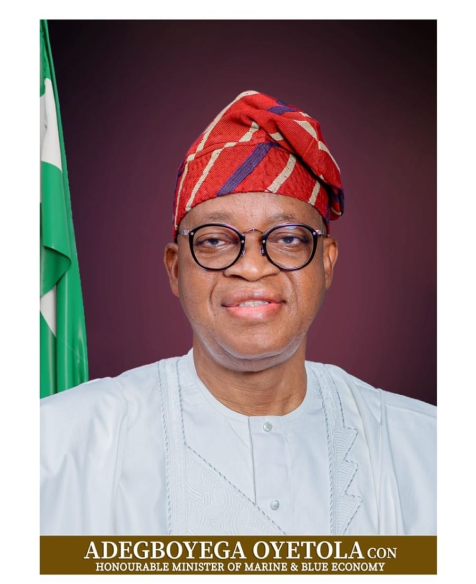
Oyetola Presents ₦10.5bn 2026 Marine and Blue Economy Budget

…Laments Inadequate Funding
BY GBOGBOWA GBOWA
The Minister of Marine and Blue Economy, Dr. Adegboyega Oyetola, CON, on Tuesday presented a ₦10.5 billion budget proposal for the ministry’s 2026 fiscal year, but lamented that the allocation was grossly insufficient to deliver meaningful reforms in Nigeria’s maritime sector.
Defending the proposal before a joint sitting of the Senate and House committees overseeing marine transport, ports, shipping, inland waterways, and fisheries, Oyetola disclosed that the budget comprises ₦8.24 billion for capital expenditure, ₦453.86 million for overheads, and ₦1.81 billion for personnel costs. He warned that the figures would only sustain minimal operations rather than power the transformative growth needed in trade, transport efficiency, and food security.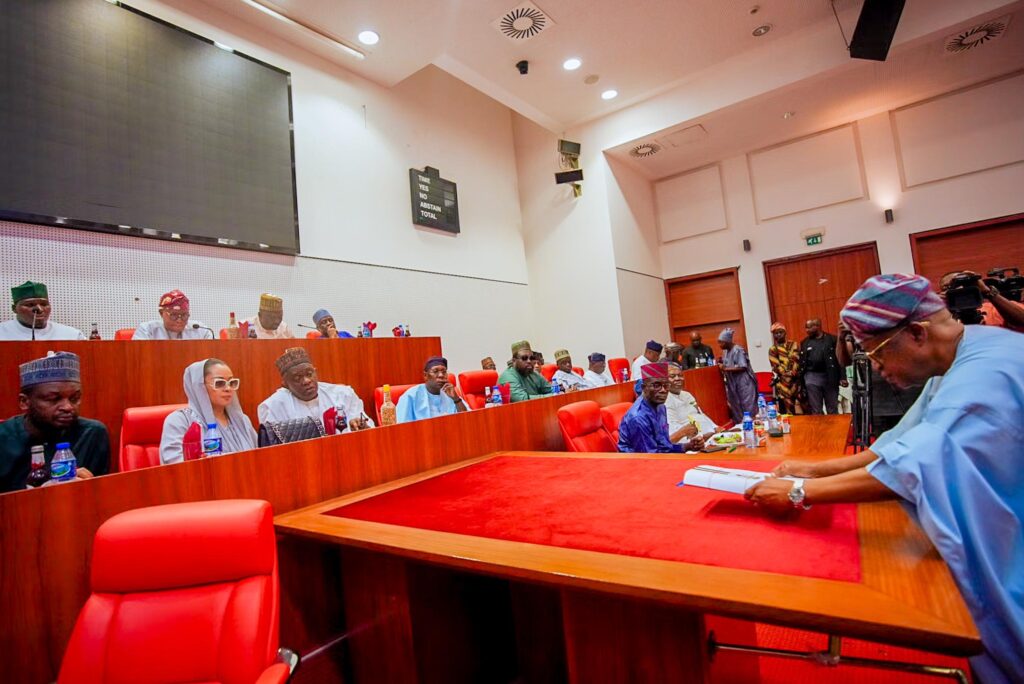
The minister stressed that the ministry’s mandate spans interconnected subsectors including ports, shipping, inland waterways, fisheries, and aquaculture; that collectively handle over 90 per cent of Nigeria’s international trade by volume.
He noted that while agencies such as the Nigerian Ports Authority, NIMASA, and the Nigerian Shippers’ Council are self-funding and remit significantly to the Consolidated Revenue Fund, their liquidity has been weakened by excessive deductions at source by the Office of the Accountant-General of the Federation.
“These deductions have reduced operational flexibility, worsened port congestion, raised logistics costs, delayed cargo movement, and triggered inflationary pressures. What appears to be an accounting issue has become a national economic concern,” Oyetola cautioned.
He further flagged misalignments in the budget process, citing the placement of the Council for the Regulation of Freight Forwarding in Nigeria (CRFFN) under the Ministry of Transportation instead of Marine and Blue Economy, saying such errors undermine policy coherence in maritime logistics.
On inland waterways, Oyetola appealed for increased funding to improve safety and reduce accidents, arguing that water transport is globally cheaper than road haulage. He said Nigeria’s reliance on road transport for over 80 per cent of freight has worsened road deterioration and raised the cost of goods, while efficient waterways could ease pressure and lower logistics costs.
Turning to fisheries, the minister highlighted Nigeria’s annual fish demand of 3.6 million metric tonnes against domestic production of 1.4 million metric tonnes, forcing imports worth over $1 billion annually. He added that post-harvest losses of up to 30 per cent further strain supply, despite fish being one of the most affordable protein sources for households.
Oyetola revealed that in 2025, the ministry’s revised capital budget of ₦3.53 billion recorded an actual cash release of just ₦202.47 million, about 1.7 per cent while overhead releases stood at 35 per cent. He assured that engagements are ongoing with the Ministry of Budget and Economic Planning to close funding gaps in line with the government’s diversification drive.
Senator Wasiu Eshilokun, Chairman of the Senate Committee on Marine Transport, pledged that the National Assembly would carefully examine the proposals, acknowledging the strategic importance of the marine and blue economy to Nigeria’s development and resilience.






Nigeria Customs Foils Major Drug Trafficking Attempt in Edo State

Port Efficiency: NCS, PEBEC Launch Strategic Reform Initiatives

Barge Operators Push for Fairer Regulations in Nigeria’s Port Logistics

SEREC Congratulates Prince Olayiwola Shittu on UN-POLAC Appointment

The $1.1 Billion Anchor: Why We Cannot Abandon Our Gateway Ports – The CVFF and the New Shipping Line (Part 2)

NASS Rules ‘Tantita Providing Critical National Assignment’

ANLCA vs Nigeria Police Force: MMAC Secretariat Crisis Deepens

Nigeria’s $748m UK Port Infrastructure Loan: Many Questions Begging for Answer

President Tinubu’s Borrowing Binge Amid Rising Revenues and Elite Excesses
Prince Olayiwola Shittu: A Glimpse Into His ‘International Peace Advocate’ Appointment

NRS, Customs, PEBEC Visit NSW Office Apapa

Customs Boss Adeniyi Announces Relocation of FOU Zone ‘A’ Office

ANLCA Board is intact, cannot be wished away by anybody’-Elochukwu

B-R-E-A-K-I-N-G: Effedua, Rector MAN Oron, Resigns

EFCC’s Probe: Okowa Plots Sheriff’s Removal Despite London Accord
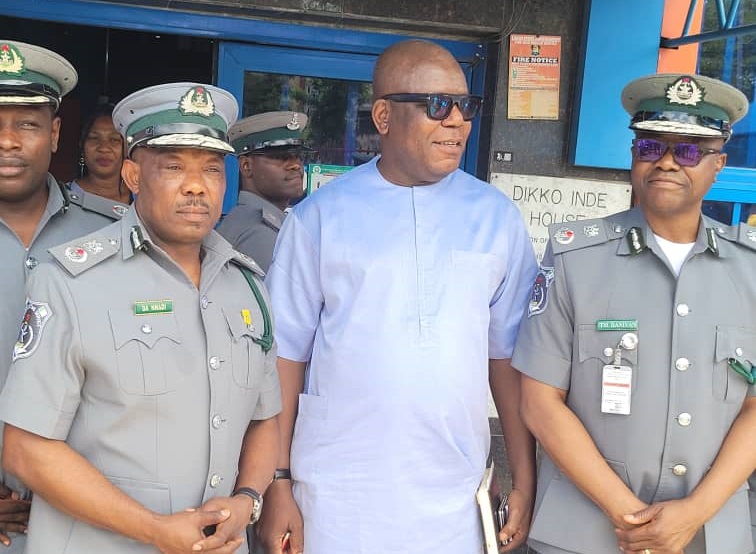
Customs Trains ANLCA Members, Others on B’Odogwu Portal

NPA’s Alleged Executive Management Fight: The Half Truth & Truth
ANLCA Board Election: Know Your Candidates
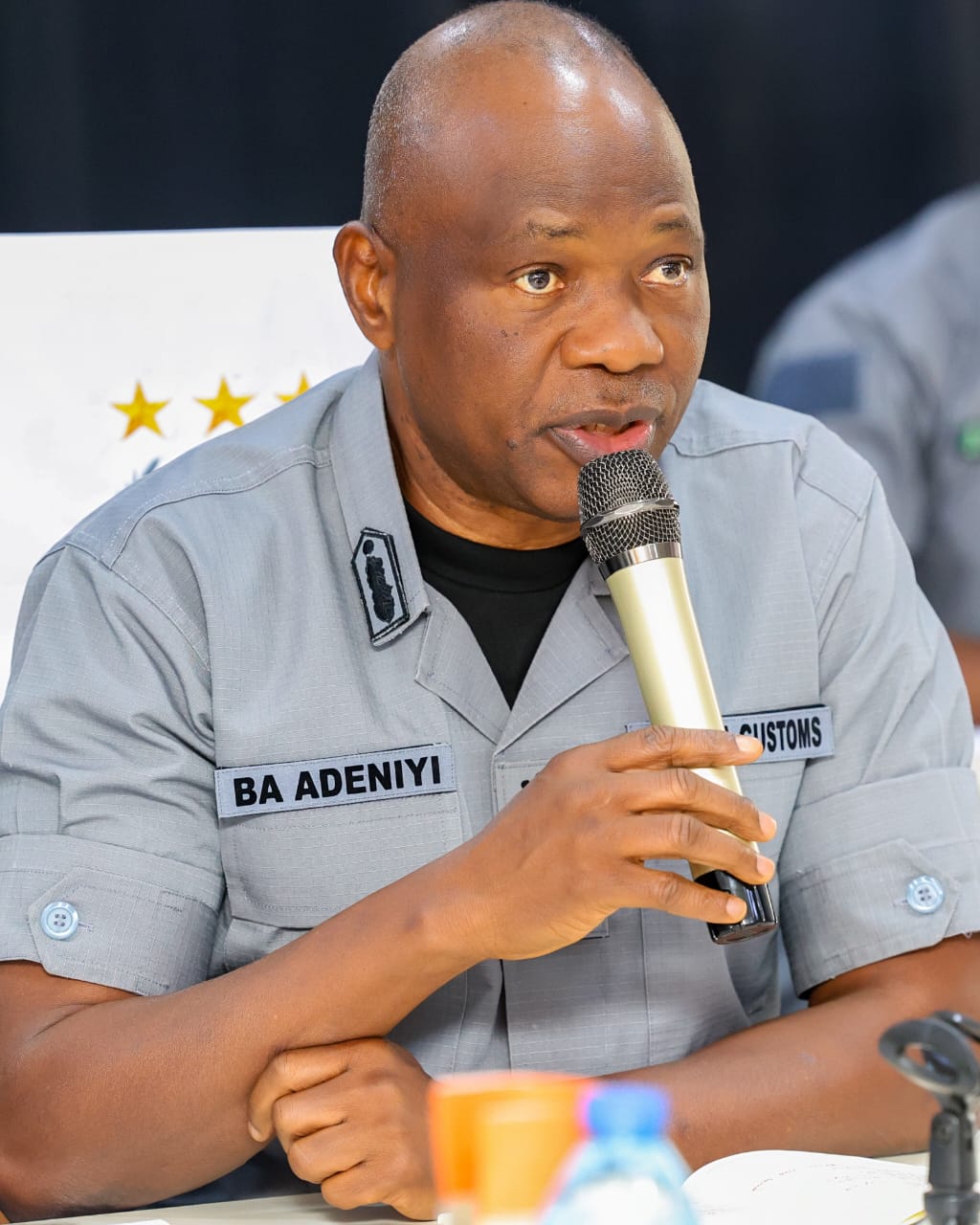
‘Why We Launched B-Odogwu Pilot Scheme With Webb Fontaine Still Running’ – Adeniyi

Nigeria Customs: Trust, Competence And The Oramalugo Factor

Onyemekara Promoted GM, Appointed NPA’s New Spokesperson

‘Rush To Break News Can Lead To Brush With Cybercrime’- Police

Kebbi Is Hub of Hard Drugs Smuggling In Northern Region’ – Oramalugo

Maritime Industry At 64: Oyetola Versus Oyetola