
Business Maritime
Reinventing Apapa Port for National Security: Oshoba’s Digital Drive

BY FUNMI ALUKO
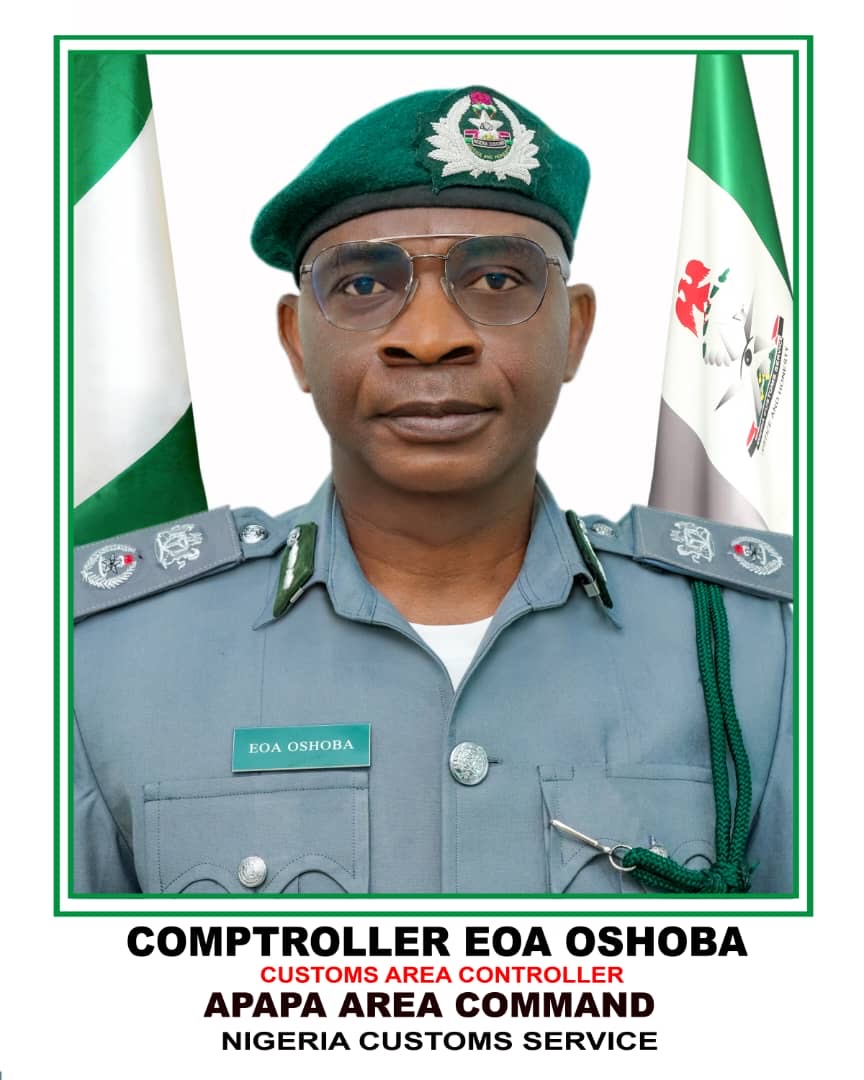
The story of Apapa Port is the story of Nigeria’s economic heartbeat. Every day, thousands of containers pass through its gates, carrying goods that sustain industries, households, and livelihoods across the nation. It is no exaggeration to say that the efficiency of Apapa Customs determines the rhythm of Nigeria’s trade. Under the stewardship of Comptroller Emmanuel Oshoba, the Apapa Area Command Command of the Nigeria Customs Service has become a laboratory for reform, a proving ground for innovation, and a symbol of how visionary leadership can shape the destiny of a nation’s commerce.
Oshoba’s tenure has been marked by a deliberate blend of modernization and enforcement. He has not only embraced digital transformation but also ensured that the command remains vigilant against smuggling and economic sabotage. His leadership style, adjudged as firm, pragmatic, and forward-looking has positioned Apapa as a model for other ports in Nigeria and across West Africa.
Digital Transformation: Oshoba’s Strategic Push
The modernization of Customs processes through digital platforms has been one of the most significant shifts in recent years. The introduction of e-Customs modernization has reduced the labyrinthine paperwork that once defined cargo clearance. Importers and exporters now navigate a more streamlined system, where automation replaces human bottlenecks and transparency curbs corruption.
For Oshoba, efficiency is not just a buzzword; it is a competitive necessity. In a global economy where speed and reliability determine trade flows, Nigeria cannot afford to lag behind. His insistence on efficiency has been instrumental in pushing Apapa toward this digital frontier. Yet, he acknowledges that modernization is not flawless. Technical glitches, uneven adoption across agencies, and resistance from entrenched interests remind us that reform is not a switch to be flipped but a culture to be cultivated.
Blockchain Cargo Tracking: A Leadership-Driven Innovation
Beyond automation lies the promise of blockchain cargo tracking. Around the world, ports are experimenting with blockchain to create tamper-proof documentation, ensuring that cargo manifests cannot be altered and that every transaction is recorded with immutable precision. For Apapa, where document fraud has historically been a thorn in the side of Customs, Oshoba’s openness to global best practices has made blockchain a revolutionary safeguard.
Imagine a system where every container’s journey is logged from origin to destination, accessible to Customs, shipping lines, and importers alike. Such transparency would not only deter fraud but also build trust in Nigeria’s trade ecosystem. Oshoba has championed this vision, insisting that Nigeria must invest in infrastructure and training to make these tools more than a buzzword. His conviction is clear: without commitment, innovation risks becoming mere rhetoric.
Artificial Intelligence in Risk Management
Equally transformative is the application of artificial intelligence (AI) in risk management. Traditionally, Customs officers have relied on manual checks and intuition to identify suspicious consignments. This approach, while valuable, is limited by human capacity. AI offers predictive analytics that can sift through vast datasets, flagging high-risk shipments without slowing legitimate trade.
For Apapa, where the volume of cargo is overwhelming, AI could be the difference between catching smugglers and drowning in paperwork. Oshoba’s command has begun exploring these tools, with the Command Public Relations Officer, CSC Suleiman Isah, confirming that officers have been receiving training to interpret the outputs of these modern trade tools. Oshoba’s leadership ensures that technology is not deployed in isolation but paired with human expertise, creating a balance between machine efficiency and human judgment.
Single Window Integration: Oshoba’s Push for Collaboration
The ambition of a Single Window integration is another frontier worth examining. The idea is simple yet profound: harmonize Customs, port authorities, shipping lines, and other agencies under one digital umbrella, so that traders interact with a unified platform rather than a maze of bureaucracies.
For Apapa, this would mean fewer delays, less duplication, and greater accountability. Oshoba’s leadership has been pivotal in pushing for inter-agency collaboration, but he recognizes that turf wars and institutional inertia often slow progress. His role has been that of a negotiator and reformer, pressing agencies to align with the broader vision of efficiency.
Cybersecurity: Oshoba’s Head-Up Approach
No discussion of digital transformation is complete without addressing cybersecurity challenges. As Apapa embraces digital platforms, it also opens itself to vulnerabilities. Hacking, data leaks, and cyber fraud are not hypothetical risks; they are realities that have crippled ports elsewhere.
Oshoba’s leadership, known for its proactive stance, has taken steps to secure the systems, conscious of the fact that cybersecurity is a national priority, not a departmental concern. The integrity of trade data is as vital as the physical security of cargo, and Oshoba has ensured that investment in digital safeguards matches the ambition of modernization.
Regional Trade and AfCFTA
Apapa is not merely a Nigerian port; it is a gateway to West Africa. The African Continental Free Trade Area (AfCFTA) envisions seamless trade across borders, and Apapa’s efficiency will determine Nigeria’s competitiveness within this framework.
Oshoba has remained deliberate in his reform initiatives, ensuring that Apapa’s digital journey aligns with regional integration. He has consistently argued that the port’s success is inseparable from Nigeria’s role in Africa’s economic renaissance. His leadership has reframed Apapa’s modernization not just as a local necessity but as a continental opportunity.
Enforcement and Anti-Smuggling: Oshoba’s Dual Strategy
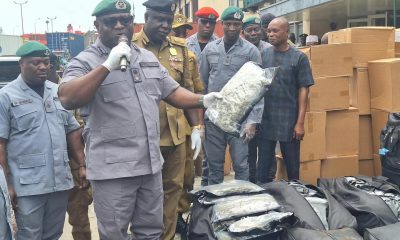
While much has been said about the role of technology in advancing the fortunes of Apapa Port, Oshoba has combined digital modernization with strong enforcement. In June 2026 alone, the command recorded seizures worth over ₦12.78 billion, including 1.81 tonnes of Cannabis Sativa (“Canadian Loud”) and expired pharmaceuticals.
These figures underscore how digital risk profiling and inter-agency collaboration are not only improving efficiency but also protecting Nigeria’s economy and public health. Two containers of expired pharmaceuticals were also uncovered, including antibiotics, injections, and tablets with expiry dates from 2021–2023. These operations were intelligence-led, using advanced risk assessment tools and collaboration with the National Drug Law Enforcement Agency (NDLEA).
Oshoba’s leadership has ensured that modernization does not come at the expense of vigilance. His dual strategy: embracing technology while strengthening enforcement, has made Apapa a fortress against smuggling and economic sabotage.
Human Dimension: Empowering Officers
The human dimension must also be considered. For Customs officers, digital transformation is both an opportunity and a challenge. Training, adaptation, and morale are critical. Oshoba has emphasized staff development, ensuring that officers are constantly empowered to thrive in a digital environment.
Technology should not alienate the workforce; it should enhance their capacity. Oshoba’s leadership has created a work atmosphere where officers see modernization not as a threat but as a tool to make their jobs more effective.
Conclusion: Leadership as a National Imperative
It is often said that digital systems are only as strong as their weakest link. If automation is undermined by corruption, if blockchain is stalled by lack of investment, if AI is misapplied, if Single Window integration is sabotaged by bureaucracy, then the promise of digital transformation will collapse into disappointment.
While Oshoba’s leadership has been commendable, leadership alone cannot sustain reform. It requires political will, institutional cooperation, and sustained investment. Yet, his stewardship has shown that with vision, commitment, and courage, Apapa can be re-invented as a beacon of modernization.
Given our present digital age, the efficiency of Apapa is not merely a local concern anymore; it is a national imperative, a continental opportunity, and a global necessity. Comptroller Emmanuel Oshoba has demonstrated that leadership at the port is not about managing cargo alone but about safeguarding Nigeria’s economic future.




Again, Customs FOU Zone ‘A’ Rescues Five Live Pangolins in Ogun State

Lagos-Calabar Highway: When a Presidential Legacy Project Collides with Accountability (2)
Lagos-Calabar Highway: Did Nigeria Pay the Price for Inadequate Planning?

ANLCA Airport Crisis: Police Raid Raises Questions Over IGP’s Respect For Court Orders

‘We Arrested Several Vessels Violating Cabotage Trade’ – NIMASA

Customs CGC Says ‘The World Is Connected, Not Borderless’

Nigeria Customs Mulls Reviews of Complaints Arising from Recruitment

Edo-Delta Journalists Forum Challenges Political Leaders on Regional Development

Nnadi Urges Nigerian Importers to Shift from Finished Goods to Manufacturing

WMD: Oyetola Recommit to Unlock CVFF Pursuant to Indigenous Operators Financing

Customs FOU Zone ‘A’ Hands Over Seized ₦511.4m Pharmaceuticals, Illicit Drugs to NDLEA, NAFDAC

Oyetola Unveils NPERA, Corporate Logo Amid Quiet Enthusiasm

ANLCA Board is intact, cannot be wished away by anybody’-Elochukwu

B-R-E-A-K-I-N-G: Effedua, Rector MAN Oron, Resigns

EFCC’s Probe: Okowa Plots Sheriff’s Removal Despite London Accord
Customs Trains ANLCA Members, Others on B’Odogwu Portal

NPA’s Alleged Executive Management Fight: The Half Truth & Truth

ANLCA Board Election: Know Your Candidates
‘Why We Launched B-Odogwu Pilot Scheme With Webb Fontaine Still Running’ – Adeniyi

Onyeka Makes History As Tin-Can Customs Hit ₦16.4bn A Day

Onyemekara Promoted GM, Appointed NPA’s New Spokesperson

Nigeria Customs: Trust, Competence And The Oramalugo Factor

Apapa Customs Collects ₦161b On B’Odogwu Platform In 3 Weeks

‘Rush To Break News Can Lead To Brush With Cybercrime’- Police