
Transport
Second-guessing NRC Preliminary Report On Warri-Itakpe Train Accident

PINNACLE TIME COMMENTARY
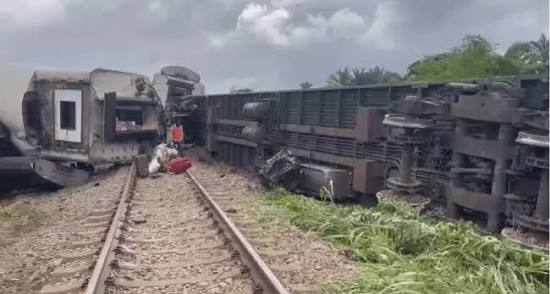
The tragic events of June 8 along the Warri-Itakpe rail corridor where four lives were lost and 64 passengers injured near Owa-Oyibu have thrust Nigeria’s rail infrastructure back into a sharp, uncomfortable spotlight.
In the wake of the disaster, the Nigerian Railway Corporation (NRC) has issued a preliminary internal report; which we think is very timely but which must also be taken with cautious optimism. While their swift attempt at operational transparency is commendable, it has raised critical questions about regulatory boundaries, statutory authority, and what true accountability looks like in our transport sector.
The NRC’s preliminary findings point toward internal mechanical failures—specifically a sudden bogie or wheel defect alongside the dynamics of emergency braking, while explicitly ruling out track vandalism. We believe that for an anxious public seeking immediate answers, these preliminary observations offer necessary context.
However, it is vital that Nigerians do not mistake the operator’s internal hypothesis for the final word; which the NRC gratefully, emphasized in the said preliminary report.
Under the NSIB Act 2022, the Nigerian Safety Investigation Bureau (NSIB) is the only independent statutory body legally empowered to determine the definitive root cause of transportation accidents and issue binding safety mandates. The NRC is the operator and asset custodian; asking it to investigate its own line is a structural conflict of interest that the 2022 Act was explicitly designed to fix. The operator’s internal notes are useful for immediate recovery, but they cannot replace an objective, external autopsy of the system.
Restoring public confidence along the Warri-Itakpe corridor requires more than quick working theories, it demands unyielding safety protocols before another train leaves the station.
Independent Audits: Tracks and rolling stock must undergo thorough, third-party technical clearance before passenger services resume.
Pre-Departure Rigor: Strict, non-negotiable inspection regimes must be enforced across all active coaches to catch mechanical defects before departure.
Total NSIB Compliance: The operator must publicly commit to implementing every binding safety recommendation outlined in the forthcoming NSIB final report.
The traveling public deserves a rail system defined by safety, not guesswork. As we await the NSIB’s conclusive findings, regulators and operators alike must remember that transparency without independent accountability is just noise. The lives lost at Owa-Oyibu demand nothing less than complete structural reform.









Teamwork, Discipline, Central to Our Enforcement Mandate —Jonah Charges Customs Marine Operatives

How the UAE-Nigeria Partnership Can Transform Our Ports

Cross River, FTZ Customs Gets New Impulse

CGC Adeniyi Signs Anti-Corruption Documents, Activates ICRAM Steering Committee

Nigeria Customs Marks Breast Cancer Awareness Month in Abuja

NIMASA To Host Webinars on Automation of Nigerian Ship Registry

NPA Moves To Cut Export Bottlenecks, Targets Forex Inflows

NPA Congratulates ANLCA on 72nd Anniversary, Reaffirms Support for Port Modernisation

Afeni Lands at FOU Zone ‘A’ in Acting Controller Capacity

NPA Mulls Specialised Fishing Port to Deepen Nigeria’s Blue Economy

Industry Stakeholders Applaud ANLCA at 72nd Anniversary Celebration

Port Regulation Critical To Fisheries, Blue Economy – NPERA DG, Akutah
ANLCA Board is intact, cannot be wished away by anybody’-Elochukwu

B-R-E-A-K-I-N-G: Effedua, Rector MAN Oron, Resigns

EFCC’s Probe: Okowa Plots Sheriff’s Removal Despite London Accord
Customs Trains ANLCA Members, Others on B’Odogwu Portal

NPA’s Alleged Executive Management Fight: The Half Truth & Truth

ANLCA Board Election: Know Your Candidates
‘Why We Launched B-Odogwu Pilot Scheme With Webb Fontaine Still Running’ – Adeniyi

Onyemekara Promoted GM, Appointed NPA’s New Spokesperson

Nigeria Customs: Trust, Competence And The Oramalugo Factor

‘Rush To Break News Can Lead To Brush With Cybercrime’- Police

Kebbi Is Hub of Hard Drugs Smuggling In Northern Region’ – Oramalugo

Apapa Customs Collects ₦161b On B’Odogwu Platform In 3 Weeks