
Analysis
Aje Oilfield at 10: Offshore Wealth, Onshore Poverty

…Why Badagry Is Still Waiting for Its Oil Dividend
BY GBOGBOWA GBOWA
For generations, Badagry has lived with the burden of history while waiting for the promise of prosperity.
Globally renowned as one of West Africa’s principal slave trade gateways, the ancient kingdom has struggled to redefine itself beyond its painful past. While its slave museums and relics continue to attract tourists, successive generations of Badagry elites have pursued a far more ambitious dream — transforming the coastal corridor into an industrial and commercial hub capable of competing with other economic centres in Lagos State.
That aspiration has produced more political declarations than tangible development.
From one administration to another, both at the federal and state levels, Badagry has repeatedly been promised a deep seaport, industrial estates, export-processing facilities, modern transport infrastructure and investment incentives. Yet, those promises have largely remained campaign rhetoric.
Ironically, in the absence of sufficient legitimate economic opportunities, the same strategic location has continued to serve as one of Nigeria’s most notorious smuggling corridors, stretching across land borders and coastal waterways. Security agencies have intensified enforcement over the years, but enforcement alone has never addressed the underlying economic vacuum that sustains illicit trade.
Today, another struggle has emerged.
It is no longer merely about a seaport or industrialisation. It is about ownership, recognition and equitable participation in the benefits arising from the Aje Oil Field, Nigeria’s first commercial offshore oilfield outside the Niger Delta.
The debate raises fundamental questions about resource justice, constitutional entitlement and whether natural resource wealth can truly transform host communities.
These concerns were first publicly raised by a stakeholder during a state-sponsored town hall meeting with the then Governor of Lagos State, Akinwunmi Ambode, where he asked a straightforward question concerning the Aje Oil Field and what it meant for the people of the Badagry corridor.
Years later, neither that administration nor its successors has provided a satisfactory answer.
The question remains unanswered because the contradiction remains unresolved.
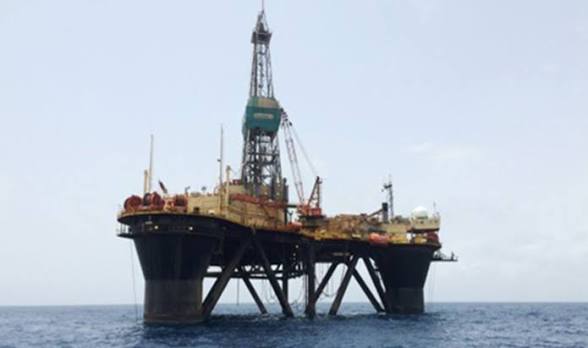
The Aje Field in Oil Mining Lease (OML) 113, operated by Yinka Folawiyo Petroleum, is only about 24 kilometres off the Badagry coastline. When production commenced in May 2016, Lagos State officially entered Nigeria’s league of oil-producing states, becoming the first commercial crude oil-producing state outside the Niger Delta.
That achievement altered Nigeria’s petroleum geography. The discovery proved that commercially viable hydrocarbons extend into the Dahomey Basin, opening fresh exploration prospects across the South-West and strengthening Lagos’ strategic importance within Nigeria’s energy industry.
Yet, almost a decade after first oil, the communities geographically closest to the field remain largely untouched by the economic transformation many expected.
The contrast between offshore wealth and onshore reality has become increasingly difficult to ignore. Available industry data indicate that Aje is far more than a conventional crude oil field. It is fundamentally a gas province.
Published estimates suggest contingent resources of roughly 380 million barrels of oil equivalent, comprising about 28 per cent oil and condensate, 20 per cent liquefied petroleum gas (LPG) and an estimated 52 per cent natural gas.
Other independent assessments estimate recoverable resources at approximately 480 billion cubic feet of natural gas alongside about 54 million barrels of recoverable oil, condensate and LPG.
These figures point to one unmistakable conclusion: the long-term economic value of Aje lies more in natural gas than crude oil.
Gas processing, power generation, fertiliser production, petrochemicals and LPG distribution offer opportunities capable of sustaining industrial growth for decades if properly developed.
The field’s first production phase was built around two subsea wells connected to the Front Puffin Floating Production, Storage and Offloading (FPSO) vessel — effectively a floating industrial complex at sea.
Designed with storage capacity of about 750,000 barrels and oil processing capability of approximately 40,000 barrels daily, the facility was expected to support long-term production targets ranging between 50,000 and 80,000 barrels of oil equivalent per day as future gas phases matured.
However, investigations indicate that actual production has consistently remained below those design capacities owing to mechanical challenges, financing constraints and delayed gas development.
Like most offshore petroleum facilities worldwide, the FPSO accommodates a highly specialised workforce comprising petroleum engineers, production technicians, marine officers, mechanical and electrical engineers, safety professionals, crane operators, medical personnel, catering staff and security teams.
These positions demand internationally recognised certifications, technical competence and years of offshore experience.
That reality exposes another uncomfortable dimension of the Badagry story.
Despite living closest to the resource, many local youths remain excluded from direct employment because they lack specialised petroleum training and certification.
Physical proximity to oil wealth has not translated into meaningful participation in the industry. Yet the value of petroleum development extends far beyond employment on offshore platforms.
Oil and gas projects ordinarily stimulate wider economic activity through marine logistics, fabrication, engineering services, local procurement, taxation, royalties, transportation, warehousing and community development investments.
Where gas infrastructure follows, industries often emerge around power generation, fertiliser production, petrochemicals, manufacturing and export services.
Unfortunately, little of that industrial ecosystem has taken root in Badagry. The expected multiplier effects remain largely absent. Thus, this reality inevitably leads to the constitutional question.
Section 162(2) of the 1999 Constitution provides that not less than 13 per cent of revenues derived from natural resources shall be returned to producing states under the derivation principle.
Following the commencement of production at Aje, Lagos became constitutionally recognised as an oil-producing state. However, implementation has generated controversy.
Lagos State officials publicly acknowledged in 2020 that derivation payments had yet to be fully received because of federal administrative processes. Even where such revenues are eventually disbursed, the Constitution does not compel state governments to allocate those funds directly to host local governments or producing communities.
Distribution remains subject to state budgeting priorities. It is precisely within this constitutional gap that public frustration has flourished.
Across the Badagry corridor, many residents believe their communities bear the geographical identity of an oil-producing area without enjoying corresponding developmental benefits.
Several factors reinforce this perception. Offshore production naturally creates relatively limited permanent employment. Most technical personnel are recruited nationally and internationally.
High-value procurement contracts frequently go to specialist companies located outside Badagry. No major gas processing plants, petrochemical facilities or energy-based industrial clusters have emerged within the corridor.
Visible infrastructure directly linked to petroleum wealth remains scarce. Equally significant is the absence of sustained public transparency regarding how oil-related revenues have translated into local development initiatives.
While these perceptions are widespread, it is equally important to distinguish public sentiment from verifiable financial evidence. Without comprehensive public disclosure of petroleum-related receipts, expenditure patterns and project implementation, neither government nor communities can conclusively demonstrate whether Badagry has received its fair share.
Transparency remains the missing bridge between expectation and trust.
Perhaps the most important lesson from Aje is that natural resources alone do not guarantee development. Without deliberate public policy, investment planning and local capacity-building, resource wealth can coexist with persistent poverty.
Badagry therefore requires a coordinated development strategy that looks beyond crude oil extraction. First, there is a compelling case for establishing a Badagry Petroleum Development Commission to coordinate local participation in emerging oil and gas opportunities.
Second, government and industry should jointly establish a Petroleum Skills Academy to equip local youths with internationally recognised competencies in offshore engineering, welding, instrumentation, marine operations and industrial safety certification.
Third, an Oil and Gas Industrial Park should be developed to attract fabrication companies, logistics providers, equipment maintenance firms and marine support services.
Fourth, annual public reports detailing petroleum-related revenues, community investments and corporate social responsibility commitments should become standard practice.
Fifth, stronger Community Development Agreements under the Petroleum Industry Act should prioritise measurable investments in roads, healthcare, education, potable water and environmental sustainability.
Sixth, greater emphasis should be placed on gas commercialisation through LPG bottling facilities, fertiliser production, independent power projects and gas-based manufacturing.
Finally, local content provisions must move beyond policy declarations to measurable implementation, ensuring that qualified Badagry businesses and professionals participate meaningfully across the petroleum value chain.
The Aje Field represents far more than another offshore oil discovery. It has become a national test of whether Nigeria can convert natural resource wealth into inclusive economic development.
Ten years after first oil, the field has already secured Lagos State’s place on Nigeria’s petroleum map. The more important question is whether it will also secure Badagry’s place on Nigeria’s development map.
For decades, Badagry has been defined by the tragedy of its past and the unfulfilled promises of its future. Its people have waited for industries instead of political speeches, for investment instead of symbolism, and for economic inclusion instead of constitutional ambiguity.
The real measure of Aje’s success should therefore not be counted solely in barrels of crude produced or cubic feet of gas exported. It should be reflected in factories established, skilled jobs created, local enterprises empowered, schools improved, roads constructed and communities transformed.
Only then will the wealth generated offshore become visible onshore. Until that happens, the Aje Oil Field will remain both a remarkable national achievement and a sobering reminder that resource abundance, without deliberate inclusion, can leave host communities standing closest to prosperity while remaining furthest from its benefits.

Oshoba at 60: A Life of Service, a Port Legacy and the Joy of Thanksgiving

Nigeria Customs Commission Rehabilitated Modakeke Healthcare Centre

Lagos-Calabar Highway: Whose Investments, Livelihoods and Coastal Communities Count? (3)

Again, Customs FOU Zone ‘A’ Rescues Five Live Pangolins in Ogun State
Lagos-Calabar Highway: When a Presidential Legacy Project Collides with Accountability (2)
Lagos-Calabar Highway: Did Nigeria Pay the Price for Inadequate Planning?

ANLCA Airport Crisis: Police Raid Raises Questions Over IGP’s Respect For Court Orders

‘We Arrested Several Vessels Violating Cabotage Trade’ – NIMASA

Customs CGC Says ‘The World Is Connected, Not Borderless’

Nigeria Customs Mulls Reviews of Complaints Arising from Recruitment

Edo-Delta Journalists Forum Challenges Political Leaders on Regional Development

Nnadi Urges Nigerian Importers to Shift from Finished Goods to Manufacturing

ANLCA Board is intact, cannot be wished away by anybody’-Elochukwu

B-R-E-A-K-I-N-G: Effedua, Rector MAN Oron, Resigns

EFCC’s Probe: Okowa Plots Sheriff’s Removal Despite London Accord

Customs Trains ANLCA Members, Others on B’Odogwu Portal

NPA’s Alleged Executive Management Fight: The Half Truth & Truth
ANLCA Board Election: Know Your Candidates
‘Why We Launched B-Odogwu Pilot Scheme With Webb Fontaine Still Running’ – Adeniyi

Onyeka Makes History As Tin-Can Customs Hit ₦16.4bn A Day

Onyemekara Promoted GM, Appointed NPA’s New Spokesperson

Nigeria Customs: Trust, Competence And The Oramalugo Factor

Apapa Customs Collects ₦161b On B’Odogwu Platform In 3 Weeks

‘Rush To Break News Can Lead To Brush With Cybercrime’- Police