Business Maritime
Silence: Onne Vessel Crash Another Likely Buried Maritime Investigation?

BY EGUONO ODJEGBA
When two large vessels collide in one of Nigeria’s busiest maritime corridors, the issue extends beyond damaged ships and spilled oil. It becomes a test of a nation’s commitment to maritime safety, environmental protection and regulatory accountability.
That is why the collision between MV Maersk Valparaiso and MT Lady Martina at the Bonny Inner Anchorage on May 20, 2026 deserves far more than the fleeting publicity it received on the day it occurred.
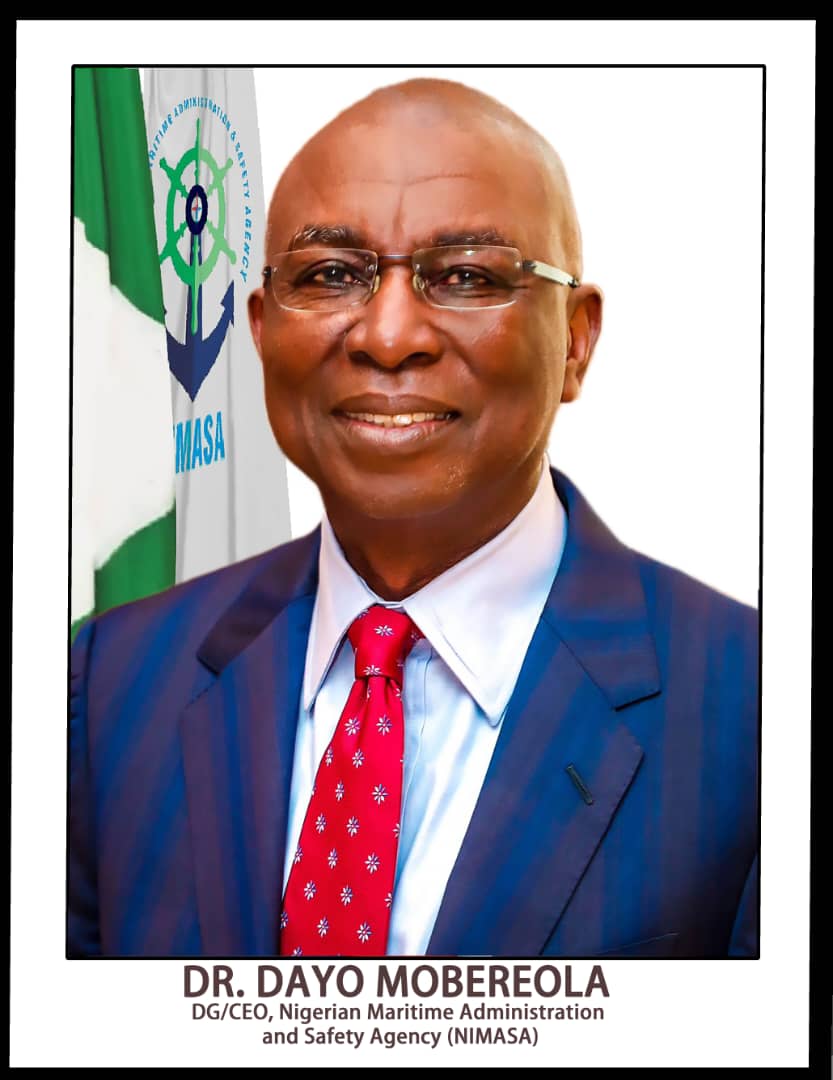
The Nigerian Maritime Administration and Safety Agency (NIMASA) reacted swiftly in the immediate aftermath. It announced that the Director General, Dr. Dayo Mobereola, had ordered a comprehensive investigation into both the immediate and remote causes of the collision. A Situation Monitoring Room was believed to have been established. The Marine Environment Management Department was directed to undertake an Environmental Impact Assessment following the reported oil spill. According to NIMASA, while injured crew members were evacuated, both vessels were grounded pending investigations.
Those were reassuring announcements which reflected the response expected of a maritime administration charged with ensuring safe navigation within Nigeria’s waters. Yet, more than six weeks later, public silence has replaced official urgency.
There has been no public update on the investigation. No preliminary findings. No indication of the extent of the environmental damage. No explanation of what caused two professionally manned commercial vessels to collide in a controlled anchorage. No lessons for the shipping community. No safety recommendations.
The questions continue to multiply. Was it human error? Did equipment fail? Were there communication lapses between the vessels and Vessel Traffic Services? Did weather, currents or navigational aids contribute? Was fatigue involved? Were international collision regulations properly observed?
Until these questions are answered, the industry is left with speculation instead of facts.
That should worry everyone. Maritime accident investigations are not conducted merely to determine blame. Their primary objective is to prevent future accidents. Every collision contains valuable safety lessons that could save lives, protect investments and preserve the marine environment.
The International Maritime Organization (IMO) has repeatedly emphasized that casualty investigations should promote transparency and continuous safety improvement rather than secrecy.
Unfortunately, Nigeria’s maritime sector has developed an uncomfortable reputation for investigations that begin with loud announcements but end in unexplained silence.
Over the years, several marine casualties including vessel sinking, rigs rupture, fatal boat mishaps, fires aboard ships, offshore incidents and oil spill events have generated impressive promises of investigations. In many instances, the reports are either never released or quietly disappear into administrative archives, away from public scrutiny.
The consequence is predictable. The same operational deficiencies recur, the same navigational mistakes are repeated, same institutional weaknesses remain unaddressed; while the same accidents happen again and again.
Without published investigation reports, shipowners cannot improve their safety management systems. Masters and pilots cannot learn from previous errors. Marine insurers receive limited guidance on emerging risks. Training institutions lose valuable case studies. Regulators themselves are deprived of opportunities to strengthen oversight.
In effect, every unpublished report becomes a lost opportunity to improve maritime safety. The Bonny collision is particularly significant because it occurred in one of Nigeria’s strategic oil and export channels, where hundreds of vessel movements take place annually. Any weakness exposed by this incident has implications far beyond the two vessels involved.
Equally important is the environmental dimension. NIMASA confirmed that the collision resulted in an oil spill, prompting a Tier 1 pollution response. Yet the public has heard nothing further about the extent of contamination, the effectiveness of containment efforts or the ecological impact on surrounding waters.
Communities whose livelihoods depend on fishing deserve answers. So do operators whose businesses depend on the integrity of Nigeria’s waterways.
Transparency is not a favour. It is a regulatory obligation. Globally, serious marine casualties often result in detailed investigation reports running into dozens, sometimes hundreds, of pages. Such reports reconstruct timelines, analyze navigational decisions, examine bridge resource management, evaluate equipment performance and conclude with practical recommendations for the industry.
That is how maritime nations build safer shipping systems. Nigeria should aspire to no less. If investigations are conducted only to satisfy immediate public pressure, then the country loses twice: first through the accident itself and again through the failure to learn from it.
The industry therefore expects NIMASA to break this unfortunate cycle. The Agency should publicly update stakeholders on the progress of the Bonny collision investigation, publish its findings upon completion and disclose the corrective measures recommended to prevent recurrence.
Doing so would reinforce confidence in Nigeria’s maritime regulatory system and demonstrate that accident investigations are genuine instruments of safety improvement rather than public relations exercises.
Maritime accidents cannot always be prevented. But institutional silence after those accidents is entirely avoidable.
The collision between MV Maersk Valparaiso and MT Lady Martina should not become another file gathering dust on a government shelf. It should become a reference point for reform, accountability and a renewed commitment to safer navigation in Nigerian waters.
The point has already been made that Nigerian maritime industry deserves answers. More importantly, it deserves to learn the lessons before another collision writes the next tragic headline.







NIMASA Unveils National Innovation Hackathon, Open Young Innovators Por

Ogun 1 Customs Intercepts N417m Range Rover

Operator Raises Alarm Over Foreign Control, Cartelisation of Maritime Supply Chain

Tin-Can Customs Generates ₦137.298bn in August

DG NIMASA, Mobereola Reasserts Cabotage Implementation Key To Maritime Development

Tribute to a Colossus: The Eternal Legacy of Alhaji Bamanga Tukur (1935–2026)

Stakeholders To Re-Examine Blue Economy Imperatives

ANLCA@72: From Founders’ Dream to Indispensable Pillar of Nigeria’s Port Economy

ANLCA’s 72nd Anniversary: NECOM Reels Out Programme, Says Peace Worth Celebrating

US Coast Guard, Nigeria and the Politics of a Maritime Victory

Wasiu, Seme ANLCA Chairman Calls for Review of Vehicle Restriction

Seme-Krake: Nigeria, Benin Launch Joint Assessment to Revive One-Stop Border Post
ANLCA Board is intact, cannot be wished away by anybody’-Elochukwu

B-R-E-A-K-I-N-G: Effedua, Rector MAN Oron, Resigns

EFCC’s Probe: Okowa Plots Sheriff’s Removal Despite London Accord
Customs Trains ANLCA Members, Others on B’Odogwu Portal

NPA’s Alleged Executive Management Fight: The Half Truth & Truth
ANLCA Board Election: Know Your Candidates
‘Why We Launched B-Odogwu Pilot Scheme With Webb Fontaine Still Running’ – Adeniyi

Onyemekara Promoted GM, Appointed NPA’s New Spokesperson

Nigeria Customs: Trust, Competence And The Oramalugo Factor

‘Rush To Break News Can Lead To Brush With Cybercrime’- Police

Kebbi Is Hub of Hard Drugs Smuggling In Northern Region’ – Oramalugo

‘Our Trade Security Is More Protected Under B’Odogwu’ – Daniyan