
Business Focus
Kano–Maradi Rail Project: Between Buhari’s Vision, Tinubu’s Promise and the Cost of Delay

BY EGUONO ODJEGBA
When former President Muhammadu Buhari flagged off the Kano–Maradi Standard Gauge Railway in February 2021, the project was presented as far more than another railway construction site. It was projected as Nigeria’s gateway to the vast Sahel market, a strategic transport corridor that would connect Nigerian seaports to Niger Republic and ultimately deepen regional trade under the African Continental Free Trade Area (AfCFTA).
Three years after the end of the Buhari administration and following President Bola Ahmed Tinubu’s repeated assurances that his government would sustain viable legacy infrastructure projects, the Kano–Maradi railway once again finds itself in public discourse—this time for reasons that raise uncomfortable questions.
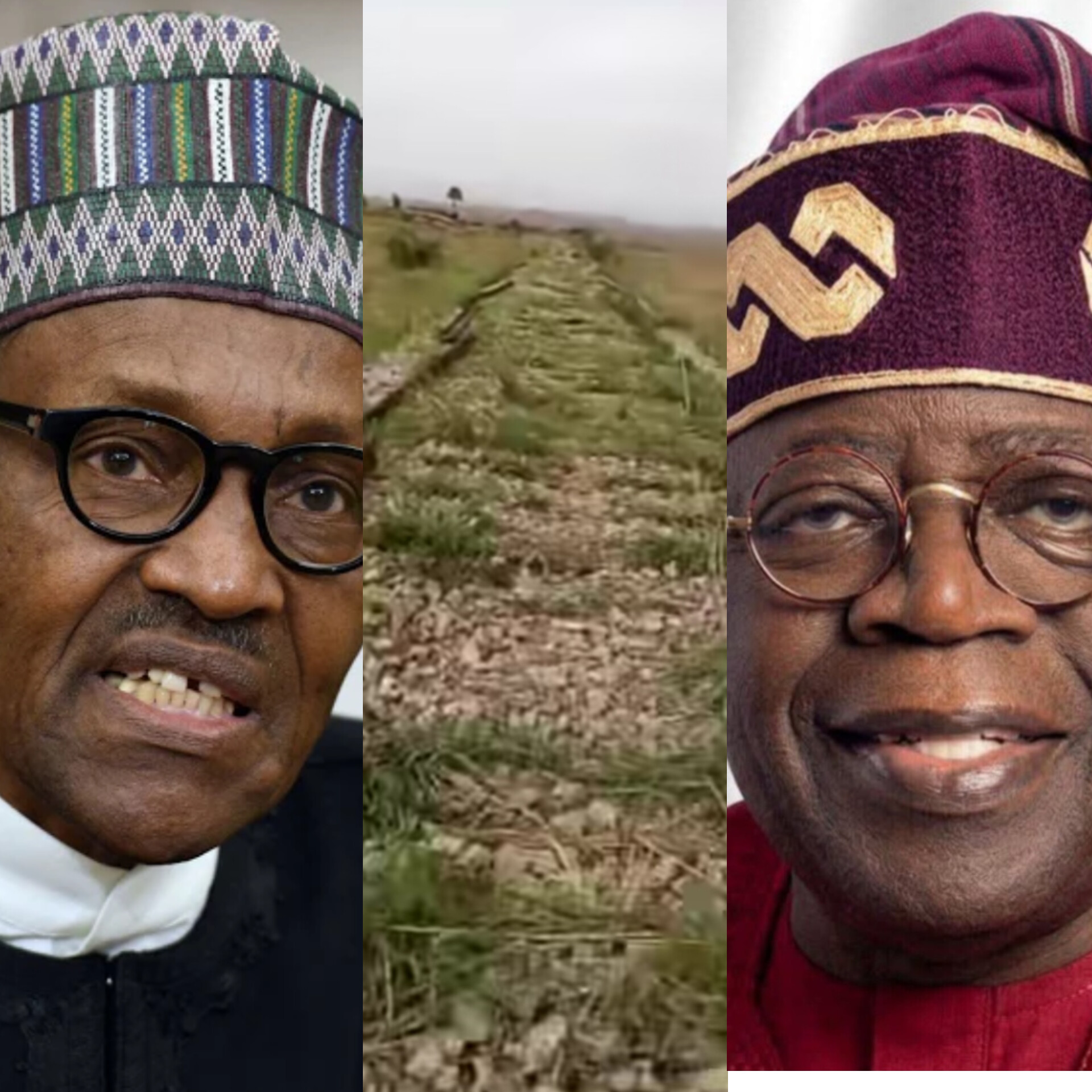
Social media commentator Isaac Fayose recently drew public attention to what he described as an abandoned project, alleging that sections of rail materials, particularly iron sleepers, have become targets of vandalism. Although government agencies have yet to officially respond to those specific allegations, the claims have revived public interest in the fate of one of Nigeria’s most expensive and controversial railway investments.
The concern goes beyond politics. It touches on accountability, infrastructure protection and the nation’s commitment to completing projects funded largely with borrowed resources.
From inception, the Kano–Maradi railway divided public opinion. Supporters viewed it as a bold economic initiative capable of transforming Kano into a regional logistics hub while opening new export opportunities for northern Nigeria. The line, stretching roughly 393 kilometres including the Kano–Dutse branch, was designed to facilitate both passenger movement and freight services between Nigeria and Niger Republic.
The Buhari administration argued that the railway would complement investments in seaports by enabling cargo arriving in Lagos and Warri to move efficiently by rail into northern Nigeria and onward to neighbouring landlocked countries. In official presentations, government maintained that nearly 80 million people within the economic corridor stood to benefit from increased commerce, agricultural exchange and industrial development.
Critics, however, questioned both the timing and priority of the investment. To many, spending almost two billion dollars on an international railway while critical domestic corridors—including the Eastern Railway, the Port Harcourt–Maiduguri line and completion of the Ibadan–Kano segment—remained unfinished appeared difficult to justify.
The controversy intensified because the project relied substantially on external financing. Successive announcements by government placed funding arrangements at well over one billion dollars through a combination of external financiers, development institutions and federal counterpart contributions.
For many Nigerians, the issue has never been whether regional integration is desirable. Rather, it has been whether the sequence of national priorities was properly arranged.
Yet regardless of differing opinions about its conception, one fact remains beyond dispute, which is, once a nation commits public resources and borrowed funds to a strategic infrastructure project, abandoning it midway would represent an enormous economic loss.
It is against this backdrop that President Tinubu’s commitment to policy continuity assumes greater significance. Since assuming office, the President has consistently pledged not to discard economically viable projects initiated by previous administrations merely because they bear another government’s imprint. That assurance has provided comfort to investors, contractors and development partners who expect infrastructure development to transcend political transitions.
Official updates from the Federal Government indicate that construction has continued and that significant portions of the project have progressed, with completion targeted for 2027. If those official assessments remain accurate, then public communication has become almost as important as the construction itself.
Infrastructure of this magnitude cannot be left vulnerable to speculation. Where allegations of vandalism emerge, prompt verification becomes imperative. If indeed railway materials have been stolen or damaged, law enforcement agencies must investigate and those responsible brought to justice. If, on the other hand, construction is progressing according to schedule, government owes Nigerians regular and transparent updates capable of dispelling misinformation.
The Kano–Maradi railway has become more than a transport project; it has evolved into a test of Nigeria’s institutional capacity to complete long-term infrastructure irrespective of changes in political leadership. For a country seeking to attract investment, credibility matters. Investors measure governments not only by the projects they initiate but by those they complete. Every abandoned project weakens confidence, while every completed project strengthens it.
The Tinubu administration therefore has an opportunity to settle the debate—not through rhetoric but through visible progress on the ground. If the railway remains on course as officially stated, Nigerians deserve to see measurable milestones, not conflicting narratives. If challenges have arisen, whether funding constraints, security concerns or contractual adjustments, they should be openly acknowledged.
Infrastructure financed with public borrowing belongs to the Nigerian people. They deserve periodic accounts of how their money is being spent and what value it is expected to generate. The Kano–Maradi railway was conceived as a symbol of regional connectivity and economic ambition. It should not become another monument to uncertainty or public distrust.
Ultimately, history will judge the project not by the controversy that surrounded its conception, nor by the politics that accompanied its groundbreaking, but by a far simpler question: was it completed, did it deliver value, and did Nigeria obtain the economic returns promised to its people?
Those are the questions that deserve answers as the nation watches the rails stretching northward not merely toward Maradi, but toward the credibility of Nigeria’s infrastructure agenda itself.








NIMASA in Show- of- Force Display to Stregthen Intelligence-Led Maritime Compliance

New Law Will End Arbitrary Shipping Charges, Enforce Compliance — NPERA Boss

When Customs Commissioned Rehabilitated Eleme Health Facility

ANLCA@72: Making Celebration a New Covenant for Peace, Unity and Professionalism

NIMASA Unveils National Innovation Hackathon, Open Young Innovators Por

Ogun 1 Customs Intercepts N417m Range Rover

Operator Raises Alarm Over Foreign Control, Cartelisation of Maritime Supply Chain

Tin-Can Customs Generates ₦137.298bn in August

DG NIMASA, Mobereola Reasserts Cabotage Implementation Key To Maritime Development

Tribute to a Colossus: The Eternal Legacy of Alhaji Bamanga Tukur (1935–2026)

Stakeholders To Re-Examine Blue Economy Imperatives
ANLCA@72: From Founders’ Dream to Indispensable Pillar of Nigeria’s Port Economy
ANLCA Board is intact, cannot be wished away by anybody’-Elochukwu

B-R-E-A-K-I-N-G: Effedua, Rector MAN Oron, Resigns

EFCC’s Probe: Okowa Plots Sheriff’s Removal Despite London Accord
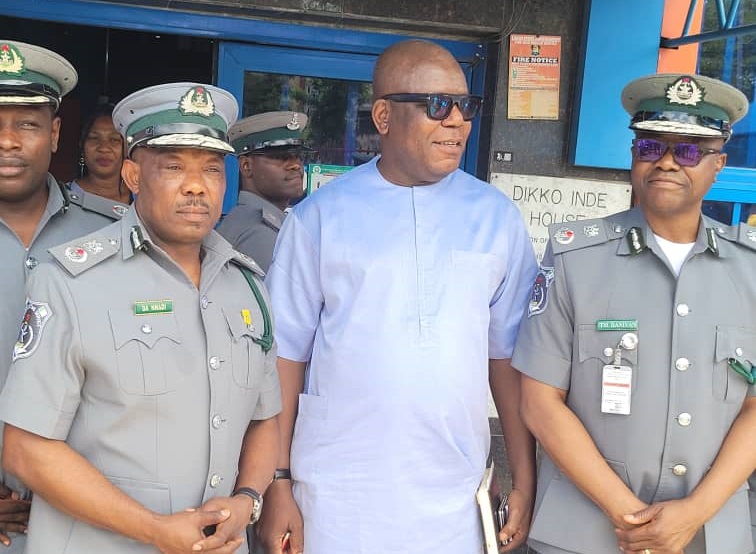
Customs Trains ANLCA Members, Others on B’Odogwu Portal

NPA’s Alleged Executive Management Fight: The Half Truth & Truth
ANLCA Board Election: Know Your Candidates
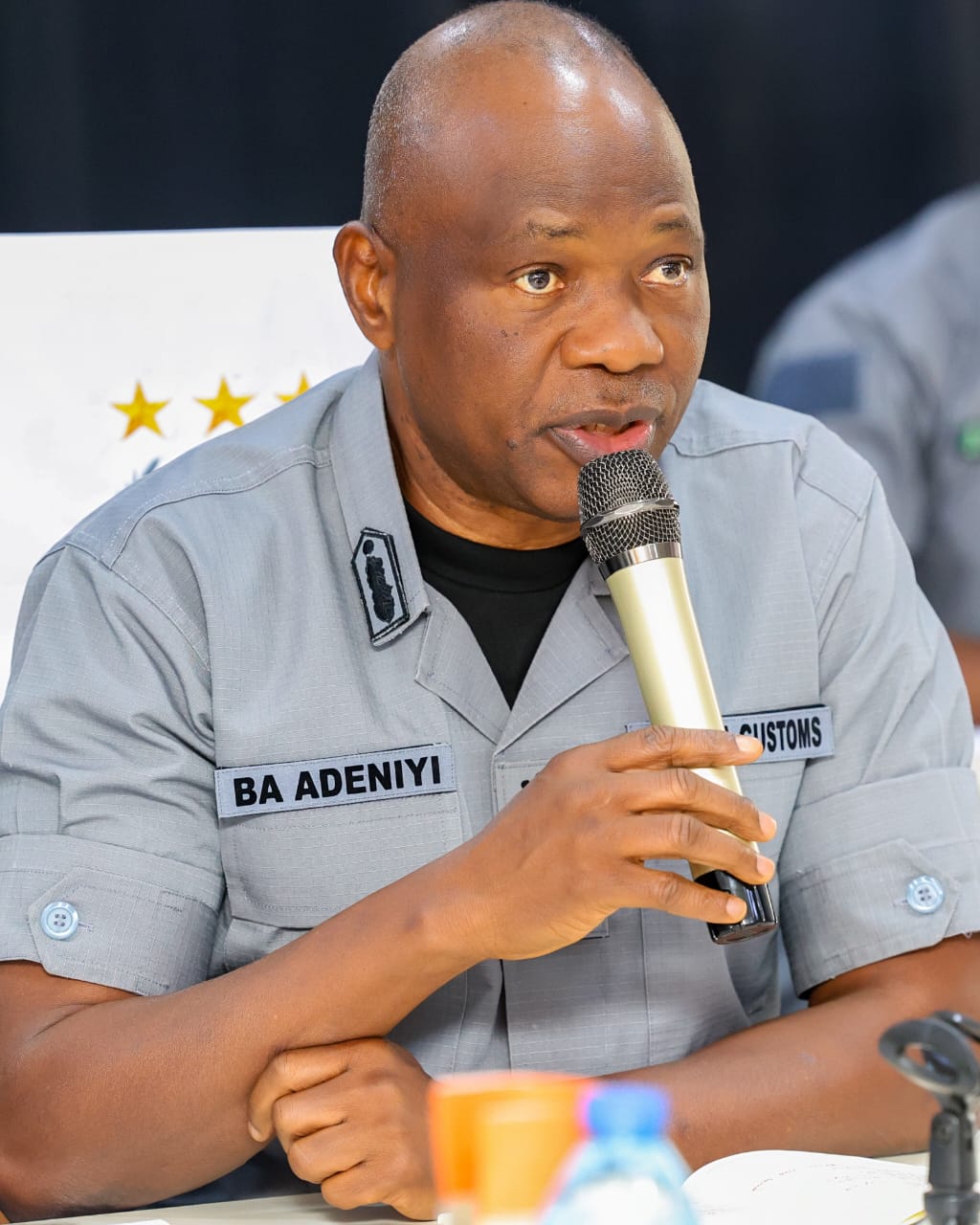
‘Why We Launched B-Odogwu Pilot Scheme With Webb Fontaine Still Running’ – Adeniyi

Onyemekara Promoted GM, Appointed NPA’s New Spokesperson

Nigeria Customs: Trust, Competence And The Oramalugo Factor

‘Rush To Break News Can Lead To Brush With Cybercrime’- Police

Kebbi Is Hub of Hard Drugs Smuggling In Northern Region’ – Oramalugo

‘Our Trade Security Is More Protected Under B’Odogwu’ – Daniyan