
Business Maritime
Operator Raises Alarm Over Foreign Control, Cartelisation of Maritime Supply Chain

BY KESIENNA SHEPHERDS
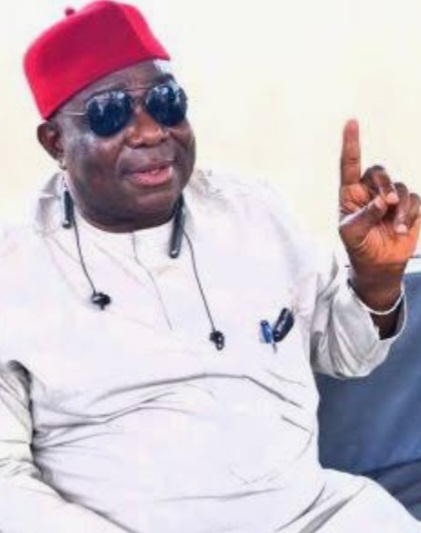
A concerned clearing agent and member of the Association of Nigerian Licensed Customs Agents (ANLCA), High Chief Sir John Alfred Ofobike, has called on the Federal Government to urgently review the growing participation of foreign interests in Nigeria’s maritime supply chain, alleging that Chinese businesses and their Nigerian collaborators are increasingly operating across several segments of the industry.
Ofobike, who made the call in an open letter to the Federal Government from Apapa, Lagos, said the development has implications on national security, revenue generation, regulatory compliance and the survival of indigenous operators in the freight forwarding business.
He particularly questioned what he described as the increasing involvement of foreign companies in clearing, bonded terminals, warehousing, stevedoring and delivery operations, arguing that sensitive segments of the maritime industry required stronger indigenous participation and regulatory oversight.
According to him, the situation had become more concerning because of persistent interceptions of arms, ammunition, illicit drugs, tramadol and other prohibited items by the Nigeria Customs Service (NCS) at ports and border stations.
He asked how such items continued to find their way into the country despite existing layers of port and border controls.
“Every day we hear Customs intercepted arms, ammunition, illicit drugs, tramadol, and all kinds of contraband at our ports and border stations,” he said, urging the government to investigate the routes, networks and possible loopholes that enable prohibited cargoes to enter the country.
Ofobike also raised concerns about what he described as alleged foreign domination of the cargo clearance and logistics value chain. He claimed that some Chinese interests were involved not only in manufacturing and shipping but also in clearing, bonded terminals, warehouses, stevedoring and last-mile delivery of imported cargo.
He argued that the concentration of several stages of the import supply chain in the hands of related foreign interests could create regulatory and national-security vulnerabilities if not properly monitored.
Alleged Duty Evasion
A major concern raised by the clearing agent was an alleged arrangement under which some importers were being offered door-to-door cargo delivery without payment of applicable customs duties.
Recounting an experience involving one of his longstanding clients, Ofobike said the importer had informed him that other business associates wanted to introduce him to a Chinese clearing company allegedly offering to deliver imported goods directly to his warehouse without payment of government duties.
Ofobike said he advised the importer against participating in any such arrangement, describing duty evasion as harmful to government revenue and legitimate businesses that comply with the law.
He subsequently called for a comprehensive investigation into any alleged networks involved in duty evasion, particularly arrangements that purportedly bypass established customs clearance and payment procedures.
Customs Cartels Alleged
Beyond foreign participation, Ofobike also called attention to what he described as an alleged network of compromised Customs officials, clearing agents and officials in other government agencies.
He alleged that some officers had remained in particular commands or locations for extended periods, creating opportunities for entrenched relationships and networks to develop.
He canvassed the routine transfer Customs officers to different zones and different commands to cut the cartel lines, alleging that some officers had remained in their original postings for too long.
This is even as he called for stronger internal controls and surveillance, arguing that certain officers who have spent prolonged periods in one location could become detrimental to the system, having become deeply familiar with both legitimate and illicit operating networks.
Calls for Security Agencies’ Intervention
Ofobike also urged the National Security Adviser and other relevant security agencies to take a closer look at the maritime sector, particularly allegations surrounding the movement of arms, ammunition and other prohibited cargoes through ports and border stations.
He said security agencies should investigate not only seizures already announced by Customs but also the supply chains and networks behind them. He argued that a seizure should not be treated as the end of an investigation where there were indications of an organised smuggling network.
The freight forwarder also called for closer scrutiny of the relationship between foreign-owned businesses and their Nigerian partners, alleging that some compromised Nigerian officials, businessmen and political actors could be facilitating questionable business practices.
He stressed, however, that the problem should not be viewed simply as a foreign-versus-Nigerian issue, arguing that Nigerians allegedly participating in illicit activities were equally responsible for undermining the country’s economic and security interests.
Four-Point Call to Government
Ofobike outlined a number of measures he wants the Federal Government to consider, including a review of the eligibility of foreigners to operate in sensitive areas of customs clearing and bonded-terminal operations.
He specifically called for:
A review of foreign participation in customs clearing and bonded-terminal operations, with consideration given to reserving sensitive activities for Nigerian citizens where national-security considerations justify such measures.
A full investigation into alleged duty-evasion arrangements, particularly claims involving door-to-door delivery of imported cargo without payment of applicable duties.
A deeper investigation into the movement of arms, ammunition and illicit drugs through Nigerian ports and border stations, including the networks behind intercepted consignments.
A comprehensive investigation of alleged corruption and cartelisation within the maritime sector, involving officials of government agencies, and clearing agents where evidence supports such claims. He maintained that the objective should be to strengthen compliance, improve revenue collection, protect legitimate Nigerian businesses and reinforce national security.
Ofobike’s intervention comes amid continuing government efforts to strengthen controls over Nigeria’s maritime gateways, improve trade facilitation and increase revenue collection while combating smuggling and other forms of illicit trade.
He urged the authorities not to ignore allegations emanating from industry practitioners, insisting that early intervention could prevent entrenched networks from becoming more difficult to dismantle.
“We have no other country than Nigeria. If we don’t protect it, who will?”, adding that the time for decisive government action was now, urging the authorities to use stronger enforcement, improved internal discipline, greater transparency and enhanced intelligence gathering to safeguard Nigeria’s maritime industry.




Oshoba at 60: A Life of Service, a Port Legacy and the Joy of Thanksgiving

Nigeria Customs Commission Rehabilitated Modakeke Healthcare Centre

Lagos-Calabar Highway: Whose Investments, Livelihoods and Coastal Communities Count? (3)

Again, Customs FOU Zone ‘A’ Rescues Five Live Pangolins in Ogun State
Lagos-Calabar Highway: When a Presidential Legacy Project Collides with Accountability (2)
Lagos-Calabar Highway: Did Nigeria Pay the Price for Inadequate Planning?

ANLCA Airport Crisis: Police Raid Raises Questions Over IGP’s Respect For Court Orders

‘We Arrested Several Vessels Violating Cabotage Trade’ – NIMASA

Customs CGC Says ‘The World Is Connected, Not Borderless’

Nigeria Customs Mulls Reviews of Complaints Arising from Recruitment

Edo-Delta Journalists Forum Challenges Political Leaders on Regional Development

Nnadi Urges Nigerian Importers to Shift from Finished Goods to Manufacturing
ANLCA Board is intact, cannot be wished away by anybody’-Elochukwu

B-R-E-A-K-I-N-G: Effedua, Rector MAN Oron, Resigns

EFCC’s Probe: Okowa Plots Sheriff’s Removal Despite London Accord
Customs Trains ANLCA Members, Others on B’Odogwu Portal

NPA’s Alleged Executive Management Fight: The Half Truth & Truth
ANLCA Board Election: Know Your Candidates
‘Why We Launched B-Odogwu Pilot Scheme With Webb Fontaine Still Running’ – Adeniyi

Onyeka Makes History As Tin-Can Customs Hit ₦16.4bn A Day

Onyemekara Promoted GM, Appointed NPA’s New Spokesperson

Nigeria Customs: Trust, Competence And The Oramalugo Factor

Apapa Customs Collects ₦161b On B’Odogwu Platform In 3 Weeks

‘Rush To Break News Can Lead To Brush With Cybercrime’- Police