Business Maritime
Oyetola Pushes CVFF Disbursement, Agbakoba Demands Cargo-Backed Shipping Finance At Scan Summit

…As UBA, NISA Seek Affordable Capital, Regulatory Certainty for Indigenous Shipowners
BY FUNMI ALUKO
The Minister of Marine and Blue Economy, Dr Adegboyega Oyetola, has directed the Nigerian Maritime Administration and Safety Agency (NIMASA) to accelerate the assessment of applications and disbursement of the Cabotage Vessel Financing Fund (CVFF) to qualified beneficiaries, as stakeholders renewed calls for affordable capital, cargo certainty and regulatory reforms to strengthen indigenous shipping.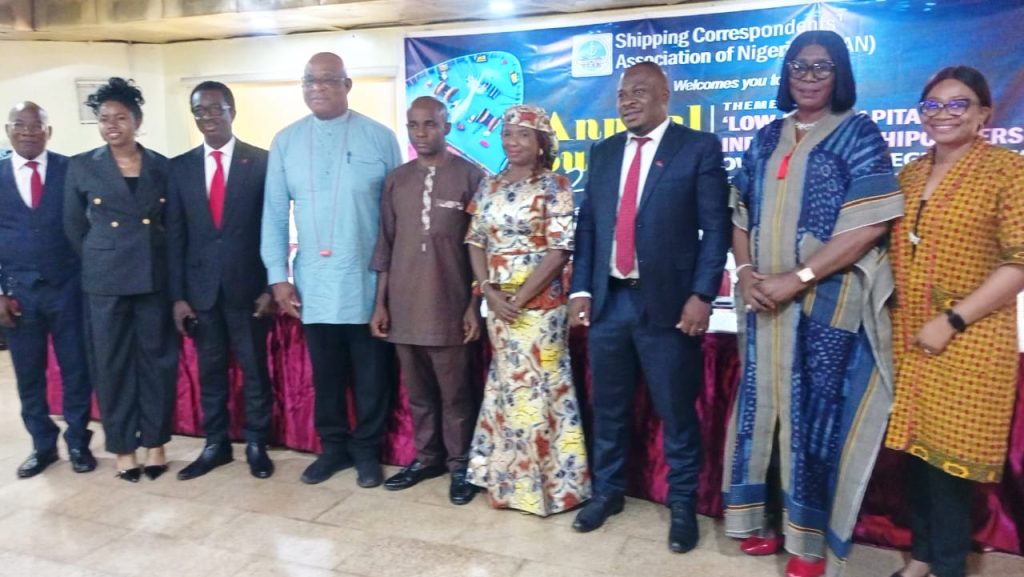
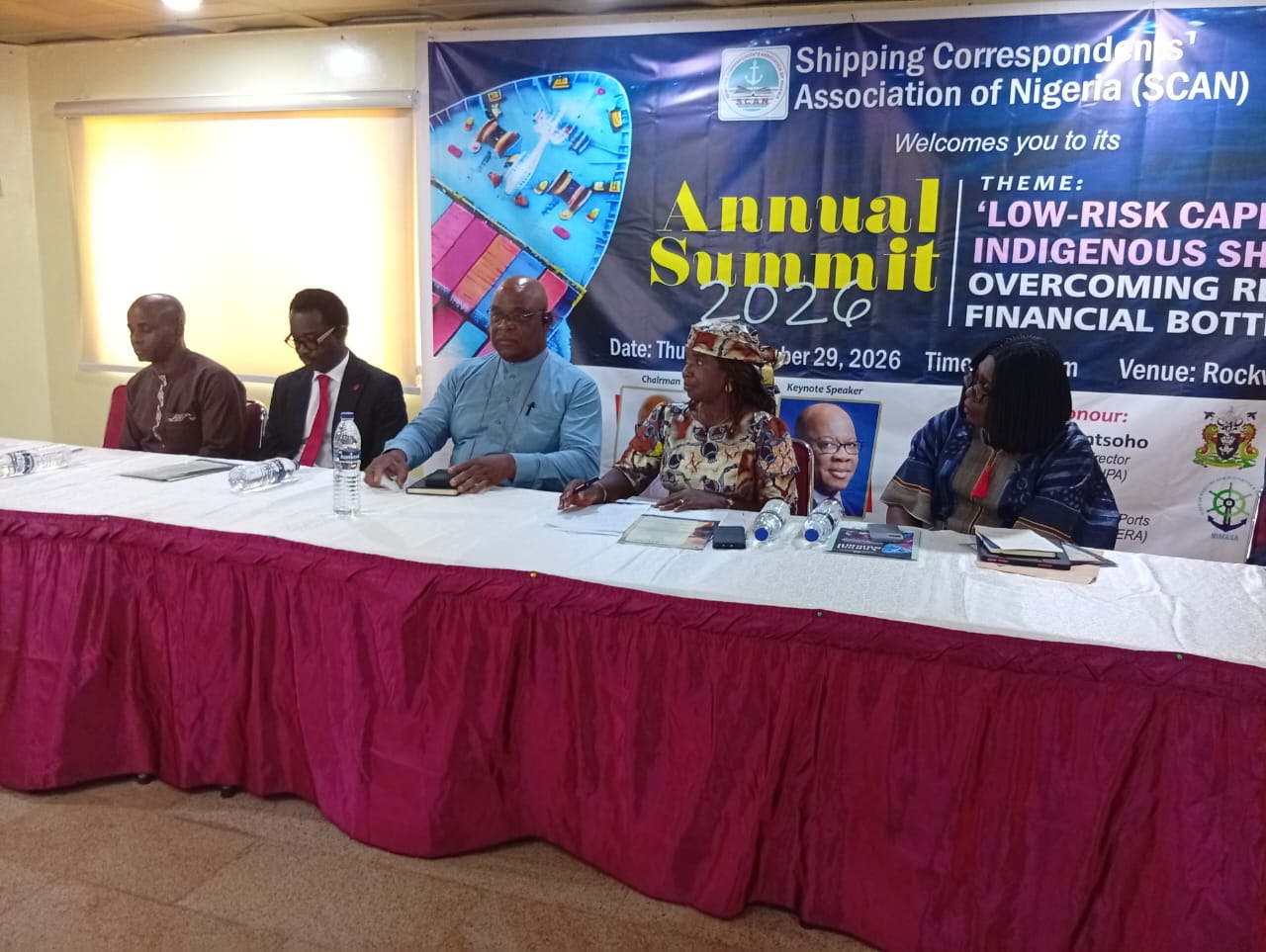
Oyetola gave the directive on Thursday at the 2026 Annual Summit of the Shipping Correspondents’ Association of Nigeria (SCAN), held at Rockview Hotel, Apapa, Lagos, where industry leaders argued that Nigeria’s aspiration to build a competitive indigenous fleet would remain elusive unless financing arrangements were linked to commercially viable shipping opportunities.
The summit with the theme “Low-Risk Capital for Indigenous Shipowners: Overcoming Regulatory and Financial Bottlenecks” drew participants from different segments of the industry.
The minister remarked that the Federal Government launched a dedicated CVFF application portal in January 2026 to improve transparency, accessibility and efficiency, while increasing the number of approved Primary Lending Institutions (PLIs) from five to 12.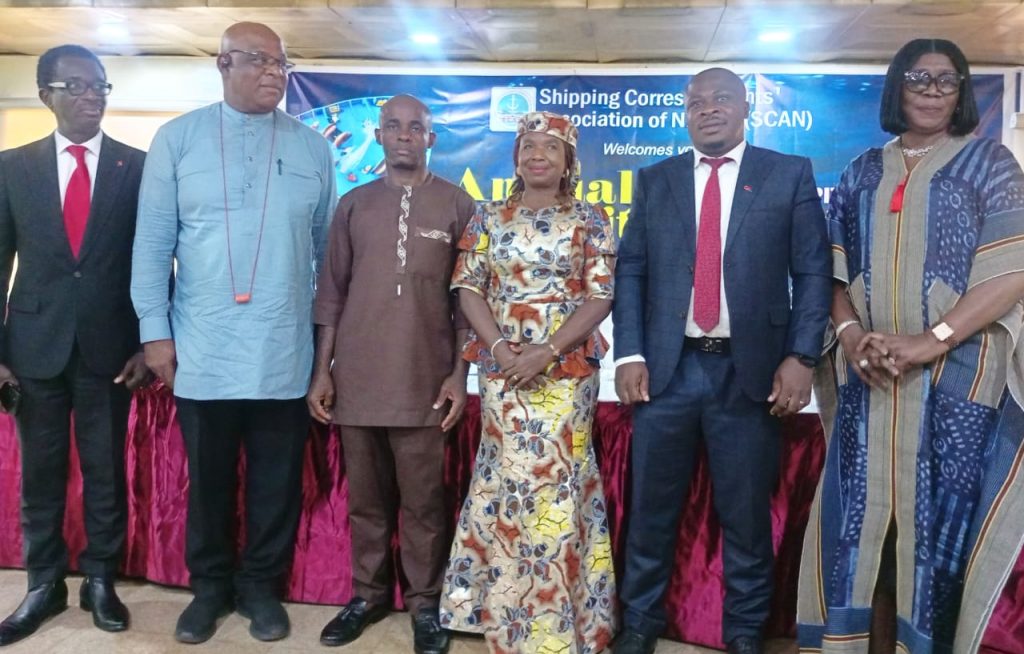
He said NIMASA had also been directed to work closely with the approved lending institutions to accelerate the assessment and disbursement process, stressing that the government was determined to move from prolonged waiting to practical outcomes.
Established under the Coastal and Inland Shipping (Cabotage) Act of 2003, the CVFF is intended to support indigenous vessel ownership and strengthen Nigerian participation in domestic shipping.
Oyetola described the fund as a strategic instrument for developing indigenous shipping capacity, noting that its effective deployment could help qualified operators acquire modern vessels, expand their fleets and stimulate growth in ship repair, marine engineering, maritime logistics and other supporting industries.
He, however, cautioned that the fund must be managed through transparent procedures, rigorous due diligence and prudent risk management, given its revolving nature and dependence on responsible borrowing and repayment.
The minister said access to finance alone would not eliminate the constraints confronting Nigerian shipowners, adding that a predictable regulatory environment, credible business plans, effective insurance, competent management and reliable revenue streams were equally necessary to reduce investment risks.
He also disclosed that the government was exploring a commercially driven national shipping line initiative involving private capital, professional management, public-private partnership arrangements and international expertise.
The initiative, he explained, was intended to complement indigenous operators, expand national shipping capacity and operate on a sustainable commercial basis.
Providing the keynote address, maritime lawyer and former President of the Nigerian Bar Association, Dr Olisa Agbakoba, SAN, argued that Nigeria did not need government to finance every vessel but needed a system capable of creating cargo certainty, bankable shipping contracts and regulatory confidence to attract private investment.
He identified the absence of dependable commercial opportunities as a major constraint on indigenous ship ownership, explaining that lenders would be reluctant to finance vessels without credible prospects of generating sufficient revenue to repay loans.
According to him, vessel acquisition must be supported by enforceable cargo or charter contracts, reliable counterparties and cash flows sufficient to cover operating expenses and debt obligations.
Agbakoba said maritime financing carries risks associated with vessel values, technical condition, foreign exchange, insurance, operating costs, fluctuating freight rates and cross-border enforcement.
He called for comprehensive legal, technical, commercial and financial due diligence, alongside appropriate security arrangements, including registered ship mortgages, guarantees and assignments of insurance proceeds and charter earnings.
He also urged effective implementation of the Cabotage Act and applicable Nigerian oil and gas local-content requirements, arguing that qualified Nigerian shipowners should have practical access to cargo opportunities rather than merely formal recognition under existing policies.
Major oil and gas companies, terminal operators and other cargo interests, he said, should engage qualified indigenous operators through commercially viable contracts with clearly defined cargo volumes, freight rates, payment obligations, performance requirements and remedies for default.
Agbakoba proposed six priority interventions: cargo-backed vessel financing; improved indigenous access to cargo; stronger regulatory coordination; mobilisation of private capital; development of domestic maritime technical capacity; and an implementation framework with identified vessel categories, cargo sources, financing partners, responsible institutions and measurable timelines.
He identified NIMASA as well positioned to convene the relevant stakeholders and lead a structured engagement capable of translating the summit’s recommendations into practical commitments.
The United Bank for Africa (UBA) also pledged support for financing solutions tailored to the commercial realities of the shipping industry.
In a goodwill message delivered on behalf of the Group Managing Director, Oliver Alawuba, UBA Regional Manager, Apapa, Nelson Edoye, said the bank recognised the capital-intensive nature of shipping and the need for innovative financing structures capable of reducing investment risks.
He said UBA remained committed to supporting indigenous participation in the maritime value chain through tailored financing, trade facilitation and advisory services.
Edoye expressed confidence that the summit would produce actionable recommendations capable of informing policy, attracting sustainable investment and improving the competitiveness of Nigerian shipowners.
Similarly, the President of the Nigeria Shipowners Association (NISA), Otunba Sola Adewumi, identified high financing costs, perceived investment risks and regulatory bottlenecks as persistent barriers to the growth of indigenous shipping.
Adewumi called for a predictable and transparent regulatory environment, innovative financing mechanisms, effective risk-sharing frameworks and stronger collaboration among government agencies, financial institutions, development partners and industry operators.
He said a stronger indigenous fleet would help retain more maritime earnings within the Nigerian economy, create employment, develop local capacity and improve the country’s participation in regional and international trade.
In his welcome address, SCAN President Moses Ebosele identified high borrowing costs, expensive vessel acquisition and maintenance, multiple charges, administrative delays, inadequate ship repair and dry-docking facilities, maritime security concerns and limited access to cargo as interconnected challenges requiring coordinated intervention.
Ebosele said the summit was intended to bridge the gap between policy formulation and implementation, urging participants to develop practical recommendations with clear responsibilities, measurable targets and timelines.
He also called for greater investment in seafarer training, professional development and partnerships between indigenous operators and established international shipping companies.
The SCAN president reaffirmed the media’s responsibility to promote informed debate, examine the effectiveness of government policies and hold relevant authorities accountable through factual, balanced and solution-oriented reporting.
The summit concluded its central argument around the need to move beyond repeated calls for financing towards a commercially sustainable framework in which cargo demand, credible contracts, competent operators, responsive regulation and responsible lending reinforce one another.







Oyetola Pushes CVFF Disbursement, Agbakoba Demands Cargo-Backed Shipping Finance At Scan Summit

ANLCA Presidential Aid, Ayokunle Bags Alakoso-Adeen Title

51 MAN Oron Cadets Bags NLNG Seatime Offers As 314 Graduates

Captain Enisuoh Advances Fresh Narratives About Ports Capabilities

Customs Pledges Sustained Fight Against Money Laundering

NIMASA, ITF Signs MOU On Seafarer Wellbeing

Oshoba at 60: A Life of Service, a Port Legacy and the Joy of Thanksgiving

Nigeria Customs Commission Rehabilitated Modakeke Healthcare Centre

Lagos-Calabar Highway: Whose Investments, Livelihoods and Coastal Communities Count? (3)

Again, Customs FOU Zone ‘A’ Rescues Five Live Pangolins in Ogun State
Lagos-Calabar Highway: When a Presidential Legacy Project Collides with Accountability (2)
Lagos-Calabar Highway: Did Nigeria Pay the Price for Inadequate Planning?
ANLCA Board is intact, cannot be wished away by anybody’-Elochukwu

B-R-E-A-K-I-N-G: Effedua, Rector MAN Oron, Resigns

EFCC’s Probe: Okowa Plots Sheriff’s Removal Despite London Accord
Customs Trains ANLCA Members, Others on B’Odogwu Portal

NPA’s Alleged Executive Management Fight: The Half Truth & Truth
ANLCA Board Election: Know Your Candidates

Onyeka Makes History As Tin-Can Customs Hit ₦16.4bn A Day
‘Why We Launched B-Odogwu Pilot Scheme With Webb Fontaine Still Running’ – Adeniyi

Onyemekara Promoted GM, Appointed NPA’s New Spokesperson

Nigeria Customs: Trust, Competence And The Oramalugo Factor

Apapa Customs Collects ₦161b On B’Odogwu Platform In 3 Weeks

‘Rush To Break News Can Lead To Brush With Cybercrime’- Police