Business
2027: South-South Governors Under Fire Over Neglect of Vast Blue Economy Potentials

BY KESIENNA SHEPHERDS
South-South political leaders have come under renewed scrutiny over what stakeholders described as years of leadership failure, policy inertia and poor governance that have left the region’s enormous coastal and marine economic resources largely untapped.
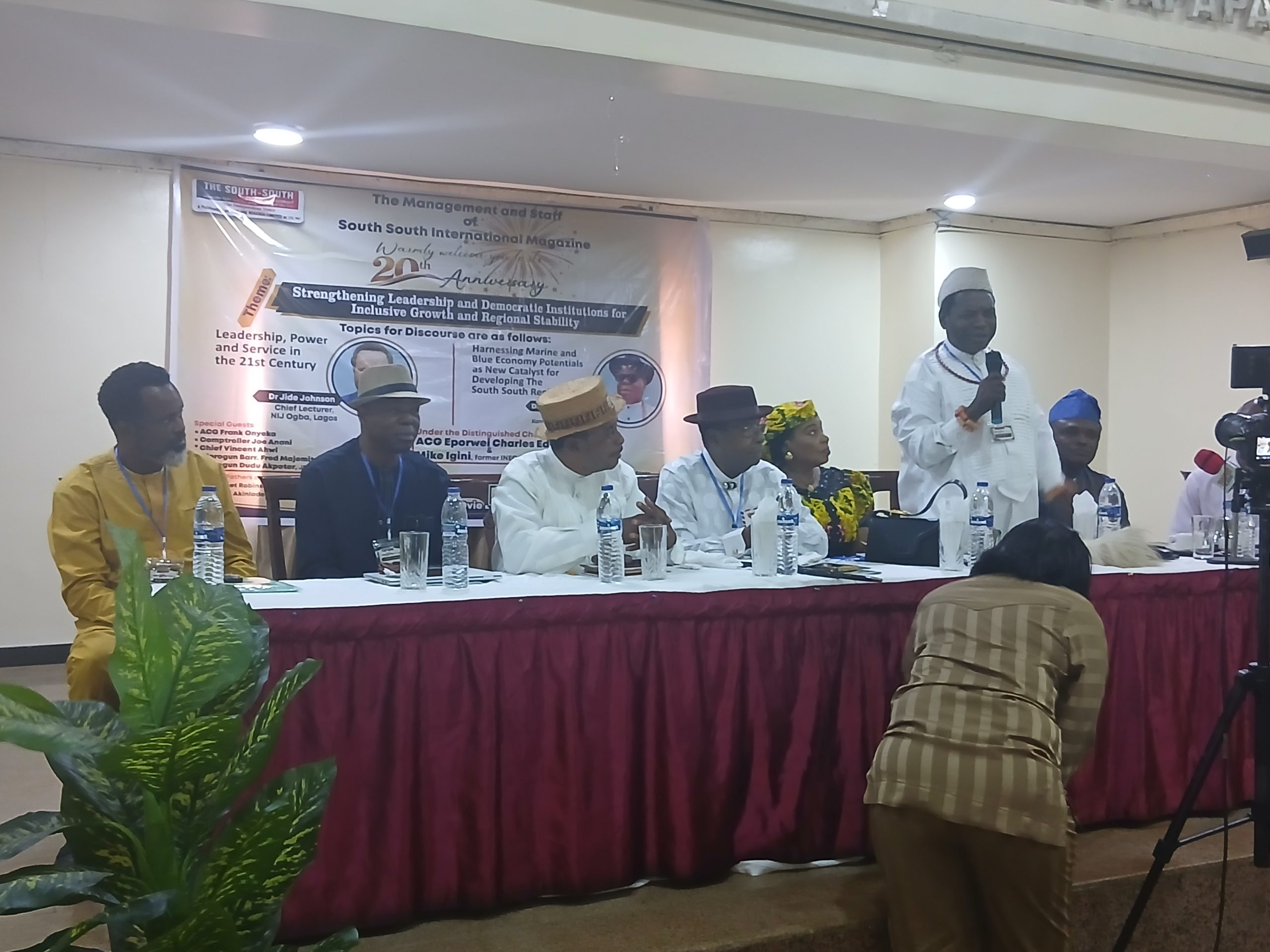
L-R: Dr. Johnson, Dr. Okorefe, Dr. Edomi, ACG Edike Rtd, and other stakeholders on the high table
The stakeholders, comprising academics, maritime professionals and public affairs commentators, argued that the persistent underdevelopment of the Niger Delta, despite its vast marine endowments, raises fundamental questions about the quality of political leadership and the priorities of successive administrations in the region.
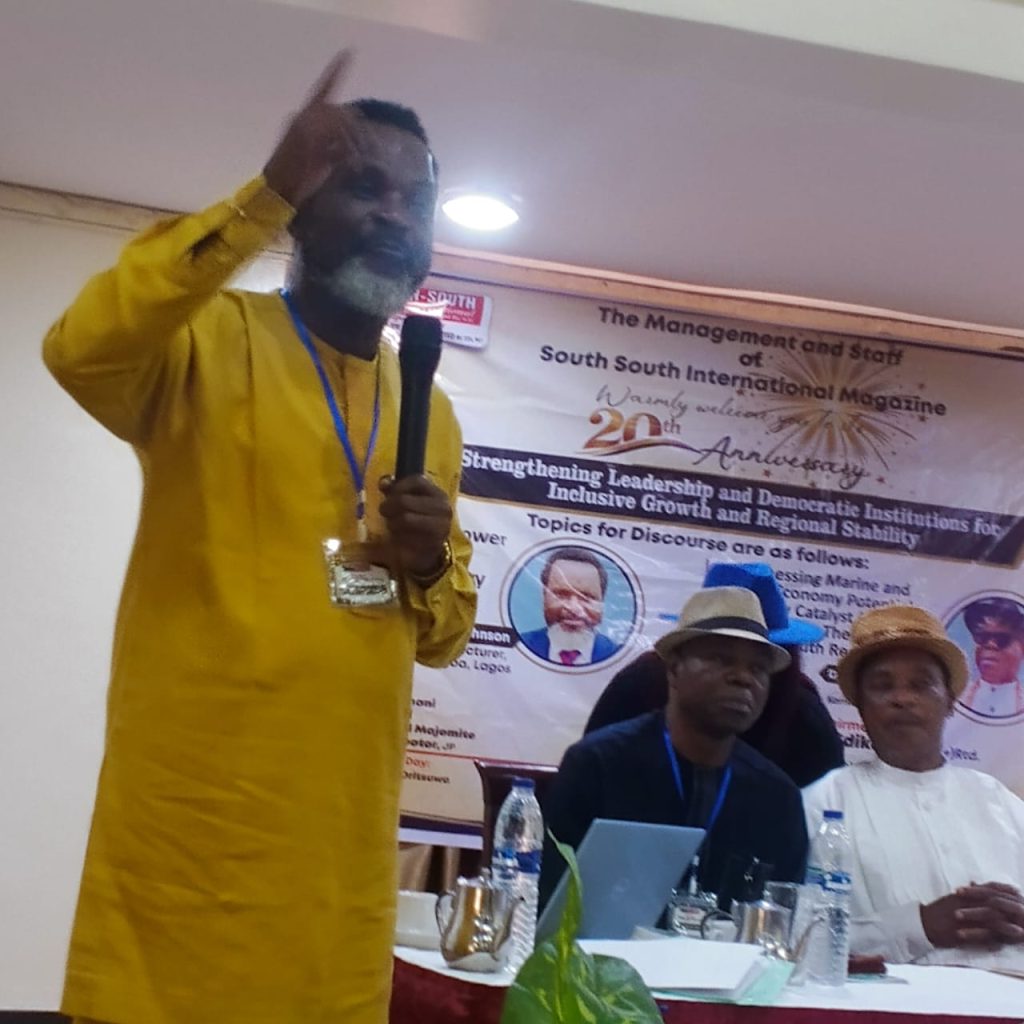
Above concerns were expressed at the 20th anniversary celebration of The South-South International Magazine (TSSI), held on Wednesday, November 18, 2026, at Rockview Hotel, GRA, Apapa, Lagos, where speakers challenged political officeholders to demonstrate that democratic power could translate into measurable improvements in the economic and social conditions of their constituents.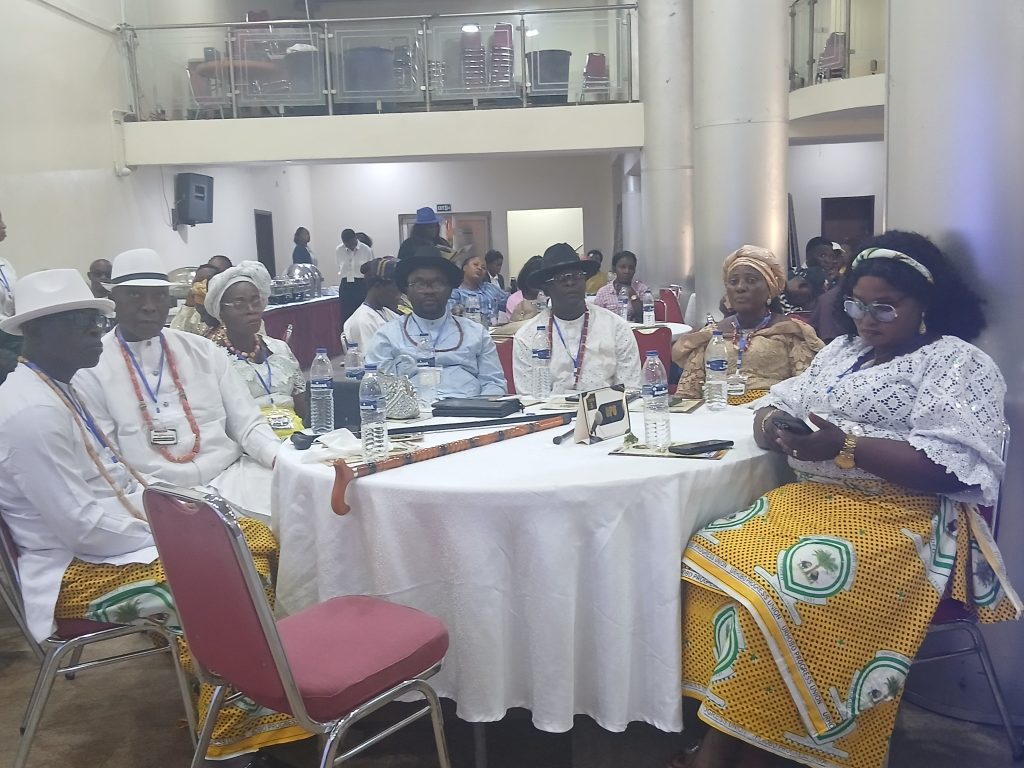
The development debate took on added political significance against the background of the approaching 2027 general elections, with speakers insisting that citizens must look beyond political promises and demand verifiable records of public service delivery.
In a paper titled, Leadership, Power and Service: The Leadership Conundrum of Nigeria’s Fourth Republic, Dr. Jide Johnson, a senior lecturer at the Nigerian Institute of Journalism (NIJ), Lagos, argued that the legitimacy and sustainability of democratic governance depend not merely on who possesses political power but on how such power is exercised and translated into public service.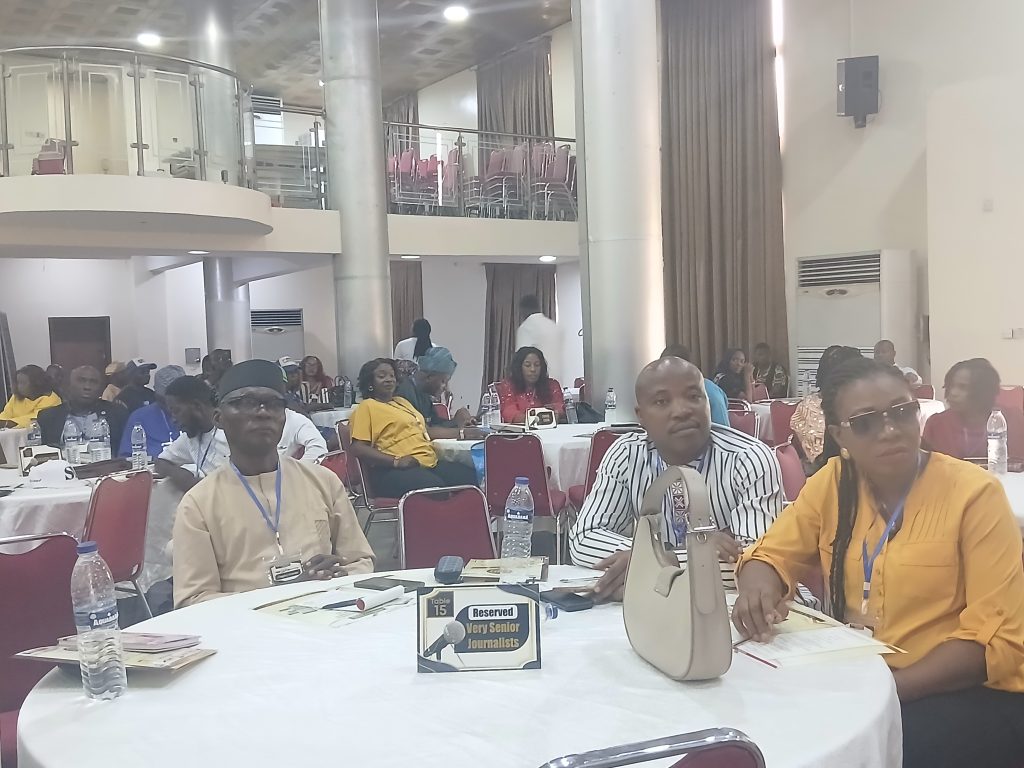
According to him, leadership is about direction and influence, power represents authority and capacity, while service constitutes the ultimate purpose and ethical test of public office.
He warned that power without leadership could become arbitrary, while leadership and power without service could degenerate into instruments of domination and oppression.
The NIJ scholar maintained that government exists primarily to serve the people, insisting that leadership must be legitimate, inclusive, effective and beneficial to the wider population.
His argument resonated with the concerns raised over the South-South’s largely unrealised Blue Economy potential, with stakeholders questioning why a region surrounded by extensive rivers, waterways, coastlines and other marine resources continues to struggle with unemployment, infrastructural deficits and limited economic diversification.
Johnson challenged Nigerians to recognise the direct relationship between politics and their economic circumstances, warning that political apathy amounts to surrendering the right to influence decisions that shape their lives.
“If you refuse to participate in the political process, you have lost your right to complain on the outcomes of political actions,” he declared.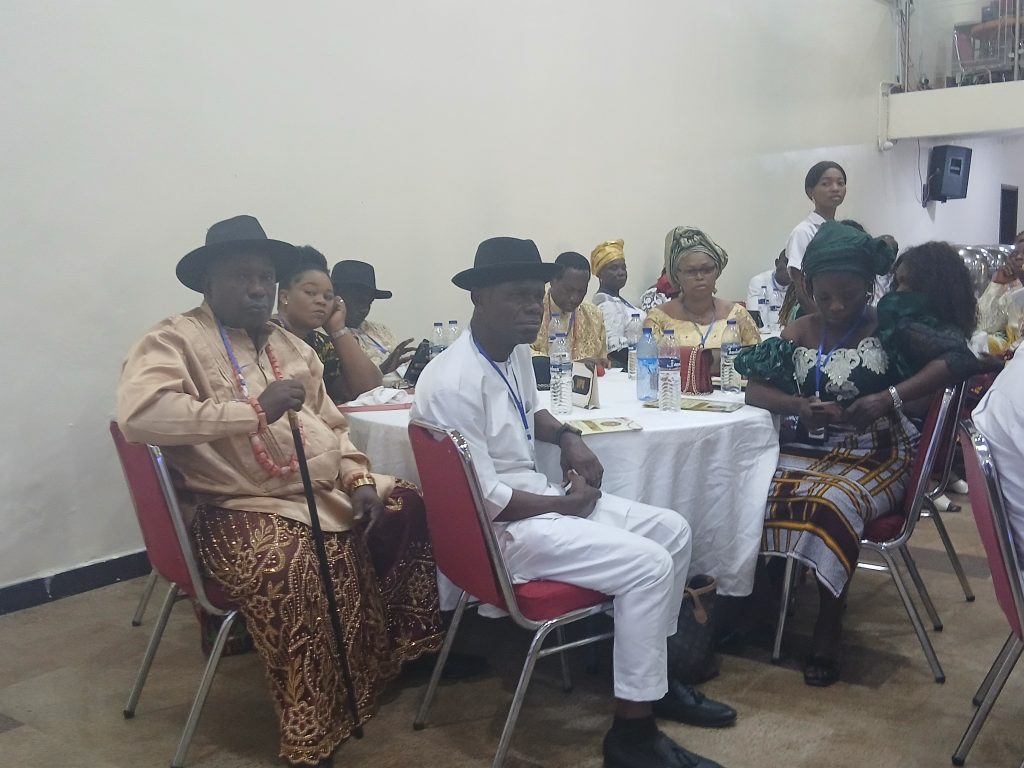
He further argued that the claim by some Nigerians that they were not interested in politics was misplaced, noting that politics produces policies which ultimately determine people’s economic, social and political conditions.
His intervention also reinforced the constitutional responsibility of the media under Section 22 of the 1999 Constitution, as amended, to hold government accountable to the people.
The political accountability question was given a more concrete economic dimension by Dr. Charles Okerefe, a maritime expert and Managing Director of Kamany Marine Services Limited, who lamented the failure of South-South governments to adequately exploit the region’s marine and coastal resources.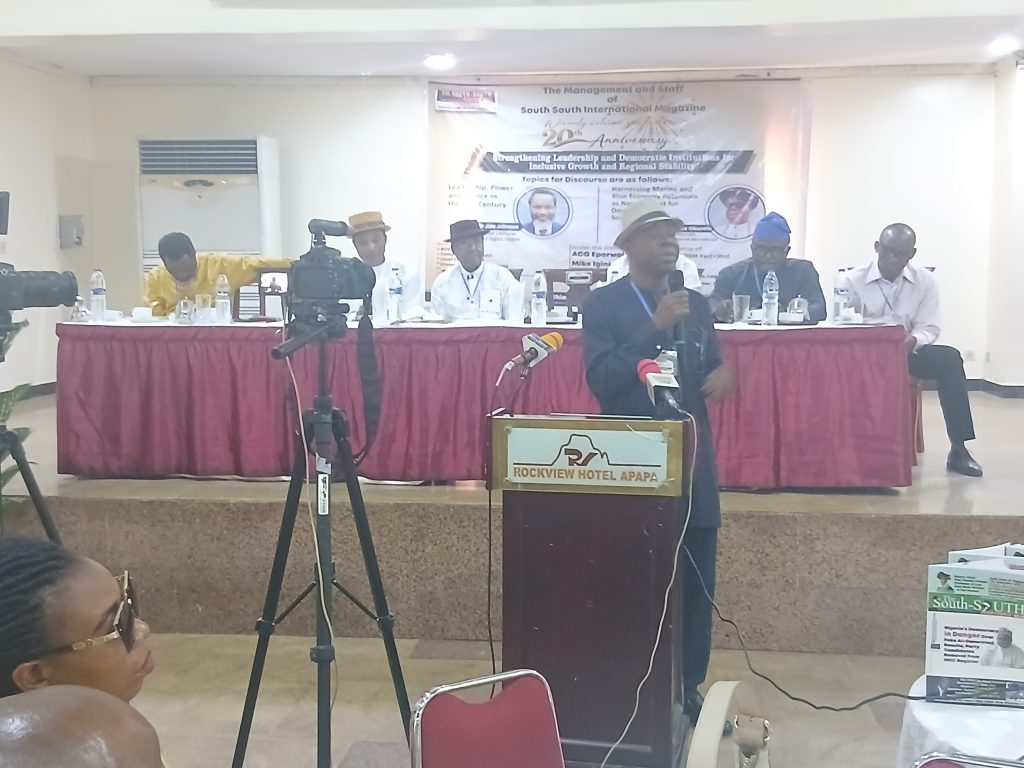
In his presentation, Harnessing Marine and Blue Economy Potentials as a New Catalyst for Developing the South-South Region of Nigeria, Okerefe argued that the region’s economic predicament could not be separated from the failure of its political leadership to recognise and invest in alternative sources of prosperity beyond the traditional oil economy.
He described the Blue Economy as a major development opportunity capable of generating employment, strengthening food security, stimulating private investment and improving the region’s economic fortunes.
However, he identified weak policy frameworks, inadequate awareness, environmental pollution and the exclusion of local communities from decision-making as major obstacles to its development.
He challenged the governors to move beyond isolated state-level initiatives and develop a coordinated regional investment blueprint capable of unlocking the economic opportunities in fisheries, aquaculture, marine biotechnology, renewable energy, coastal tourism, shipbuilding, ship repairs, dredging and inland waterways transportation.
Okerefe also questioned why states endowed with extensive water resources continued to depend heavily on conventional electricity arrangements instead of exploring renewable marine energy opportunities, including offshore wind and tidal power.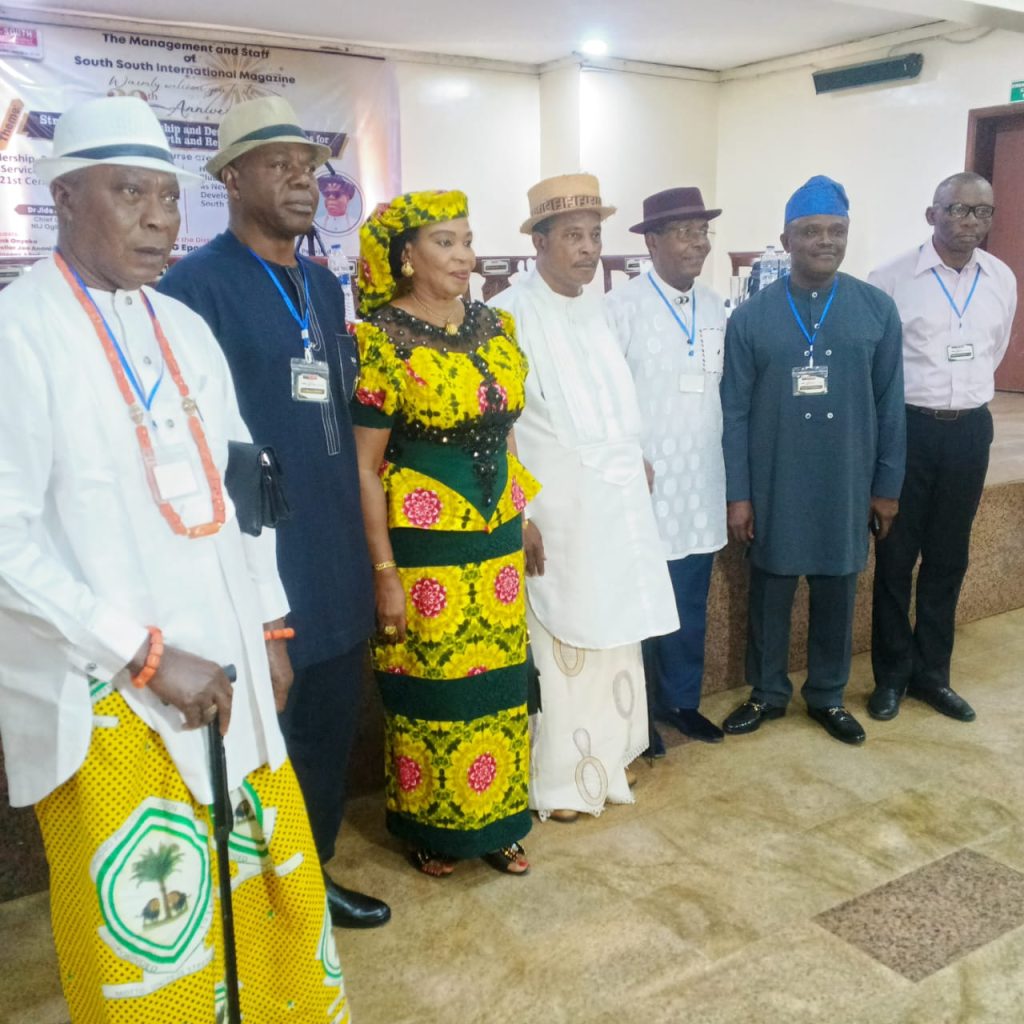
He cited the Netherlands’ utilisation of wind energy as an example of how natural geographical advantages could be converted into sustainable economic assets.
The maritime expert further urged South-South governments to emulate Lagos State’s investments in water transportation, arguing that the region’s extensive waterways should become economic corridors rather than remain largely underutilised geographical features.
Chairman of the occasion, retired Assistant Comptroller-General of Customs, Charles Eporwei Edike, also called on the governors to look beyond the conventional East-West road infrastructure and consider developing coastal roads across their respective states to improve connectivity and stimulate regional commerce.
For the stakeholders, the central issue was not the absence of economic opportunities but the apparent failure of political leadership to convert available resources into sustainable development.
As the 2027 elections approach, the challenge thrown at the region’s political class is therefore increasingly difficult to ignore: which is, beyond electioneering promises and political calculations, what measurable economic value have governments created from the enormous natural resources entrusted to their stewardship over the years?
The anniversary event was held under the theme, Strengthening Leadership and Democratic Institutions for Inclusive Growth and Regional Stability.
Publisher of the magazine, Dr. Ovie Edomi, called on journalists to reclaim their responsibility of holding public officials accountable, particularly as the country approaches another general election.
He urged the media to remain committed to truth, balance, objectivity and fairness, stressing that these principles had sustained the publication through two decades of operations.
He also challenged the Lagos press to recover its historic vibrancy and strengthen its watchdog role in democratic governance.






2027: South-South Governors Under Fire Over Neglect of Vast Blue Economy Potentials

Nigeria, Russia Strengthens Customs Cooperation on Trade Facilitation, Information Exchange

Blue Economy: Okonna Makes Case for Professional Capacity, Practical Implementation

Onileimo Challenges Maritime Journalists to End Fragmentation, Embrace One Professional Voice

Maritime Sector Bleeds $4.5bn Annually to Foreign Transport Interests – Akabogu

Denmark Backs Nigerian Cadets, NIMASA Innovation Drive

Alumanah Takes Over Seme Customs as Kaila Handover A Staggering 233% Revenue Surge

Oyo/Osun Customs Generates ₦81.88bn in 10 Months, Posts 5.3% Revenue Growth

Onne Customs: Adigun Reads Riot Act on Revenue Leakages, Demands Operational Discipline

Egunjobi Assumes Command at Kebbi Customs, Pledges Tighter Border Security

NNMJ Unity Conference Today: All Roads Lead to Lagos Airport Hotel

ANLCA @72 Celebrations: Prince Oduntan Led LOC Returns N33m Surplus
ANLCA Board is intact, cannot be wished away by anybody’-Elochukwu

B-R-E-A-K-I-N-G: Effedua, Rector MAN Oron, Resigns

EFCC’s Probe: Okowa Plots Sheriff’s Removal Despite London Accord

Onyeka Makes History As Tin-Can Customs Hit ₦16.4bn A Day
Customs Trains ANLCA Members, Others on B’Odogwu Portal

NPA’s Alleged Executive Management Fight: The Half Truth & Truth

FOU Zone A Intercepts Drugs Worth Over ₦5.5Bn
ANLCA Board Election: Know Your Candidates
‘Why We Launched B-Odogwu Pilot Scheme With Webb Fontaine Still Running’ – Adeniyi

Apapa Customs Collects ₦161b On B’Odogwu Platform In 3 Weeks

Again, Apapa Port Command Intercepts Cannabis Indica Worth ₦26.5b

Customs, NAFDAC, Strengthen Inter-Agency Ties with Landmark ₦20.5bn Drug Bust in Onne