Business Focus
B-R-E-A-K-I-N-G: Customs Clamp Down on 172-Terminals Charge With Abuse of “Transire”

BY EGUONO ODJEGBA
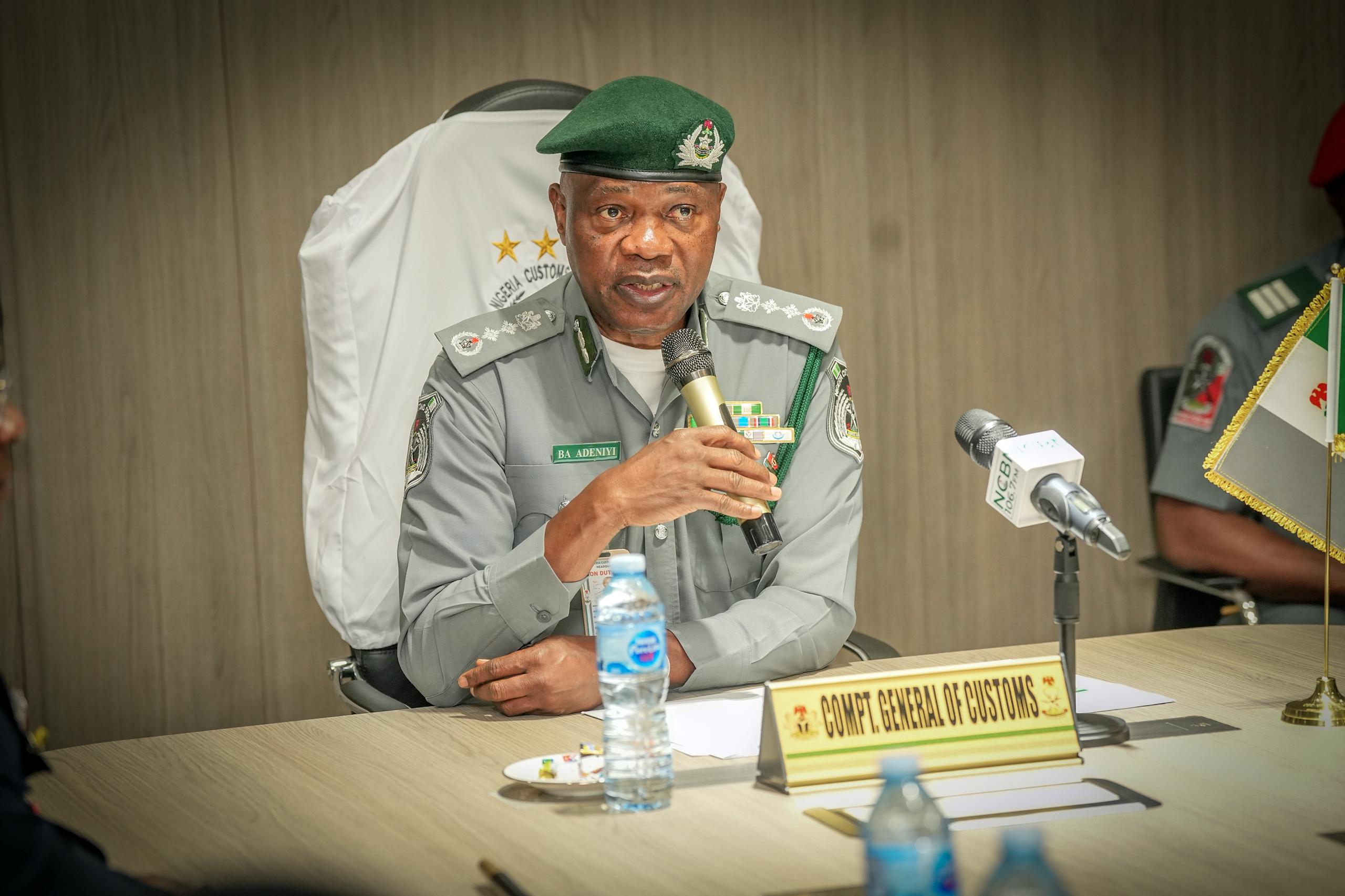
For months, the warnings from the Comptroller General of Customs, Adewale Adeniyi MFR, continued to echo through the corridors of our maritime logistics chain as a stark prophecy.
Time and again, the administration sounded the alarm: bonded terminals and warehouses across the country were increasingly morphing from legitimate transit hubs into shadowy conduits for illicit trade. Under the guise of standard logistics procedures, unverified goods, and in the most alarming cases, illicit narcotics and arms were slipping past border security, leveraging an administrative transit tool known as the “Transire.”
The Nigeria Customs Service in an unexpected move appeared to have ended the rhetoric and rat race, as the hammer officially falls on deviants’ operators.
In official customs terminology, a transire is designed to facilitate trade: a simple authorization permit that allows duty-unpaid goods to be moved under customs control from a primary port of entry to an inland bonded warehouse or Free Trade Zone; in theory, it is the grease that keeps Nigeria’s congested port corridors moving.
In practice, an investigative probe reveals how rogue operators turned the transire into an untouchable getaway vehicle. Findings show that once containerized freight left the port gates under the transit permit, an alarming number of cargoes simply disappeared into the hinterland. Duty are not only left unpaid, containers gets diverted, while in some cases, dangerous contraband are quietly offloaded into local markets before reaching its declared destination.
The system depended on administrative delay and localized discretion, and hence gaps that allows unverified goods to sit indefinitely in off-dock terminals under the guise of “in-transit reconciliation.”
The Crackdown: 172 Terminals in the Crosshairs
However, the illusion of business-as-usual may have come to a screeching halt following a comprehensive probe by the CGC Special Task Force on Transires (STFT).
According to an internal enforcement memo emanating from Customs Headquarters in Abuja (Ref: NCS/ENF/STFT/ABJ/HQ/VOL.I), sighted by our reporter, an unprecedented sweeping audit revealed a massive footprint of non-compliance spanning all three operational zones of the Nigeria Customs Service:
The memo revealed that in Zone A (Western Zone / Lagos Corridor), 69 terminals and bonded warehouses were flagged with unresolved transit accounts.
Zone C (Eastern & South-South Zone) has 74 facilities identified with outstanding transire balances, while Zone B (Northern Zone) had 29 warehouses caught in the reconciliation net.
In total, 172 bonded terminals and Free Trade Zone entities across the length and breadth of Nigeria have been tied to unverified, un-reconciled cargo movements.
Absolute Lockdown: “No Waivers, No Discretion”
Given above facts and figures, the response from the Office of the CGC has been swift and uncompromising. In a directive signed by the Deputy Comptroller-General of Enforcement, DCG Timi Bomodi, the Headquarters directed all Area Controllers (CACs) nationwide, on the immediate, blanket suspension of all transire processing privileges for every affected facility on the schedule.
To indicate NCS uncompromising stance, the memo leaves zero room for administrative maneuvering as it states in part:
”No waiver, local clearance, exceptional approval or administrative discretion shall be exercised by any Command in favour of an affected bonded warehouse while its reconciliation remains outstanding.”
By stripping Area Controllers of local discretion and centralizing all clearance authority strictly through the STFT in Abuja, the administration has effectively sealed the cracks where compromise previously thrived. Terminals seeking to lift the restriction must now physically account for every un-reconciled container on their registers. Any attempt to circumvent the system, the directive warns, will trigger severe administrative and legal sanctions.
A New Enforcement Baseline
This sweeping shutdown signals a fundamental shift in the Nigeria Customs Service’s enforcement playbook. By targeting the procedural mechanisms that facilitate illegal cargo movements rather than just intercepting contraband on the highway, the Adeniyi-led administration is systematically dismantling the infrastructure of cargo diversion.
For the 172 affected terminals across Zones A, B, and C, the message is unmistakable: the transire is no longer a loophole to be exploited, and the days of unaccounted cargo sit-ins are officially over.
Among the facilities that appeared under Zone A are Sapid, AML (Abule Osun) and APMDC. Zone B includes AAA Logistics, Acebliz and Admiral Marine; while Onne Oil & Gas Free Zone Authority, Armada and BB & YK was listed under Zone C.
According to the memo dated September 22, 2026, management says the circular takes immediate effect, and would remain in force in respect of each affected bonded warehouse until formal clearance is issued by the Headquarters.






B-R-E-A-K-I-N-G: Customs Clamp Down on 172-Terminals Charge With Abuse of “Transire”

NIMASA in Show- of- Force Display to Stregthen Intelligence-Led Maritime Compliance

New Law Will End Arbitrary Shipping Charges, Enforce Compliance — NPERA Boss

When Customs Commissioned Rehabilitated Eleme Health Facility

ANLCA@72: Making Celebration a New Covenant for Peace, Unity and Professionalism

NIMASA Unveils National Innovation Hackathon, Open Young Innovators Por

Ogun 1 Customs Intercepts N417m Range Rover

Operator Raises Alarm Over Foreign Control, Cartelisation of Maritime Supply Chain

Tin-Can Customs Generates ₦137.298bn in August

DG NIMASA, Mobereola Reasserts Cabotage Implementation Key To Maritime Development

Tribute to a Colossus: The Eternal Legacy of Alhaji Bamanga Tukur (1935–2026)

Stakeholders To Re-Examine Blue Economy Imperatives

ANLCA Board is intact, cannot be wished away by anybody’-Elochukwu

B-R-E-A-K-I-N-G: Effedua, Rector MAN Oron, Resigns

EFCC’s Probe: Okowa Plots Sheriff’s Removal Despite London Accord
Customs Trains ANLCA Members, Others on B’Odogwu Portal

NPA’s Alleged Executive Management Fight: The Half Truth & Truth
ANLCA Board Election: Know Your Candidates
‘Why We Launched B-Odogwu Pilot Scheme With Webb Fontaine Still Running’ – Adeniyi

Onyemekara Promoted GM, Appointed NPA’s New Spokesperson

Nigeria Customs: Trust, Competence And The Oramalugo Factor

‘Rush To Break News Can Lead To Brush With Cybercrime’- Police

Kebbi Is Hub of Hard Drugs Smuggling In Northern Region’ – Oramalugo

‘Our Trade Security Is More Protected Under B’Odogwu’ – Daniyan