Business Focus
Nwala Moves to Turn Customs Command into Engine of Trade, Revenue Growth


BY EGUONO ODJEGBA
The economic future of Cross River State may be entering a decisive phase, with the proposed Bakassi Deep Sea Port, the Calabar Free Trade Zone and renewed interest in the region’s commercial potential offering fresh prospects for investment, employment and international trade.
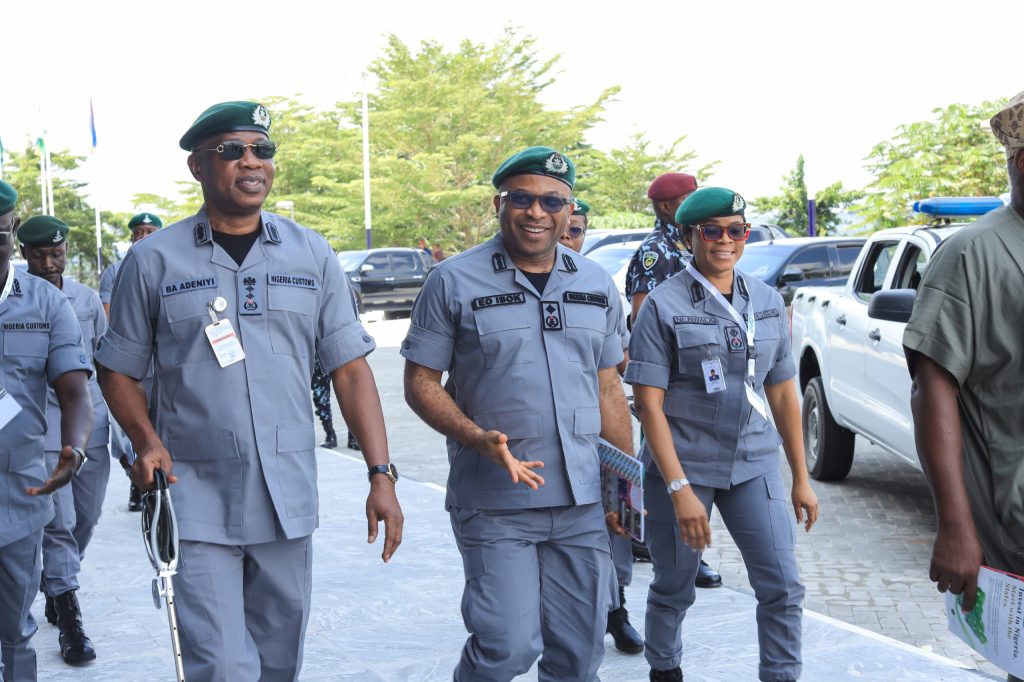
Nwala, right, with the CGC Dr. Adeniyi and DCG Ikot, during tour of relevant trace bases recently when the CGC visited Calabar.
For the Nigeria Customs Service (NCS), however, the significance of these developments goes beyond infrastructure and investment announcements. They present an opportunity to expand the revenue base, strengthen trade facilitation and reposition Customs administration as a strategic instrument of economic development.
At the centre of this emerging responsibility is Deputy Comptroller Nkiru Nwala, Acting Customs Area Controller of the Cross River/CFTZ/Akwa Ibom Area Command, whose administrative and public relations experience is now being brought to bear on operational and revenue assignments.
Her current mandate is particularly significant as the Command prepares for the commercial possibilities associated with the proposed Bakassi Deep Sea Port and the broader economic aspirations of Cross River State.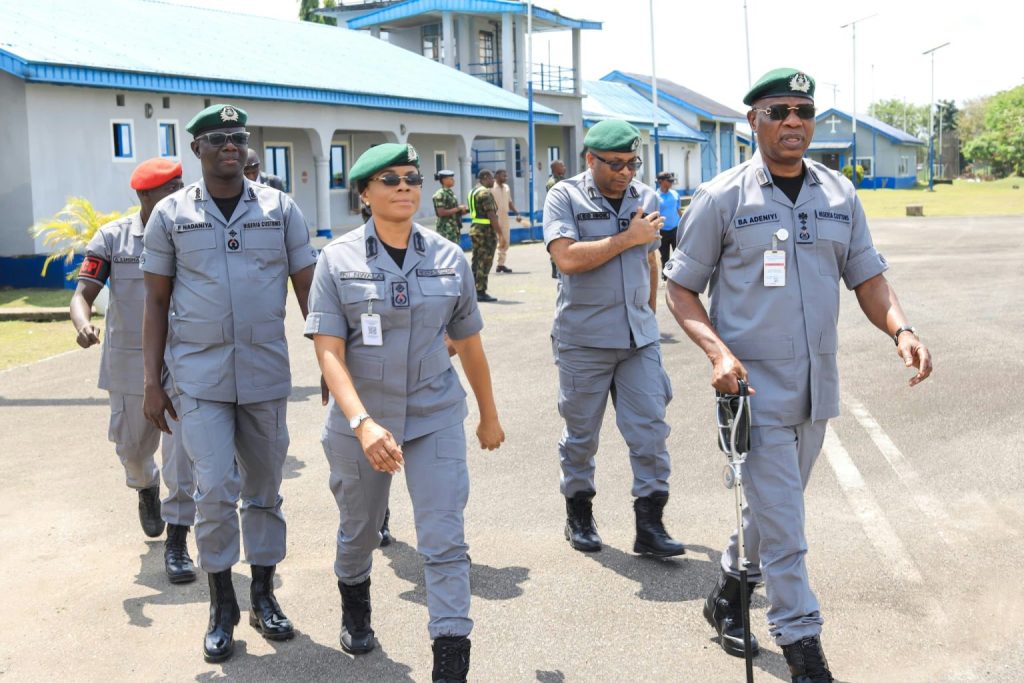
The challenge before Nwala is to ensure that the Command is not merely positioned to respond to increased commercial activity when it eventually materialises, but is administratively, operationally and institutionally prepared to facilitate and secure it.
The envisaged Calabar’s ₦-trillion opportunity can only materialize under a focused driven agenda, with Nwala wholly and undividedly on top of the situation; fully grounded and savvy as usual.
FROM CUSTOMS COMMUNICATION TO REVENUE ADMINISTRATION
Nwala’s professional trajectory offers an interesting dimension to her current assignment. Before taking on operational and revenue responsibilities, she served as Public Relations Officer in several strategic Customs formations, including Oyo/Osun, Apapa and Zone A.
The experience exposed her to different operational environments and the demands of managing institutional communication, stakeholder relationships and public confidence in Customs administration.
Her transition from public relations into operational leadership is particularly relevant to a Command whose future effectiveness will depend heavily on the quality of its engagement with importers, exporters, terminal operators, investors, border communities and other government agencies.
In contemporary Customs administration, the ability to communicate policy, build stakeholder confidence and understand the concerns of legitimate businesses is increasingly important to revenue performance.
Businesses are more likely to comply with Customs regulations when procedures are predictable, information is accessible and the relationship between enforcement officers and compliant operators is constructive.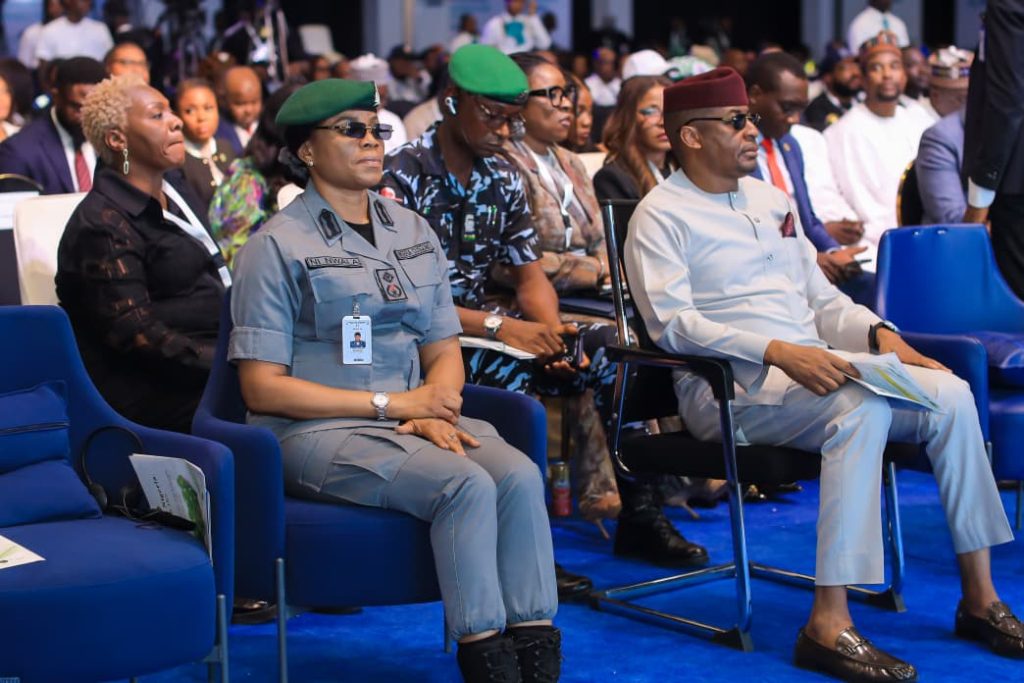
For Nwala, therefore, her public relations background represents a potentially valuable administrative asset. The test is how effectively that experience can be translated into improved compliance, reduced trade friction and stronger revenue outcomes.
Her assignment also places her in a position to demonstrate that effective Customs administration is not exclusively about enforcement, but about creating the conditions under which legitimate trade can flourish without compromising national security or fiscal responsibility.
CALABAR’S HISTORIC TRADING ADVANTAGE
The economic argument for a stronger Customs presence in Cross River State is rooted in the region’s commercial history. Calabar once occupied a prominent position in Nigeria’s maritime trade, serving as an important gateway for international commerce.
The proposed Bakassi Deep Sea Port has revived expectations that the region could regain a greater share of maritime activity, attract new investment and strengthen its position within Nigeria’s evolving port and logistics network.
The anticipated development of the port, alongside the strategic importance of the Calabar Free Trade Zone and the Mfum-Ekok border corridor, presents opportunities for a more diversified regional economy. For Customs, the implications are substantial.
Increased maritime and cross-border trade could expand the volume of dutiable imports, create new opportunities for export processing and improve the prospects for revenue generation across the Command’s areas of responsibility.
The potential economic benefits also extend beyond Customs collections. Efficient border administration can reduce the cost of doing business, improve cargo movement, encourage investment and support the development of industries that depend on imported raw materials, intermediate goods and access to export markets.
The resulting expansion of legitimate commercial activity could generate additional employment, stimulate local enterprise and broaden the tax base of government. It must however be stated clearly and timely that these benefits are not automatic.
They depend on the ability of relevant institutions to anticipate the demands of increased trade and establish efficient systems before commercial activity reaches its full potential.
This is where Nwala’s administrative leadership becomes particularly consequential.
THE REVENUE IMPERATIVE: BEYOND SEIZURES AND ROUTINE COLLECTIONS
One of the most important responsibilities confronting the Acting Controller is the need to strengthen the Command’s revenue administration without creating unnecessary barriers to legitimate trade.
The Customs revenue challenge is not simply to collect more duties from existing cargo volumes. It is also to ensure that the opportunities presented by expanding trade are not lost through administrative inefficiency, weak compliance or avoidable delays.
A commercially responsive Customs administration must be able to identify revenue leakages, improve the accuracy of declarations, strengthen post-clearance controls and ensure that applicable duties and levies are collected in accordance with the law.
It must also maintain effective coordination among its operational units, revenue officers and stakeholders to prevent the duplication of procedures and unnecessary delays in cargo processing.
For a Command with a free trade zone and important international border responsibilities, the balance is especially delicate. Free trade zones are designed to encourage investment and facilitate commercial activity under established regulatory arrangements. Their economic benefits depend on the confidence of investors that legitimate operations will be supported by predictable administration.
At the same time, Customs must ensure that the privileges associated with such arrangements are not exploited to facilitate diversion of goods, revenue evasion or other forms of illicit trade.
Nwala’s task is therefore to strengthen the administrative capacity of the Command to protect revenue while preserving the commercial advantages that make the region attractive to investors.
This requires a revenue strategy that is intelligence-led, compliance-focused and supported by reliable information. It also demands close attention to the performance of officers responsible for cargo examination, documentation, valuation, release procedures and enforcement.
The objective should be a Customs environment in which legitimate operators can transact business with greater certainty, while non-compliant activities attract timely and proportionate enforcement.
TRADE FACILITATION AS AN ECONOMIC GROWTH STRATEGY
The economic value of Customs administration is often most visible in the revenue it generates and the illicit goods it intercepts. But its contribution to national development also lies in the trade it enables.
For businesses operating through Calabar and the surrounding commercial corridors, the speed and predictability of Customs procedures can influence investment decisions, production costs and the competitiveness of their products.
Where clearance procedures are efficient, compliant traders can plan shipments, manage inventories and meet delivery schedules with greater confidence.
Where procedures are unnecessarily cumbersome, the resulting costs can discourage investment and divert commercial activity to competing trade corridors. This makes trade facilitation an important economic responsibility for the Cross River/CFTZ/Akwa Ibom Area Command.
Nwala’s leadership presents an opportunity to deepen engagement with importers, exporters, freight forwarders, licensed Customs agents and other stakeholders to identify operational bottlenecks and improve compliance through better communication.
Her experience in public relations could be particularly useful in this regard, especially in developing a more structured relationship between Customs and the business community.
Such engagement, however, must be anchored on institutional discipline and measurable outcomes. Stakeholder consultations as she has since embarked upon are expected to translate into clearer procedures, improved information flow, stronger compliance and more efficient cargo movement.
The ultimate measure of success is not the number of meetings held, but the extent to which engagement improves the experience of legitimate traders and strengthens the integrity of Customs operations.
STRATEGIC ENFORCEMENT IN A CHANGING COMMERCIAL ENVIRONMENT
The anticipated expansion of commercial activity in Cross River State also carries implications for border security and enforcement. At the risk of repetition, the Mfum-Ekok corridor and other international trade routes require sustained vigilance against smuggling, revenue evasion and the movement of prohibited goods.
The prospect of increased maritime activity equally reinforces the need for effective intelligence gathering, risk assessment and inter-agency cooperation.
For Nwala, the challenge is to ensure that enforcement remains sufficiently robust to protect national interests without becoming an obstacle to legitimate economic activity. This calls for a more strategic approach to operational deployment, one that concentrates attention on high-risk transactions and emerging threats while allowing compliant trade to proceed with minimal disruption.
Effective collaboration with other security and regulatory agencies will also be important in addressing the complexities of cross-border commerce. The broader objective is to create an operating environment in which investors and legitimate businesses enjoy greater confidence, while those seeking to exploit commercial opportunities for illicit purposes encounter a coordinated and effective enforcement system.
ADENIYI’S CONFIDENCE AND THE TEST OF INSTITUTIONAL LEADERSHIP
The significance of Nwala’s assignment was underscored by her appearance alongside the Comptroller-General of Customs, Bashir Adewale Adeniyi, MFR, PhD, at the sixth Africa Social Network and Investment Conference in Calabar on November 13, 2026.
The conference, which coincided with the ground-breaking ceremony for the proposed Bakassi Deep Sea Port, provided a platform for the NCS to reaffirm its commitment to trade-led development and economic prosperity.
The CGC’s presence also highlighted the strategic importance of Cross River State to Nigeria’s maritime and commercial future. For Nwala, the occasion represented an opportunity to align the Command’s operational priorities with the broader institutional vision of a modern Customs Service that supports legitimate commerce while protecting national revenue and security.
Adeniyi’s leadership emphasis on institutional confidence and professional capacity places considerable responsibility on officers entrusted with strategic assignments. In Nwala’s case, the expectations are particularly high because of the economic opportunities associated with the Command and the breadth of her professional experience.
The task now is to translate that confidence into measurable improvements in administration, revenue performance, enforcement and trade facilitation.
THE REAL MEASURE OF SUCCESS
The economic prospects of Cross River State are encouraging, but infrastructure announcements and investment projections alone cannot guarantee a commercial renaissance.
The real transformation will depend on the capacity of institutions to create an environment in which businesses can operate efficiently, investors can plan with confidence and government can collect legitimate revenue without imposing unnecessary costs on commerce.
For the Cross River/CFTZ/Akwa Ibom Area Command, this means preparing for a future in which increased trade volumes will demand stronger administrative systems, better stakeholder relationships and more sophisticated enforcement strategies.
Nwala’s appointment brings together experience in public relations, administration and operational assignments at a time when the Command’s economic responsibilities are becoming more pronounced.
Her leadership will be tested by the extent to which the Command can improve compliance, strengthen revenue collection, reduce avoidable trade delays and maintain effective enforcement across its areas of responsibility.
It will also be tested by its readiness to support the commercial opportunities that may emerge from the proposed Bakassi Deep Sea Port and the wider development of Cross River State’s maritime and border economy.
Ultimately, the success of her stewardship will not be determined by the promise of a deep-sea port or the historic reputation of Calabar as a trading centre. It will be determined by whether Customs administration can help convert those advantages into sustainable economic activity, stronger public revenue and a more competitive trading environment.
For Nwala, the opportunity is to demonstrate that a strategically managed Customs Command can do more than police the borders of commerce. It can help open the door to economic growth.

Nwala Moves to Turn Customs Command into Engine of Trade, Revenue Growth

How Quiet Grace, Steel Resolve and Record Results Crowned Joseph Anani Acting ACG

Two Customs Officers’ Secure Key WCO Technical Appointments, International Accreditation

Blue Economy: South-South Governors Face Investment Blueprint Challenge

Waterways Transportation: How State Neglect Turned Cheapest Transit Into Luxury

Customs New Intakes Training Put On-hold As Service, FCC Furthers Consultation
WPRF 2026 Delegates Left Nigeria Highly Impressed – Adeniyi

Seme: How Acting ACG Abdullahi Shuaibu Kaila Redefined Border Grit and Revenue Velocity

2027: South-South Governors Under Fire Over Neglect of Vast Blue Economy Potentials

Nigeria, Russia Strengthens Customs Cooperation on Trade Facilitation, Information Exchange

Blue Economy: Okonna Makes Case for Professional Capacity, Practical Implementation

Onileimo Challenges Maritime Journalists to End Fragmentation, Embrace One Professional Voice

ANLCA Board is intact, cannot be wished away by anybody’-Elochukwu

B-R-E-A-K-I-N-G: Effedua, Rector MAN Oron, Resigns

EFCC’s Probe: Okowa Plots Sheriff’s Removal Despite London Accord

Onyeka Makes History As Tin-Can Customs Hit ₦16.4bn A Day

Customs Trains ANLCA Members, Others on B’Odogwu Portal

FOU Zone A Intercepts Drugs Worth Over ₦5.5Bn

NPA’s Alleged Executive Management Fight: The Half Truth & Truth

Again, Apapa Port Command Intercepts Cannabis Indica Worth ₦26.5b
ANLCA Board Election: Know Your Candidates

Apapa Customs Collects ₦161b On B’Odogwu Platform In 3 Weeks
‘Why We Launched B-Odogwu Pilot Scheme With Webb Fontaine Still Running’ – Adeniyi

Customs, NAFDAC, Strengthen Inter-Agency Ties with Landmark ₦20.5bn Drug Bust in Onne