
Business Focus
Customs CGC Says ‘The World Is Connected, Not Borderless’

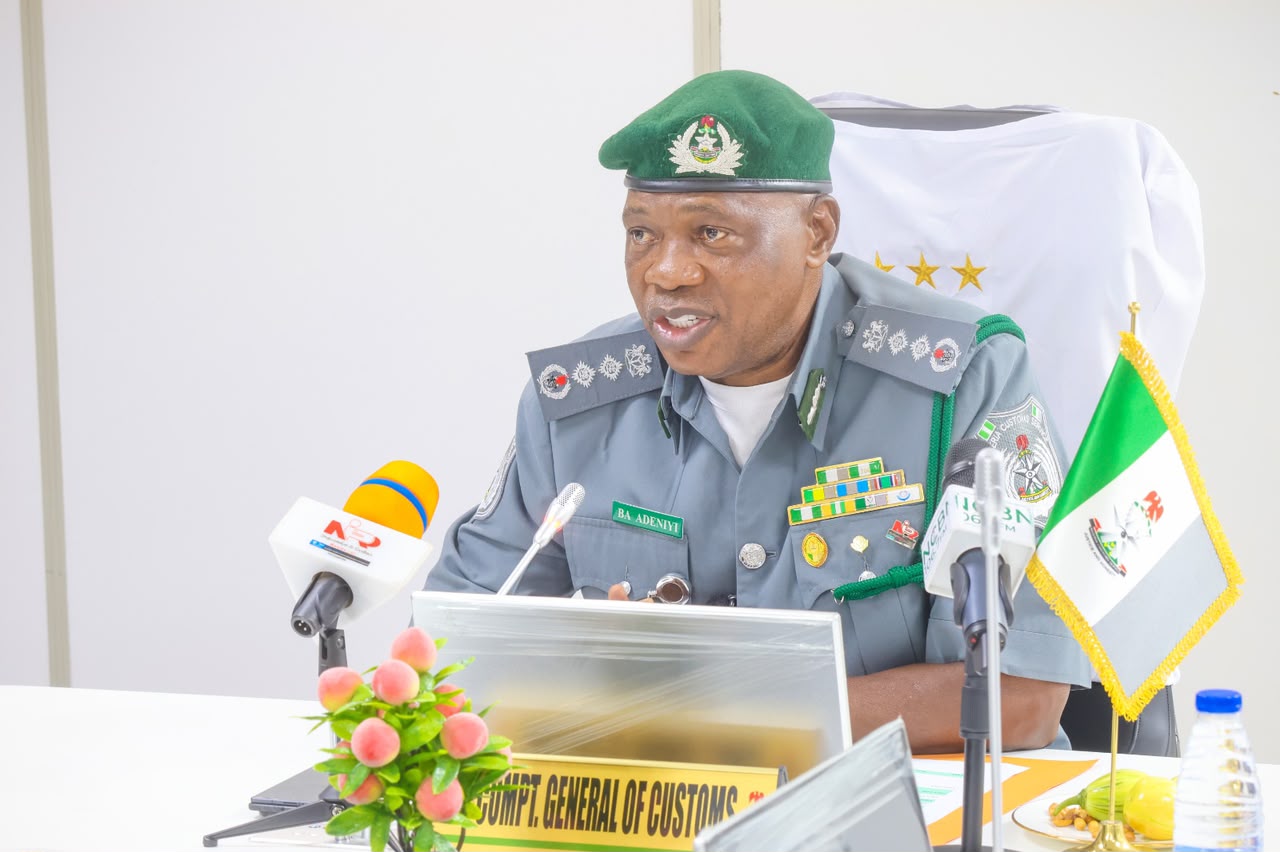
…As He Unveils New Revenue, Security Reforms at UI Lecture
BY EGUONO ODJEGBA
The Comptroller-General of the Nigeria Customs Service (NCS), Dr Bashir Adewale Adeniyi, MFR, has declared that Customs administration has become more critical in today’s interconnected global economy, arguing that the growing movement of goods, capital and technology across countries makes intelligent border management indispensable to national security, economic prosperity and sovereignty.
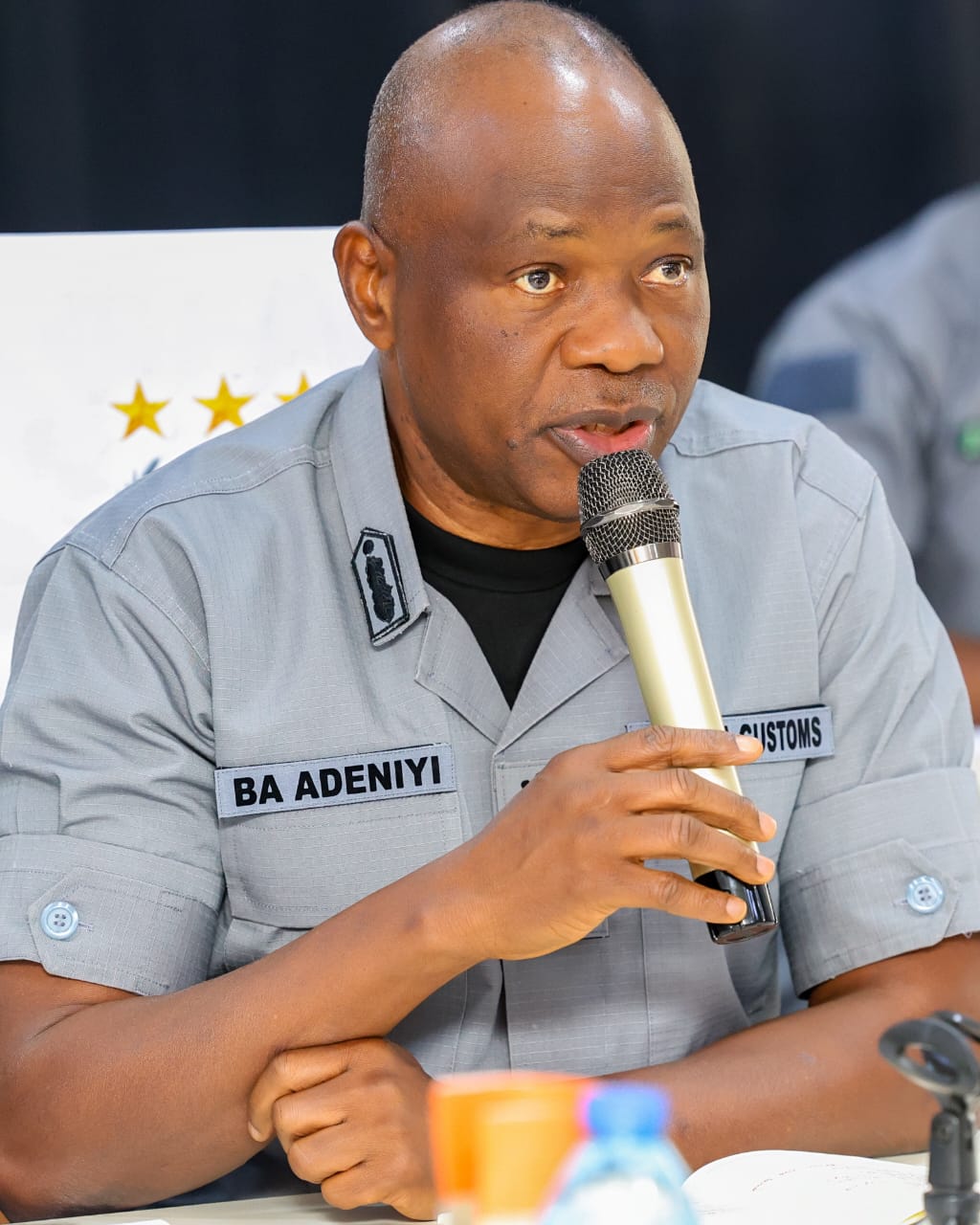
Adeniyi made the declaration on Tuesday while delivering a Distinguished Personality Lecture titled “Why Customs Matters: Revenue, Security and Nationhood in a Borderless World” at Trenchard Hall, University of Ibadan, where he received an enthusiastic reception from a distinguished audience of professors, academics and other stakeholders.
Organized by the TETFund Centre of Excellence in Security Management (TECESM), University of Ibadan, the lecture examined the historical evolution of Customs administration, its contribution to national revenue, its role in combating transnational crime and its significance in defining the relationship between the Nigerian state and citizens living along its borders.
The occasion was chaired by Professor Abel Idowu Olayinka, the 12th Vice-Chancellor of the University of Ibadan, while the incumbent Vice-Chancellor, Professor Kayode Oyebode Adebowale, served as Chief Host, even as the Director of TECESM, Professor P. A. Aluko, delivered the welcome address.
The packed auditorium reflected the strong academic and institutional interest generated by Adeniyi’s presentation, which combined historical analysis, fiscal data, security case studies and an outline of ongoing reforms within the Nigeria Customs Service.
The Vice-Chancellor praised the Customs chief’s distinguished accomplishments, recognising his milestones in public service and his contributions to the development of Customs administration.
At the heart of Adeniyi’s lecture was a forceful rebuttal of the notion that globalisation has rendered national borders less relevant.
“The world is connected, but it is not borderless,” he declared, arguing that the real challenge for governments was to build borders that are intelligent, fair and efficient rather than slow, corrupt and blind.
To illustrate the contemporary importance of Customs, Adeniyi opened his presentation with three contrasting scenarios: a container concealing weapons at a Lagos port, a market woman conducting routine cross-border trade between Nigeria and the Republic of Benin, and a university student whose education indirectly benefits from revenue collected by Customs.
The first example was the interception of 399 pump-action rifles and hundreds of firearm components concealed in a container discharged from the vessel MV Velika at Tin Can Island Port, Lagos, in July 2026.
According to the CGC, the interception resulted from the Service’s risk-management system flagging the suspicious consignment, demonstrating the value of technology and intelligence-led enforcement.
He disclosed that the recovered weapons had been handed over to the National Centre for the Control of Small Arms and Light Weapons, while declining to discuss further details because suspects were facing proceedings before the Federal High Court.
The incident, he explained, demonstrated that modern Customs enforcement increasingly depended on intelligence, data analysis and risk profiling rather than random physical examinations.
He recalled an earlier interception at Onne Port on June 21, 2024, when Customs officers seized 844 rifles and 112,500 rounds of ammunition concealed in a 40-foot container shipped from Türkiye among dolls, furniture and plumbing fittings.
He also cited the handover of 1,599 firearms seized between 2018 and 2024 to the national small-arms control centre in February 2025.
“These are not merely enforcement statistics. Every rifle stopped at the quay is a rifle that never reaches a forest camp, a kidnapping gang or a polling unit”, he declared.
He said the seizures underscored the importance of strengthening intelligence and surveillance, particularly as Nigeria approaches the 2027 general elections.
However, the CGC acknowledged a significant operational gap: the Service’s largest arms seizures had occurred at seaports rather than along the land borders connecting Nigeria to the Sahel.
He invited researchers at TECESM to investigate the gap and help develop evidence-based strategies for improving detection along vulnerable land corridors.
Moving to the fiscal implications of Customs administration, Adeniyi argued that revenue collection should be understood as a direct contribution to public services rather than merely a government accounting exercise.
He explained that import duties collected by Customs enter the Federation Account for distribution among the three tiers of government, with the statutory allocation formula providing 52.68 per cent to the Federal Government, 26.72 per cent to state governments and 20.60 per cent to local governments.
He added that, under the new tax laws taking effect in 2026, 90 per cent of VAT collected on imports goes to states and local governments. Consequently, he said, Customs revenue helps finance education, primary healthcare, rural roads and other public services, making revenue evasion a loss to ordinary Nigerians.
The CGC disclosed that the Service collected approximately ₦3.2 trillion in 2023, ₦6.105 trillion in 2024 and ₦7.28 trillion in 2025, exceeding its ₦6.58 trillion target for the year.
He attributed the performance not simply to exchange-rate adjustments but also to improved valuation, digital platforms, tighter enforcement, sharper risk management and greater compliance.
According to him, Customs revenue still grew by about 19 per cent in 2025, when the exchange rate was relatively more stable, while firms certified under the Authorised Economic Operator (AEO) programme increased their revenue contribution by approximately 30 per cent.
The Service has set a revenue target of ₦11.07 trillion for 2026, against which it collected about ₦4.03 trillion in the first half of the year.
Adeniyi acknowledged that geopolitical tensions in the Middle East had slowed cargo movements, but maintained that the revenue target must be pursued through better compliance, data-driven enforcement and trade facilitation rather than harassment of legitimate businesses.
“A target met by choking trade would be a false victory,” was the central message of his position on balancing revenue generation with economic competitiveness.
He also called for closer scrutiny of import duty concessions, disclosing that import concessions were worth approximately ₦1.68 trillion in 2024. Equally, he argued that waivers must be assessed against their economic benefits and fiscal costs, warning that poorly designed concessions could undermine domestic revenue mobilization.
On national security, Adeniyi broadened the discussion beyond arms trafficking to include counterfeit medicines, illicit drugs, wildlife trafficking, fuel smuggling and the movement of essential commodities.
He cited the seizure of 25 containers of fake and unregistered medicines valued at approximately ₦9.2 billion in July 2025, including antimalarials and antibiotics bearing false NAFDAC registration numbers.
He also highlighted joint operations against illicit wildlife trafficking, including the seizure of 3.76 tonnes of pangolin scales in Lagos in April 2025. The Customs chief said that, since 2021, joint operations with the Wildlife Justice Commission had resulted in the seizure of more than 25 tonnes of pangolin scales and over one tonne of ivory, alongside 12 convictions.
He further referenced the seizure of approximately a quarter of a million litres of petrol under Operation Whirlwind in less than three months in early 2025. According to him, such activities cannot be treated solely as commercial offences because illicit trade can finance organised crime, undermine public health and weaken the security of communities.
He cited United Nations Office on Drugs and Crime findings indicating that fuel smuggled from Nigeria could supply violent extremist groups in the Sahel, where such groups also impose levies on illicit trade.
Adeniyi described Customs as the detection point in a broader national security chain, explaining that seized arms, drugs, counterfeit medicines and undeclared currency are referred to the appropriate agencies, including the National Centre for the Control of Small Arms and Light Weapons, the National Drug Law Enforcement Agency, NAFDAC and the Economic and Financial Crimes Commission.
In his analysis, effective border management must therefore be built around inter-agency cooperation rather than the expectation that Customs can independently resolve every dimension of illicit trade.
One of the most striking dimensions of the lecture was Adeniyi’s treatment of Customs as an institution that shapes citizens’ perception of the Nigerian state.
Returning to his example of the market woman trading between Ogun State and the Republic of Benin, he explained that national boundaries frequently divide communities whose members share language, ancestry, family relationships and commercial interests.
Drawing on the political theorist Benedict Anderson’s concept of the nation as an “imagined community”, the CGC argued that the Customs officer is often among the first representatives of Nigeria encountered by visitors and cross-border traders.
How officers treat citizens, he maintained, can either reinforce confidence in the state or deepen alienation from it. Accordingly, he called for border enforcement that respects the law while recognizing the social and economic realities of border communities.
The ECOWAS Trade Liberalisation Scheme, he said, provides a legal avenue for eligible goods of community origin to move across borders, and Customs must make such channels sufficiently accessible to discourage traders from resorting to illegal routes.
Reflecting on Nigeria’s land-border closure between August 2019 and December 2020, Adeniyi observed that restrictions could disrupt smuggling networks without necessarily dismantling them.
His conclusion was that intelligent controls, data, cooperation with neighbouring countries and joint patrols were more sustainable instruments than indiscriminate border closures.
He also highlighted the difficult policy choices confronting the government in balancing the interests of domestic producers and consumers, particularly over food imports, duties and the protection of local agriculture. He expressed the belief that Customs revenue represents more than money entering government accounts, but rather, an expression of Nigeria’s fiscal sovereignty and its capacity to finance national development.
Adeniyi used the lecture to outline reforms intended to reposition Customs for a technology-driven trading environment. He identified the Nigeria Customs Service Act 2023 as the legal foundation for a new phase of administration, citing provisions for advance rulings on classification, valuation and origin, post-clearance audits and mutual assistance with foreign Customs administrations.
He also referenced the four per cent charge on the free-on-board value of imports, which the Service began collecting on August 4, 2025, as a dedicated funding mechanism for Customs modernisation.
On digital transformation, the CGC disclosed that B’Odogwu, the Service’s home-grown cargo clearance platform, processed approximately 16,000 entries and ₦120 billion in revenue during its first three months at the Port and Terminal Multiservices Limited (PTML) Command.
He said the platform was being integrated with the National Single Window, which went live on March 27, 2026, to improve coordination of import permits, cargo manifests and risk management.
The long-term objective, he said, was to achieve cargo clearance within 24 hours. However, the CGC acknowledged that significant delays remained.
A Time Release Study conducted at Tin Can Island Port with support from the World Customs Organization found that average cargo release time was nearly five days, even though physical inspections took only hours. More than 90 per cent of the time, he said, was spent waiting.
The Service has consequently set targets of reducing average release time to two days and expanding scanning in place of physical examination to 99 per cent of cargo.
Adeniyi also reported improvements under the AEO programme, launched in February 2025, stating that the 51 certified firms had seen clearance time decline from 168 hours to 41 hours, while demurrage costs fell by approximately 90 per cent.
He maintained that verified compliance should earn traders’ faster clearance, allowing Customs to concentrate its enforcement resources on high-risk consignments.
The lecture also placed Nigeria’s Customs reforms within the wider international trading system. Adeniyi traced the evolution of Customs administration from ancient Athens and indigenous Nigerian trading systems to the modern global Customs framework.
He noted that before the establishment of the colonial Customs administration, Niger Delta rulers collected duties known as comey from European traders in exchange for security and the maintenance of trade routes.
The colonial administration subsequently formalized import duties, with 1891 marking the founding year from which the Nigeria Customs Service dates its institutional history.
The CGC highlighted Nigeria’s growing influence within the World Customs Organization, where he was elected Council Chairperson in June 2025 and returned for a second term in June 2026.
He also disclosed that Nigerian Customs officers were serving as technical attachés at the WCO Secretariat in Brussels and at its Regional Office for Capacity Building for West and Central Africa in Abidjan.
According to him, the appointments provide opportunities for Nigerian officers to contribute to the development of international Customs standards while bringing global experience back into domestic administration.
He argued that the African Continental Free Trade Area (ACfTA) would not eliminate the need for Customs but would increase the importance of verifying rules of origin, applying preferential tariffs and connecting national systems across borders.
The challenge, he said, was to facilitate legitimate trade without surrendering the state’s responsibility to protect revenue, security and domestic economic interests.
In a significant academic dimension to the lecture, Adeniyi called for a closer working relationship between the Nigeria Customs Service and the University of Ibadan, particularly through TECESM and TETFund-supported research.
He proposed five practical areas of collaboration. The first is a Border Economies Research Partnership, involving field research at Idiroko, Seme, Jibia and Illela to understand cross-border trading patterns, compliance costs and the factors driving informal trade.
The second is Customs Data and Analytics Fellowships, through which doctoral and postdoctoral researchers could work with Customs risk-management teams using appropriately anonymized data to develop models for detecting valuation fraud, misclassification and smuggling.
Third, he proposed an Illicit Trade Observatory at TECESM to track the movement of arms, drugs, counterfeit medicines, wildlife products and fuel across West Africa.
The fourth proposal is a postgraduate curriculum on borders, trade and illicit flows, with Customs officers participating as students and practitioners, while the Service’s Command and Staff College could develop an institutional relationship with TECESM.
The fifth is independent academic evaluation of Customs reforms, including the implementation of the 2023 Act, import duty waivers, the AEO programme and the National Single Window.
Adeniyi said he had asked his team to engage the TECESM Director to determine priorities and develop the proposals.
He emphasised that effective reform required independent research and constructive criticism, adding that universities could help the Service identify weaknesses and strengthen the evidence base for policy decisions.
Despite the achievements outlined in his presentation, Adeniyi acknowledged that important challenges remained, including lengthy cargo-clearance times, the need for greater discipline in administering waivers and the conduct of officers who failed to meet professional standards.
He stressed that technology alone could not guarantee effective enforcement without integrity, training and accountability.
“One compromised insider can undo the work of a thousand honest officers,” was the warning underpinning his call for stronger professional standards and more robust internal controls.
The CGC maintained that the future of Customs administration lay in combining technology, institutional integrity, collaboration with security agencies and partnerships with academic institutions.
His central argument was that revenue, security and nationhood were not separate responsibilities but interconnected dimensions of the same national mandate.
As the lecture concluded, Adeniyi returned to the three figures with which he began: the container carrying weapons, the market woman crossing a border and the university student benefiting from public revenue.
Together, he argued, they illustrated why Customs remains indispensable to the Nigerian state.
“The world is connected, and that connection makes the border more important, not less,” he said in summation.






Customs CGC Says ‘The World Is Connected, Not Borderless’

Nigeria Customs Mulls Reviews of Complaints Arising from Recruitment

Edo-Delta Journalists Forum Challenges Political Leaders on Regional Development

Nnadi Urges Nigerian Importers to Shift from Finished Goods to Manufacturing

WMD: Oyetola Recommit to Unlock CVFF Pursuant to Indigenous Operators Financing

Customs FOU Zone ‘A’ Hands Over Seized ₦511.4m Pharmaceuticals, Illicit Drugs to NDLEA, NAFDAC

Oyetola Unveils NPERA, Corporate Logo Amid Quiet Enthusiasm

Nigeria, Benin Urged to Deploy Culture and Traditional Diplomacy to Defuse Border Tensions

Nigeria’s Ports: How Foreign Capital Took the Dinner, While Indigenous Businesses Got the Crumbs (3)

FOU Zone A, Police, Army, DSS, Others Strengthen Security Alliance Ahead of Elections

Nigeria’s Ports: How Foreign Capital Took the Dinner, While Indigenous Businesses Got the Crumbs (2)

Former Senatorial Candidate, Hajia Nike AbdulRahman Dumps NDC, Defects to APC
ANLCA Board is intact, cannot be wished away by anybody’-Elochukwu

B-R-E-A-K-I-N-G: Effedua, Rector MAN Oron, Resigns

EFCC’s Probe: Okowa Plots Sheriff’s Removal Despite London Accord
Customs Trains ANLCA Members, Others on B’Odogwu Portal

NPA’s Alleged Executive Management Fight: The Half Truth & Truth
ANLCA Board Election: Know Your Candidates
‘Why We Launched B-Odogwu Pilot Scheme With Webb Fontaine Still Running’ – Adeniyi

Onyemekara Promoted GM, Appointed NPA’s New Spokesperson

Nigeria Customs: Trust, Competence And The Oramalugo Factor

Onyeka Makes History As Tin-Can Customs Hit ₦16.4bn A Day

‘Rush To Break News Can Lead To Brush With Cybercrime’- Police

Kebbi Is Hub of Hard Drugs Smuggling In Northern Region’ – Oramalugo