

BY KESSIENNA SHEPHERDS The Association of Nigerian Licensed Customs Agents (ANLCA) has issued a fiery statement condemning what it describes as the irresponsible and brazen manner...
… As NIMASA Launches Seafarers’ Discharge Book Portal At 2026 Seafarers’ Day BY GBOGBOWA GBOWA Stakeholders in Nigeria’s maritime sector have called for stronger protection, improved...
BY IBRAHIM NASIRU When the World Bank and S&P Global recently released the 2025 Container Port Performance Index (CPPI), the headlines understandably erupted in celebration. For Tin Can Island and Apapa to land in the global Top 20 for performance gains is undoubtedly a historic milestone. Yet, for seasoned maritime analysts and industry stakeholders, a glaring question remains: what about the rest of Nigeria’s coastlines? While the satellite data accurately captures a localized turnaround in the Lagos pilotage districts, it simultaneously masks a stark regional imbalance. The narrative of Nigerian maritime modernization cannot begin and end in Lagos. To truly turn the tide, the conversation must expand to the Eastern Corridor encompassing Onne Port, Port Harcourt Port, Calabar Port, and Warri Port. The fundamental issue is that the World Bank’s CPPI relies strictly on automated vessel AIS data tracking. It registers a win when ship turnaround times shrink at a berth, but it completely shuts out the structural and geographical deficiencies that prevent large vessels from even sailing into Eastern waters in the first place. Modern deep sea shipping lines require drafts starting at 15 meters. While multi-billion naira investments and natural depths allow Lagos and the expanding Lekki Deep Sea Port to receive mega-vessels, Calabar Port remains severely hindered by an un-dredged channel hovering around a shallow 6 to 7 meters. Port Harcourt suffers from similar shallow constraints. Without aggressive, patriotic capital dredging projects, the devils in the details ensure that these regional Ports remain underutilized, regardless of how much digitization is deployed on paper. It is easy for policymakers to announce massive financial interventions. Critics are entirely right to point out that the Federal Government’s massive Port modernization plans must yield measurable metrics on the ground, not just political headlines. However, recent data shows that commercial viability is waiting to be unlocked. In overall cargo throughput metrics, Onne Port has consistently proven that the Eastern flank possesses massive economic power when given the operational room to breathe. The roadmap for greenfield developments like the Ibom deep seaport and others exists, but real execution under the African Continental Free Trade Area (AfCFTA) framework will be the ultimate judge of these investments. The current operational reality forces an unnatural economic bottleneck. Importers in the South-East and South-South regions frequently clear their goods in Lagos, only to transport them across hundreds of kilometers of volatile highways back to Eastern markets. This layout drives up logistics expenses, completely wiping out the macro efficiencies celebrated in recent National Bureau of Statistics (NBS) trade surplus figures. The next institutional hurdle for the Managing Director of the NPA, Dr. Abubakar Dantsoho, and the Minister of Marine and Blue Economy, Adegboyega Oyetola, is the implementation of a unified, cooperative Port development strategy. This requires more than just launching an electronic call-up system; it demands a deliberate re-alignment of tariff structures that actively incentivizes shipping consortia to divert traffic to regional hubs. Ultimately, a Port system is only as strong as its weakest link. Celebrating the World Bank validation of Apapa and Tin Can is fair, but treating it as a nationwide victory is premature. Until the institutional bottlenecks, channel depths, and security challenges of the Eastern Corridor seaports are solved with the same urgency applied to Lagos, Nigeria’s maritime sector will continue running on half its cylinders. True maritime competitiveness is not won by building an elite logistics island in one state, but by unlocking the full economic potentials of the nation’s entire coastline. Chief Ibrahim Nasiru, a Public Affairs Analyst writes from Abuja
…As 50 Graduate from NCCSC Gwagwalada BY FUNMI ALUKO The Nigeria Customs Service (NCS) has graduated 50 officers from the Nigeria Customs Command and Staff College (NCCSC), Gwagwalada, with two officers from the...
BY KESSIENA SHEPHERDS The Maritime Academy of Nigeria (MAN), Oron, under the dynamic stewardship of its Acting Rector, Dr. Kevin Okonna, has once again demonstrated its...
BY EGUONO ODJEGBA When Comrade Adewale Adeyanju, Deputy President of the Nigeria Labour Congress (NLC) and immediate past President General of the Maritime Workers Union of...
BY FUNMI ALUKO In a landmark move to bolster international trade and security, the Nigeria Customs Service (NCS) has signed a Joint Declaration with the Customs Administration of the Kingdom of the Netherlands, aimed at strengthening cooperation in trade facilitation, border security, and the fight against transnational organised crime. The agreement according to a release signed on behalf of the Comptroller-General of Customs by the Service Public Relations Officer, Abdullahi Maiwada PhD, was formalised on Wednesday, June 24, 2026, in Brussels, with Comptroller-General of Customs, Adewale Adeniyi, MFR, and the Director-General of Netherlands Customs, Mrs Nanette Van Schelven, appending their signatures. Maiwada who is a Deputy Comptroller of Customs explained that the milestone follows a series of high-level engagements, including Nigeria’s bilateral visit to the Netherlands in October 2025 and a reciprocal visit by Dutch officials to Nigeria in March 2026. He further explained that the key areas of collaboration include: Trade facilitation: Streamlining cargo clearance systems and promoting fair trade practices. Border security: Enhancing risk management and supply chain security. Capacity building: Training, knowledge sharing, and institutional development. Intelligence sharing: Strengthening enforcement cooperation and compliance management. Combatting illicit trade: Addressing trafficking in narcotics, counterfeit goods, wildlife products, and weapons. The declaration, Maiwada said recognises Nigeria’s role as West Africa’s leading economy and a vital trading partner of the Netherlands. Both administrations acknowledged that customs cooperation is essential to facilitating legitimate trade while countering illegal cross-border activities. Concerns highlighted include the growing threats of drug trafficking, counterfeit goods, wildlife smuggling, and arms proliferation, which demand coordinated international responses. The event also highlighted the leadership perspectives to the issues of mutual interests, as CGC Adewale Adeniyi described the alliance as “a significant milestone in the Service’s international cooperation agenda”, noting that it will strengthen intelligence sharing, enforcement effectiveness, and supply chain security. This is even as Mrs Nanette Van Schelven emphasised that both countries face similar challenges in today’s interconnected trading environment, adding that closer collaboration will promote mutual learning and operational efficiency. Providing a broad future outlook, the declaration committed both parties to the following: Developing a joint work plan for structured cooperation. Enhancing border efficiency and transparent trade processes. Deepening collaboration through training and expertise exchange. Building frameworks to tackle both legal and illegal cross-border movements. The alliance signals a new era of customs modernisation and international cooperation, positioning Nigeria and the Netherlands as partners in securing global trade routes while promoting economic growth.
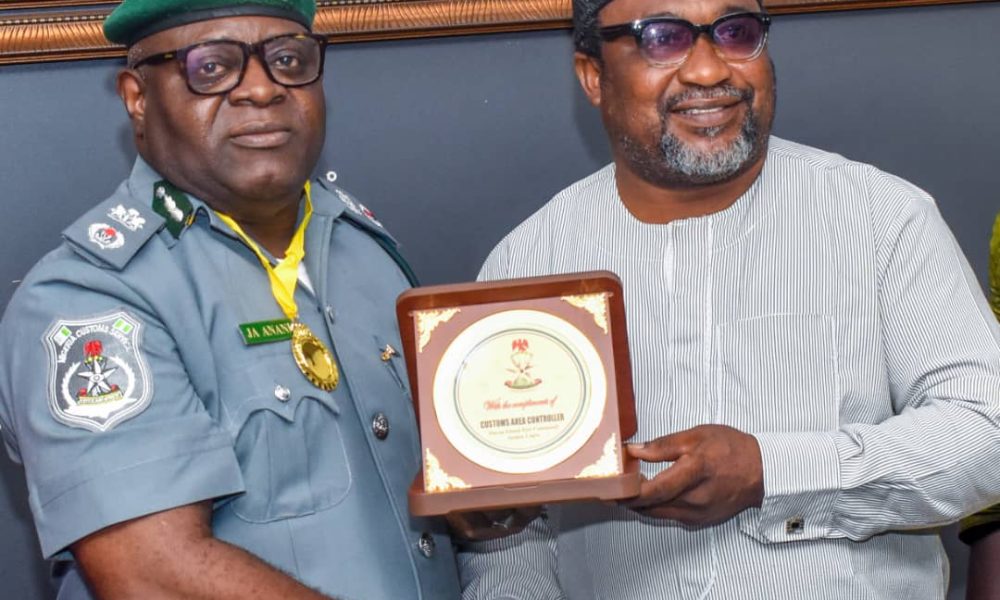
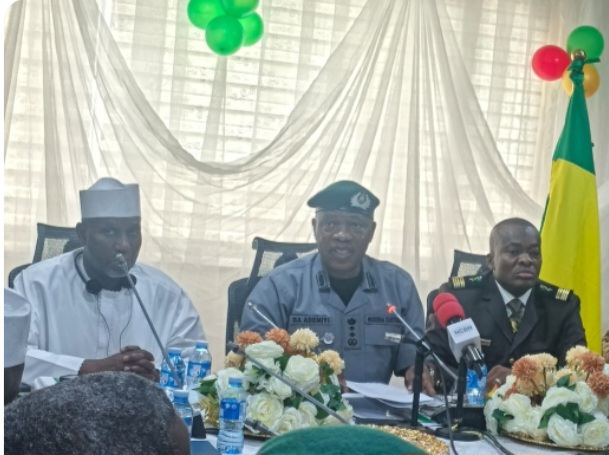
…Challenges Industry Media on Professionalism BY FUNMI ALUKO The newly appointed Area Controller of the Nigeria Customs Service (NCS), Tin Can Island Port Command, Comptroller Joe Anani, has pledged to tackle the notorious Apapa–Mile 2 port corridor traffic gridlock while calling on maritime journalists to uphold the highest standards of professionalism in their reportage. Speaking during his maiden interactive session with the maritime press on Wednesday, June 23, 2026, Anani emphasized that inaccurate publications can cause costly damages, stressing the need for ethical and responsible journalism. He assured the media of strong partnership, transparency, and continuous engagement throughout his tenure. In his address, Anani described the press as a “strategic partner” in shaping public understanding, promoting accountability, and enhancing compliance within the maritime ecosystem. He promised timely and accurate information flow, while announcing plans for structured training, sensitization workshops, and capacity-building programs to empower journalists covering the port command. “Responsible journalism is critical to maintaining public trust, preventing misinformation, and ensuring that our collective objectives are not undermined by inaccurate or misleading narratives,” he said. Fielding questions on the resurgence of traffic congestion along the Apapa–Mile 2 corridor, Anani disclosed that the Command is already engaging stakeholders to reverse the development. He revealed that discussions have been held with Five Star Logistics, whose terminal operations were linked to the road blockage due to delayed truck access. “I have spoken with them and they have pledged to hasten the process to allow the trucks come in. So, I believe that this issue will go away very soon,” Anani assured. On his operational strategy, Anani acknowledged that the groundwork laid by his immediate predecessors, retired DCG Dera Nnadi and ACG Frank Onyeka were solid framework to build on. He noted that the administrative and operational structures are already in place, describing his role as “being at the driver’s seat, at full alert” to ensure faithful implementation. Highlighting the Command’s performance, Anani disclosed that Tin Can Island Port Command generated over ₦111.2 billion in revenue in May, reflecting improved compliance levels and operational efficiency. He however pledged strict adherence to import regulations and total compliance with the Nigeria Customs Service Act 2023. He also expressed gratitude to the Comptroller-General of Customs, Bashir Adewale Adeniyi, for the confidence reposed in him, promising to consolidate on existing gains and surpass previous achievements. To further cement ties with the press, Anani announced that the Public Relations Unit of the Command will prioritize media engagement, ensuring timely information dissemination and fostering mutual understanding. “Together, we can ensure that Tin Can Island Port Command continues to play its critical role in national growth, trade facilitation, and revenue generation,” he declared.
BY EGUONO ODJEGBA In Nigeria’s maritime corridors, whispers have grown louder over the curious handling of allegations against the Grimaldi Agency of Nigeria. Earlier this month, reports surfaced accusing Grimaldi of engaging in questionable sales of empty containers in contravention of Nigerian Customs Service (NCS) rules. The company swiftly denied wrongdoing, but its rebuttal was publicly dismantled by international business consultant Mr. Okey Ibeke, who insisted Grimaldi had breached legal and procedural protocols. Yet, the Federal Ministry of Marine and Blue Economy and its supervising minister, Dr. Adegboyega Oyetola, maintained an absolute silence. For a...
BY FUNMI ALUKO Looked at broadly, the Seme Border is more than just a customs post; it is by all ramifications a diplomatic artery linking Nigeria...