Business Focus
‘Corruption, Human Interference Choking Nigeria’s Port Access Roads’ – Ofobike

BY KESSIENA
The persistent congestion along the Tin-Can and Apapa port corridors has once again raised alarm among stakeholders in Nigeria’s maritime sector, with accusations of corruption, sabotage, and human interference undermining government interventions designed to ease traffic flow.
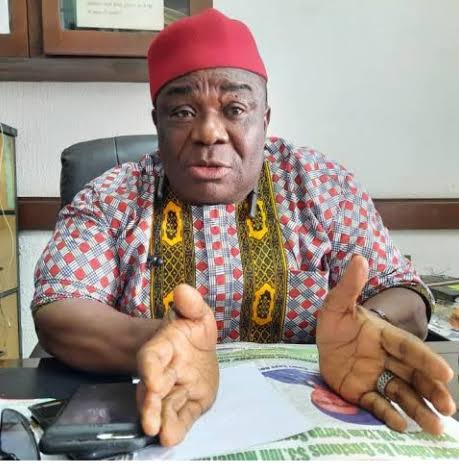
A petition written to the Minister of Marine and Blue Economy, Dr Adegboyega Oyetola CON by High Chief (Sir) John Alfred Ofobike, a licensed customs agent and stakeholder in the maritime hub, paints a grim picture of deliberate manipulation of systems meant to regulate truck movement, resulting in worsening gridlock and inhumane conditions for port users.
According to the petition, the Trucks Transit Park (TTP) and the Electronic Call-Up System (ETO), both introduced to streamline truck entry into ports, have been compromised. The petitioner deposed to further allegations suggesting that officials entrusted with managing these systems, purportedly in collusion with bad eggs within the Nigerian Ports Authority (NPA), have acquired their own trucks and now prioritize them over legitimate operators. This practice he claimed has rendered the government’s intervention ineffective, defeating the purpose of the reforms and allowing congestion to build daily.
Ofobike lamented that the situation has turned port access roads into chaotic zones where corruption thrives unchecked.
The petition further describes how gridlock has resurfaced with greater intensity, particularly at night, when access roads become makeshift camps where illicit trade flourishes. Licensed agents and legitimate businesses are forced to navigate conditions likened to refugee camps, allegedly under the watch of the relevant authorities, made worse by multiple security agencies, and Lagos “agberos.”
“What was intended to be a regulated corridor has instead become a breeding ground for extortion, intimidation, and lawlessness, leaving stakeholders frustrated and helpless”, he said.
He recalls warning last year that the celebrated decongestion of ports was a smokescreen, predicting that corruption would fight back. He says his fears have now materialized, as those controlling traffic are the same individuals profiting from the disorder. The petition alleges that corruption on port access roads has escalated into a multi-billion-naira enterprise involving powerful interests who deliberately sabotage reforms to ensure the system never works efficiently.
Government agencies, he argues, have failed the administration they serve, betrayed the trust of Nigerians, and undermined President Bola Ahmed Tinubu’s Renewed Hope Agenda.
In his recommendations, Ofobike calls for immediate investigation into all persons and agencies implicated in sabotaging TTP and ETO, with prosecution of those found guilty to serve as deterrent. He demands the redeployment of officials previously managing port access roads out of Lagos ports, and the introduction of new personnel from other ports, alongside freight forwarders, manufacturers, and individuals of proven integrity.
He insists that political will is required to confront corruption head-on, beyond lip service, and urges protection of due process so that licensed agents and legitimate trade can operate without intimidation, illegal roadblocks, or extortion.
The petition warns that any new task force established with the same corrupt individuals will be counterproductive, likening such efforts to using hot chili pepper to cure an eye disease. “We cannot use evil spirits to drive away bad spirits,” Ofobike writes, stressing that stakeholders from the business sector, who bear the brunt of this crisis, must be involved in traffic management to create a lasting solution.
He concludes with a passionate appeal that corruption at the ports corridor is strangling Nigeria’s economy and must be confronted decisively to save the ports, the economy, and the suffering masses






Oyetola Unveils NPERA, Corporate Logo Amid Quiet Enthusiasm

Nigeria, Benin Urged to Deploy Culture and Traditional Diplomacy to Defuse Border Tensions

Nigeria’s Ports: How Foreign Capital Took the Dinner, While Indigenous Businesses Got the Crumbs (3)

FOU Zone A, Police, Army, DSS, Others Strengthen Security Alliance Ahead of Elections

Nigeria’s Ports: How Foreign Capital Took the Dinner, While Indigenous Businesses Got the Crumbs (2)

Former Senatorial Candidate, Hajia Nike AbdulRahman Dumps NDC, Defects to APC

Nigeria’s Ports: How Foreign Capital Took the Dinner, While Indigenous Businesses Got the Crumbs

How Anani’s Tin Can Command Intercepted a ₦3.6 Billion Illicit Drug Shipment

Ibrahim, Ogun 1 Customs New Sheriff Unveils Strength Beneath His Quiet Mien

Logistics Synergy: NPA Advances Integration of ICDs Under New Reform Agenda

Teamwork, Discipline, Central to Our Enforcement Mandate —Jonah Charges Customs Marine Operatives

How the UAE-Nigeria Partnership Can Transform Our Ports
ANLCA Board is intact, cannot be wished away by anybody’-Elochukwu

B-R-E-A-K-I-N-G: Effedua, Rector MAN Oron, Resigns

EFCC’s Probe: Okowa Plots Sheriff’s Removal Despite London Accord
Customs Trains ANLCA Members, Others on B’Odogwu Portal

NPA’s Alleged Executive Management Fight: The Half Truth & Truth
ANLCA Board Election: Know Your Candidates
‘Why We Launched B-Odogwu Pilot Scheme With Webb Fontaine Still Running’ – Adeniyi

Onyemekara Promoted GM, Appointed NPA’s New Spokesperson

Nigeria Customs: Trust, Competence And The Oramalugo Factor

‘Rush To Break News Can Lead To Brush With Cybercrime’- Police

Kebbi Is Hub of Hard Drugs Smuggling In Northern Region’ – Oramalugo

Onyeka Makes History As Tin-Can Customs Hit ₦16.4bn A Day