
Business
Senate Commend Adeniyi’s Led Customs Technology-Driven Reforms

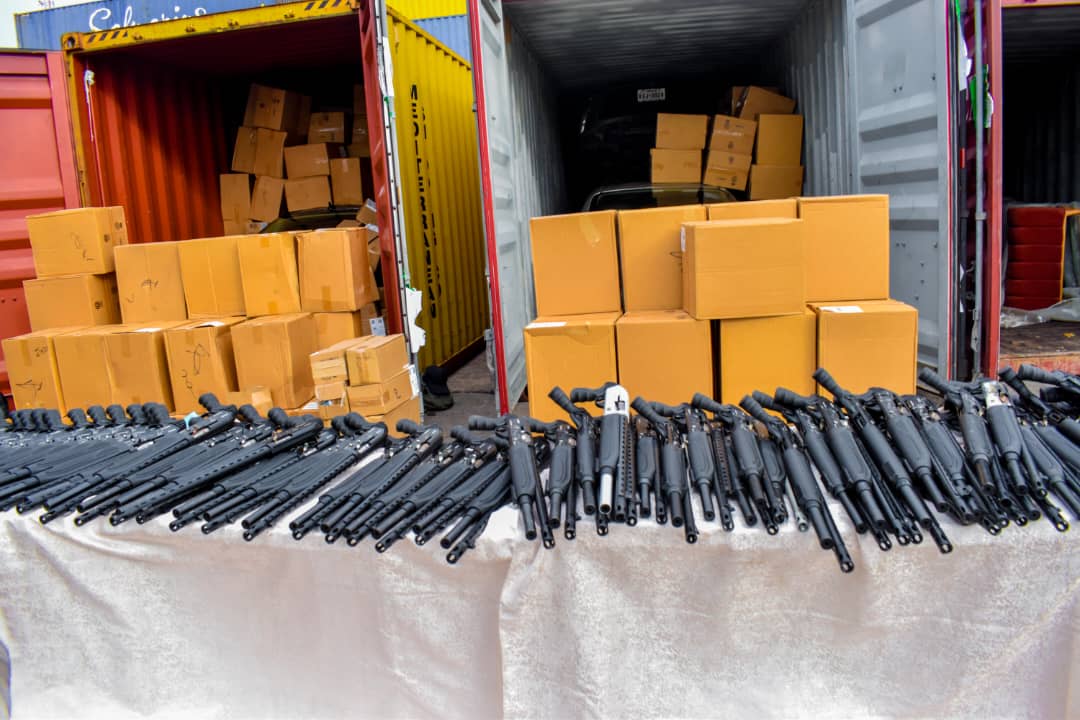
…As Service Uncovers Additional 259 Jojef Rifles at Tin Can Port
BY FUNMI ALUKO
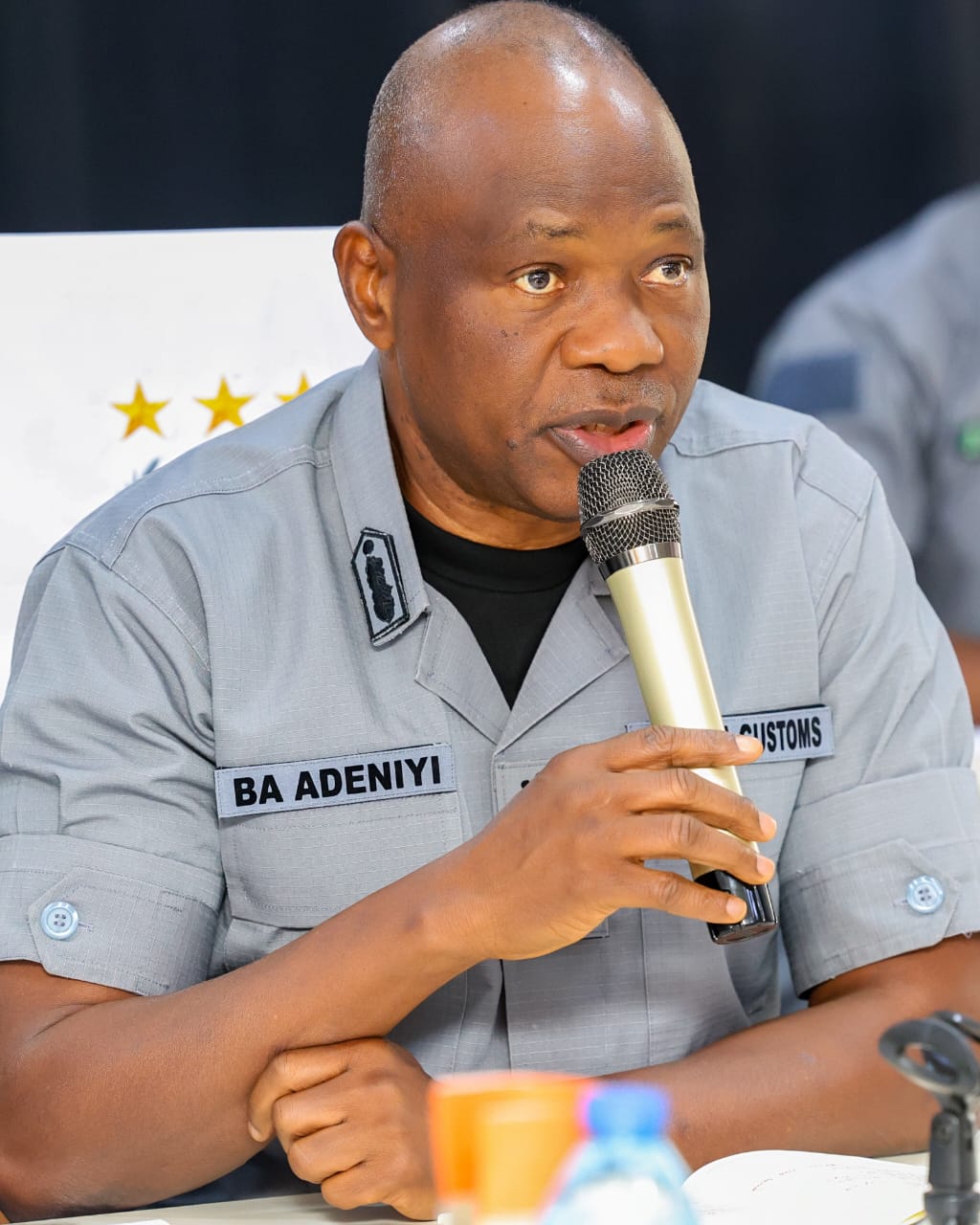
The Senate Committee on Customs and Excise has commended the sweeping reforms and technology-driven modernisation of the Nigeria Customs Service (NCS) under the Comptroller General, Bashir Adewale Adeniyi, MFR, describing the transformation as evidence that public resources appropriated to the Service are being judiciously utilised.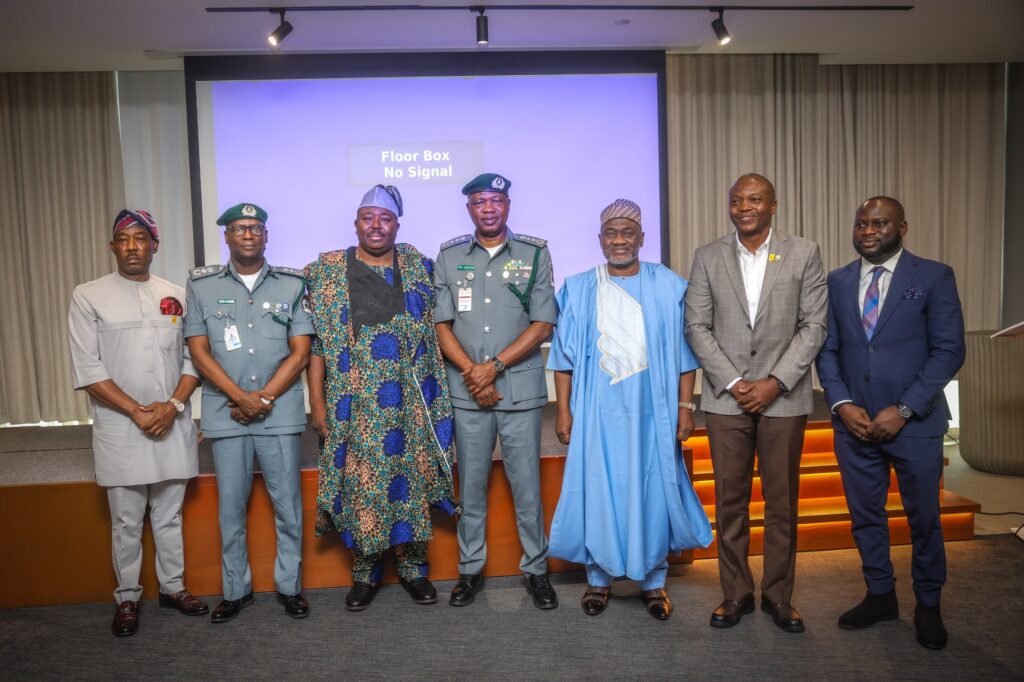
The commendation came as the Customs Service disclosed that it had completed the detailed examination and coupling of a major arms shipment intercepted at the Tin Can Island Port Command, uncovering 399 fully assembled Jojef firearms and a large quantity of additional rifle components.
The development has heightened concerns over attempts by criminal networks to exploit Nigeria’s ports, borders and airports to smuggle arms into the country, particularly as the nation approaches another major electoral cycle.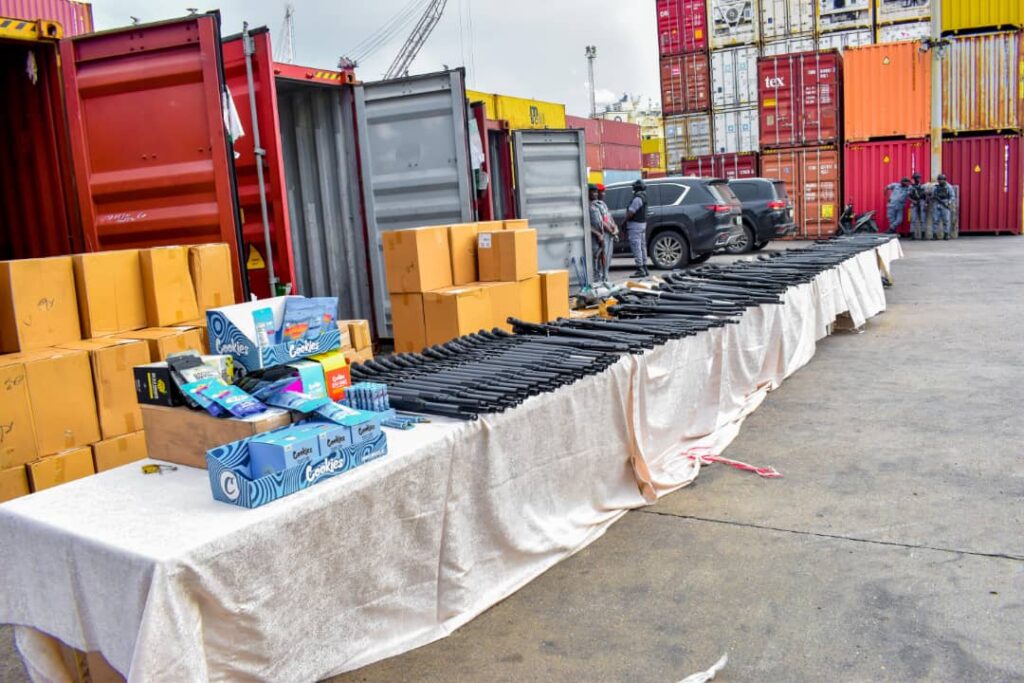
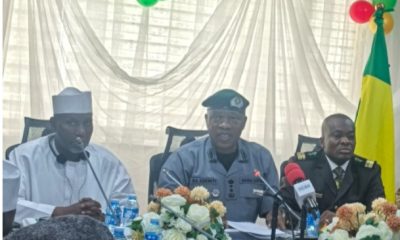
The Senate commendation was made on Thursday, August 6, 2026, during a two-day retreat between the NCS and the Senate Committee on Customs and Excise, held to strengthen legislative oversight and review the Nigeria Customs Service Act.
As part of the retreat, members of the committee toured the Customs House in Maitama, Abuja, where they were taken through the Service’s ongoing modernisation programmes, technology-driven operations and institutional reforms.
Speaking after the tour, Chairman of the Senate Committee on Customs and Excise, Senator Isah Jibrin, said the visit provided lawmakers with an opportunity to witness first-hand the transformation taking place within the NCS.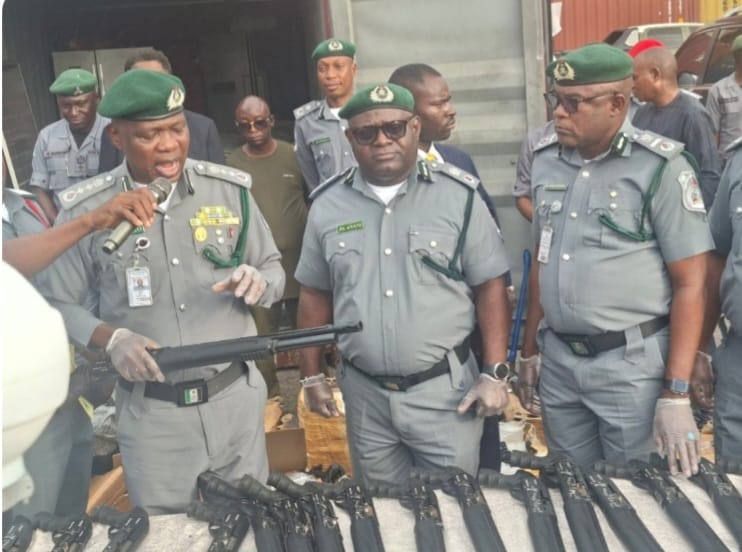
He said the reforms, particularly in the areas of technology, infrastructure and operational innovation, were repositioning the Service for greater efficiency.
According to him, the committee had previously heard about the reforms from a distance but was now able to see their practical impact.
Jibrin also said the visit had given the lawmakers a clearer understanding of how funds appropriated to the Customs Service were being deployed.
He noted that whenever the NCS approached the National Assembly for approval of capital expenditure, lawmakers could now better appreciate the purpose and impact of such investments.
The Senator said the reforms witnessed at the Customs House demonstrated that government resources were being invested responsibly to strengthen Customs operations, facilitate legitimate trade and improve national revenue generation.
The CGC, Adeniyi, attributed the progress recorded by the Service to the deliberate deployment of technology across virtually every aspect of Customs administration.
He explained that the digital transformation of the Service began with personnel administration, postings, staff-related matters and pensions before being extended to its core operational responsibilities.
According to Adeniyi, the objective is to ultimately make virtually every aspect of Customs operations technology-driven.
He said the Service had equally introduced sophisticated technological tools into its enforcement operations, including virtual shooting simulators, geospatial intelligence and digital surveillance.
The Customs boss explained that geospatial intelligence was being deployed to map patrol routes and determine more effectively where checkpoints should be positioned across the country, while modern training facilities such as virtual shooting ranges were being used to strengthen the operational capacity of officers.
Adeniyi further noted that several of the Service’s modernisation initiatives were backed by the Nigeria Customs Service Act, including the Authorised Economic Operator Programme, Advance Ruling, Time Release Study and scanner deployment.
He said the responsibility of the Service was to continue implementing the provisions of the law in line with the Federal Government’s reform agenda.
The effectiveness of the Customs reform programme in strengthening enforcement was underscored by the latest arms interception at the Tin Can Island Port.
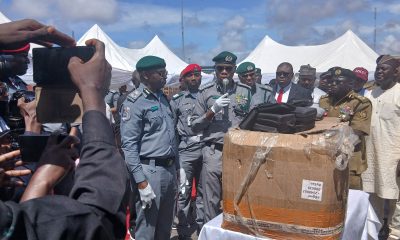
In a related development, the Service disclosed on Sunday, August 9, that it had completed the coupling and detailed examination of a seized shipment, revealing 399 fully assembled Jojef firearms concealed in the container, paraded two days earlier.
The discovery followed the initial disclosure by Adeniyi on Thursday that Customs had intercepted a container containing crates of knocked-down components preliminarily identified as Jojef pump-action rifles.
Further examination of the shipment produced a substantial cache of supplementary rifle parts, including 89 frames, 16 heat shields, 10 trigger pins, three pistons, 25 locking lugs, 80 charging handles, 39 pistol-grip screws, 34 springs, 57 trigger groups, 66 foregrip latches, 45 foregrips or handguards, four pistol grips and five barrels.
The scale of the consignment has raised fresh concerns about the activities of arms traffickers seeking to exploit Nigeria’s maritime supply chain and other entry points to introduce prohibited weapons into the country.
Adeniyi had earlier warned that criminal elements could attempt to take advantage of the approaching election cycle to move dangerous items through the country’s borders, seaports and airports.
He said the Customs Service was prepared to intensify surveillance and enforcement operations to prevent such attempts.
“We are about entering a major election cycle and we know that by this period, men of the underworld will want to use our borders, our ports, our airports to bring in items like this. We are going to redouble our efforts to ensure that we do not allow them to do so,” he said.
The CGC reaffirmed the NCS commitment to intelligence-led enforcement, enhanced border surveillance and deeper collaboration with sister security agencies to combat the trafficking of prohibited weapons.
In particular, he identified collaboration with the National Centre for the Control of Small Arms and Light Weapons (NCCSALW), under the Office of the National Security Adviser (ONSA), as critical to identifying and dismantling the networks behind the movement of illicit arms.
Following the completion of the inventory and assessment of the seized consignment, Adeniyi disclosed that the NCS was preparing to hand over the recovered firearms and components to the NCCSALW.
The planned handover, he said, would reinforce the inter-agency approach to removing dangerous weapons from circulation while ensuring that those responsible for the trafficking operation are identified, tracked and brought to justice.
The latest seizure therefore provides a practical dimension to the Senate’s assessment of the Customs modernisation programme, particularly its emphasis on technology, intelligence and operational innovation.
With the Service simultaneously pursuing trade facilitation, revenue mobilisation and border security, the Senate’s endorsement of the Adeniyi reforms could also strengthen legislative support for further investments in Customs technology and infrastructure.
The developments at Tin Can Island Port, meanwhile, have demonstrated the security implications of the country’s maritime gateways and the need for sustained investment in cargo examination, intelligence gathering, surveillance and inter-agency enforcement to prevent Nigeria’s ports from being exploited as conduits for arms trafficking










Business2 days ago
Teamwork, Discipline, Central to Our Enforcement Mandate —Jonah Charges Customs Marine Operatives

Uncategorized2 days ago
How the UAE-Nigeria Partnership Can Transform Our Ports

Business2 days ago
Cross River, FTZ Customs Gets New Impulse

Business2 days ago
CGC Adeniyi Signs Anti-Corruption Documents, Activates ICRAM Steering Committee

Customs Report3 days ago
Nigeria Customs Marks Breast Cancer Awareness Month in Abuja

Business Maritime6 days ago
NIMASA To Host Webinars on Automation of Nigerian Ship Registry

Business Maritime6 days ago
NPA Moves To Cut Export Bottlenecks, Targets Forex Inflows

Business Maritime1 week ago
NPA Congratulates ANLCA on 72nd Anniversary, Reaffirms Support for Port Modernisation

Uncategorized1 week ago
Afeni Lands at FOU Zone ‘A’ in Acting Controller Capacity

Business Maritime1 week ago
NPA Mulls Specialised Fishing Port to Deepen Nigeria’s Blue Economy

Uncategorized1 week ago
Industry Stakeholders Applaud ANLCA at 72nd Anniversary Celebration

Business Maritime1 week ago
Port Regulation Critical To Fisheries, Blue Economy – NPERA DG, Akutah

Customs Report6 years ago
ANLCA Board is intact, cannot be wished away by anybody’-Elochukwu

Maritime2 years ago
B-R-E-A-K-I-N-G: Effedua, Rector MAN Oron, Resigns

Features2 years ago
EFCC’s Probe: Okowa Plots Sheriff’s Removal Despite London Accord
Business2 years ago
Customs Trains ANLCA Members, Others on B’Odogwu Portal

Analysis2 years ago
NPA’s Alleged Executive Management Fight: The Half Truth & Truth
Features2 years ago
ANLCA Board Election: Know Your Candidates
Interview2 years ago
‘Why We Launched B-Odogwu Pilot Scheme With Webb Fontaine Still Running’ – Adeniyi

Maritime2 years ago
Onyemekara Promoted GM, Appointed NPA’s New Spokesperson

Customs Report2 years ago
Nigeria Customs: Trust, Competence And The Oramalugo Factor

Uncategorized2 years ago
‘Rush To Break News Can Lead To Brush With Cybercrime’- Police

Customs Report1 year ago
Kebbi Is Hub of Hard Drugs Smuggling In Northern Region’ – Oramalugo

Customs Report1 year ago
Apapa Customs Collects ₦161b On B’Odogwu Platform In 3 Weeks
Enter ad code her