
Customs Report
Miko Doubles Down on PTML’s RoRo Advantage

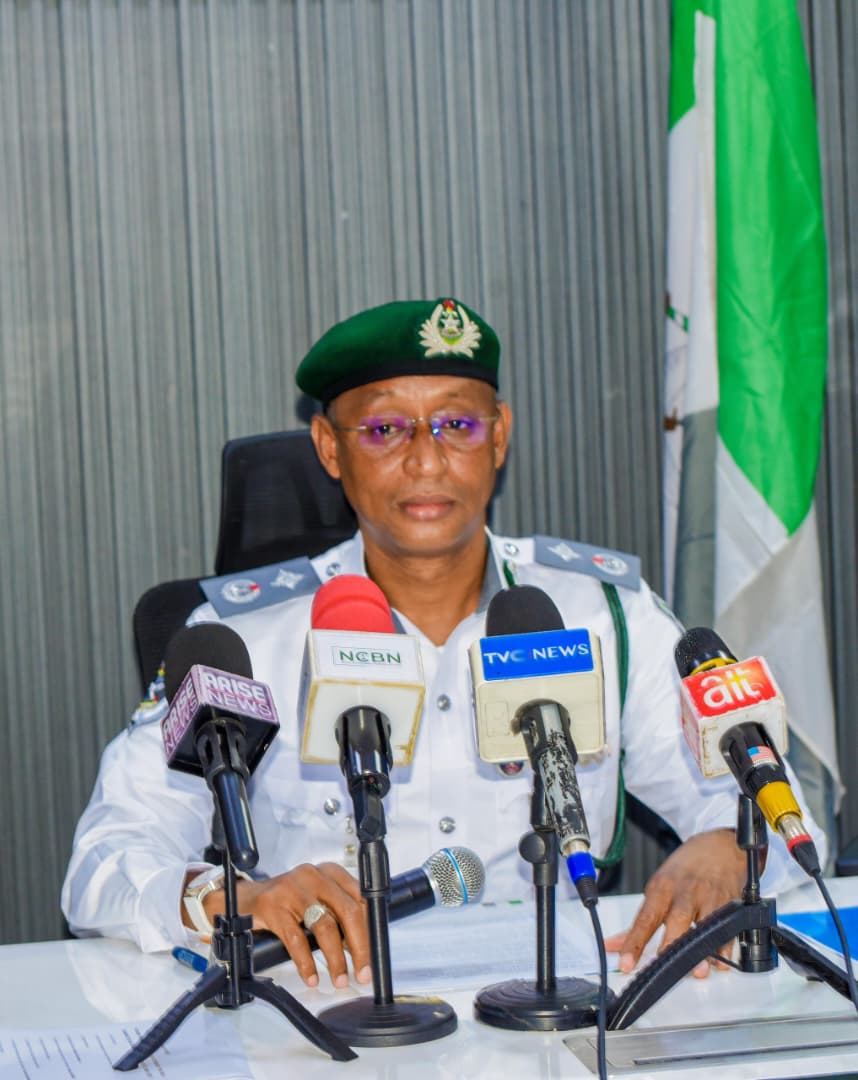
…Holds Out Digital Push for Attainment of 1Hr Clearance Timeframe
BY FUNMI ALUKO
At Nigeria’s busiest Roll-on Roll-off (RoRo) gateway, the future of vehicle importation is increasingly being defined not merely by how quickly a car, truck or heavy-duty machine can be discharged from a vessel, but by how intelligently the entire clearance chain can be managed.
That is the emerging story at the Port & Terminal Multi-services Limited (PTML) Area Command of the Nigeria Customs Service (NCS), where Acting Controller, Deputy Comptroller Nura Miko, is pushing a combination of trade facilitation, digitalisation, stakeholder engagement and compliance to reshape the experience of vehicle importers and freight forwarders.
Already reputed for achieving a two-hour clearance window for compliant RoRo cargoes, PTML is now setting its sights even higher. Miko has declared that the Command is working to reduce the existing two-hour cargo clearance record for compliant RoRo imports to one hour, a target that, if sustained, could further strengthen PTML’s position as a benchmark for vehicle clearance and reinforce the wider modernisation agenda of the NCS.
The declaration came as the Service launched its Management Information System (MIS) File Tracker, commencing a pilot rollout at the PTML Command—another indication that the terminal is increasingly being used as a laboratory for Customs innovation.
The development is significant because the future of port competitiveness is no longer determined solely by cranes, berths, warehouses and access roads. It is increasingly about information, data, predictability and the ability of regulatory agencies to make decisions in real time.
For PTML, therefore, the RoRo advantage is becoming as much digital as it is physical, with Miko in full focus, and leaving nothing to chance.
The two-hour clearance record for compliant RoRo cargoes has become one of the defining indicators of PTML’s trade facilitation efforts. But Miko’s new one-hour target suggests that Customs is unwilling to rest on existing achievements.
The ambition is important in a sector where delays can quickly translate into additional costs for importers, terminal operators, freight forwarders and ultimately consumers.
For Customs, however, speed cannot be divorced from compliance. The challenge is to accelerate legitimate cargo while maintaining the necessary scrutiny to prevent revenue leakage, undervaluation, false declarations and other infractions.
That is where technology becomes critical. Miko’s approach appears to recognise that the fastest clearance system is not necessarily one where officers simply work faster, but one where processes are redesigned to remove unnecessary human intervention, duplication and paperwork.
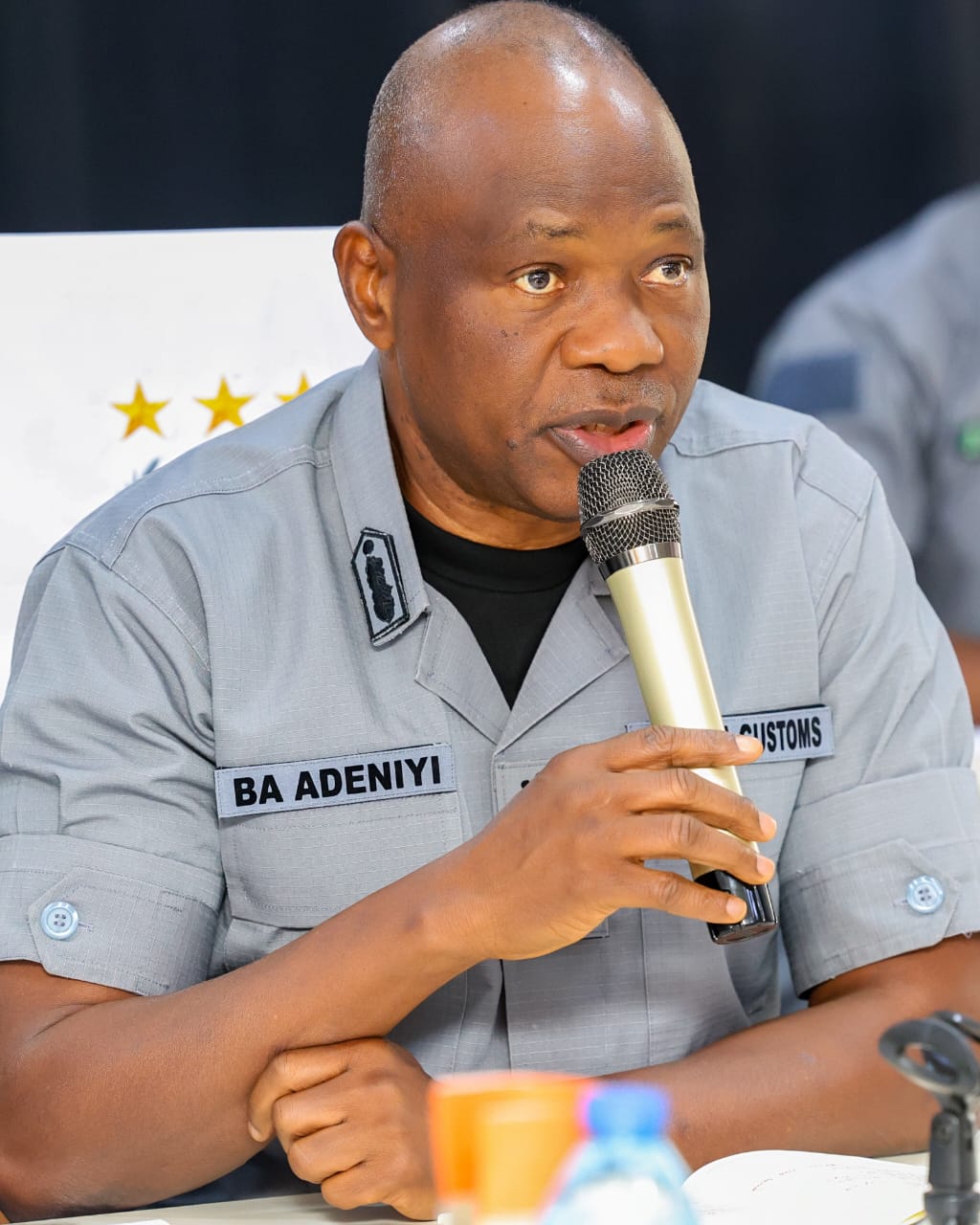
This is the philosophy behind the MIS File Tracker now being piloted at PTML; conceived to take customs administration beyond paper. Launching the platform, the Comptroller General of Customs, Bashir Adewale Adeniyi, MFR, described the initiative as another milestone in the Service’s expanding modernisation programme.
Represented by the Deputy Comptroller General in charge of ICT/Modernisation, Oluyomi Adebakin, the CGC said the system was designed to deepen technology deployment in the administration of Customs personnel while improving speed, efficiency and transparency in documentation.
The significance of the MIS File Tracker goes beyond simply tracking files. According to the Service, the platform is an enterprise system designed to support Customs administrative processes through a Single Sign-On (SSO) arrangement, allowing a unified dataset to be utilised across departments.
Its functions include leave and pass applications, file tracking, duty rosters, internal staff orders, nominal rolls and other administrative processes.
That could have an important operational consequence. When internal administrative processes are digitised, officers spend less time moving files and more time performing core regulatory and trade facilitation functions. It also creates a more transparent trail of administrative decisions, reducing the risks associated with missing documents, unnecessary delays and opaque manual procedures.
For an organisation as large and operationally complex as the NCS, such transformation could have ramifications extending well beyond PTML. DCG Adebakin also urged officers to use the platform and provide feedback on areas requiring modification, additions and improvement. This is particularly important because successful digital transformation depends not merely on launching software, but on continuously adapting it to operational realities.
There is a reason PTML has repeatedly emerged as a preferred testing ground for Customs modernisation. The Command is already regarded as one of the technologically advanced formations within the Service and has previously been used for the pilot implementation of major digital initiatives, including the Unified Customs Management System (UCMS), popularly known as B’Odogwu.
The decision to commence the MIS File Tracker pilot at PTML therefore reinforces a growing institutional pattern: where Customs wants to test the capacity of technology to transform operations, PTML is increasingly part of the conversation.
Interestingly, Miko appears determined to capitalise on this confidence. While expressing optimism about the successful implementation of the new system, he said the Command was already maximising technology-backed trade facilitation initiatives introduced by the NCS management.
His commitment that PTML would justify the confidence reposed in it by the Customs leadership carries an additional significance. The Command is being asked not merely to adopt the technology, but to demonstrate what a modern Customs formation can look like when technology, human capacity and managerial discipline operate together.
Miko is also very conscious of the stakeholder equation in the emerging modernization. Especially so, since technology alone cannot solve Nigeria’s port problems.
RoRo operations involve a complex chain of actors—from Customs officers and terminal operators to shipping companies, freight forwarders, vehicle importers and other government agencies. PTML’s General Manager, Tunde Keshinro, and other stakeholders have continued to recognise the importance of constructive engagement between the terminal and Customs.
Miko’s open-door approach is therefore particularly relevant. The efficiency of a modern terminal is ultimately measured by the predictability of its processes. Importers need to know what is required, freight forwarders need clarity on procedures, and regulators need cooperation to enforce compliance.
The objective is not to sacrifice scrutiny for speed, but to use technology and better coordination to make compliance faster.
That distinction could prove crucial to the success of the one-hour clearance ambition. The PTML Customs boss has also emphasized the interplay between revenue, integrity and efficiency. For the NCS, PTML is also more than a trade facilitation platform. It is a significant component of the Service’s revenue architecture.
The challenge is to improve revenue collection without making legitimate trade unnecessarily expensive or cumbersome. This is where digitalisation could offer a strategic advantage.
A more integrated system can improve visibility, reduce discretionary intervention, strengthen audit trails and support data-driven decision-making. It can also help Customs identify anomalies more efficiently while allowing compliant transactions to move with minimal interruption.
In that sense, Miko’s PTML agenda is not simply about clearing vehicles faster. It is about establishing whether Customs can simultaneously deliver speed, compliance, transparency and revenue assurance.
That is the real test. A model beyond PTML, and the implications extend beyond vehicle imports. If PTML succeeds in moving from two-hour to one-hour clearance for compliant RoRo cargoes while maintaining regulatory integrity, the achievement could provide a practical model for other Customs commands and Nigerian ports.
Likewise, if the MIS File Tracker delivers on its promise of reducing administrative bottlenecks, improving workflow visibility and enabling data-driven management, the lessons from PTML could inform wider implementation across the Service.
Nigeria’s ambition to become a competitive maritime and logistics hub cannot be achieved through infrastructure alone. Port users need confidence that cargo can be processed predictably, documentation can be handled transparently and regulatory agencies can operate with speed and consistency.
That is ultimately what makes the developments at PTML significant. The Command’s RoRo advantage is evolving from a story of physical cargo handling into a broader experiment in digital Customs administration.
With the MIS File Tracker now entering its pilot phase, and Miko targeting a one-hour clearance window for compliant RoRo cargoes, the pressure is on PTML to prove that technology-driven Customs modernisation can move from policy statements to measurable operational results.
For Nigeria’s vehicle import market, the stakes are high. And for PTML, the message from its current leadership is unmistakable: the next frontier is not simply faster clearance, it is smarter clearance.






Nnadi Urges Nigerian Importers to Shift from Finished Goods to Manufacturing

WMD: Oyetola Recommit to Unlock CVFF Pursuant to Indigenous Operators Financing

Customs FOU Zone ‘A’ Hands Over Seized ₦511.4m Pharmaceuticals, Illicit Drugs to NDLEA, NAFDAC

Oyetola Unveils NPERA, Corporate Logo Amid Quiet Enthusiasm

Nigeria, Benin Urged to Deploy Culture and Traditional Diplomacy to Defuse Border Tensions

Nigeria’s Ports: How Foreign Capital Took the Dinner, While Indigenous Businesses Got the Crumbs (3)

FOU Zone A, Police, Army, DSS, Others Strengthen Security Alliance Ahead of Elections

Nigeria’s Ports: How Foreign Capital Took the Dinner, While Indigenous Businesses Got the Crumbs (2)

Former Senatorial Candidate, Hajia Nike AbdulRahman Dumps NDC, Defects to APC

Nigeria’s Ports: How Foreign Capital Took the Dinner, While Indigenous Businesses Got the Crumbs

How Anani’s Tin Can Command Intercepted a ₦3.6 Billion Illicit Drug Shipment

Ibrahim, Ogun 1 Customs New Sheriff Unveils Strength Beneath His Quiet Mien
ANLCA Board is intact, cannot be wished away by anybody’-Elochukwu

B-R-E-A-K-I-N-G: Effedua, Rector MAN Oron, Resigns

EFCC’s Probe: Okowa Plots Sheriff’s Removal Despite London Accord
Customs Trains ANLCA Members, Others on B’Odogwu Portal

NPA’s Alleged Executive Management Fight: The Half Truth & Truth
ANLCA Board Election: Know Your Candidates
‘Why We Launched B-Odogwu Pilot Scheme With Webb Fontaine Still Running’ – Adeniyi

Onyemekara Promoted GM, Appointed NPA’s New Spokesperson

Nigeria Customs: Trust, Competence And The Oramalugo Factor

‘Rush To Break News Can Lead To Brush With Cybercrime’- Police

Kebbi Is Hub of Hard Drugs Smuggling In Northern Region’ – Oramalugo

Onyeka Makes History As Tin-Can Customs Hit ₦16.4bn A Day