
Analysis
NCS at 65: The Quiet Restructuring Behind Customs’ ₦11.07trn Revenue Ambition

BY EGUONO ODJEGBA
The headline from the 65th Regular Meeting of the Nigeria Customs Service Board (NCSB) may have been the confirmation of one Deputy Comptroller General and five Assistant Comptroller-Generals, but beneath the personnel announcement lies a much bigger story.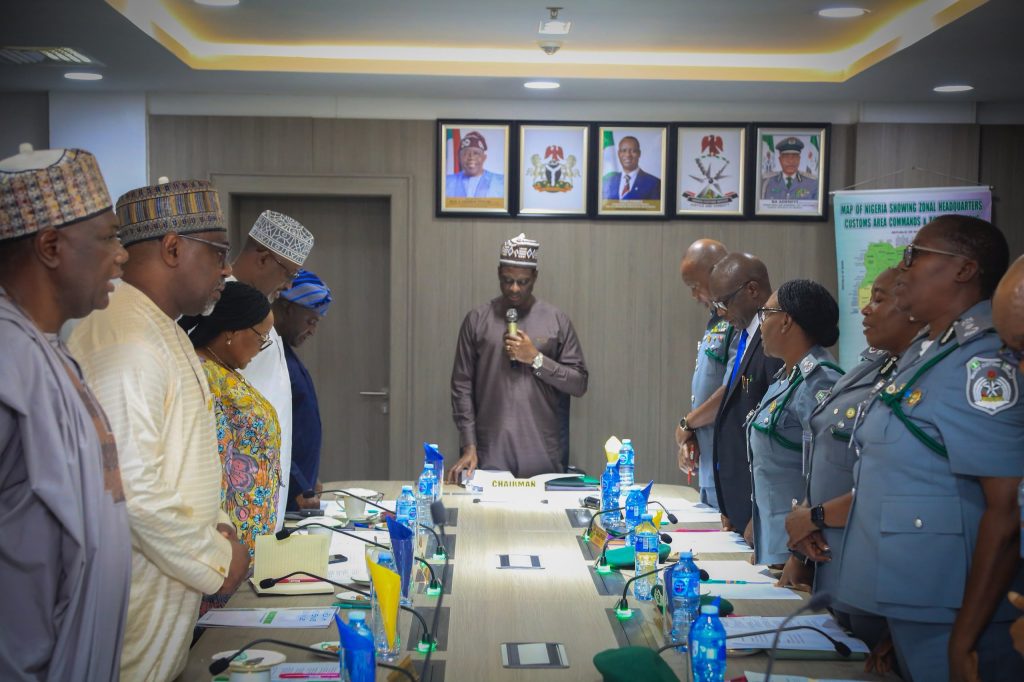
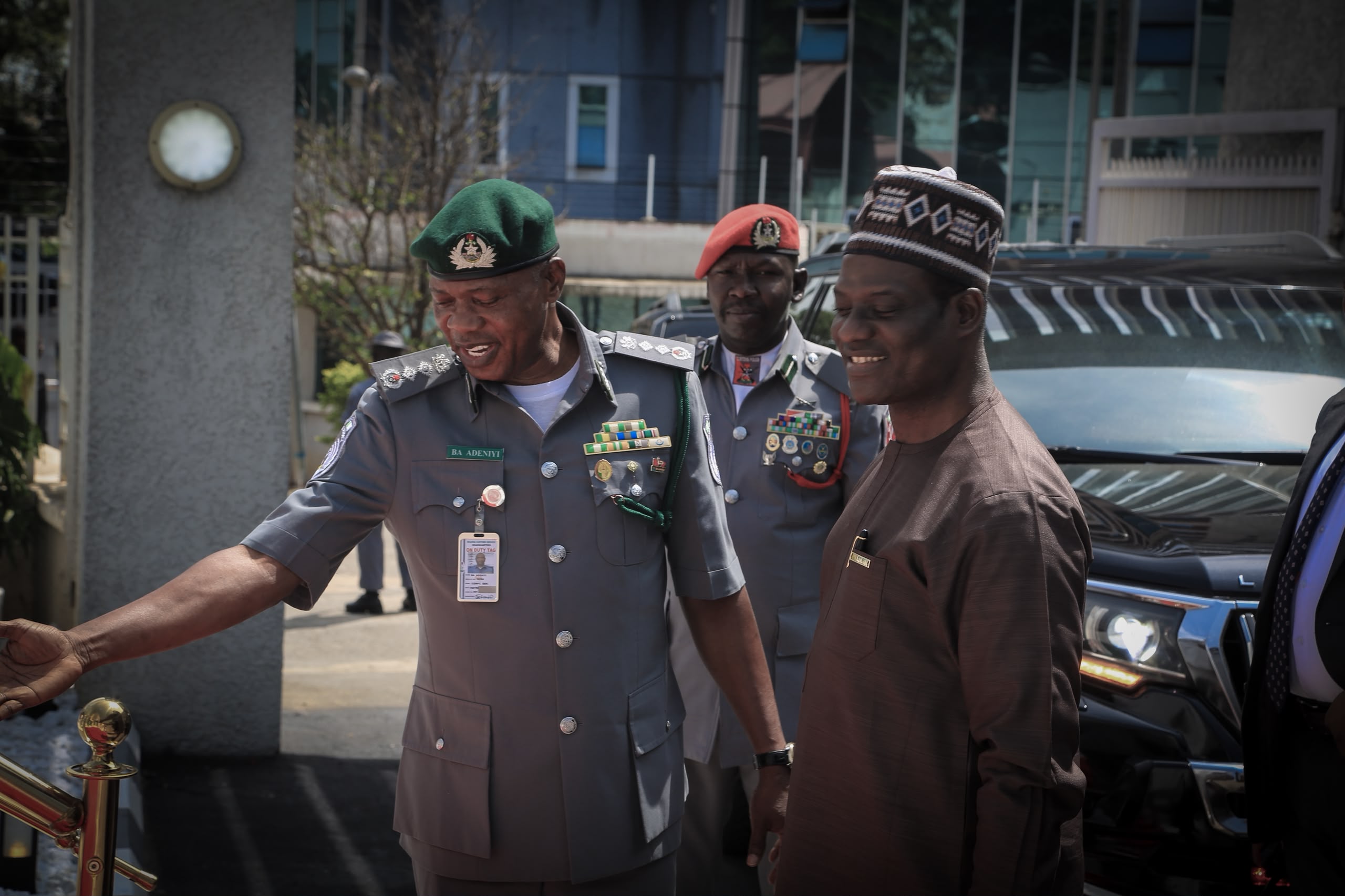
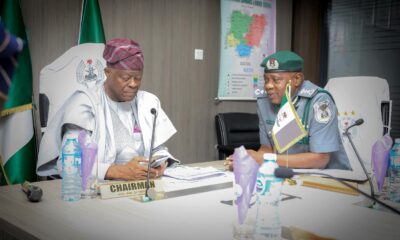
The September 2, 2026 meeting, chaired by the Minister of Finance and Coordinating Minister of the Economy, Professor Taiwo Oyedele, offered a revealing snapshot of an institution undergoing a gradual but consequential restructuring.
The decisions taken at the meeting touched virtually every critical nerve of modern customs administration, from leadership, revenue mobilisation, healthcare, recruitment, discipline, digitalisation, trade facilitation, border management and legislation.
Taken together, they point to a Nigeria Customs Service that is being repositioned from a predominantly revenue-collection and enforcement agency into a more technologically driven, professionally structured and trade-oriented border management institution.
This no doubt carries a formidable challenge. The Service has set itself an annual revenue target of ₦11.074 trillion for 2026. By the end of June, it had collected ₦4.30 trillion, representing 36.4 per cent of the annual target.
On the surface, the figure could be read simply as a revenue performance statistic. But within the broader reform agenda, it represents something more profound: the pressure on Customs to generate more revenue without undermining legitimate trade.
That delicate balance appears to be at the heart of the institutional changes now taking place.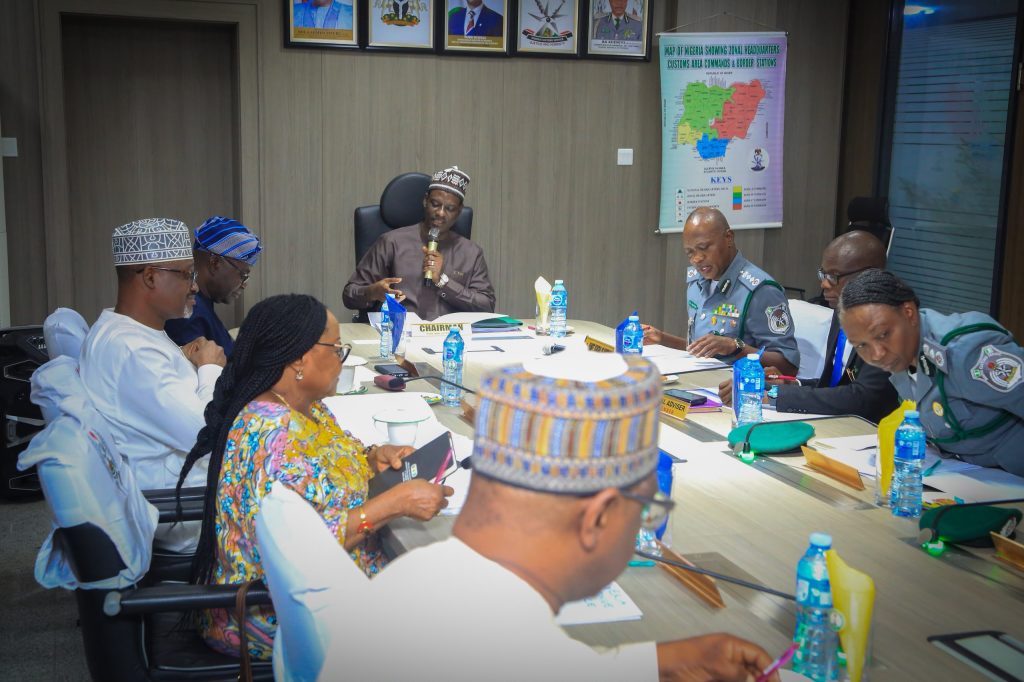
Thus, the confirmation of Constantine Dim as Deputy Comptroller-General, alongside Pascal Chibuoke, Sani Yahaya, Frank Onyeka, Chibuzor Eyakwaire and Ethelbert Nnaji as Assistant Comptrollers General, is significant beyond the individual careers involved.
According to official statement, the appointments were made in accordance with the Federal Character Policy as provided under Section 14(4) of the Nigeria Customs Service Act, 2023. But leadership changes in an organisation as geographically dispersed and operationally complex as Customs inevitably carry consequences for policy implementation.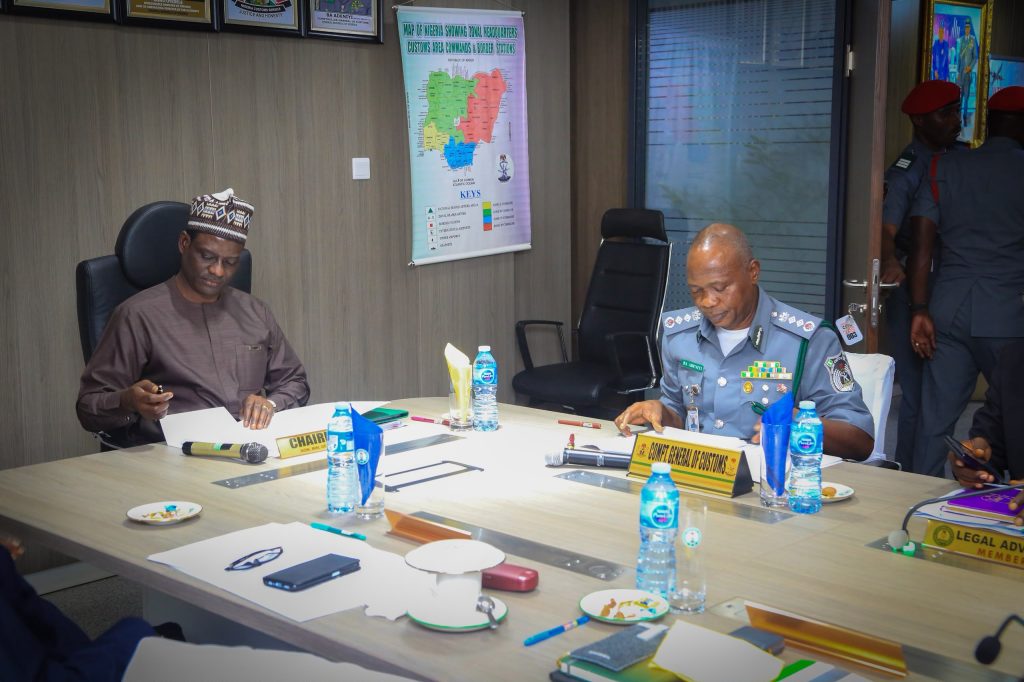
The emergence of a new layer of confirmed management therefore comes at a time when the Service is confronting a rapidly changing operating environment.
Customs administrations globally are moving increasingly towards data, automation, risk management, intelligence-led enforcement and seamless trade facilitation. Nigeria cannot afford to operate outside that trajectory.
The new management structure will consequently be expected to deliver more than administrative continuity. It will have to translate the Service’s reform programmes into measurable improvements in revenue, compliance, clearance efficiency and border security.

ACG Frank Onyeka, middle, being decorated by the CGC Adeniyi and another management chief
But of course, the development also directly speaks to the question of revenue. Thus, the most telling element of the Board’s deliberations was its review of the Service’s 2026 revenue performance.
With a target of ₦11.074 trillion and collections of ₦4.30 trillion by June, the Service had realised just over one-third of its annual expectation at the halfway point of the year.
That puts enormous importance on the second half of the year. But the more interesting question is not merely whether Customs can collect the balance, it is how the balance will be generated.
The answer increasingly appears to lie in technology and compliance rather than simply intensifying physical enforcement. The Board specifically noted the full deployment of the Unified Customs Management System, popularly known as B’Odogwu, alongside expanded post-clearance and real-time audit, the Authorised Economic Operator programme and advance ruling initiatives.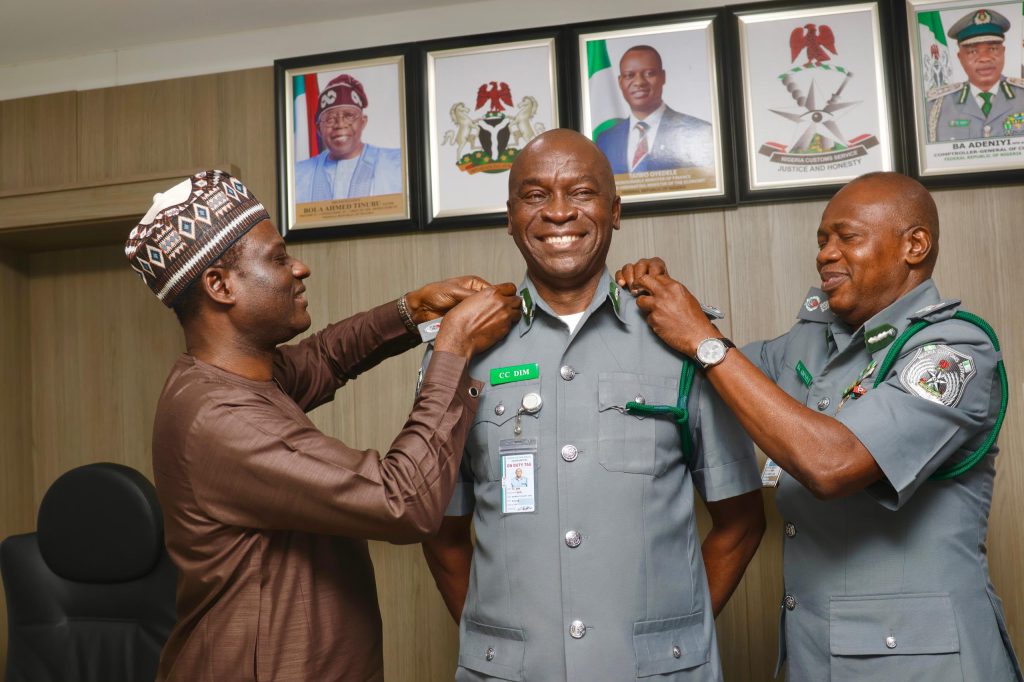
These are important because they represent a shift from traditional transaction-by-transaction intervention towards a system in which compliant traders can be facilitated while Customs concentrates its enforcement resources on areas of higher risk.
That is the essence of modern customs administration. B’Odogwu and the changing Customs equation. The full deployment of B’Odogwu could ultimately prove to be one of the most consequential components of the Service’s reform programme.
For years, inefficiencies associated with fragmented processes, manual interventions and multiple points of contact have complicated the relationship between Customs and the trading community.
It is instructive that digitisation offers an opportunity to change that equation. A more integrated customs management platform can potentially improve transaction visibility, reduce human interface, strengthen data analysis and make it easier to identify anomalies.
But technology alone does not guarantee reform. Logically, the real test will be whether digitalisation translates into faster clearance for compliant cargo, better revenue assurance, reduced leakage and a more predictable operating environment for importers and exporters.
In that sense, B’Odogwu’s success should eventually be measured not merely by its deployment, but by the quality of the customs experience it creates.
To achieve its broad-based mandate, the Service is also transiting rapidly from seizure culture to intelligence-led enforcement. This was another important element of the Board’s review, emphasis on post-clearance and real-time audit, geospatial technology and joint border patrols. This suggests a Customs Service attempting to expand its enforcement toolkit beyond physical examination and interception.
Post-clearance audit is particularly significant because it allows Customs to examine transactions after cargo has left the port, thereby reducing the pressure to subject every consignment to intrusive checks at the point of entry.
The principle is straightforward: facilitate the compliant and investigate the suspicious. Perhaps this is the baseline of the CGC Bashir Adewale Adeniyi’s administration.
Advance rulings and the Authorised Economic Operator programme reinforce this philosophy by giving compliant businesses greater certainty while enabling Customs to deploy its resources more strategically.
For a country seeking to improve its ease of doing business, this distinction matters. The objective therefore should not a customs environment where everybody is treated according to his predisposition for compliance or otherwise. It should be an atmosphere where risk is identified intelligently and legitimate commerce moves with minimal friction.
Away from the headline appointments, one of the quieter but potentially significant decisions of the Board was the approval of the upgrade of the NCS Medical Corps to a Sub-department headed by an Assistant Comptroller-General, supported by nine Comptrollers.
At first glance, the decision may appear peripheral to the Service’s revenue mandate; but it is not. Customs is a highly operational organisation with officers deployed across seaports, airports, land borders, warehouses, terminals, patrol formations and other difficult environments.
An institution that expects its personnel to operate effectively must also have an organised welfare and occupational health structure.
The elevation of the Medical Corps therefore represents an institutional investment in the human capital required to sustain Customs operations.
It also demonstrates that the Board’s current reform agenda is not entirely about revenue. It is equally about building the internal structures necessary to sustain a modern Service.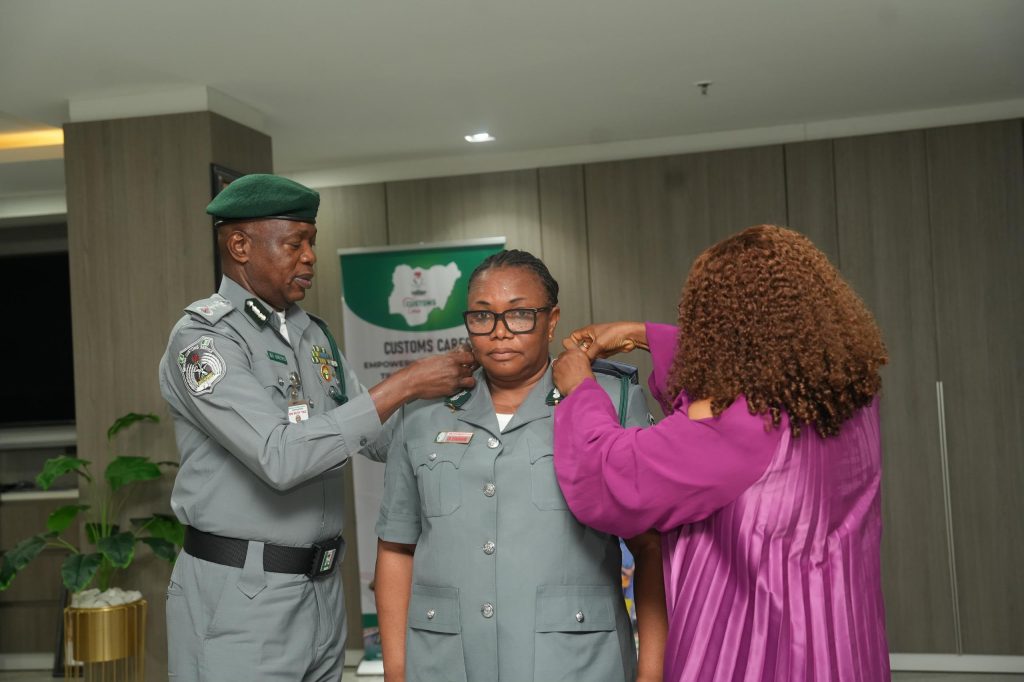
The meeting also assessed recruitment, designed preparing for succession planning. The ongoing recruitment exercise, with successful candidates scheduled for documentation, physical and medical screening from September 7, adds another dimension to the restructuring.
Recruitment into Customs is not simply about filling vacancies. It is about determining the profile of the next generation of officers who will operate an increasingly digital and intelligence-driven institution.
The Customs officer of the future will require a different combination of skills from the traditional enforcement officer.
Beyond knowledge of customs procedures, officers will increasingly need competence in technology, data interpretation, intelligence gathering, risk management and international trade processes.
The success of the recruitment exercise will therefore depend not only on numbers but also on the quality and suitability of those being admitted into the Service.
This takes us to the issues of discipline and institutional credibility. The Board’s consideration of disciplinary appeals is another element that deserves attention.
The outcomes ranging from dismissal and compulsory retirement to warning, exoneration and reinstatement underscores the fact that institutional reform must also involve accountability.
For an organisation vested with extensive regulatory, enforcement and revenue-collection powers, internal discipline is inseparable from public confidence. A modern Customs Service cannot demand compliance from the trading community while tolerating indiscipline within its own ranks. Looked at more clinically, the credibility of enforcement depends substantially on the credibility of the enforcers.
There was also the issue of De-Minimis question. The Board’s approval of the Nigeria Customs Service De-Minimis Regulation, 2025, to align it with the provisions of the Nigeria Customs Service Act, 2023, is another potentially important development for trade.
De-minimis arrangements are particularly relevant to low-value consignments and the growing world of e-commerce. As cross-border digital commerce expands, customs administrations are increasingly required to develop simpler procedures for small-value shipments without compromising revenue protection or border security.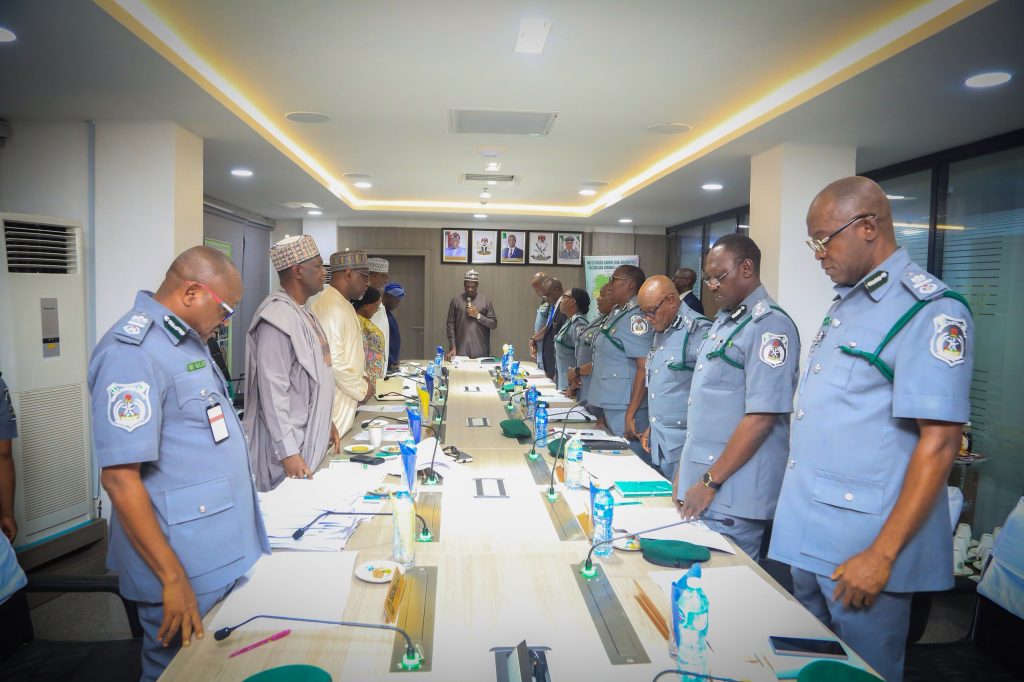
The decision to align the regulation with the 2023 Act therefore fits into the larger effort to modernise Customs procedures and bring them in line with contemporary trading realities.
Perhaps the most forward-looking element of the Board meeting was the update on the invitation from the Federal Ministry of Finance for memoranda proposing amendments to the Nigeria Customs Service Act for possible inclusion in the 2027 Finance Bill.
This could become a major opportunity. The 2023 Act fundamentally changed the statutory framework of the Service. But customs administration is evolving rapidly, and legislation must remain capable of responding to new technologies, new trading models, new enforcement threats and changing international standards.
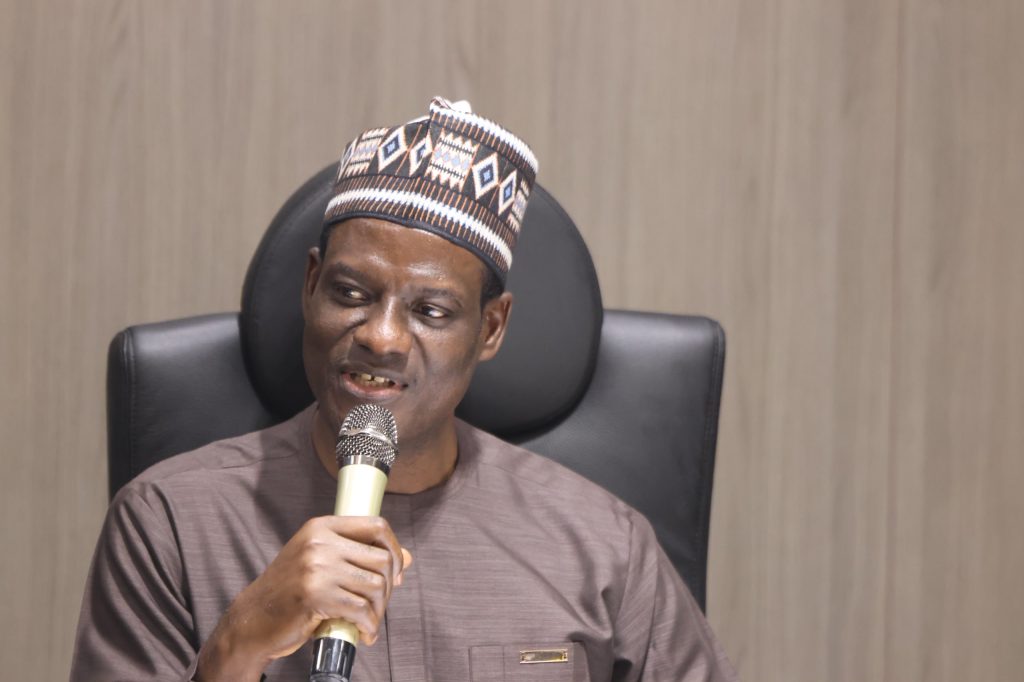
Prof. Oyedele speaking during the meeting
The coming amendment process therefore deserves close attention from stakeholders. Importers, exporters, customs brokers, manufacturers, logistics operators, shipping interests and other members of the trading community have an opportunity to put forward practical proposals based on their experience of the current system.
If properly handled, the process could produce a stronger legal framework that balances revenue, security and trade facilitation.
Let us also take a quick look at a Customs Service in transition. The 65th Regular Meeting of the NCS Board is therefore more significant than the appointment figures initially suggest.
All things considered, perhaps the real story is the convergence of the several reforms, beginning with the new layer of confirmed management.
There is a strengthened medical structure, there is a fresh recruitment process, there is an ongoing disciplinary framework, full deployment of B’Odogwu, and expanded audit mechanisms.
There are programmes designed to reward compliant traders. There is greater use of geospatial technology and joint border operations. There is a new regulatory framework for de-minimis transactions. And there is the prospect of further amendments to the governing Customs legislation.
All these developments are occurring against the backdrop of an ambitious ₦11.074 trillion revenue target. That target will test the Service’s ability to combine revenue mobilisation with trade facilitation and enforcement.
The danger would be to interpret revenue success purely through the volume of money collected. The more sustainable measure is whether Customs can increase collections while simultaneously reducing clearance friction, improving compliance, plugging leakage and making legitimate Nigerian trade more competitive. That is the real test of the reform agenda.
With all of the above, one can anticipate the road ahead with clarity. The Nigeria Customs Service has entered an era in which its success can no longer be measured solely by seizures or revenue figures.
The modern customs institution is judged by how effectively it manages the border, protects society, facilitates legitimate commerce, deploys technology, manages risk and collects the revenue legitimately due to government.
The decisions of the NCSB at its 65th Regular Meeting suggest that the Service is moving in that direction.
But implementation will determine the outcome. The ₦4.30 trillion collected by June provides a substantial foundation, but the remaining distance to the ₦11.074 trillion target is considerable.
The new management team will therefore inherit not just offices and ranks, but a demanding institutional assignment. They must help transform technology into efficiency, enforcement into intelligence, recruitment into professionalism, regulation into predictability and revenue mobilisation into a more sustainable economic contribution.
Ultimately, the most important outcome of the Board’s decisions will not be how many officers were promoted. It will be whether, at the end of the reform journey, Nigeria has a Customs Service that is more efficient for legitimate traders, tougher on economic crime, more accountable to the public and stronger as a revenue institution.
That is the larger story behind the 65th meeting.









Nnadi Urges Nigerian Importers to Shift from Finished Goods to Manufacturing

WMD: Oyetola Recommit to Unlock CVFF Pursuant to Indigenous Operators Financing

Customs FOU Zone ‘A’ Hands Over Seized ₦511.4m Pharmaceuticals, Illicit Drugs to NDLEA, NAFDAC

Oyetola Unveils NPERA, Corporate Logo Amid Quiet Enthusiasm

Nigeria, Benin Urged to Deploy Culture and Traditional Diplomacy to Defuse Border Tensions

Nigeria’s Ports: How Foreign Capital Took the Dinner, While Indigenous Businesses Got the Crumbs (3)

FOU Zone A, Police, Army, DSS, Others Strengthen Security Alliance Ahead of Elections

Nigeria’s Ports: How Foreign Capital Took the Dinner, While Indigenous Businesses Got the Crumbs (2)

Former Senatorial Candidate, Hajia Nike AbdulRahman Dumps NDC, Defects to APC

Nigeria’s Ports: How Foreign Capital Took the Dinner, While Indigenous Businesses Got the Crumbs

How Anani’s Tin Can Command Intercepted a ₦3.6 Billion Illicit Drug Shipment

Ibrahim, Ogun 1 Customs New Sheriff Unveils Strength Beneath His Quiet Mien

ANLCA Board is intact, cannot be wished away by anybody’-Elochukwu

B-R-E-A-K-I-N-G: Effedua, Rector MAN Oron, Resigns

EFCC’s Probe: Okowa Plots Sheriff’s Removal Despite London Accord
Customs Trains ANLCA Members, Others on B’Odogwu Portal

NPA’s Alleged Executive Management Fight: The Half Truth & Truth
ANLCA Board Election: Know Your Candidates
‘Why We Launched B-Odogwu Pilot Scheme With Webb Fontaine Still Running’ – Adeniyi

Onyemekara Promoted GM, Appointed NPA’s New Spokesperson

Nigeria Customs: Trust, Competence And The Oramalugo Factor

‘Rush To Break News Can Lead To Brush With Cybercrime’- Police

Kebbi Is Hub of Hard Drugs Smuggling In Northern Region’ – Oramalugo

Onyeka Makes History As Tin-Can Customs Hit ₦16.4bn A Day