
Business Focus
SEREC Urges National Framework on Empty Container Disposal Amid Corporate Dispute

BY GBOGBOWA GBOWA
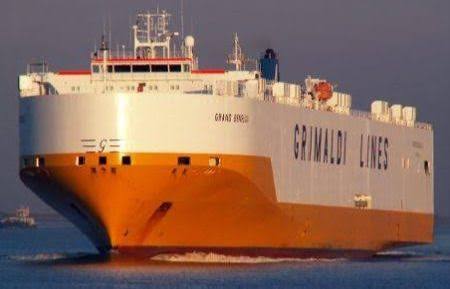
The Sea Empowerment and Research Center (SEREC) has weighed in on the ongoing corporate spat between the Principal Consultant, International Trade Advisory Services, Mr. Okey IBEKE and Grimaldi Agency Nigeria, using the controversy as a springboard to call for urgent reforms in Nigeria’s port and shipping ecosystem.
In a statement signed by its Head of Research, Fwdr. Eugene Nweke, SEREC emphasized that while it is not positioned to determine liability in any specific transaction, the dispute highlights systemic gaps in the management of empty shipping containers operating under temporary importation arrangements.
“This development presents a timely opportunity to draw national attention to the urgent need for a transparent and harmonized framework governing the management, disposal, conversion, tracking, and accountability of empty containers in Nigeria,” the statement read.
Key Concerns Raised by SEREC
SEREC outlined several long-standing issues that have plagued Nigeria’s ports and logistics sector:
Absence of national policy on empty container disposal.
Weak reconciliation mechanisms for temporarily imported containers.
Revenue leakages due to unaccounted container conversions.
Escalating costs for importers and freight forwarders.
Port congestion caused by container accumulation.
Environmental concerns linked to indiscriminate storage across urban areas.
Call to Action
SEREC urged the Nigeria Customs Service (NCS), Nigerian Ports Authority (NPA), Nigerian Shippers’ Council (NSC), and the Federal Ministry of Marine and Blue Economy to collaborate on a comprehensive regulatory framework that would:
Provide clear guidelines for container conversion and disposal.
Strengthen tracking and accountability mechanisms.
Eliminate ambiguities around duties, taxes, and statutory obligations.
Promote transparency in ownership transfers and disposal processes.
Safeguard government revenue while supporting trade facilitation.
The organization also recommended a comprehensive audit of container inventory, movements, and disposal practices across shipping companies as part of broader port sector reforms and the National Single Window initiative.
Broader Implications
SEREC stressed that the objective should go beyond resolving the isolated Ibeke–Grimaldi controversy. Instead, Nigeria must establish a sustainable regulatory regime that balances trade facilitation, revenue protection, operational efficiency, environmental responsibility, and national economic interest.









Oshoba at 60: A Life of Service, a Port Legacy and the Joy of Thanksgiving

Nigeria Customs Commission Rehabilitated Modakeke Healthcare Centre

Lagos-Calabar Highway: Whose Investments, Livelihoods and Coastal Communities Count? (3)

Again, Customs FOU Zone ‘A’ Rescues Five Live Pangolins in Ogun State
Lagos-Calabar Highway: When a Presidential Legacy Project Collides with Accountability (2)
Lagos-Calabar Highway: Did Nigeria Pay the Price for Inadequate Planning?

ANLCA Airport Crisis: Police Raid Raises Questions Over IGP’s Respect For Court Orders

‘We Arrested Several Vessels Violating Cabotage Trade’ – NIMASA

Customs CGC Says ‘The World Is Connected, Not Borderless’

Nigeria Customs Mulls Reviews of Complaints Arising from Recruitment

Edo-Delta Journalists Forum Challenges Political Leaders on Regional Development

Nnadi Urges Nigerian Importers to Shift from Finished Goods to Manufacturing

ANLCA Board is intact, cannot be wished away by anybody’-Elochukwu

B-R-E-A-K-I-N-G: Effedua, Rector MAN Oron, Resigns

EFCC’s Probe: Okowa Plots Sheriff’s Removal Despite London Accord

Customs Trains ANLCA Members, Others on B’Odogwu Portal

NPA’s Alleged Executive Management Fight: The Half Truth & Truth

ANLCA Board Election: Know Your Candidates
‘Why We Launched B-Odogwu Pilot Scheme With Webb Fontaine Still Running’ – Adeniyi

Onyeka Makes History As Tin-Can Customs Hit ₦16.4bn A Day

Onyemekara Promoted GM, Appointed NPA’s New Spokesperson

Nigeria Customs: Trust, Competence And The Oramalugo Factor

Apapa Customs Collects ₦161b On B’Odogwu Platform In 3 Weeks

‘Rush To Break News Can Lead To Brush With Cybercrime’- Police