Customs Report
Transire Suspension: Customs Faces Industry Pushback as Ibeke Demands Free Zone Performance Audit


BY EGUONO ODJEGBA
The Nigeria Customs Service’s suspension of further transire processing for bonded terminals, warehouses and Free Trade Zones with unresolved transactions has opened a fresh debate in the maritime industry, with stakeholders divided between the imperative of tighter Customs control and fears of unintended consequences for legitimate trade.
While some operators and freight-forwarding interests have cautioned against prolonged restrictions because of the potential impact on cargo movement, demurrage and supply-chain costs, Principal Consultant, International Trade Advisory Services Ltd, Okey Ibeke, has thrown his weight behind the Customs intervention, arguing that the development offers an opportunity to examine a much larger question: what economic value is Nigeria actually deriving from its Free Zone and bonded-facility regime?
Ibeke, who spoke to maritime journalists in Lagos, described the Customs action as a necessary enforcement intervention, insisting that facilities benefiting from extensive fiscal and Customs concessions should be able to demonstrate that they are delivering the production, export, employment and investment outcomes for which the incentives were created.
The Customs directive followed an ongoing verification and reconciliation exercise by the Comptroller-General of Customs Special Task Force on Transires. Affected facilities with outstanding transactions are required to reconcile their positions before processing, initiating or obtaining approval for fresh transire applications.
The measure has, however, generated concerns among freight-forwarding interests over the possibility that a prolonged suspension could obstruct legitimate cargo movement and increase the financial burden on importers.
National President of the Africa Association of Professional Freight Forwarders and Logistics of Nigeria (APFFLON), Otunba Frank Ogunjemite, backed the reconciliation exercise and the need for accountability, but urged Customs to ensure that the process remained transparent, time-bound and concluded without unnecessary disruption to legitimate businesses.
According to Ogunjemite, discrepancies established during the exercise should be addressed and those responsible held accountable, but compliant operators should not be subjected to indefinite operational restrictions.
His concern is that prolonged restrictions could produce a chain reaction of cargo delays, storage charges and demurrage, with the additional costs eventually passed down to businesses and consumers.
But Ibeke’s intervention takes the debate beyond the immediate question of whether affected facilities should continue enjoying transire privileges.
For him, the more fundamental issue is whether Nigeria’s Free Zone architecture is producing the economic results promised when the scheme was established.
“We need to ask a very simple question: what exactly are many of these Free Trade Zones producing, and where are the exports?” Ibeke asked.
He noted that the Free Zone policy was designed to attract investment, promote export-oriented manufacturing, create employment, increase foreign exchange earnings and encourage technology and skills transfer.
Yet, he argued, that the possession of a Free Zone licence should not automatically be regarded as proof that those objectives are being achieved.
Ibeke wants the authorities to publish a comprehensive performance scorecard showing the actual status of enterprises operating within the zones, their production output, export volumes and destinations, domestic sales, Customs obligations and employment figures.
The figures already published by the Nigeria Export Processing Zones Authority (NEPZA), he noted, raise questions that deserve closer scrutiny.
NEPZA lists more than 40 Free Zones and over 580 enterprises, alongside claims of more than $30 billion in foreign investment and over 25,000 jobs. But earlier performance data cited by Ibeke showed a substantial gap between registered enterprises and those actually operational, with 244 listed as operational, 30 under construction and 307 yet to commence operations.
For Ibeke, the discrepancy reinforces the need to move away from broad aggregate claims towards verifiable enterprise-level performance.
“Government should be able to disaggregate those figures. We should know which enterprises are operational, which are manufacturing, which are exporting and which are merely registered,” he said.
The trade expert also raised a fundamental concern over the possibility of Free Zones being used primarily as warehousing and trading platforms rather than as engines of manufacturing and exports.
He stressed that Free Zone status does not amount to unrestricted access to Nigeria’s domestic market and that the regime was never designed to provide a back door for the movement of finished goods into the country without appropriate Customs treatment.
Speaking on affected bonded terminals and warehouses, Ibeke explained that transire facilitates the movement of cargo from one Customs-controlled location to another; it does not amount to an unrestricted release of cargo from Customs control.
Where outstanding transactions cannot be satisfactorily reconciled, he argued, Customs has a legitimate basis for demanding accountability before allowing additional duty-suspended cargo to move under the facility’s control.
He identified cargo diversion, false declarations, under-valuation or under-declaration, manipulation of quantities and unauthorised release of duty-suspended goods into the domestic market as potential vulnerabilities in a weakly controlled transire system.
He was, however, careful to distinguish system vulnerability from allegations against individual operators, stressing that the existence of such risks does not mean every bonded terminal or Free Zone operator is engaged in wrongdoing.
“The point is that the system must be strong enough to prevent abuse and detect it when it occurs,” he said.
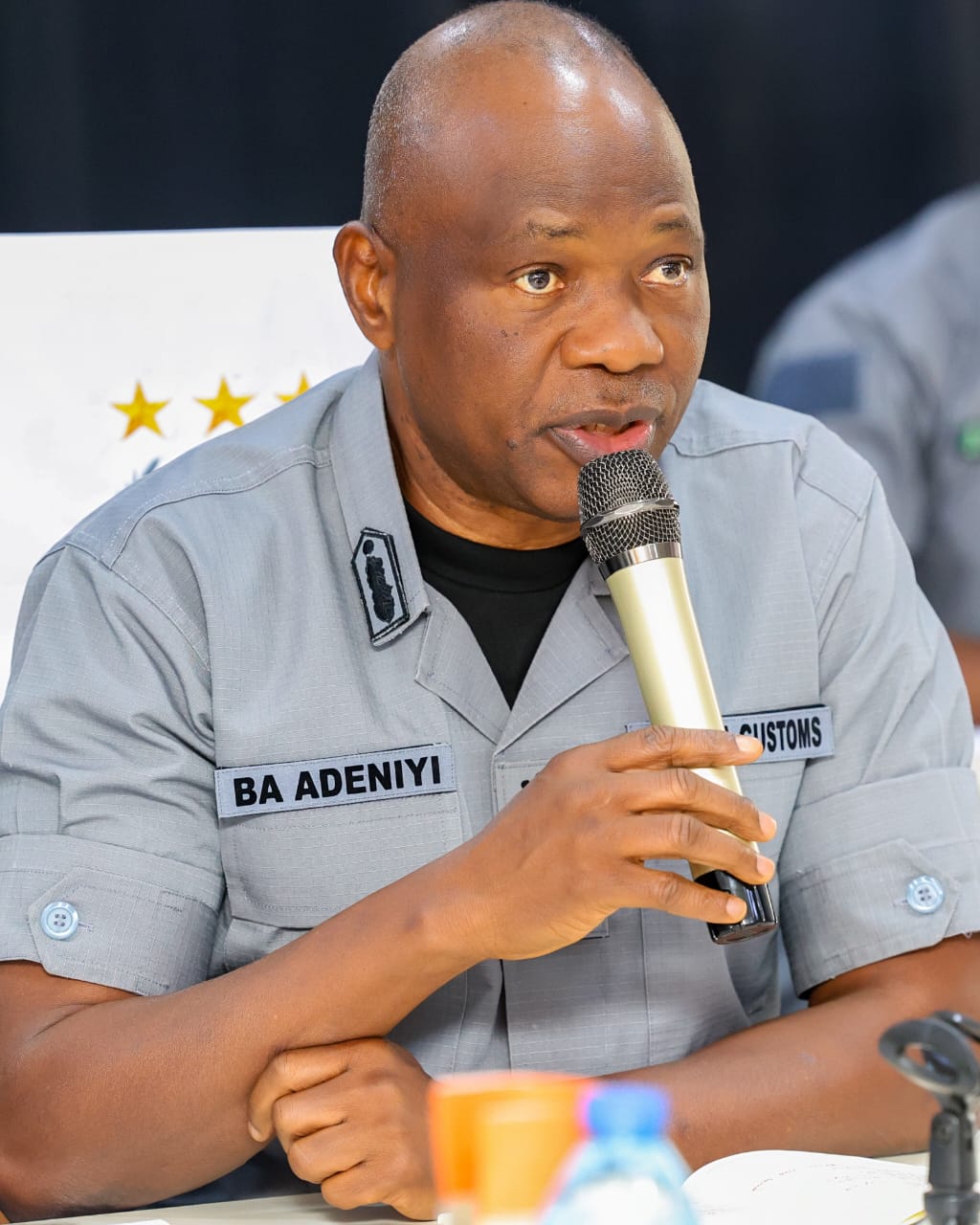
Ibeke commended Comptroller-General of Customs, Adewale Adeniyi, and the Service for insisting on reconciliation before affected facilities receive further transire privileges.
He also supported the reported restriction of local waivers or exceptional approvals while outstanding transactions remain unresolved, arguing that such measures could strengthen the integrity of the enforcement process.
But he equally cautioned Customs against allowing the exercise to become an open-ended disruption of legitimate business.
“Legitimate operators should not be held down indefinitely. Once a facility has satisfactorily reconciled its transactions, its operations should be restored,” he said.
This is where his position converges with that of Ogunjemite. Both stakeholders support the principle of reconciliation and accountability. Their difference is largely over the emphasis and potential consequences of the enforcement process.
While Ibeke sees the suspension as an opportunity to undertake a deeper audit of the Free Zone and bonded-warehouse ecosystem, Ogunjemite is focused more immediately on ensuring that the enforcement does not become another bottleneck in an already cost-sensitive supply chain.
Ogunjemite has urged Customs to maintain regular communication with affected bonded warehouses, terminal operators, Free Trade Zones and licensed Customs agents throughout the exercise.
He warned that delays could translate into higher storage charges and demurrage, disrupt cargo movement and impose additional costs on businesses.
For Ibeke, however, the controversy should not obscure the central issue of accountability. He called for stronger digital tracking of containers, regular reconciliation of transire movements and deeper integration of Customs records with bonded-terminal and Free Zone inventory systems.
More importantly, he wants the present Customs intervention to trigger a comprehensive review of the Free Zone regime itself. Frank and straightforward, the maritime business expert argues that for any enterprise that wish to enjoy duty-free treatment and other government incentives, Nigerians should be able to measure its economic returns.
“We should see the factories, the products, the export destinations, the value of exports and the jobs,” he said.
In that sense, the transire controversy has grown beyond a dispute over the movement of cargo. The issue has become a test of the balance between trade facilitation and enforcement, but also a broader examination of whether the institutional architecture created to facilitate investment and exports is actually delivering those outcomes.
While the Customs Service’s immediate task is to reconcile outstanding transactions and protect government revenue, the industry is concern is that the exercise must not unnecessarily immobilise legitimate cargo or inflate the cost of doing business.
But Ibeke’s intervention introduces a third dimension: that the present scrutiny should extend beyond transire records to the performance of the facilities themselves. The emerging industry debate, therefore, is no longer simply whether Customs should suspend transire processing.
It is whether the suspension can become the starting point for a more transparent, data-driven examination of Nigeria’s bonded-warehouse and Free Zone regime—one capable of separating genuine production and export platforms from facilities whose economic contribution remains difficult to establish.








Nigeria, Benin Urged to Deploy Culture and Traditional Diplomacy to Defuse Border Tensions

Nigeria’s Ports: How Foreign Capital Took the Dinner, While Indigenous Businesses Got the Crumbs (3)

FOU Zone A, Police, Army, DSS, Others Strengthen Security Alliance Ahead of Elections

Nigeria’s Ports: How Foreign Capital Took the Dinner, While Indigenous Businesses Got the Crumbs (2)

Former Senatorial Candidate, Hajia Nike AbdulRahman Dumps NDC, Defects to APC

Nigeria’s Ports: How Foreign Capital Took the Dinner, While Indigenous Businesses Got the Crumbs

How Anani’s Tin Can Command Intercepted a ₦3.6 Billion Illicit Drug Shipment

Ibrahim, Ogun 1 Customs New Sheriff Unveils Strength Beneath His Quiet Mien

Logistics Synergy: NPA Advances Integration of ICDs Under New Reform Agenda

Teamwork, Discipline, Central to Our Enforcement Mandate —Jonah Charges Customs Marine Operatives

How the UAE-Nigeria Partnership Can Transform Our Ports

Cross River, FTZ Customs Gets New Impulse

ANLCA Board is intact, cannot be wished away by anybody’-Elochukwu

B-R-E-A-K-I-N-G: Effedua, Rector MAN Oron, Resigns

EFCC’s Probe: Okowa Plots Sheriff’s Removal Despite London Accord
Customs Trains ANLCA Members, Others on B’Odogwu Portal

NPA’s Alleged Executive Management Fight: The Half Truth & Truth
ANLCA Board Election: Know Your Candidates
‘Why We Launched B-Odogwu Pilot Scheme With Webb Fontaine Still Running’ – Adeniyi

Onyemekara Promoted GM, Appointed NPA’s New Spokesperson

Nigeria Customs: Trust, Competence And The Oramalugo Factor

‘Rush To Break News Can Lead To Brush With Cybercrime’- Police

Kebbi Is Hub of Hard Drugs Smuggling In Northern Region’ – Oramalugo

Onyeka Makes History As Tin-Can Customs Hit ₦16.4bn A Day