
Uncategorized
Wasiu, Seme ANLCA Chairman Calls for Review of Vehicle Restriction


BY EGUONO ODJEGBA
The Chairman, Association of Nigerian Licensed Customs Agents (ANLCA), Seme Chapter, Alhaji Abioye Toyin Wasiu, has appealed to the Comptroller General of the Nigeria Customs Service (NCS), Bashir Adewale Adeniyi, MFR, to review and lift the restriction on the movement of vehicles through the Seme-Krake land border.
Wasiu made the appeal on behalf of traders, freight forwarders, customs agents and other stakeholders whose businesses depend substantially on legitimate trans-border commerce along the Nigeria-Benin corridor.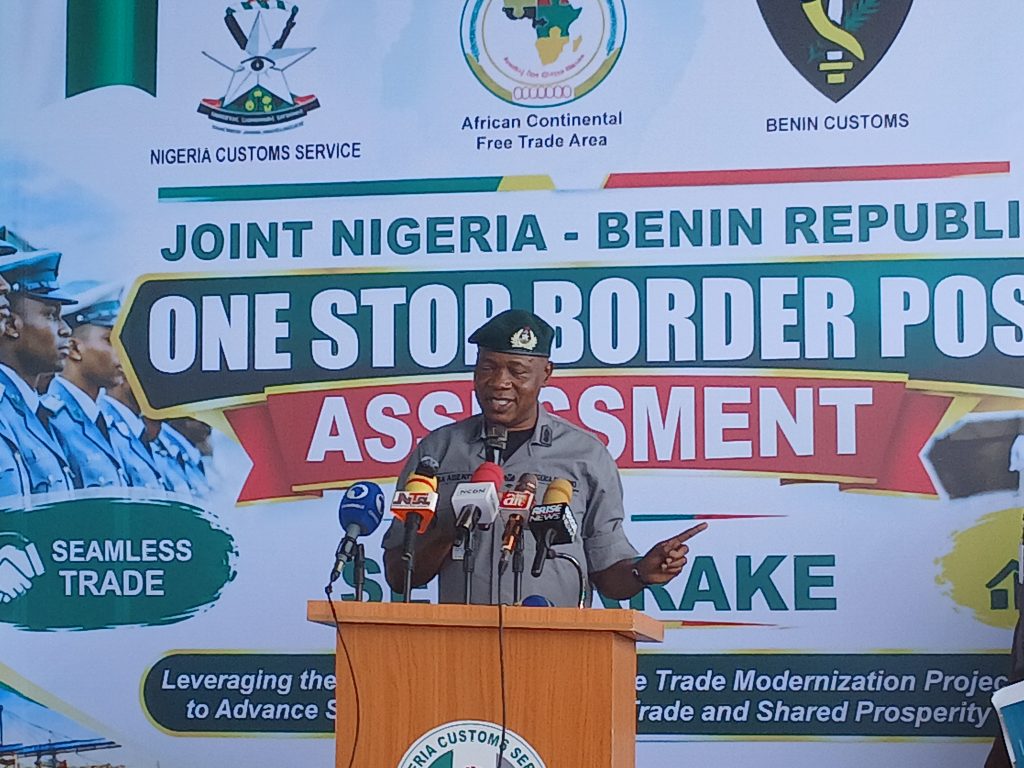
The appeal came against the backdrop of renewed efforts by Nigeria and Benin Republic to deepen economic integration and facilitate legitimate movement of goods and people through the Seme-Krake Joint Border Post.
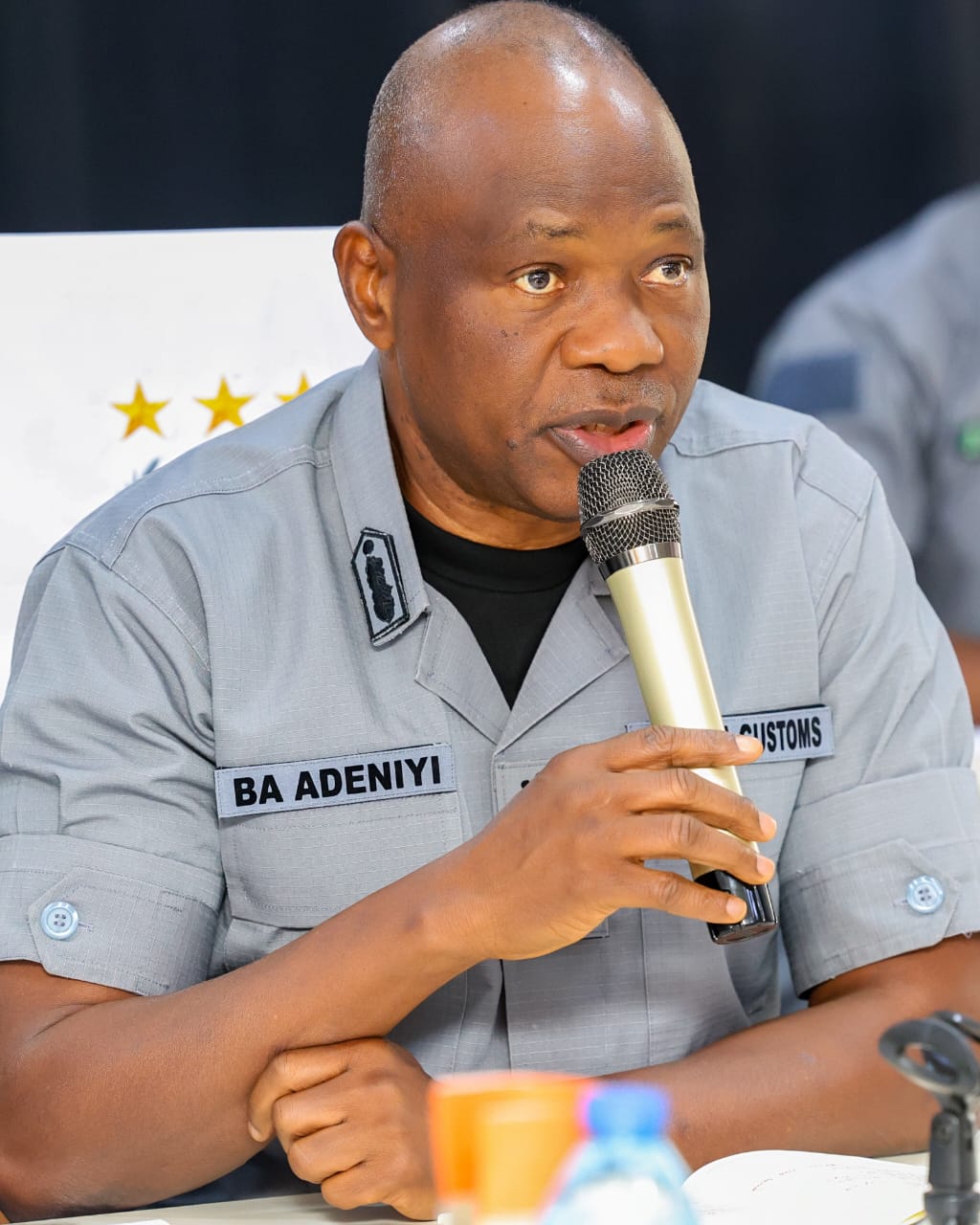
Responding to the appeal, Adeniyi said the possibility of removing the existing restrictions remained tied to the successful implementation of a functional interconnectivity system between the two countries’ Customs administrations.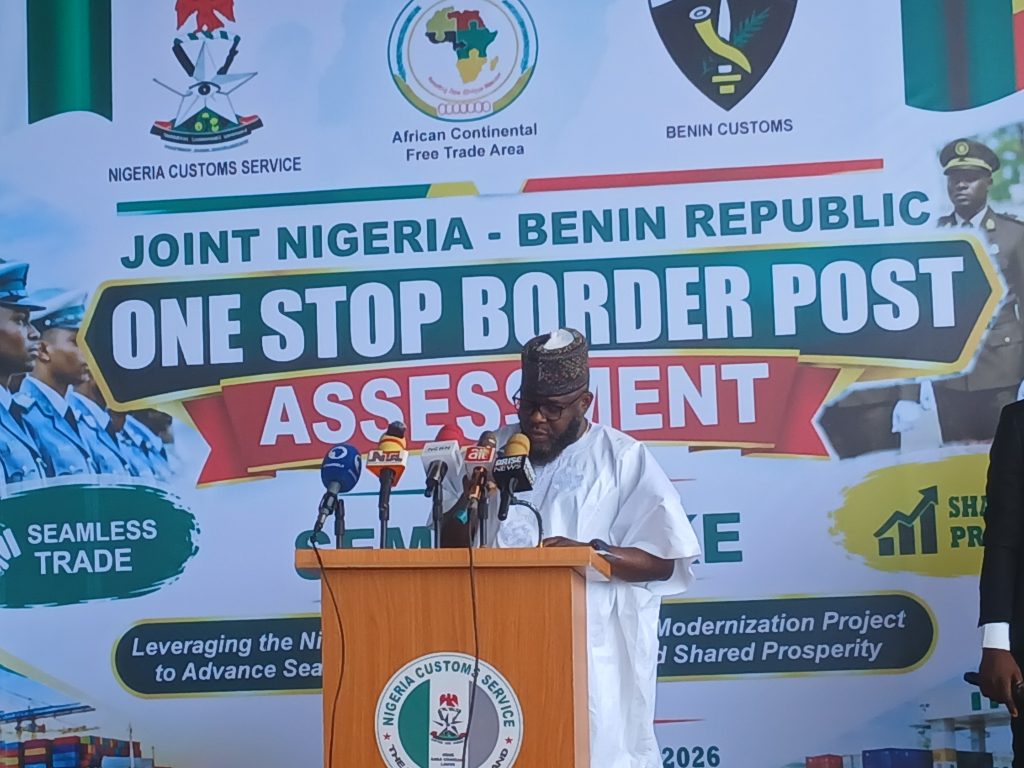
The CGC, who spoke on Friday, September 11, 2026, during the assessment and commissioning activities at the Joint Border Post, said the ultimate objective was not merely to remove restrictions on vehicles but to harmonise restrictions across the broader trade value chain once the required systems and confidence had been established.
“Like the ANLCA Chairman requested in his remarks, we are all here to achieve the process for seamless trade,” Adeniyi said.
According to him, if the interconnectivity scheme becomes fully operational, it would enable both countries to project the gains of the initiative and subsequently take steps towards harmonising existing trade restrictions.
His position effectively linked the clamour for the relaxation of vehicle restrictions to the larger question of whether Nigeria and Benin could establish sufficient confidence, information-sharing mechanisms and joint enforcement systems to prevent legitimate trade facilitation from becoming a conduit for smuggling and other trans-border offences.
Adeniyi stressed that trust built on compliance on both sides of the border would create mutual gains, facilitating the movement of goods and people while expanding neighbouring and regional commerce.
He challenged government agencies on both sides, particularly the two Customs administrations, to build the mutual trust required to support joint operations and actualise seamless assessment of cargo and movement across the border.
The CGC said the Seme-Krake crossing was fundamentally different from many other borders because Nigeria and Benin had historically operated as an interconnected economic space, with communities, families, markets and languages extending across the 809-kilometre border.
He noted that Nigeria remained Benin Republic’s largest trading partner, stressing that the objective was therefore not to create economic integration from scratch but to ensure that the integration already existing in practice was properly reflected in border procedures.
Adeniyi said the political commitment to deeper Nigeria-Benin economic integration had already been demonstrated repeatedly at the highest level by both countries.
He recalled that Presidents Bola Ahmed Tinubu and Patrice Talon had witnessed the signing of a Memorandum of Understanding in June last year committing both countries to deeper bilateral trade and fuller integration, with their Ministers subsequently instructed to implement the agreement.
He added that the framework developed in Cotonou in August identified Customs procedures and trade facilitation as one of its four major pillars, while the recent bilateral engagement between the two countries had further reinforced the commitment.
The challenge Adeniyi explained has moved beyond political declarations to technical implementation, noting that the Seme-Krake Joint Border Post had existed physically for years but that its full potential remained constrained by the absence of adequate technological interconnectivity between the two Customs administrations.
According to him, the facility, which was conceived under the ECOWAS Road Transport and Transit Facilitation Programme, began construction in 2011 and was financed by the European Union under the 10th European Development Fund for ECOWAS and UEMOA at a cost of about €18.29 million.
The 17-hectare facility was commissioned in October 2018, while Nigeria and Benin signed a bilateral agreement in 2022 towards its operationalisation.
Speaking further, Adeniyi observed that while the physical infrastructure had been provided, the systems required to make it genuinely joint were still being developed. He described the absence of seamless real-time exchange of declarations, manifests, transit information, risk profiles and enforcement alerts as a major gap.
The CGC explained that two administrations working under one roof without operating on an interconnected system could hardly constitute a truly joint border post. He said the NCS was therefore working with its Benin counterpart to close the systems gap through a common data exchange arrangement.
Under the proposed arrangement, a declaration lodged on one side would be visible to the other in real time, transit movements could be tracked from origin to destination, while risk profiles and enforcement alerts could be transmitted across the border while they remained operationally useful.
It was against this background that the CGC’s response to Wasiu’s appeal assumed wider significance. Rather than treating the vehicle restriction as an isolated Customs policy, Adeniyi’s remarks suggested that its review would form part of a broader process of rebuilding confidence in the Nigeria-Benin trade environment.
He said successful interconnectivity would help both administrations project the gains of the new arrangement and take further steps towards harmonising trade restrictions.
This, he explained, would include the development of joint risk management, coordinated enforcement, harmonised bilingual standard operating procedures and improved surveillance. He also called for restoration of scanning capability, stronger access control, lighting and surveillance, as well as a standing Nigeria-Benin enforcement and intelligence mechanism capable of coordinated patrols and rapid response.
For stakeholders at Seme, such measures could ultimately provide the institutional framework for a more predictable trading environment in which legitimate vehicle and cargo movements are facilitated without compromising national security and revenue interests.






ANLCA Airport Crisis: Police Raid Raises Questions Over IGP’s Respect For Court Orders

‘We Arrested Several Vessels Violating Cabotage Trade’ – NIMASA

Customs CGC Says ‘The World Is Connected, Not Borderless’

Nigeria Customs Mulls Reviews of Complaints Arising from Recruitment

Edo-Delta Journalists Forum Challenges Political Leaders on Regional Development

Nnadi Urges Nigerian Importers to Shift from Finished Goods to Manufacturing

WMD: Oyetola Recommit to Unlock CVFF Pursuant to Indigenous Operators Financing

Customs FOU Zone ‘A’ Hands Over Seized ₦511.4m Pharmaceuticals, Illicit Drugs to NDLEA, NAFDAC

Oyetola Unveils NPERA, Corporate Logo Amid Quiet Enthusiasm

Nigeria, Benin Urged to Deploy Culture and Traditional Diplomacy to Defuse Border Tensions

Nigeria’s Ports: How Foreign Capital Took the Dinner, While Indigenous Businesses Got the Crumbs (3)

FOU Zone A, Police, Army, DSS, Others Strengthen Security Alliance Ahead of Elections

ANLCA Board is intact, cannot be wished away by anybody’-Elochukwu

B-R-E-A-K-I-N-G: Effedua, Rector MAN Oron, Resigns

EFCC’s Probe: Okowa Plots Sheriff’s Removal Despite London Accord
Customs Trains ANLCA Members, Others on B’Odogwu Portal

NPA’s Alleged Executive Management Fight: The Half Truth & Truth
ANLCA Board Election: Know Your Candidates
‘Why We Launched B-Odogwu Pilot Scheme With Webb Fontaine Still Running’ – Adeniyi

Onyeka Makes History As Tin-Can Customs Hit ₦16.4bn A Day

Onyemekara Promoted GM, Appointed NPA’s New Spokesperson

Nigeria Customs: Trust, Competence And The Oramalugo Factor

Apapa Customs Collects ₦161b On B’Odogwu Platform In 3 Weeks

‘Rush To Break News Can Lead To Brush With Cybercrime’- Police