
Business Focus
‘₦1.45trn Lagos Ports Project Merely Exposed 20-Year Failure of Landlord Model’ – SEREC

WEEKEND BUSINESS MAGAZINE
Research centre faults Marine Ministry over infrastructure neglect, Lagos-centric policy, demands concession audit before further loan disbursement
BY GBOGBOWA GBOWA
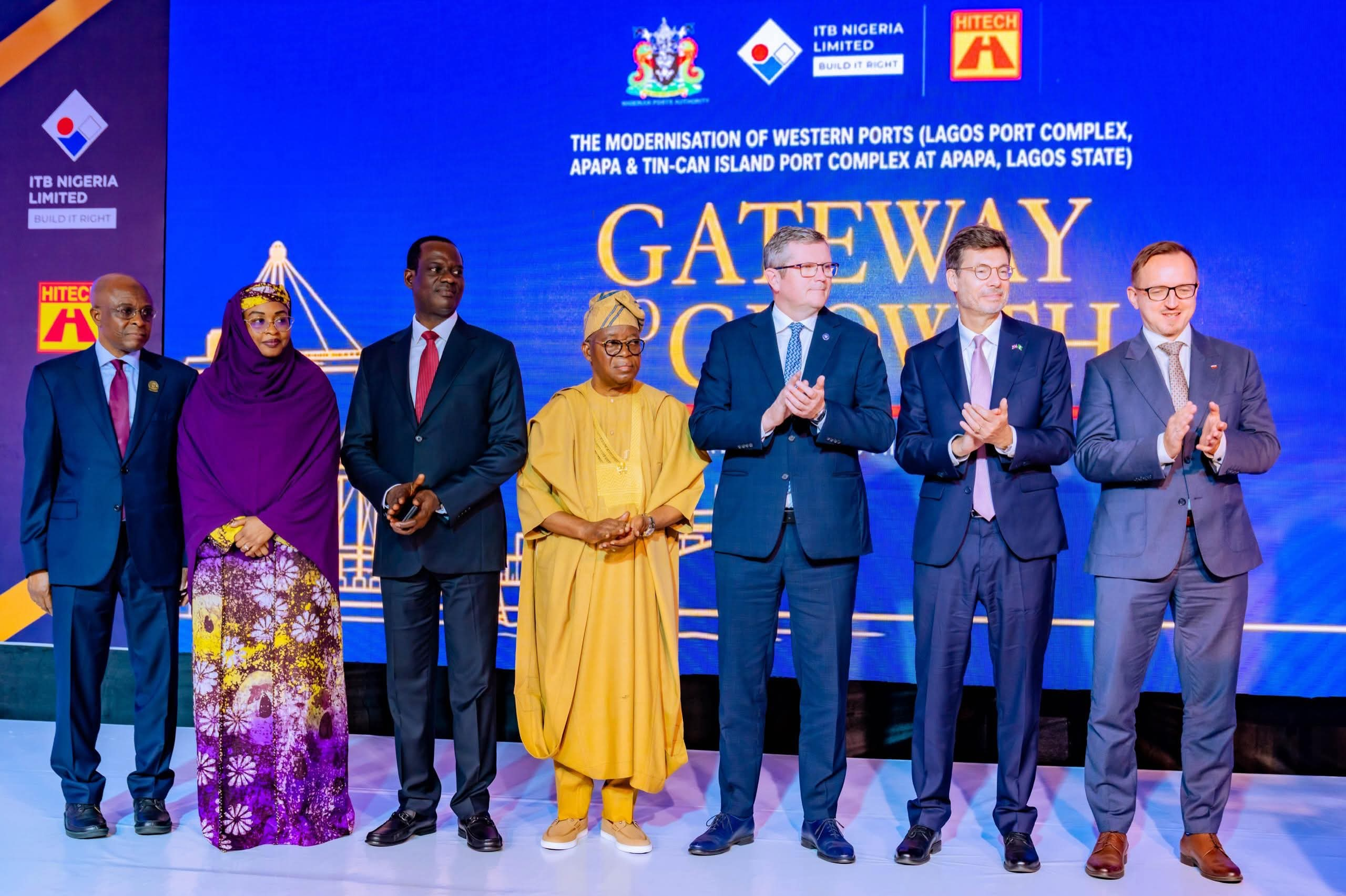
The Sea Empowerment and Research Center (SEREC) has accused the Federal Ministry of Marine and Blue Economy of presiding over an inadequate port development policy, declaring that the flag-off of the ₦1.45 trillion Lagos ports modernisation project merely exposed two decades of perceived failure by the Nigerian Ports Authority (NPA) to discharge its obligations under the landlord port model.
The maritime policy research organisation, in a strongly worded rejoinder to the Federal Government’s November 25 flag-off of the Apapa and Tin Can Island port modernisation project, questioned why Nigeria must borrow £746 million to rehabilitate infrastructure that should have been maintained through 20 years of concession revenue.
It described the project as an implicit admission that the landlord model, introduced in 2006, had failed in its fundamental obligation, insisting that the Ministry’s celebration of the investment was premature without an independent audit of the concession regime.
SEREC, however, clarified that it did not oppose port modernisation, but warned against what it termed ‘modernisation without memory, audit and accountability’.
The organisation’s position places the Ministry of Marine and Blue Economy at the centre of a growing policy accountability debate over the management of Nigeria’s maritime infrastructure, the financing of port development and the apparent absence of a comprehensive national port modernisation framework.
In its November 26 policy bulletin, signed by its Co-Founder and Head of Research, Fwdr. Eugene Ifeanyichukwu Nweke, SEREC argued that the Lagos project was not merely an infrastructure intervention but a verdict on the government’s handling of the landlord port model.
Ministry Under Scrutiny Over Landlord Obligations
At the heart of SEREC’s criticism is the apparent disconnect between the responsibilities assigned to the NPA under the 2006 port concession arrangement and the state of the country’s port infrastructure after two decades.
Under the landlord model, the organisation explained, concessionaires were expected to invest in terminal superstructures, including cargo-handling equipment, terminal yards, information technology and operational systems.
The NPA, as landlord, retained responsibility for the maintenance and development of core infrastructure, including quay walls, berths, dredging, navigation channels, access roads, utilities and marine services.
The regulator, meanwhile, was expected to ensure that both parties fulfilled their contractual obligations.
SEREC noted that the infrastructure component of the Lagos modernisation project falls squarely within the landlord’s responsibility, raising questions about why the government must now resort to sovereign borrowing to undertake what should have been a sustained obligation.
The organisation said the Ministry’s responsibility goes beyond flagging off projects to providing leadership, ensuring accountability and demonstrating that the country’s port development policies are producing measurable results.
It argued that the failure to establish a clear record of infrastructure investment and maintenance under the concession regime reflects a deeper institutional weakness that the Ministry must confront.
“Yesterday’s flag-off was not for terminal equipment. It was for quay walls, berths, dredging, channels, and access facilities,” SEREC stated, describing the project as a renewed public financing of the landlord’s own obligation.
The organisation further questioned what happened to the concession fees, lease rentals, throughput-based royalties, harbour dues, pilotage charges and other statutory revenues collected by the NPA over the past 20 years.
According to SEREC, the inability to demonstrate how these revenues were reinvested in port infrastructure raises serious questions about financial management and institutional accountability.
It argued that if the funds were collected but not reinvested, the landlord’s obligation was breached, while diversion of the funds to other purposes would point to policy and governance failures.
₦1.45trn Loan Raises Fiscal Concerns
The research centre also challenged the financing structure of the Lagos project, warning that the Federal Government was transferring the financial risk of port infrastructure development to Nigerian taxpayers.
The project, valued at approximately £746 million or ₦1.45 trillion, is being financed through an export credit arrangement involving Poland’s Export Credit Insurance Corporation, KUKE.
SEREC said the transaction, described by the government as Nigeria’s largest sovereign export credit transaction since 2009, should not be presented as private investment when the ultimate repayment obligation rests with the Nigerian state.
It expressed concern that the government was borrowing in pounds sterling to rehabilitate infrastructure whose users generate revenue in naira, at a time when the local currency remains under pressure.
The organisation demanded disclosure of the loan’s interest rate, tenor, moratorium, insurance premium, total repayment cost and repayment source.
It also questioned why the Port Development Fund or accumulated concession income could not have been used to finance the rehabilitation.
SEREC warned that without transparency over the financing terms, the project could become another example of public borrowing without adequate accountability.
The organisation insisted that no further major disbursement should proceed until the government publishes a comprehensive audit of the concession regime.
Ministry Accused of Lagos-Centric Port Policy
Beyond the financing concerns, SEREC accused the Ministry of perpetuating a Lagos-centric approach to port development, warning that the modernisation of Apapa and Tin Can Island without a binding programme for other ports would deepen existing regional imbalances.
The organisation noted that while the Lagos project has an identified cost, financier and flag-off date, the government has not publicly provided equivalent details for the modernisation of Onne, Rivers, Delta and Calabar ports.
It argued that the continued neglect of eastern ports, characterised by deteriorating quay walls, inadequate dredging and poor access roads, has contributed to the concentration of cargo in Lagos, worsening congestion and increasing the pressure for further investment in the same location.
SEREC said the Ministry’s reference to a wider national maritime transformation agenda would remain unconvincing until the government publishes a costed, financed and time-bound modernisation plan for the other ports.
The organisation also questioned the Ministry’s disclosure that Nigeria loses an estimated $4 billion annually to port inefficiencies, asking how much of the loss could be attributed to the underdevelopment of non-Lagos ports.
It argued that a national port policy must address the structural causes of congestion and inefficiency rather than concentrate investment on Lagos while leaving other ports underutilised.
No Audit, No Accountability
SEREC described the absence of a publicly available, comprehensive and independent audit of the 20-year concession regime as the most serious indictment of the system.
It said Nigerians had yet to receive a complete account of what concessionaires promised in their development plans, what they delivered annually, what the NPA committed to provide as landlord and how much concession revenue was collected and reinvested in infrastructure.
The organisation specifically called on the Infrastructure Concession Regulatory Commission (ICRC) and the NPA to publish the concession performance re-evaluation report for Apapa, Tin Can Island and other concessioned ports.
It argued that the failure to publish such an assessment before commencing a new multitrillion-naira project undermines public accountability and risks allowing past contractual breaches, policy failures or governance shortcomings to go unexamined.
According to SEREC, the Ministry must demonstrate that the new investment is informed by the lessons of the previous 20 years rather than simply repeating the cycle of project announcements and public expenditure.
Stakeholders Excluded from Continuity Plan
The organisation further faulted the composition of the Inter-Ministerial Committee announced by the Minister to develop a Port Business Continuity and Cargo Flow Management Plan.
SEREC said the committee, comprising the Ministry, NPA and the Nigerian Ports Economic Regulatory Agency (NPERA), excluded critical private-sector stakeholders who would bear the operational consequences of construction and cargo disruption.
It listed freight forwarders, shippers, manufacturers, truckers, terminal operators’ labour and research institutions among those whose participation was necessary to develop an effective continuity plan. The research centre described the exclusion as a continuation of a pattern in which government makes decisions for the maritime industry without adequately involving those directly affected.
It urged the Ministry to broaden the committee’s representation, arguing that port modernisation cannot be successfully implemented without the participation of cargo owners, transport operators and other industry stakeholders.
Demands Five-Point Policy Reset
To address what it described as the shortcomings of the port concession regime, SEREC demanded the immediate publication of the 20-year concession performance audit, full disclosure of the Lagos project financing terms and the publication, within 90 days, of a binding modernisation plan for Onne, Rivers, Delta and Calabar ports.
It also called for the inclusion of organised private-sector stakeholders in the Port Business Continuity Committee and the establishment of a dedicated Port Infrastructure Development Fund into which all future concession revenues would be paid.
The proposed fund, it said, should be ring-fenced for port infrastructure development, subject to annual audits and public disclosure.
SEREC maintained that the 2006 concession policy did not fail because private-sector participation was inherently wrong, but because the landlord failed to discharge its responsibilities and the regulator failed to enforce contractual obligations.
The organisation urged the Federal Government to use the Lagos project as an opportunity to correct these deficiencies, rather than celebrate the investment without addressing the institutional weaknesses that necessitated it.
It said the success of the project should ultimately be measured not by the flag-off ceremony but by the delivery of infrastructure, transparent management of public funds and a demonstrable improvement in port efficiency across the country.
The organisation warned that without accountability, balanced national port development and a credible infrastructure financing framework, the ₦1.45 trillion investment could become another monument to unfulfilled promises.
For the Ministry of Marine and Blue Economy, the challenge now is to demonstrate that the Lagos modernisation project represents a genuine policy reset and not merely another expensive intervention in a port system whose underlying governance and infrastructure problems remain unresolved.










‘₦1.45trn Lagos Ports Project Merely Exposed 20-Year Failure of Landlord Model’ – SEREC

Kebbi Customs Boss Egunjobi Visits Emir of Gwandu

KLT New Customs Controller, Akanni, Inspects Terminals

Nigeria Customs Advocates Strategic Communication as Driver of Africa’s Sustainable Development

FG Flags Off ₦1.45 Trillion Lagos Ports Modernisation

NPERA: Akutah Urge Gradual Transition, Warns Against Draconian Enforcement

Customs Takes War on Smuggling to TV as ‘Novara’

Nwala Moves to Turn Customs Command into Engine of Trade, Revenue Growth

How Quiet Grace, Steel Resolve and Record Results Crowned Joseph Anani Acting ACG

Two Customs Officers’ Secure Key WCO Technical Appointments, International Accreditation

Blue Economy: South-South Governors Face Investment Blueprint Challenge

Waterways Transportation: How State Neglect Turned Cheapest Transit Into Luxury

ANLCA Board is intact, cannot be wished away by anybody’-Elochukwu

B-R-E-A-K-I-N-G: Effedua, Rector MAN Oron, Resigns

Onyeka Makes History As Tin-Can Customs Hit ₦16.4bn A Day

EFCC’s Probe: Okowa Plots Sheriff’s Removal Despite London Accord

FOU Zone A Intercepts Drugs Worth Over ₦5.5Bn

Customs Trains ANLCA Members, Others on B’Odogwu Portal

Again, Apapa Port Command Intercepts Cannabis Indica Worth ₦26.5b

NPA’s Alleged Executive Management Fight: The Half Truth & Truth

Apapa Customs Collects ₦161b On B’Odogwu Platform In 3 Weeks
ANLCA Board Election: Know Your Candidates
‘Why We Launched B-Odogwu Pilot Scheme With Webb Fontaine Still Running’ – Adeniyi

Customs, NAFDAC, Strengthen Inter-Agency Ties with Landmark ₦20.5bn Drug Bust in Onne